
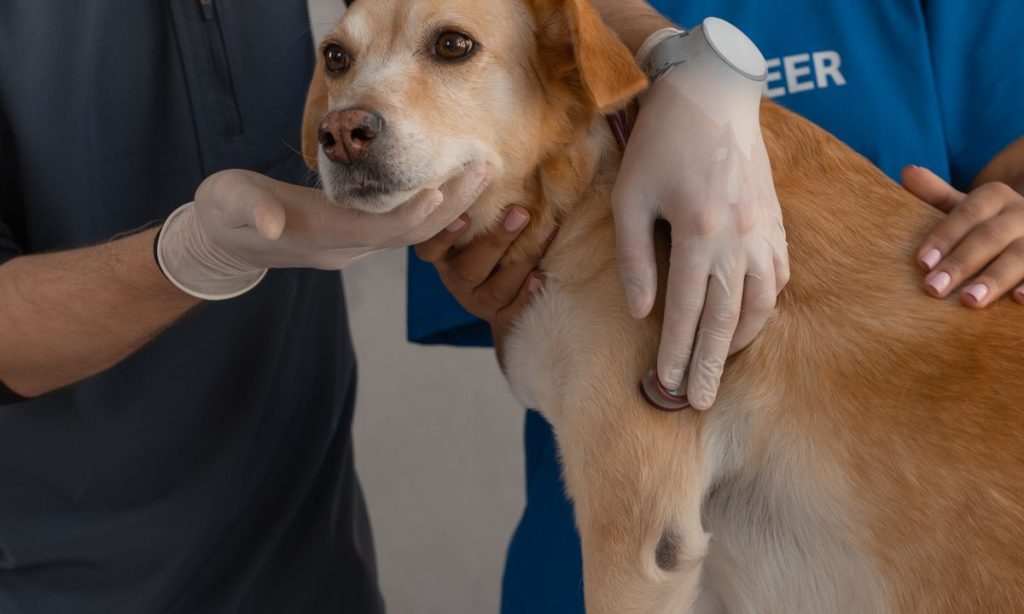
Home light-therapy devices can look straightforward, but treating a dog’s pain is more complicated than pointing a light at a sore joint. Before introducing any device, a veterinarian should identify the cause of discomfort and decide whether this approach fits the dog’s medical plan. These questions to ask a veterinarian before using light therapy at home will help you discuss evidence, equipment, safety, goals, and follow-up. Light therapy can refer to different technologies, including LEDs and therapeutic lasers. Their output and risks are not interchangeable. Dogs with arthritis may already receive medication, weight management, exercise guidance, or rehabilitation. Ask how any new approach would complement, rather than replace, established care. If you’re exploring infrared light therapy for dogs with arthritis, begin with a clinical conversation instead of device advertising.
What diagnosis are we treating?
The first of the questions to ask a veterinarian before using light therapy at home is whether the dog has an established diagnosis. Limping, stiffness, poor sleep, and reluctance to climb stairs can have many causes. Osteoarthritis is one possibility, but ligament injury, neurologic problems, infection, and other diseases can produce overlapping signs. The veterinarian may need to examine the dog and recommend imaging or additional tests. Ask which problem light therapy might target, what other diagnoses have been considered, and whether the pet needs urgent conventional treatment. Starting home treatment before assessment can delay appropriate care. For sudden weakness, our guide to sudden hind-leg weakness in dogs explains why prompt evaluation matters.
What does the evidence show for my dog’s condition?
Another essential item among questions to ask a veterinarian before using light therapy at home concerns benefit. Photobiomodulation has been studied in dogs, including some with osteoarthritis, but findings vary by condition, device, study design, and treatment protocol. The American Animal Hospital Association discusses laser therapy among rehabilitation modalities while noting limits in clinical evidence for some physical approaches. Ask whether good veterinary evidence supports your dog’s particular diagnosis, how large an improvement is realistic, and when benefit should be noticeable. Do not accept a guarantee of eliminating pain or restoring damaged joints. Even when an adjunctive therapy is considered, a multimodal pain-management plan may be necessary. Ask what symptoms would show that the approach is not helping.
Is this an LED device or a therapeutic laser?
Precise equipment questions belong on any list of questions to ask a veterinarian before using light therapy at home. The terms red light, near-infrared light, photobiomodulation, and laser therapy are sometimes used loosely. Devices can differ in wavelength, output power, beam characteristics, treatment area, and safety classification. Ask the veterinarian to identify what kind of device is appropriate, if any, and whether they can evaluate its technical documentation. An LED panel is not necessarily equivalent to a clinic’s higher-powered laser. A marketing claim about wavelength alone does not establish safe use. Do not attempt to copy a professional clinic’s treatment time onto an unrelated home unit. Device settings should come from an individualized veterinary protocol.
What are the eye and burn precautions?
Safety is central to questions to ask a veterinarian before using light therapy at home. Certain lasers can injure eyes, including through reflections, and improperly applied energy can cause tissue heating or burns. Ask whether protective eyewear is required for the dog and people in the room, and whether a specific light source should never be aimed near the face. Verify that the clinic can explain safe handling, setup, power controls, and what to do if the dog moves unexpectedly. Never point any laser directly at an eye. Keep the device inaccessible to children and unsupervised pets. Stop if the dog shows pain, excessive heat, or distress. Personal protective equipment must match the actual device, not merely have a generic safety label.
Are there health conditions or medicines that change the risks?
Specific medical history belongs among questions to ask a veterinarian before using light therapy at home. Tell the clinician about cancer or suspicious masses, eye disease, bleeding, pregnancy, thyroid problems, photosensitizing drugs, skin conditions, and recent surgery. Not every light technology has identical precautions, so ask what matters for the proposed device. Do not apply energy to an unexplained lump or a surgical area without instructions. The clinician may decide that another diagnostic examination is needed before treatment. If the dog takes pain medication, steroids, or other prescriptions, confirm whether therapy changes monitoring. Never discontinue an essential medicine to test whether light therapy alone works. A safe treatment plan accounts for the whole patient rather than one painful body part.
How would treatment fit with standard pain management?
The best questions to ask a veterinarian before using light therapy at home include how it fits the full care plan. The AAHA pain guidelines emphasize individualized assessment and multimodal management. Depending on the diagnosis, treatment may include prescribed analgesia, exercise adjustment, weight management, rehabilitation, and environmental changes. Ask which interventions have stronger evidence, what light therapy might add, and whether it would change any existing schedule. Request a written summary identifying which treatments continue unchanged. A dog that appears more active is not automatically free of disease. Avoid increasing exercise abruptly because of a short period of improvement. The veterinarian should also explain whether a certified rehabilitation specialist is needed to coordinate treatment.
Who will teach us the correct procedure?
Training is one of the most practical questions to ask a veterinarian before using light therapy at home. Ask whether a veterinarian or qualified rehabilitation professional can provide a hands-on demonstration for the exact equipment. Clarify who should operate it, where the dog should be positioned, how the treatment area is identified, and what behavior should end the session. Do not improvise power, duration, frequency, distance, or treatment zones from online videos. Ask whether the dog must be calm and how to prevent a frightened animal from struggling. If safe handling is not possible at home, clinic-based treatment may be more appropriate. An operator’s confidence cannot substitute for device-specific training and medically appropriate instructions.
What outcomes should we measure, and when do we recheck?
A good list of questions to ask a veterinarian before using light therapy at home includes an agreed way to judge results. Ask what baseline observations to record, such as mobility, willingness to rise, gait, activity level, sleep, and signs of pain. Use the same observations before and after treatment rather than relying on one enthusiastic afternoon. Your veterinarian may prefer a formal pain or function questionnaire and scheduled follow-up examination. Agree on a realistic review date and a stopping rule if the dog does not benefit. Keep notes about any discomfort or skin changes. A record makes conversations more meaningful, but owners cannot diagnose improvement in underlying joint disease from behavior alone.
What signs mean we should stop and call?
Emergency planning is another part of questions to ask a veterinarian before using light therapy at home. Ask which reactions warrant immediate discontinuation, same-day veterinary advice, or urgent emergency care. Concerning signs can include burns, severe discomfort, sudden weakness, collapse, new breathing difficulty, or a rapid decline in mobility. Do not continue sessions over a painful area because an advertisement says temporary discomfort is normal. Sudden severe lameness or inability to bear weight needs assessment for causes that light therapy cannot correct. Confirm how to reach the clinic outside office hours. Keep device manuals available and report the exact model and treatment settings if a problem occurs. A cautious plan includes an exit route, not just optimistic expectations.
When should a veterinary clinic handle treatment instead?
The final group of questions to ask a veterinarian before using light therapy at home addresses alternatives. Some dogs may require professional rehabilitation because of medical complexity, difficult treatment sites, behavior, or equipment risks. Others may not be suitable candidates at all. Ask whether an in-clinic demonstration, rehabilitation evaluation, or different therapy would be safer and more useful. A home device should not replace physical examination or repeat prescriptions without supervision. Consider the time needed for consistent observation and rechecks as well as purchase cost. Our guide to whether infrared laser therapy can be performed at home offers further background, but a clinician must determine what is appropriate for the individual dog.
Frequently Asked Questions
Is light therapy proven to cure canine arthritis?
No. It does not cure arthritis. Evidence for potential symptom benefit varies, and treatment decisions belong within an individualized veterinary plan.
Can I use the same settings as a veterinary clinic?
No. Devices differ in output and risks. Ask your veterinarian for instructions specific to the equipment and your dog’s condition.
Does my dog need eye protection?
Some light devices, especially lasers, pose eye risks. Your veterinarian must identify protection and handling requirements for the exact device.
Should I stop pain medicine when starting therapy?
Never stop or adjust prescribed medication without the treating veterinarian’s direction. Light therapy may be only an adjunct.
What if my dog becomes uncomfortable during a session?
Stop the session and contact your veterinarian. New pain, heat, skin changes, or distress deserve assessment before further use.
Final Words
These questions to ask a veterinarian before using light therapy at home can turn a confusing device discussion into a practical safety plan. Confirm the diagnosis, clarify evidence, review precautions, obtain training, and arrange follow-up. For context about infrared light therapy for dogs with arthritis, see our related guide. The final decision should be based on the dog’s health and the clinician’s judgment, not marketing promises.
Reference
American Animal Hospital Association: “2022 AAHA Pain Management Guidelines for Dogs and Cats,” including “Nonpharmacologic Modalities for Pain Management.” American Journal of Veterinary Research: “A randomized double-blinded controlled trial on the effects of photobiomodulation therapy in dogs with osteoarthritis” (2022), indexed by the National Library of Medicine.









