

The best tick treatment for horses begins with preventing exposure, finding attached ticks, and recognizing when a veterinarian should become involved. Ticks hide around ears, the mane, tail, legs, and other hard-to-see areas after turnout or trail riding. This guide compares seven genuine horse tick-control products, including spot-ons, water-based sprays, oil-based formulations, and wipe-on options. Their application methods, ingredients, and advertised intervals differ. The safe choice depends on the exact current product label, not a seller’s headline or a general claim of being natural. Read species restrictions, target pests, application directions, and precautions before applying anything. Continue regular tick checks even when using repellents, and contact your veterinarian when bites are accompanied by fever, swelling, stiffness, or other unusual signs. Product selection is only one part of a sensible tick-management plan.
Quick Picks
| Product | Best For | Key Advantage | Buy | |
|---|---|---|---|---|
| Farnam Equi-Spot 12-Week Supply | targeted spot-on application | horse-labeled spot-on | View on Amazon | Jump to Review |
| Farnam Repel-X Ready-to-Use Spray | routine spray application | ready-to-use horse spray | View on Amazon | Jump to Review |
| Absorbine UltraShield EX | multiple pest exposure | broad insect-control spray | View on Amazon | Jump to Review |
| Farnam Bronco E Gallon Refill | barn refill routines | large equine spray refill | View on Amazon | Jump to Review |
| UltraCruz Natural Fly and Tick Spray | no-dilution refill use | equine fly and tick deterrent | View on Amazon | Jump to Review |
| Pyranha Wipe N’ Spray | oil-based topical protection | pyrethrin and lanolin formula | View on Amazon | Jump to Review |
| Farnam Wipe Original Formula | horses avoiding spray mist | wipe-on tick protection | View on Amazon | Jump to Review |
1. Farnam Equi-Spot 12-Week Supply

What We Like
- Horse-specific spot-on
- Ticks on listing
- Targeted applications
- Extended-interval format
What We Don’t Like
- Check retreatment directions
- Chemical handling precautions
Farnam Equi-Spot 12-Week Supply offers an approach for targeted spot-on application. Farnam Equi-Spot is a targeted spot-on insect-control product for horses. Its listing identifies ticks among the pests and describes a claimed protection interval of fourteen days. Compare this product against the horse’s exposure pattern, not simply the number of insects advertised on the bottle. The intended species and target pests must be verified on the actual label. The exact label matters more than a marketplace title or headline claim.
Spot-on application offers a different routine from whole-coat spraying. Read the current label for exact application sites, dose, retreatment period, and restrictions on other animals nearby. A convenient application style is useful only when the product is appropriate and the owner can follow all required precautions. Keep written dates of each application and observe the horse for reactions. Record application dates so the interval is not guessed from memory. Follow all precautions for skin, eyes, nostrils, and companion animals.
Do not treat marketing language about long-lasting protection as a substitute for the current pesticide label. This product does not diagnose or treat tick-borne illness. These tradeoffs matter before relying on the product for tick management. Rechecking the horse after turnout remains essential because no spray or spot-on guarantees that every tick is prevented. A topical product cannot treat disease transmitted by an attached tick. Seek veterinary advice for fever, swelling, stiffness, or unusual behavior. More spray is not automatically safer or more effective.
My Recommendation
My recommendation is to compare Farnam Equi-Spot 12-Week Supply when targeted spot-on application matches the actual barn routine. Its horse-labeled spot-on format is a relevant difference from the alternatives. Do not treat marketing language about long-lasting protection as a substitute for the current pesticide label. This product does not diagnose or treat tick-borne illness. Review the exact equine tick label and the horse’s sensitivity before using it, and do not discontinue routine tick inspections.
2. Farnam Repel-X Ready-to-Use Spray

What We Like
- Horse spray formulation
- Ticks among listed targets
- No dilution for selected size
- Thirty-two-ounce bottle
What We Don’t Like
- Coverage requires attention
- Read species precautions
Farnam Repel-X Ready-to-Use Spray offers an approach for routine spray application. Farnam Repel-X Ready-to-Use comes as a thirty-two-ounce horse spray. The product listing includes flies, mosquitoes, gnats, and ticks among its targets. Compare this product against the horse’s exposure pattern, not simply the number of insects advertised on the bottle. The intended species and target pests must be verified on the actual label. Inspect common tick attachment sites even when using a repellent. Tick control should be combined with management of pasture and trail exposure.
A ready-to-use bottle avoids concentrate mixing, which may help owners maintain a consistent routine. Still follow labeled spray areas, application quantity, and safety instructions carefully. A convenient application style is useful only when the product is appropriate and the owner can follow all required precautions. Keep written dates of each application and observe the horse for reactions. Follow all precautions for skin, eyes, nostrils, and companion animals. Wear the protective equipment specified on the current product label. Store the container securely and follow disposal directions.
It is not a substitute for checking the horse after turnout. Confirm the exact formula says it is for horses and ticks, and follow precautions around other species. These tradeoffs matter before relying on the product for tick management. Rechecking the horse after turnout remains essential because no spray or spot-on guarantees that every tick is prevented. Seek veterinary advice for fever, swelling, stiffness, or unusual behavior. More spray is not automatically safer or more effective. Different insecticides should not be combined without appropriate guidance.
My Recommendation
My recommendation is to compare Farnam Repel-X Ready-to-Use Spray when routine spray application matches the actual barn routine. Its ready-to-use horse spray format is a relevant difference from the alternatives. It is not a substitute for checking the horse after turnout. Confirm the exact formula says it is for horses and ticks, and follow precautions around other species. Review the exact equine tick label and the horse’s sensitivity before using it, and do not discontinue routine tick inspections.
3. Absorbine UltraShield EX

What We Like
- Ticks among listed pests
- Horse-branded spray
- Water-based formula
- Broad pest list
What We Don’t Like
- Duration requires verification
- Multi-insecticide caution
Absorbine UltraShield EX offers an approach for multiple pest exposure. Absorbine UltraShield EX is a ready-to-use water-based insecticide and repellent for horses. The listing includes ticks alongside many flying insects. Compare this product against the horse’s exposure pattern, not simply the number of insects advertised on the bottle. The intended species and target pests must be verified on the actual label. Tick control should be combined with management of pasture and trail exposure. The correct product must list horses and the target pest.
This broad target list may fit horses exposed to more than one biting pest. Check which applications are actually permitted on the horse and which may apply to premises. A convenient application style is useful only when the product is appropriate and the owner can follow all required precautions. Keep written dates of each application and observe the horse for reactions. Wear the protective equipment specified on the current product label. Store the container securely and follow disposal directions.
The manufacturer’s up-to-seventeen-day language is a claim to cross-check against the actual label. Do not combine insecticides or extend treatment intervals by guesswork. These tradeoffs matter before relying on the product for tick management. Rechecking the horse after turnout remains essential because no spray or spot-on guarantees that every tick is prevented. More spray is not automatically safer or more effective. Different insecticides should not be combined without appropriate guidance. Always verify the current equine-use instructions before purchase.
My Recommendation
My recommendation is to compare Absorbine UltraShield EX when multiple pest exposure matches the actual barn routine. Its broad insect-control spray format is a relevant difference from the alternatives. The manufacturer’s up-to-seventeen-day language is a claim to cross-check against the actual label. Do not combine insecticides or extend treatment intervals by guesswork. Review the exact equine tick label and the horse’s sensitivity before using it, and do not discontinue routine tick inspections.
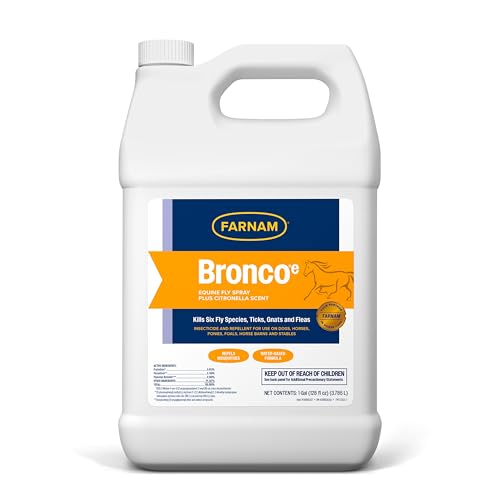
4. Farnam Bronco E Gallon Refill
What We Like
- One-gallon refill
- Horse and tick listing
- Several listed active ingredients
- Barn restocking convenience
What We Don’t Like
- Bulk handling demands care
- Application rules still apply
Farnam Bronco E Gallon Refill offers an approach for barn refill routines. Farnam Bronco E is sold as a gallon-size refill and its listing names flies and ticks. The ingredient description mentions permethrin, prallethrin, and piperonyl butoxide. Compare this product against the horse’s exposure pattern, not simply the number of insects advertised on the bottle. The intended species and target pests must be verified on the actual label. The correct product must list horses and the target pest.
It may suit a barn already using suitable spray equipment, but transfer to another bottle requires careful labeling and safe storage. Use only as the current label directs. A convenient application style is useful only when the product is appropriate and the owner can follow all required precautions. Keep written dates of each application and observe the horse for reactions. Store the container securely and follow disposal directions. Check the horse’s coat and skin regularly for reactions. Record application dates so the interval is not guessed from memory.
A larger container does not justify extra applications or mixing with another product. Verify permitted treatment surfaces and animal species every time. These tradeoffs matter before relying on the product for tick management. Rechecking the horse after turnout remains essential because no spray or spot-on guarantees that every tick is prevented. Different insecticides should not be combined without appropriate guidance. Always verify the current equine-use instructions before purchase. A topical product cannot treat disease transmitted by an attached tick.
My Recommendation
My recommendation is to compare Farnam Bronco E Gallon Refill when barn refill routines matches the actual barn routine. Its large equine spray refill format is a relevant difference from the alternatives. A larger container does not justify extra applications or mixing with another product. Verify permitted treatment surfaces and animal species every time. Review the exact equine tick label and the horse’s sensitivity before using it, and do not discontinue routine tick inspections.
5. UltraCruz Natural Fly and Tick Spray

What We Like
- Equine-specific name
- Tick deterrent positioning
- One-gallon supply
- No dilution listed
What We Don’t Like
- Natural claims need caution
- Large-container storage
UltraCruz Natural Fly and Tick Spray offers an approach for no-dilution refill use. UltraCruz Equine Natural Fly and Tick Spray is a one-gallon ready-to-use refill. Its product page describes deterrence of ticks, mosquitoes, flies, and gnats. Compare this product against the horse’s exposure pattern, not simply the number of insects advertised on the bottle. The intended species and target pests must be verified on the actual label. Never assume a pesticide approved for dogs is approved for horses.
The no-dilution format may simplify preparation for owners who already have an appropriate application bottle. Read the exact ingredient and equine-use directions before applying. A convenient application style is useful only when the product is appropriate and the owner can follow all required precautions. Keep written dates of each application and observe the horse for reactions. Check the horse’s coat and skin regularly for reactions. Record application dates so the interval is not guessed from memory. Follow all precautions for skin, eyes, nostrils, and companion animals.
Natural labeling is not proof of stronger effectiveness or complete freedom from reactions. Verify the current label and monitor for skin sensitivity. These tradeoffs matter before relying on the product for tick management. Rechecking the horse after turnout remains essential because no spray or spot-on guarantees that every tick is prevented. Always verify the current equine-use instructions before purchase. A topical product cannot treat disease transmitted by an attached tick. Seek veterinary advice for fever, swelling, stiffness, or unusual behavior.
My Recommendation
My recommendation is to compare UltraCruz Natural Fly and Tick Spray when no-dilution refill use matches the actual barn routine. Its equine fly and tick deterrent format is a relevant difference from the alternatives. Natural labeling is not proof of stronger effectiveness or complete freedom from reactions. Verify the current label and monitor for skin sensitivity. Review the exact equine tick label and the horse’s sensitivity before using it, and do not discontinue routine tick inspections.
6. Pyranha Wipe N’ Spray

What We Like
- Oil-based horse product
- Ticks listed as targets
- Pyrethrin ingredient named
- Gallon container
What We Don’t Like
- Oil feel may not suit all
- Read insecticide precautions
Pyranha Wipe N’ Spray offers an approach for oil-based topical protection. Pyranha Wipe N’ Spray is an oil-based horse insect-control product with ticks included in its list of targeted pests. The listing mentions pyrethrin, lanolin, and citronella scent. Compare this product against the horse’s exposure pattern, not simply the number of insects advertised on the bottle. The intended species and target pests must be verified on the actual label. The exact label matters more than a marketplace title or headline claim.
The oil-based formulation differs from water-based sprays, so coat finish, handling, and application preferences may matter. Check all label statements before using it near sensitive areas. A convenient application style is useful only when the product is appropriate and the owner can follow all required precautions. Keep written dates of each application and observe the horse for reactions. Record application dates so the interval is not guessed from memory. Follow all precautions for skin, eyes, nostrils, and companion animals.
A product marketed as long-lasting still requires correct labeled application. Some horses may dislike oily residue, and ingredients must be considered around companion animals. These tradeoffs matter before relying on the product for tick management. Rechecking the horse after turnout remains essential because no spray or spot-on guarantees that every tick is prevented. A topical product cannot treat disease transmitted by an attached tick. Seek veterinary advice for fever, swelling, stiffness, or unusual behavior. More spray is not automatically safer or more effective.
My Recommendation
My recommendation is to compare Pyranha Wipe N’ Spray when oil-based topical protection matches the actual barn routine. Its pyrethrin and lanolin formula format is a relevant difference from the alternatives. A product marketed as long-lasting still requires correct labeled application. Some horses may dislike oily residue, and ingredients must be considered around companion animals. Review the exact equine tick label and the horse’s sensitivity before using it, and do not discontinue routine tick inspections.
7. Farnam Wipe Original Formula

What We Like
- Wipe-on targeted use
- Horses on listing
- Ticks listed
- Thirty-two-ounce size
What We Don’t Like
- Hands-on application needed
- Directions must be followed
Farnam Wipe Original Formula offers an approach for horses avoiding spray mist. Farnam Wipe Original Formula is a horse topical product listing ticks and several types of flies. The product description emphasizes control over exactly where it is applied. Compare this product against the horse’s exposure pattern, not simply the number of insects advertised on the bottle. The intended species and target pests must be verified on the actual label. Inspect common tick attachment sites even when using a repellent.
For a horse that dislikes spray noise, wipe application may offer a more manageable route if the current label allows it. Wear required protective equipment and avoid eyes. A convenient application style is useful only when the product is appropriate and the owner can follow all required precautions. Keep written dates of each application and observe the horse for reactions. Follow all precautions for skin, eyes, nostrils, and companion animals. Wear the protective equipment specified on the current product label.
Careful application does not remove the need for regular tick checks. Confirm the labeled areas, frequency, and product ingredient warnings before each use. These tradeoffs matter before relying on the product for tick management. Rechecking the horse after turnout remains essential because no spray or spot-on guarantees that every tick is prevented. Seek veterinary advice for fever, swelling, stiffness, or unusual behavior. More spray is not automatically safer or more effective. Different insecticides should not be combined without appropriate guidance.
My Recommendation
My recommendation is to compare Farnam Wipe Original Formula when horses avoiding spray mist matches the actual barn routine. Its wipe-on tick protection format is a relevant difference from the alternatives. Careful application does not remove the need for regular tick checks. Confirm the labeled areas, frequency, and product ingredient warnings before each use. Review the exact equine tick label and the horse’s sensitivity before using it, and do not discontinue routine tick inspections.
How to choose best tick treatment for horses
To choose the best tick treatment for horses, consider equine-specific pesticide labeling, tick coverage, application convenience, and the horse’s health. A spot-on, aerosol spray, and wipe-on formula do not have identical directions. Begin with the actual container label and a regular inspection routine.
Confirm equine labeling and tick targets
Use the manufacturer’s current container label rather than relying on a marketplace description. Check that horses are an authorized species, ticks are a listed pest, and the instructions match your intended use. Observe cautions for foals, pregnant mares, sensitive skin, eyes, and other animals sharing the barn. Some products permitted on dogs or premises cannot automatically be used on a horse. Proper handling matters because topical insecticides can create unwanted exposure to people and non-target species. Our equine fly-spray safety guide addresses adjacent spraying practices. Do not layer several treatments or increase application amounts unless the label and veterinarian support the approach.
Compare interval, weather, and application style
Spot-ons use concentrated placements, while sprays and wipe-on products need different handling. Seller promises about protection lasting days are not necessarily appropriate for every horse or weather condition. Read the exact retreatment and application directions. Ready-to-use bottles can reduce mixing mistakes, whereas gallon refills need secure storage and correctly labeled spray containers. An oil-based finish may feel different from a water-based one and can affect owner preference. Regularly inspect the horse after rides through vegetation; no product replaces checking the mane, ears, belly, legs, and tail. Compare our horse fly-sheet options for another layer of turnout equipment, although sheets do not guarantee tick prevention.
Remove ticks promptly and watch for illness
If you find an attached tick, use fine-tipped tweezers close to the skin and apply steady pressure without crushing the tick. Avoid heat, petroleum jelly, or chemical home remedies. Clean the area afterward and follow veterinary guidance when the horse is distressed or heavily infested. Record bites and observe for swelling, fever, reluctance to move, or other changes. Consider mowing tall vegetation and reducing exposure to brush where practicable. Our stable pest management guide</a covers related barn practices. A veterinarian should evaluate possible tick-borne disease, because repellents cannot provide medical treatment after infection. Keep a straightforward calendar of tick sightings and products used to support safe treatment decisions.
Frequently Asked Questions
Can a dog tick treatment be applied to a horse?
Not unless the exact product’s label explicitly allows equine use and your veterinarian confirms it is suitable. Never assume products transfer safely across species.
Do natural insect sprays always work against horse ticks?
No. Natural labeling alone does not establish tick efficacy or equine safety. Check the current product label and its supporting directions.
How often should horses be checked for ticks?
Inspect regularly in tick season, especially after brushy trails or pasture turnout. Check around the ears, mane, legs, and tail.
What should I do when a tick is attached?
Use fine-tipped tweezers close to the skin and pull steadily. Clean the site, avoid crushing the tick, and contact a veterinarian if complications develop.
Can an insecticide treat a tick-borne infection?
No. Topical tick products are not treatment for illness. Seek veterinary assessment for fever, swelling, stiffness, lethargy, or other concerning signs.
Final Verdict
Farnam Equi-Spot is one option for owners who prefer a horse-labeled spot-on routine. Repel-X and UltraShield EX are useful spray-format comparisons, and Farnam Wipe offers another application method for horses uncomfortable with spray noise. Check every exact product label and follow it strictly. Keep tick checks and environmental exposure control central to the plan. Our horse fly-spray equipment guide supports careful storage and inspection.
Affiliate disclosure: This article contains Amazon affiliate links. If you purchase through them, PetAdvisorPro may earn a commission. As an Amazon Associate I earn from qualifying purchases.









