
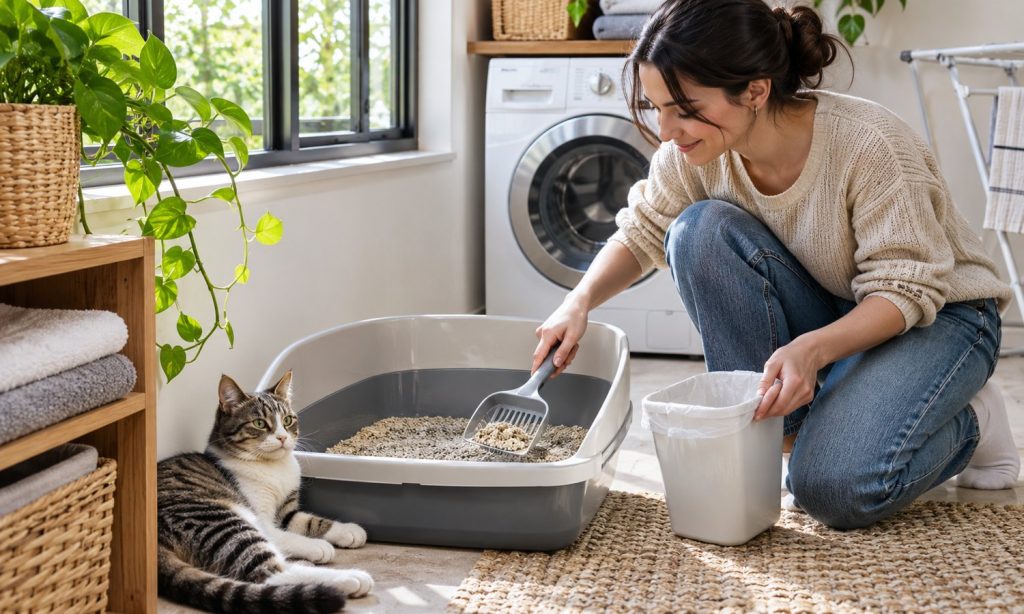
Litter box odor usually has a fixable source: waste left too long, damp litter, poor airflow, or a box that is difficult to clean. Masking the smell with perfume can make the room more intense without making the box comfortable for your cat. Start by checking the litter, the box, and the surrounding area.
This guide explains how to reduce litter box odor with a routine that removes waste, controls moisture, and keeps the area inviting. It also covers warning signs that call for a veterinary visit. For litter absorption basics, see our guide to cat litter for urine absorption; the right material still needs regular maintenance. Small changes made one at a time can show which part of the routine is causing the smell.
Find the source before treating the smell
Notice whether the odor is strongest inside the box, around its base, or elsewhere in the room. A sharp ammonia-like smell often points to urine-soaked litter or an overdue box change. A sudden foul stool odor may instead reflect a diet change, digestive upset, or illness. Persistent urine odor outside the box may linger in marked areas; our guide explains why cats may return to a urine-marked carpet spot.
Check beneath mats, behind the box, and along nearby walls for tracked litter or missed urine. A covered box can trap odors and make cleaning harder, while a liner may tear or bunch. Fixing the source is more useful than layering on fragrance.
Scoop waste and remove damp clumps consistently
Scoop at least once daily, and more often if several cats share a box or the household is home throughout the day. Remove both feces and urine clumps, then dispose of them in a sealed trash container. Do not flush litter unless its label and local wastewater rules explicitly permit it.
Keep enough clean litter in the box for digging and covering, following the material’s directions and your cat’s preference. Top up as needed, but do not let old, damp litter accumulate under a fresh layer. A quick daily check takes less time than tackling a saturated box later.
Choose and maintain litter that your cat accepts
A litter that absorbs moisture and forms removable clumps can make routine cleanup simpler. Texture, dust, and scent matter too. Many cats prefer unscented litter with a sand-like feel, so a heavily perfumed product may discourage use even when it smells pleasant to people.
If you switch litter, mix the new type with the familiar litter gradually or offer a second box temporarily. Watch whether your cat uses the box comfortably. Avoid changing the litter, box location, and box style at the same time, because that makes a refusal harder to troubleshoot.
Wash the box and clean the surrounding area
Empty and wash the box on a regular schedule based on the litter type, household, and box condition. Mild unscented soap and warm water are usually sufficient. Rinse well and dry before adding fresh litter so detergent residue and strong cleaner odors do not linger.
Use a pet-safe enzymatic cleaner on urine outside the box and follow its label exactly. Never mix cleaning products, especially bleach with ammonia-containing substances. Wash scoops and mats too, and replace a scratched or cracked plastic box that continues to hold odor after cleaning.
Improve airflow without making the box unpleasant
Place the box in a quiet, ventilated location that remains easy for the cat to reach. A small fan can improve room circulation if it does not blow directly into the box or startle the cat. Keep boxes away from food, water, loud appliances, and busy traffic.
Avoid air fresheners, essential oils, scented powders, and deodorizer sprays near the litter. Strong odors can irritate people and may make a cat avoid the area. If an air purifier is used in the room, it should supplement cleaning rather than replace scooping and washing.
Check whether the box setup fits the number of cats
A single box can become overwhelmed in a multi-cat home, even when the cats usually get along. Provide multiple boxes in separate, accessible locations so one cat cannot block another’s route. Placing several boxes side by side may function like one large resource rather than separate choices.
Use boxes large enough for each cat to turn, dig, and cover waste comfortably. Some cats need a low entrance or an uncovered box. Keep a simple cleaning schedule for every location; one neglected box can sour the whole room.
Know when odor may signal a health problem
A persistent change in urine or stool odor can accompany a health problem, but smell alone cannot identify the cause. Contact your veterinarian if the change is sudden or continues, particularly with diarrhea, vomiting, poor appetite, weight loss, or reduced energy.
Straining, frequent trips, crying while urinating, blood in urine, or producing little or no urine requires prompt veterinary advice. A cat that cannot pass urine may need emergency care. Do not respond to new odor by simply switching litter before checking for signs of illness.
A practical routine for fresher litter
Make odor control predictable by pairing a quick visual check with the same daily scoop time. Remove waste, check the litter level, wipe stray granules from the floor, and close the waste container. In a home with multiple cats, check every box rather than assuming one cat’s preferred location stays clean.
Once a week, look for damp spots stuck to the box wall, residue on the scoop, and odor trapped in a mat. Plan a full wash around the litter type and box condition. Keeping a small cleaning log can reveal whether odor follows a missed scoop, a litter change, or a particular box location. Note which box smells strongest and whether your cat’s routine has changed.
Frequently Asked Questions
Good odor control comes from removing waste and keeping the box dry and accessible. These answers address common maintenance questions.
If smell changes suddenly or your cat seems uncomfortable, consider health as well as housekeeping. Ask your veterinarian about persistent changes.
How often should I scoop a cat’s litter box?
At least once a day is a useful baseline. Scoop more often when several cats use the box or waste builds up quickly.
Do scented litters control odor better?
They may mask odor for people, but some cats dislike strong fragrance. Frequent scooping and clean, absorbent litter address the source.
Can baking soda go in a litter box?
Ask your veterinarian before adding powders. Avoid anything that creates dust, changes the litter texture, or discourages your cat from using the box.
Why does the litter box still smell after scooping?
Odor may remain in saturated litter, box scratches, the scoop, a mat, or a nearby surface. Empty and wash the box and inspect its surroundings.
When should I replace the litter completely?
Follow the litter type’s instructions and replace it sooner if it stays damp, smells after scooping, or has been contaminated.
Final Words
To reduce litter box odor, scoop daily, remove damp material, wash the box with mild soap, and clean nearby surfaces with an appropriate product. Keep the box in a quiet, ventilated place, and make sure every cat has reliable access to a clean option.
If your cat’s urine or stool suddenly smells different, or toileting habits change, ask your veterinarian about possible health causes. Our guide to cat litter for urine absorption explains how material and clumping behavior can support easier cleanup, but no litter can replace a consistent care routine.









