
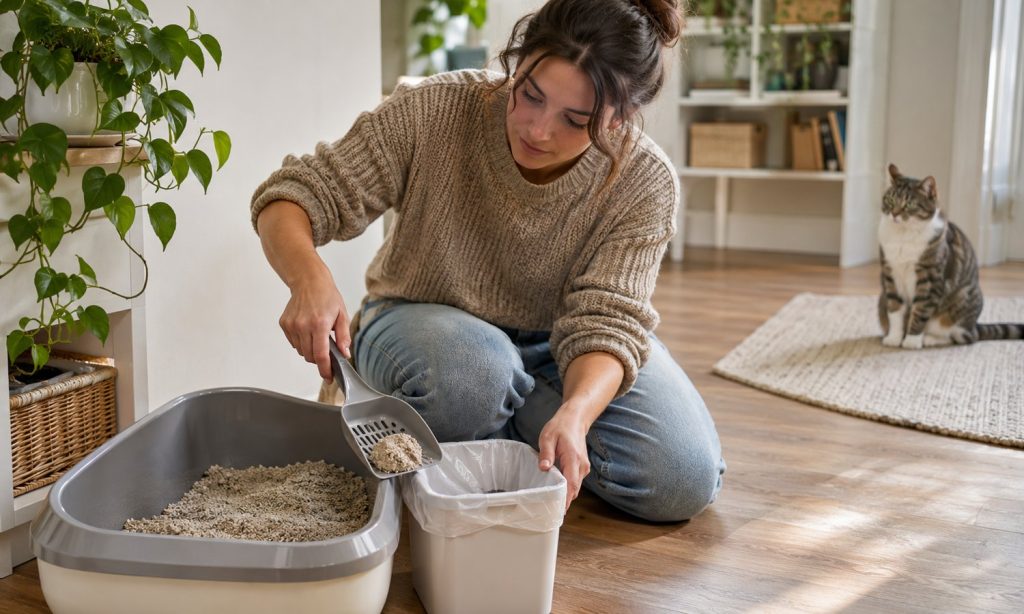
A clean litter box is part of everyday cat care, but the right schedule depends on how many cats share it, the litter type, and how quickly waste builds up. Scooping removes fresh urine clumps and feces; replacing litter means emptying some or all of the material. These jobs happen at different intervals.
This guide explains how often to scoop cat litter, when to top it up, and how to decide when a full replacement is due. For absorption and clumping considerations, our guide to cat litter for urine absorption can help you compare the maintenance needs of different materials without changing your cat’s routine too abruptly. A simple schedule helps distinguish everyday scooping from the less frequent full litter change and box wash.
Scoop at least once each day
For most households, remove feces and urine clumps at least once daily. Scoop more often if several cats use one box, the box fills quickly, or odor and waste accumulate between visits. A morning and evening check can keep the litter fresher and make it easier to notice changes in your cat’s output.
Use a scoop that fits the litter and remove waste without taking too much clean material. Dispose of clumps in a closed trash container; do not flush litter unless the product directions and local wastewater rules specifically allow it. Wash your hands after handling litter and clean the scoop regularly.
Top up litter and keep a useful depth
Scooping removes some litter along with waste, so check the level each day and add fresh material when needed. A consistent depth lets cats dig and cover waste while helping urine stay in the absorbent layer. Follow the litter’s instructions and observe whether your cat can dig comfortably.
Too little litter may let urine reach the box bottom and create stuck-on residue. Too much can spill over the sides or make the box difficult to enter. If your cat suddenly avoids a familiar litter, review both depth and texture before making several changes at once.
Replace litter based on material and condition
There is no single full-change interval for every litter. Clumping litter can often be maintained by removing waste and topping up, then emptied and washed on a regular schedule. Non-clumping clay, pellets, and crystals may require more frequent complete changes because urine spreads or remains in the material differently.
Use the package directions as a starting point, then adjust for the number of cats, box size, humidity, and odor. Replace litter sooner if it smells after scooping, stays damp, breaks apart, or has been contaminated. Do not simply cover persistent odor with a deep layer of fresh litter.
Factors that change the schedule
More cats create more waste, and smaller boxes reach capacity faster. Cats with larger urine output, soft stool, or a medical condition may also require more frequent cleaning. If you are unsure what output is typical for your cat, track the pattern and discuss changes with your veterinarian.
A covered box may retain more odor and moisture than an open one, so inspect it closely. Warm, humid rooms can also make smells noticeable sooner. The box should remain clean enough that your cat wants to use it, not just until a calendar reminder says it is time.
Use a cleaning routine that protects the box
When replacing litter, empty the box and wash it with warm water and mild, unscented soap. Rinse it well and let it dry before refilling. Strong fragrances and disinfectant residue can bother cats, and mixing cleaning products can create dangerous fumes.
Inspect the box for deep scratches, cracks, or lingering odor. Plastic can hold residue as it wears, making cleaning less effective. Replace a damaged box when it no longer washes clean, and keep the scoop and nearby mat free of buildup too.
Keep boxes accessible in multi-cat homes
A busy shared box may need scooping several times a day. Provide enough boxes in separate locations so one cat cannot guard all access. A practical starting point is one box per cat plus one extra, distributed around the home rather than grouped together.
If space is tight, prioritize boxes that are easy to reach, not just easy to hide. Keep food and water apart from litter, and avoid placing a box where a cat can be cornered. A good layout makes daily cleaning easier and gives each cat more than one clean option.
Watch for changes in waste and behavior
Scooping is also a simple way to notice changes. More or fewer clumps, unusually large urine deposits, blood, diarrhea, constipation, or straining can signal a health issue. The litter box is not a diagnostic tool, but a change from your cat’s normal pattern is useful information.
Contact your veterinarian for persistent changes or discomfort. Repeated trips with little or no urine, especially in a male cat, can be an emergency. Do not delay care while trying a different litter or cleaning schedule.
Set up a simple scooping checklist
Place the scoop and waste container within reach but away from food preparation areas. Choose a regular time for the daily check, and write down which boxes need attention if more than one person shares care. A short checklist can include scooping, checking litter depth, wiping stray granules, and noticing changes in waste.
For multiple boxes, work through each location instead of assuming the most visible box is the only one being used. This is especially helpful when cats have different preferred stations. Consistent checks help you notice when a box is suddenly used more or less often. A written schedule can help when someone else handles care or when a smell follows a missed visit.
Frequently Asked Questions
Scooping and full litter replacement are separate tasks. These answers can help you set a routine around your cat’s needs.
Check the box daily and adjust when its condition or your cat’s habits change. Consistency makes small problems easier to catch early.
How many times a day should I scoop?
At least once daily is a practical minimum for most homes. Scoop more often when a box is shared or fills quickly.
How often should clumping litter be replaced?
Follow the product directions and your box’s condition. Scoop and top up routinely, then fully change and wash it on a regular schedule.
Can I add fresh litter without emptying the box?
Yes, topping up after scooping is part of routine care. It does not replace a full change when litter stays damp or smells.
Does one cat need more frequent scooping?
A cat that produces more waste or has a health condition may need closer monitoring. Discuss unusual output with a veterinarian.
What if odor remains after scooping?
Check for saturated litter, residue on the box, and waste on nearby surfaces. Empty and wash the box when needed.
Final Words
Scoop cat litter at least daily, remove both urine clumps and feces, and top up the material as needed. Replace the litter and wash the box according to its type, the household’s number of cats, and the box’s actual condition.
A clean box supports comfort and makes changes in your cat’s habits easier to spot. See our guide to routine cat care and litter maintenance for related upkeep checks. For absorption and cleanup context, see our guide to cat litter for urine absorption. Ask your veterinarian about persistent odor, unusual output, straining, or accidents.









