
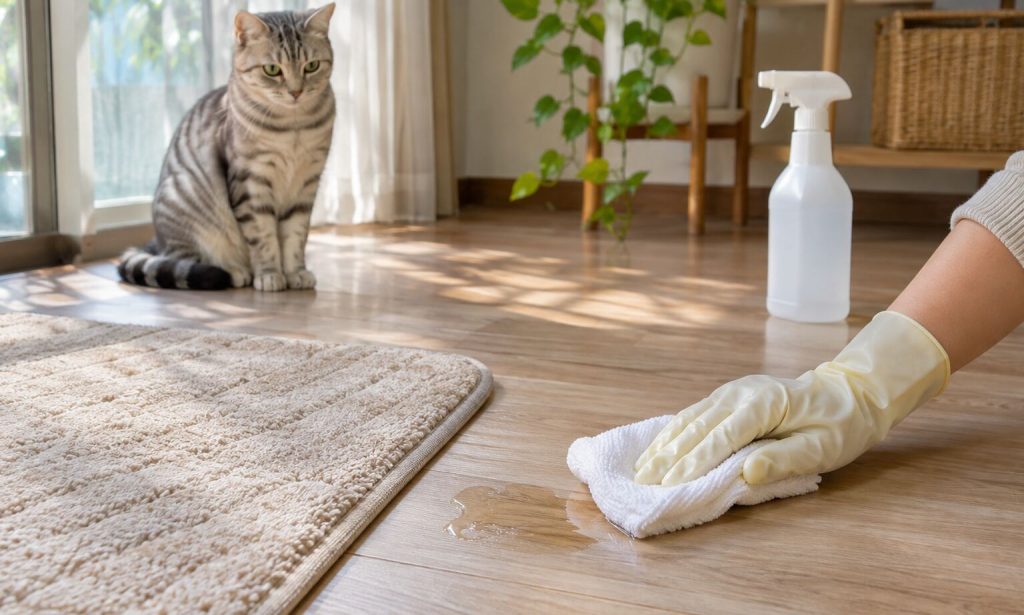
A cat-urine accident creates two problems: a visible stain and an odor that may linger after the surface looks clean. What to look for in a cleaner for cat pee depends on where the urine landed, how long it sat, and whether the surface can tolerate moisture. A strong perfume is not proof that the contamination is gone. It may simply cover the smell for a while.
When choosing a cleaner for cat pee, examine urine-specific action, compatibility, safety directions, and realistic drying time. This guide explains how enzymes differ from fragrance, how to approach fabric and flooring, and why repeated accidents may need veterinary attention. The aim is a home that feels genuinely fresh and a cat whose comfort and health are taken seriously.
What an Effective Urine Cleaner Needs to Do
Fresh urine is easier to blot than an old stain. Liquid can pass through carpet fibers into backing or padding before anyone notices. Once it reaches deeper material, a quick surface wipe may leave residues that produce odor later. Effective cleaning starts with identifying the full affected area rather than masking its smell.
Enzymatic formulas are designed to break down certain organic residues linked to pet accidents. They need direct contact and the required dwell time. The ASPCA recommends cleaning inappropriate elimination thoroughly with an enzymatic cleanser. A formula cannot work where it never reaches, and performance varies with the material and contamination depth.
Recognize the limits of surface cleaning
Do not assume a damp upper layer means the cleaner reached the padding. Carpet backing, foam, and unfinished wood can trap urine. If odor remains after suitable treatment and full drying, examine deeper layers. Some damaged padding or underlayment may need professional remediation or replacement. Repeatedly adding liquid without locating the source can make the problem worse.
Match the Method to Carpet, Fabric, and Flooring
Carpet, rugs, upholstery, ceramic tile, vinyl, laminate, and hardwood each have different limits. A treatment that works on sealed tile may stain natural fibers or swell unsealed wood. Read both the cleaner’s label and the surface manufacturer’s care instructions. Test an inconspicuous spot before treating a large visible area.
Our pet-safe cleaning routine for carpet explains why moisture control matters. Do not saturate a rug whose backing cannot dry quickly. With upholstery, check the furniture’s cleaning code. For sealed floors, wipe promptly and pay special attention to grout, seams, and edges where liquid can travel.
Handling delicate or porous surfaces
On unfinished hardwood, stone with sensitive sealants, silk, wool, or antique fabric, get advice suited to the material. A universal “safe for everything” claim deserves caution. Ask whether rinsing or extraction is required. If an odor comes from deep foam or padding, a fabric-safe surface treatment may not solve the entire issue.
Read the Directions, Not Just the Front Label
Useful directions explain preparation, how much liquid to use, the necessary contact time, whether rinsing is required, and when pets can return. Missing safety details are a warning sign. Some formulations are intended to remain damp for a measured period; others require wiping or extraction. Follow those differences closely.
Start by blotting the wet accident with absorbent material. Do not grind urine into the fibers with aggressive scrubbing. Apply the appropriate treatment to the affected footprint, then allow the stated contact and drying time. Keep your cat away from the area until it is safe, and prevent licking or tracking of damp chemicals.
Check for residue and real results
A sticky residue may attract more dirt. If odor persists after complete drying, reassess the spot instead of automatically repeating treatment. Cleaners cannot repair an already damaged finish. FYI, adding extra solution rarely compensates for skipped directions. Measure success after the surface dries, not while fragrance is still strong.
Put Pet Safety Ahead of Scent
Avoid ammonia-based cleaners on urine-marked areas. The ASPCA notes that ammonia odor may encourage a cat to return. Do not mix household chemicals, especially bleach with ammonia-containing agents, because dangerous gases can form. Read warning labels and keep containers away from pets and children.
Strong fragrances and unnecessary essential-oil mixtures are poor substitutes for urine removal. Some additives can be unsafe around cats, and concentrated scents may make the area unpleasant for them. Provide ventilation during cleaning and keep animals away for the full recommended time. Unplug powered cleaning equipment before maintenance.
If accidental exposure occurs
If your cat walks through cleaner, stop grooming exposure and follow veterinary guidance for the exact substance. Contact a veterinarian or animal poison resource for suspected ingestion or distress. Keep the label available. Do not try homemade chemical reactions on the animal or the floor. A simple, labeled, compatible cleaning method is easier to use safely.
A Practical Sequence for Fresh and Old Stains
For fresh urine, identify the area and blot as much as possible. Test the material, apply compatible treatment, follow the contact time, and allow complete drying. Check the result only after it dries. If you discover an older stain, note that the source may extend beyond the visible discoloration. A UV inspection light can sometimes reveal residues, but fluorescence alone does not prove a mark is urine.
For step-by-step surface protection, see our article on removing pet urine without damaging carpet finishes. With bedding, follow the laundering care label. Avoid high heat before appropriate pretreatment when odor remains. For mattresses or cushions, moisture can become trapped inside, so consider professional help instead of repeated soaking.
Make a repeatable cleaning kit
Keep absorbent cloths, gloves, a compatible labeled cleaner, and clean water where they are easy to access but inaccessible to pets. Record which surface treatments worked. Dispose of heavily soiled material appropriately and wash reusable cloths. Consistency helps prevent panic-cleaning with whatever chemical is nearest.
Treat Repeated Accidents as a Health and Behavior Clue
A cat urinating outside the litter box may have urinary discomfort, a medical condition, stress, litter aversion, or marking behavior. Never assume stubbornness. Straining, frequent unsuccessful trips to the box, crying, or inability to pass urine needs prompt veterinary attention; a urinary blockage is an emergency, especially in male cats.
The ASPCA recommends examining litter-box conditions and potential medical causes. Record where accidents occur, how often, and whether the cat seems uncomfortable. Clean boxes regularly and ensure easy access. Our guide about cats returning to urine-marked carpet helps explain how odor and repeated habits can overlap.
Avoid punishment
Punishment can increase fear without fixing disease or litter-box discomfort. Reward calm, appropriate litter-box use and address the underlying problem. In multi-cat homes, consider whether one cat blocks another’s access. If the pattern continues, work with a veterinarian and, when appropriate, a qualified feline behavior professional.
Frequently Asked Questions
Cleaning questions often surface only after a stain has dried. The safest answer depends on the material, the age of the accident, and the cat’s health.
Use this guidance alongside the cleaner’s instructions and the surface-care label. When signs suggest medical trouble, address the cat before the carpet.
Is an enzyme cleaner always necessary?
An enzyme cleaner is often helpful for organic urine residue, but not every surface tolerates the same formula. Select a method compatible with the material.
Can I use ammonia to remove urine odor?
Avoid ammonia-based cleaners on marked areas. Their smell may encourage re-marking, and mixing chemicals is hazardous.
Why does the carpet smell after it looks clean?
Urine may have reached backing or padding. The surface can appear clean while deeper residues remain.
Is steam always suitable for urine stains?
No. Heat and moisture may be inappropriate for some materials or treatments. Check the cleaning directions first.
When should a cat see the veterinarian?
Sudden or repeated accidents merit evaluation. Straining, pain, or inability to pass urine requires urgent care.
Final Words
What to look for in a cleaner for cat pee is not the strongest perfume or the biggest cleaning promise. Choose urine-specific action, understandable instructions, surface compatibility, and a safe drying process. Address the entire affected area, then assess the result after it dries. Know when professional material restoration is more realistic than another round of liquid.
A suitable cleaner for cat pee is only one part of a humane response. Prompt cleaning, a comfortable litter box, and attention to urinary health work together. Keep chemicals simple, avoid dangerous mixtures, and investigate recurring problems. A clean home and a healthy cat should always be the same goal.









