
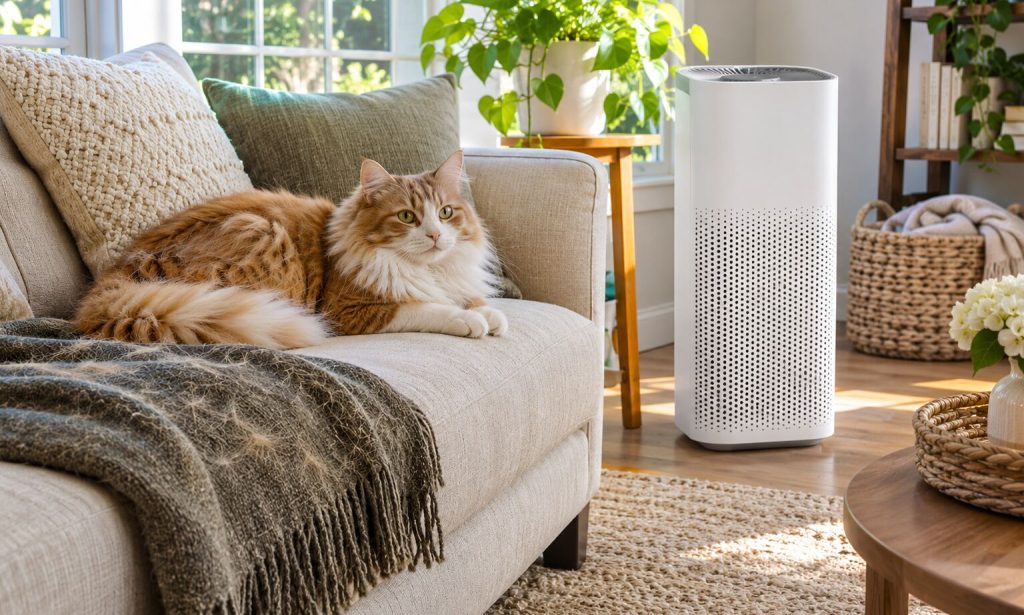
A living room can look spotless while tiny particles still float through the air. Cat hair, skin flakes, litter dust, and household dust behave differently, so a purifier cannot handle them all in the same way. Common mistakes when choosing a air purifier for cat hair begin with expecting a single machine to remove visible fur from the couch and airborne allergens from the room. Those are separate cleaning jobs, and understanding the difference saves frustration.
If you are investigating an air purifier for cat hair, start with room size, airflow, filtration, and your cat’s habits. This guide explains why HEPA-style particle filtration can help airborne dander, why regular vacuuming still matters, and how to evaluate sound, placement, operating costs, and safety. A smart setup should make daily life more comfortable without giving your home another noisy chore.
Mistake One: Confusing Visible Fur With Airborne Particles
Most visible cat hairs are heavy enough to settle on fabric, floors, and furniture. An air cleaner only captures particles that reach its intake while it is running. It is not a substitute for brushing a cat, washing bedding, or removing hair from upholstery. By contrast, small airborne particles and dander may remain suspended long enough for a properly sized filter to capture some of them.
The EPA explains that portable air cleaners can reduce certain airborne particles, but they cannot directly remove contamination already resting on surfaces. This distinction matters more than a colorful advertisement. Begin with a practical question: where is the nuisance? If fur sticks to the sofa, improve surface cleaning. If fine dust accumulates or allergy symptoms worsen around airborne particles, filtration may play a supporting role.
Put the distinction into practice
For a simple household plan, pair regular grooming with a vacuum routine for cat hair and litter. Use a cleaner with an appropriate filter and maintain it according to instructions. Clean gently around litter areas to avoid throwing settled dust back into the air. FYI, even the most hardworking purifier cannot chase fur under the couch.
Mistake Two: Ignoring Room Size and CADR
Clean air delivery rate, or CADR, describes how much filtered air a device can deliver under a test condition. A purifier with an undersized airflow rating may struggle in a large room, even when its filter material is excellent. The EPA advises selecting a unit whose CADR and recommended coverage suit the room being served. Compare actual room dimensions rather than relying on vague “whole-house” language.
Measure the floor area in square feet by multiplying length by width. A 12-by-15-foot room contains 180 square feet. Check whether the manufacturer states the room assumptions and fan speed used to calculate coverage. Tall ceilings, doors left open, and interconnected rooms increase the effective air volume. A label that advertises a huge area may assume very few air changes per hour.
Put the distinction into practice
Choose a location with enough clearance for intake and exhaust. A powerful purifier hidden behind a curtain or crowded against a bookshelf may perform poorly. In an open-plan home, one machine near the cat’s favorite area may not cover every connected space equally. Consider where people spend time, not just where the litter box sits.
Mistake Three: Overlooking Filter Type and Replacement Cost
A particle filter and an odor-control stage do different work. HEPA filtration is intended to trap fine airborne particles. Activated carbon may help with certain gases and smells, depending on the quantity of carbon and actual conditions. Neither stage eliminates the need to remove soiled litter or clean accidents promptly. A purifier that claims to destroy every odor is promising more than routine housekeeping can support.
Before deciding, find the exact replacement-filter schedule and price, plus whether replacements remain available. Filter media that stays packed with dust can reduce effective airflow and may increase operating cost. A washable prefilter may collect larger fluff, but washing a filter that is not designed for water can damage it. Follow the specific maintenance instructions rather than guessing.
Put the distinction into practice
People researching common mistakes when choosing a air purifier for cat hair often focus on the initial device price. The useful comparison is yearly ownership: replacement elements, electricity, noise at a realistic setting, and the effort required to keep the machine clean. A filter that nobody maintains is an expensive room decoration. IMO, easy access to the filter compartment is an underrated feature.
Mistake Four: Treating Odor Removal and Allergy Management as the Same Goal
Cat urine odor, litter-box smell, and airborne dander require different responses. Persistent urine odor means the source must be identified and cleaned. Household air filtration can complement cleanup but cannot neutralize a stain under the carpet. Litter odor improves most when the box is scooped, the area stays dry, and the environment has suitable ventilation.
For more information about the distinction between airborne smells and particle filtration, see the guide to air purifiers for litter smell. People sensitive to cats may also react to allergens carried on clothes and furniture. A purifier may reduce some airborne exposure, but it cannot guarantee an allergy-free home. Ask a medical professional about persistent respiratory symptoms.
Put the distinction into practice
Avoid choosing only by a promise to “remove cat smell.” Try to identify whether the issue is fecal waste, urine marking, dust, ventilation, or something else. Improving the cause is more effective than covering it with fragrance. Cats also have sensitive noses, so overpowering scents can create another problem.
Mistake Five: Missing Noise, Airflow, and Ozone Safety
A machine can have impressive airflow at maximum speed yet be unpleasant to run continuously. Compare noise ratings and performance at settings you would actually use while reading, working, or sleeping. A quiet, appropriately sized unit that runs consistently may fit daily life better than a loud unit that remains switched off. Place the machine where pets cannot tip it over or chew the cable.
Avoid devices that intentionally generate ozone. The EPA warns that ozone is a lung irritant and is not a safe approach to occupied-room air cleaning. Review claims about ionization or additional electronic modes carefully. Mechanical filtration offers a more straightforward way to address particulate matter without relying on intentionally released ozone.
Put the distinction into practice
Give the unit clear space around air openings and keep it away from water bowls and damp litter. Prevent your cat from using warm vents or unstable tops as climbing platforms. If a cable crosses a walkway, secure it. The best air cleaner works unobtrusively without adding hazards to a room shared by pets, children, and adults.
Mistake Six: Skipping the Cleaning Routine That Makes Filtration Work
The purifier is one part of a layered plan. Brush your cat according to coat type, clean frequently used fabric, vacuum upholstery and floors, and maintain the litter box. Remove accidents promptly with pet-appropriate cleaning methods. Good ventilation and reducing dust sources can also improve indoor air quality. No filter replaces those steps.
Set simple reminders for prefilter checks, filter replacement, and wiping dust from the housing. Turn off and unplug the appliance before maintenance. Do not spray liquid into its motor or vents. Always follow the manual for safe cleaning and disposal of used filters. If you notice damage, strange smells, or unusual heat, stop using it until the issue is resolved.
Put the distinction into practice
Watch whether the changes are actually useful. You can track dust on surfaces, how often grooming and vacuuming are needed, and whether your home feels more comfortable. Do not treat an unverified “air quality” light as a medical measurement. If you have asthma or severe allergies, professional healthcare advice should guide exposure management.
Frequently Asked Questions
Choosing a purifier gets easier once you separate what air filtration can accomplish from what routine cleaning must handle. These short answers address questions that tend to appear after the first few days of use.
Use your specific room conditions, the device manual, and your cat’s comfort as practical checkpoints. No single setup is ideal for every household, especially when allergies or respiratory disease are involved.
Will a purifier collect floating cat hair?
It may capture some fine airborne hair and dander that enters the intake. Most visible fur settles quickly, so brushing, fabric cleaning, and vacuuming remain essential.
Is a HEPA filter useful for cat dander?
A properly designed particle filtration system can reduce some airborne particles, including those carrying allergens. It cannot remove allergens already deposited on upholstery or guarantee symptom relief.
How large should the purifier be?
Measure the room and check CADR or validated room coverage at a realistic speed. Open doorways, ceiling height, and furniture placement can change performance.
Do carbon filters remove litter-box odors?
Carbon may reduce some gaseous odors, but results vary with carbon quantity, maintenance, and the source. Scoop litter and clean urine contamination directly.
Can I use an ozone-producing air purifier?
Avoid ozone-generating air cleaners in occupied spaces. The EPA identifies ozone as a lung irritant, so mechanical particle filtration is a safer starting point.
Final Words
The most common mistakes when choosing a air purifier for cat hair come from confusing settled fur, airborne dander, and odors. Match airflow to your room, choose suitable filtration, and calculate real maintenance costs. Consider pet safety and noise because a device that stays off cannot clean air. Keep the daily cleaning routine at the center of your plan.
A well-matched air purifier for cat hair can be a useful addition, not an all-purpose replacement for grooming or cleaning. Start with the actual problem, use the unit consistently, and revisit your setup when the cat’s habits or room conditions change. The goal is a more comfortable shared home, not spotless-air promises.









