
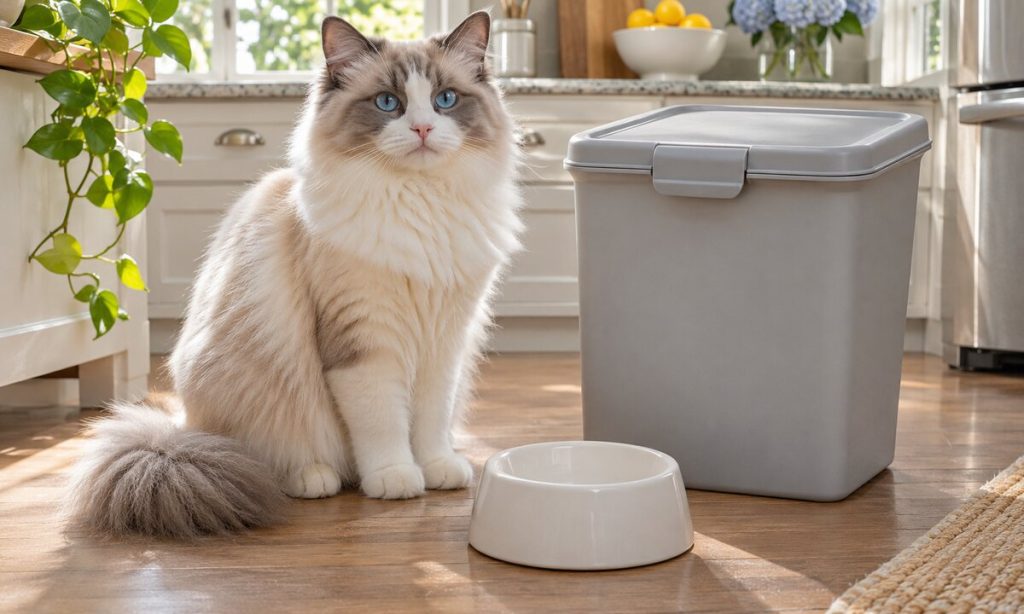
Food for Ragdoll cats needs the same careful storage as food for any other breed. The goal is to protect freshness, reduce contamination, and keep feeding amounts consistent. Learning how to store a food for ragdoll cats safely matters whether your cat eats dry kibble, wet food, or a veterinarian-prescribed diet. A fluffy coat does not change basic food-safety principles, although individual needs can vary with age, health, and appetite.
This guide explains how to store unopened and opened packages, handle leftovers, protect lot information, and clean feeding equipment. It also covers power outages, traveling with food, and warning signs that food should be discarded. The U.S. Food and Drug Administration advises keeping dry pet food in its original packaging and refrigerating opened wet food promptly. These everyday habits help keep meals safe.
Understand the Food Before Choosing Storage
Different formats need different handling. Unopened shelf-stable dry kibble is usually stored in a cool, dry place as the package directs. Unopened canned or pouched wet food also follows its labeled storage conditions. Once opened, moist food is perishable and needs prompt refrigeration or disposal. Raw, fresh, homemade, and frozen diets have additional food-safety concerns, so follow veterinary advice and the specific preparation instructions.
A breed name on a package does not establish different storage requirements. Food for Ragdoll cats should be evaluated by life stage, nutritional completeness, health needs, and the maker’s instructions. Young kittens, older cats, and pets with diagnosed illness may have special dietary plans, but safe storage remains essential for all. Check expiration or best-by dates and confirm that the package seal is intact before bringing it into the kitchen.
Keep Dry Food in the Original Bag
The FDA recommends retaining dry pet food in its original bag, even when using a secondary storage container. Original packaging carries the lot number, manufacturer details, and useful recall information. Folding the top tightly and placing the entire bag in a clean, lidded bin protects it from pests, humidity, and accidental spills. Do not pour new food over old kibble at the bottom of a container.
Choose a dry, temperate location away from direct sunlight, heat vents, damp laundry rooms, and garages with extreme temperatures. Avoid storing bags on a wet floor. Use a clean scoop, preferably kept outside the food rather than buried in it, and close the package after every serving. FYI, a bin that smells fresh does not prove it is clean. Inspect it whenever you finish a bag and wash and dry it completely when necessary.
Refrigerate Opened Wet Food Promptly
Open cans and pouches only when the cat is ready to eat. Transfer unused portions to a clean covered container, or cover an opened can safely, then refrigerate promptly at 40°F (4°C) or colder. The FDA recommends promptly refrigerating leftover wet pet food or throwing it away. Follow the label for how long refrigerated leftovers may be kept and use the shortest applicable recommendation.
Do not leave wet food sitting indefinitely in a warm feeding area. Perishable foods generally should not remain at room temperature longer than two hours, or one hour above 90°F; discard sooner if the label or veterinary instructions require it. If the cat eats slowly, serve smaller portions and replace leftovers rather than repeatedly topping up an old bowl. Safe routines also help when multiple family members provide meals throughout the day.
Store Food Away From Pests and Chemicals
Seal bags, cans, and containers to prevent access by rodents, insects, and curious pets. Keep food separate from cleaners, paints, pesticides, fuel, and strongly scented household chemicals. Never use containers that previously held hazardous substances. A shelf inside a clean pantry is generally more practical than a shed where temperature swings and insects are common.
Check for tears, rust, bulging cans, broken seals, unusual odors, clumped kibble, visible mold, or damaged packaging. Do not taste pet food to decide whether it is safe. If contamination is suspected, discard the affected supply and clean the storage area. Note the lot number before disposing of a questionable package in case you need to report an issue. Food for Ragdoll cats is not worth the risk of using a damaged or contaminated bag.
Clean Scoops, Bowls, and Storage Containers
A clean bag is only half the job. Bowls can collect saliva, residue, and crumbs, especially after wet meals. Wash food bowls regularly with hot soapy water and rinse thoroughly, following any material-specific guidance. Keep water bowls clean as well. The CDC recommends routine cleaning of pet supplies to limit contamination and protect household hygiene.
Do not assume a quick wipe makes a heavily soiled scoop or storage bin sanitary. Wash items between batches when needed and let every surface dry before contact with dry kibble. Avoid strongly scented cleaning products that may leave residues. Replace cracked or damaged plastic bowls if scratches are difficult to clean. The site guide to calmer feline feeding routines includes ways to make meals more predictable and less stressful.
Protect Portions and Prevent Waste
Measure servings using calories and the cat’s body condition, not only the volume of a scoop. Dry and wet foods can have very different energy densities. Read the calorie statement and the feeding instructions for each food. When mixing formats, calculate the total daily calories and discuss an appropriate target with your veterinarian, especially if the cat is overweight, underweight, or ill.
A labelled portion plan also reduces accidental double-feeding when multiple people are involved. See the site’s primer on calculating cat food portions for calorie-based thinking. Do not add new food to a partially eaten wet portion, and avoid mixing fresh kibble into an old bin without cleaning it first. For Ragdolls with thick coats, appearance alone can hide weight changes, making regular body-condition checks useful.
Plan for Travel and Power Outages
When traveling, carry enough familiar food for the expected trip plus a reasonable buffer. Keep dry food sealed with its identifying label. For opened wet food, use safe refrigeration and temperature control; do not leave it in a hot vehicle. If a cat requires a prescription diet, bring the original instructions and enough supply to avoid sudden substitutions. Consider how the cat will access clean water and a familiar bowl.
After a power outage, check the refrigerator temperature and how long food may have remained above safe storage conditions. If you cannot verify that opened wet food stayed cold, discard it. The general rule for human perishable foods—discard after four hours at refrigerator temperatures above 40°F—provides a cautious warning, but pet-food instructions should govern. Do not take chances because an opened pouch looks normal.
Watch Your Cat, Not Just the Expiration Date
If a cat vomits repeatedly, has diarrhea, stops eating, seems lethargic, or refuses a previously familiar food, review recent diet and storage changes and contact a veterinarian. Symptoms can have many causes beyond spoiled food, so avoid guessing. The guide to signs of digestive upset in cats explains observations worth recording. A cat that has gone without food, particularly one with existing illness, needs timely veterinary advice.
If you change diets, do so gradually when medically appropriate. See gradual changes to an older cat’s diet for a gentle transition framework. Never use long storage as an excuse to keep feeding a food after a recall or contamination warning. Retain package identification until the food is finished and check authoritative recall notices when concerns arise. Responsible storage means knowing when to discard and when to ask for help.
Frequently Asked Questions
Good storage habits are simple but depend on the food format and label. The common questions below cover the decisions that most often arise in a kitchen or pantry, including opened food and the information printed on a package.
If a cat has special dietary needs, speak with the veterinarian about safe preparation, serving, and storage. These general tips cannot replace instructions for a prescription, home-prepared, or medically restricted diet.
Should I pour dry food into an airtight bin?
The FDA recommends keeping the original bag inside a clean, lidded container so the lot number and manufacturer information remain available.
What refrigerator temperature is safe for opened wet food?
Keep the refrigerator at 40°F (4°C) or below and follow the label’s instructions for storing opened food.
Can I mix old and new kibble in the same bin?
Avoid topping up old food. Finish or discard it as appropriate, clean the container, and start with the new original bag.
Does Ragdoll cat food need special storage because of the breed?
No. Storage depends on the food format, ingredients, and label, not the cat’s breed.
Should I feed food that smells unusual but is not expired?
No. Discard food with an unusual odor, damage, mold, or other contamination concerns, and contact the manufacturer if necessary.
Final Words
How to store a food for ragdoll cats safely comes down to protecting the original package, controlling heat and moisture, chilling opened wet food, and keeping feeding equipment clean. Food for Ragdoll cats should be fresh, properly identified, and served in appropriate portions. A tidy feeding shelf and clear household routine can prevent many avoidable problems.
Keep a record of the lot number until the package is finished, check labels before changing storage methods, and discard suspicious food. Your cat may never appreciate the organizational system behind dinner, but it helps make every meal safer. If eating behavior changes or digestive symptoms appear, contact a veterinarian.









