
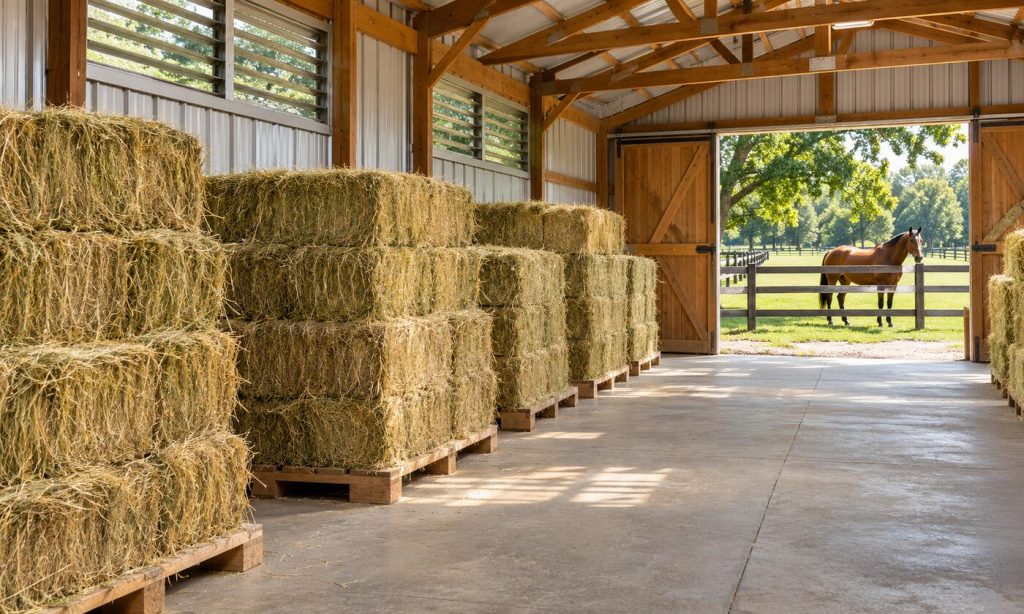
Safe hay storage begins before a bale enters the barn. Even well-chosen forage can become unsuitable after water damage, mold, pests, or careless stacking. If you are learning how to store hay for horses safely, start with three priorities: dry hay, a waterproof location, and enough airflow to manage moisture. A sensible storage system also protects workers from falling bales and helps reduce barn-fire hazards. These considerations matter in every season, not only during summer haymaking.
Different types of hay for horses share the same need for dry, clean conditions. Grass, legume, and mixed hay can spoil if a roof leaks or bottom bales touch wet ground. This guide explains how to assess deliveries, arrange stacks, watch for heat, and rotate feed. It also identifies warning signs that mean forage should not be fed.
Inspect incoming bales before placing them in storage
Begin by checking a representative sample of every delivery. Open at least one bale and examine the center, not just the greenest-looking outside. Look for clean forage, a normal hay smell, and no visible mold, unusual dampness, or excessive debris. Ask the supplier about harvest conditions and whether a forage analysis is available. University of Minnesota Extension identifies about 10–15 percent moisture as typical for properly baled horse-quality hay. Hay put away too wet can heat, deteriorate, or develop mold. Storage practices cannot restore a bale that already contains substantial mold.
Keep questionable deliveries apart from your regular feeding supply until you can assess them. Do not hide suspect bales deep inside a stack, where they may affect nearby forage and become hard to locate. Match hay type and quality to your horse’s diet separately from the storage question. The article on choosing grass hay for horses helps with quality and selection decisions. For safety, maintain a simple delivery record with dates, bale type, and any observed damage. A supplier can clarify harvesting details, but a musty smell deserves attention.
Use a dry barn and raise hay above the floor
The storage roof must remain watertight during heavy rain or snow. Inspect gutters, skylights, doors, and wall joints. Water can run down walls and collect beneath a stack without obvious signs from the main aisle. Keep bales off ground or damp concrete by using clean, stable pallets or a comparable raised platform. Leave space to inspect edges and the area behind the stack. University of Minnesota Extension warns that bales placed on wet surfaces can suffer heavy spoilage. The most impressive stack is worthless if you cannot see the wet corner.
Provide ventilation without exposing forage to direct rain. Air movement helps limit damp pockets, but it does not eliminate established mold. When practical, house hay away from the horses themselves. Separate storage can reduce dust in stalls and support better fire planning. Clear away clutter and repair openings that invite rodents. Do not place toxic pest-control materials where they could contaminate feed. After severe weather, inspect the whole building again. FYI, even a barn that stayed dry last month may develop a roof leak after one storm.
Stack bales so the pile stays stable and accessible
Stacking safely is as important as preserving nutrition. Use a firm, level base, and avoid overhanging bales or precarious towers. Arrange small square bales so adjacent layers support each other without blocking access. Large bales require machinery and handling practices suited to their weight. Never remove a supporting bale from beneath a tall stack. Never climb an unstable pile or stand in a fall zone while someone operates lifting equipment. Facility layout, ceiling height, and stack design should guide the safe maximum height, not an arbitrary target number of bales.
Leave adequate aisles and access routes for inspections, feeding, and emergency movement. Penn State Extension notes that ventilation, air spaces between bales, and manageable stack size can help stored hay dry. Mark separate deliveries so you can rotate forage without moving the entire pile. Keep feeding supplies and tools organized away from the stack’s edges. A horse hay feeder guide may help plan the feeding area, but a feeder is not a substitute for safe storage. Storage should protect forage before it reaches the horse.
Watch for heat and plan for fire emergencies
Hay that was baled with too much moisture can heat from microbial activity. Unusual heat, steam, or a sharp change in odor deserves serious attention. Penn State Extension identifies excessively wet hay as a fire risk, especially during early storage. Keep flammable chemicals, fuels, machinery heat sources, and poorly maintained electrical equipment away from stored forage. Maintain unobstructed exits and emergency access. A farm safety professional can advise on appropriate hay temperature monitoring, equipment, and an action plan for your specific barn and bale types.
Do not tear into a dangerously overheated pile yourself. Disturbing hot hay can introduce oxygen and increase risk. If you suspect smoke or a developing fire, clear the area, move animals when safe, and contact emergency services. Never rely on a casual touch test to rule out heating deep inside a stack. Good prevention includes regular checks, correctly baled forage, and a dry storage building. It also includes a clearly communicated plan for anyone working on site. A few minutes spent explaining that plan can matter far more than a perfect-looking stack.
Rotate supplies and reject damaged hay
Use older sound hay first, but never feed damaged hay simply because it has been stored longer. Check each bale as you open it. Look for mold, damp patches, unusual dust, pests, droppings, and damaged twine. Moldy hay should not be fed to horses; University of Minnesota Extension notes that inhaled mold spores can worsen respiratory problems. Shaking, brushing, or mixing bad forage with clean hay does not make it safe. Keep questionable material out of reach while arranging safe disposal or a professional quality assessment.
Plan your inventory around real consumption. Use the daily hay portion guide as a starting point, then account for pasture, body condition, and feeding waste. Maintain dates on deliveries and track how quickly each stack is used. A storage plan should make it easy to reach older bales without dismantling an unsafe pile. Inspect the space for new moisture after storms and during humid spells. IMO, a modest dry stack you can check thoroughly beats a massive supply you cannot inspect.
Frequently Asked Questions
Hay storage involves moisture control, stack stability, feed quality, and daily organization. These answers address common practical questions without assuming that every barn is built alike. When hay quality or fire risk is uncertain, seek local expertise.
Climate, bale size, and handling practices can change the safest approach. A routine that works for small square bales may not suit large rounds or dense rectangular bales. Assess your own site before copying another farm’s setup.
Should hay sit directly on concrete?
No, especially if the floor can be damp. Use stable pallets or a similar raised surface that protects the bottom layer and permits airflow.
Can moldy hay be saved by removing the outside?
Do not feed hay that appears moldy. Damage may extend inside, and inhaled mold spores pose respiratory risks. Ask a forage expert if quality is uncertain.
Is storing hay above horse stalls a good idea?
Separate storage is preferable when possible. Overhead hay may contribute dust and add fire risks while limiting the stable’s ventilation options.
How long does stored hay remain usable?
There is no universal expiration date. Correctly dried, protected hay may last, but humidity and moisture shorten its useful storage life. Always inspect before feeding.
What should I do if a stack gets unusually hot?
Keep people away and seek trained agricultural safety or emergency advice. Do not dismantle an intensely hot stack without professional direction.
Final Words
To understand how to store hay for horses safely, focus on moisture, airflow, stability, and inspections rather than clever stacking alone. Use dry incoming forage, protect it from weather, raise bales off the floor, and keep access routes open. Treat mold and unusual heat as serious concerns. Sound routines preserve nutrition while reducing avoidable risks to horses and handlers.
Estimate your needs using the hay for horses you actually feed. Keep deliveries dated, rotate only sound bales, and check the barn after heavy weather. Safe storage is ordinary maintenance done consistently, not a one-time chore you can forget.









