
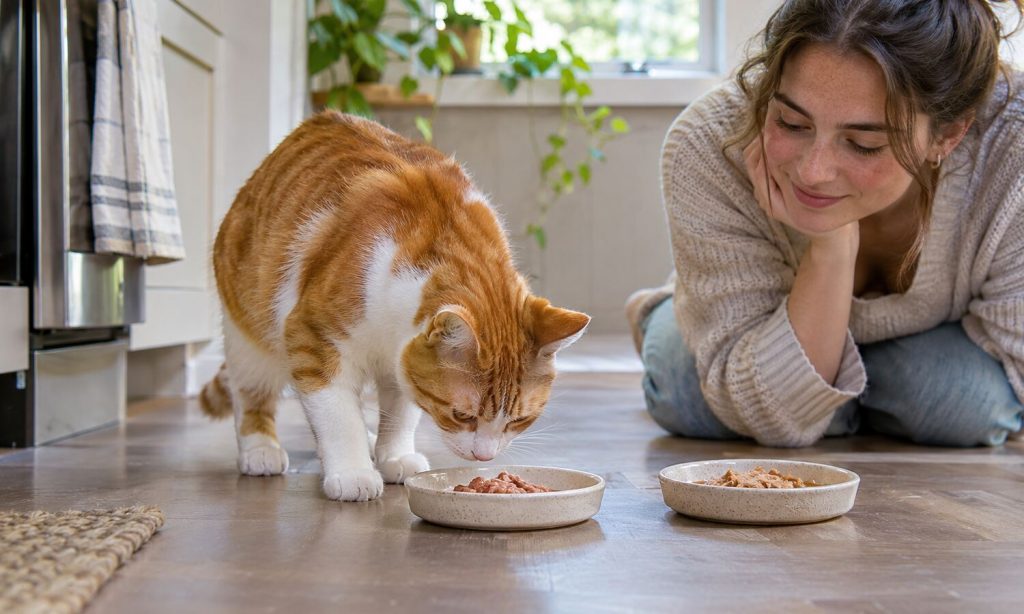
A cat that walks away from dinner may be expressing a texture preference—or signaling that something is wrong. When should you replace a wet cat food for finicky eaters? There are two separate decisions: when to discard a serving that is no longer fresh, and when to consider changing the regular recipe. Both matter, but they call for different responses. Spoiled food needs replacing immediately; a healthy cat’s mere preference may be managed more gradually.
The first step is to protect food safety and notice changes in appetite. Our wet cat food for finicky eaters category guide explains texture differences. Here, you’ll learn how to inspect opened food, handle leftovers, evaluate whether the current diet is nutritionally suitable, and recognize situations needing a veterinarian. Cats that eat too little can become seriously ill, so persistent refusal should not be treated as a harmless personality quirk.
Discard Unsafe or Spoiled Food Immediately
Replace any wet food from a swollen, punctured, leaking, deeply rusted, or otherwise compromised can or pouch. Unusual odor, mold, unexpected discoloration, or a slimy surface are also reasons to discard the contents. Do not taste questionable pet food or try to salvage it by scraping off a suspicious section. When in doubt, throw it away and wash the bowl. A new serving costs less than risking a preventable foodborne illness.
Once a container is opened, promptly refrigerate unused food in a covered container or discard it. Keep the refrigerator at 40°F or below. The food label may give a specific storage period, so follow it rather than assuming every wet recipe keeps for the same number of days. Remove uneaten food from the bowl after mealtime, especially in a hot room. Wet food left exposed for extended periods can dry out, smell different, and become less safe.
Separate a Preference Problem From an Appetite Problem
A cat may lick gravy, reject chunks, or prefer pâté because of familiar texture and scent. Notice whether the cat eats another familiar complete diet normally, maintains usual energy, and shows no signs of illness. If your cat suddenly refuses a formerly accepted food, check freshness and presentation, but also consider dental pain, nausea, illness, and stress. A meaningful appetite decline deserves veterinary advice even when the cat is known to be picky.
Cats are vulnerable when food intake falls markedly. Cornell’s feline health guidance describes hepatic lipidosis, a dangerous liver disorder that can follow inadequate eating, often with underlying disease. Contact a veterinarian promptly if a cat refuses food, especially if the refusal continues toward a day or occurs with vomiting, jaundice, lethargy, dehydration, or weight loss. Kittens and medically fragile cats require faster attention. Never wait several days hoping a cat will surrender to a new menu.
Check Nutrition Before Changing the Recipe
When considering a replacement diet, read the nutritional-adequacy statement for the appropriate feline life stage. A food sold as a topper, complement, or occasional treat may be unsuitable as the whole daily ration. Compare calories as well as serving sizes, because two cans of equal weight can supply different energy. If your cat has kidney disease, diabetes, or another condition requiring a veterinary plan, consult the treating team before altering it.
A change of flavor within the same general format may seem minor to an owner but significant to a sensitive cat. Keep a short food record of texture, temperature, portion size, acceptance, and any vomiting or stool changes. The site’s cat nutrition guide provides a foundation for balanced feeding. Changing foods repeatedly without watching total intake can create a confusing pattern and make a medical problem harder to recognize.
Introduce a Better-Tolerated Food Gradually
For a healthy cat with no urgent medical concerns, offer the new food as a separate small portion beside the familiar meal. Veterinary nutrition guidance notes that cats may reject different diets mixed together in the same bowl. Allow exploration of the new scent and texture without taking away all familiar food. Increase the new share gradually over several days or longer if your cat needs more time. Keep total calorie intake adequate throughout the transition.
Use a clean shallow dish in a quiet location. Some cats accept a slightly warmed serving more readily because aroma becomes stronger; warm only the portion offered and ensure it is not hot. Avoid spoiling your cat with an ever-changing buffet that makes regular meals unpredictable. IMO, a cat’s theatrical walk-away can be convincing, but a consistent routine makes real eating patterns easier to judge. Do not use forced starvation to make a reluctant cat accept a diet.
Watch for Signals That the New Food Works
Record how much is eaten rather than judging an empty plate by sight. Watch weekly body weight, stool quality, hydration, grooming, and play behavior. A suitable food should meet nutritional needs and support normal appetite and condition. If a cat repeatedly eats only sauce while leaving solids, ask whether the texture is difficult to chew or swallow. An oral exam may be more useful than a fourth flavor experiment.
If your cat does well on the new diet, keep the serving routine stable for a reasonable observation period. Sudden weight gain can indicate excessive portions even when the cat seems enthusiastic. The site’s guide to how much to feed a cat helps explain the portion questions. In multi-cat homes, feed separately if needed so one animal cannot take another’s food or hide how little the picky eater has consumed.
Manage Leftovers and Reduce Waste
Buy package sizes that fit how much your cat will eat within the recommended storage window. For a cat that eats small meals, a smaller sealed serving may be more practical than a large opened container. Use clean utensils, cover leftovers tightly, refrigerate promptly, and follow the label. Keep unopened food in a dry, temperature-stable place and rotate supplies by expiration date. Never blend newly opened food into old bowl leftovers.
Discard a rejected meal once it has sat out too long instead of repeatedly returning it to the refrigerator. Clean the dish after each use and offer fresh water. If the cat eats only a little from each serving, measure what actually disappears before calculating daily nutrition. Food waste is frustrating, but safety and adequate intake take priority. A calm routine paired with a written record often clarifies whether the problem is the recipe, the environment, or the cat’s health.
Frequently Asked Questions
Deciding whether to replace food depends on both freshness and the cat’s health. These answers address common everyday questions.
If intake is clearly reduced or your cat appears ill, contact the veterinarian. A picky-eater strategy should never delay examination of a possible medical problem.
Should I leave wet food out all day?
No. Follow the food label and promptly remove leftovers from the bowl, especially in warm conditions. Refrigerate unused food that remains safe to keep.
Can I switch to a new texture immediately?
A gradual separate-bowl introduction is often easier for healthy cats. Ensure the cat still eats enough and obtain veterinary guidance if appetite is poor.
Is a cat skipping one meal always an emergency?
Not always, but a marked or continuing appetite decline needs prompt veterinary advice. Contact a vet sooner for kittens, illness signs, or vulnerable cats.
Does warming food help picky eaters?
Slight warming can increase aroma for some cats. Avoid hot spots and discard unsafe leftovers; scent improvement cannot fix underlying illness.
How do I tell whether food has spoiled?
Check packaging integrity, expiration instructions, odor, texture, and visible changes. Discard any food that seems compromised rather than testing it.
Final Words
When should you replace a wet cat food for finicky eaters? Replace questionable food immediately, and reconsider a regular diet when nutrition, tolerability, or ongoing acceptance is poor. Keep bowls clean, refrigerate opened food promptly, and introduce suitable alternatives patiently while maintaining adequate intake.
For additional texture context, see the wet cat food for finicky eaters guide. If your cat suddenly stops eating or loses weight, veterinary assessment matters more than another flavor swap. The healthiest feeding routine is one that combines safe handling, complete nutrition, and attention to your cat’s real behavior.









