
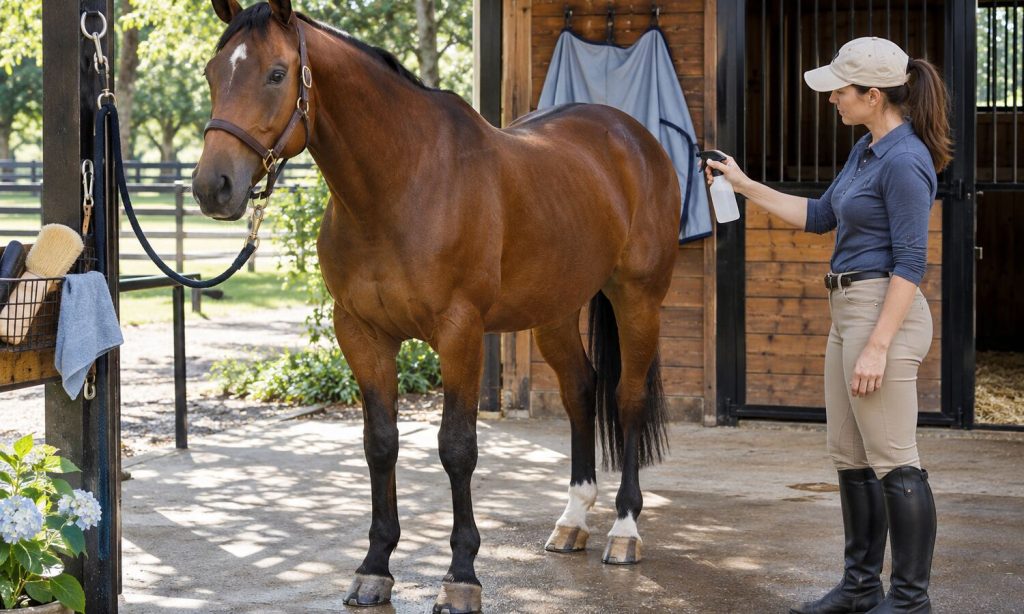
Choosing the horse fly spray size is not like fitting a saddle. How to size a horse spray for flies means selecting a practical container capacity and application setup for your horse, barn, and usage pattern. It does not mean guessing a pesticide dose from the animal’s height or weight. The approved label decides where, how, and how often a formula may be used. A bigger bottle is useful only when the product remains suitable and safely stored.
Start with your fly-management routine rather than buying the largest container available. The site’s horse spray for flies overview provides background on the category. Here, you will learn how to estimate bottle turnover from actual use, consider spray nozzle comfort, compare storage demands, and avoid potentially dangerous dilution mistakes. Also consider fly sheets, barn hygiene, and insects causing trouble. Spray is one part of a broader plan, not a stand-alone shield.
Distinguish Bottle Size From Application Rate
A package volume such as 16 or 32 fluid ounces describes how much liquid is in the container. It does not tell you the safe amount to apply to a horse. Different active ingredients, concentrations, and application methods require different directions. Carefully read the label for the target species, permitted application sites, frequency, protective precautions, and any restrictions involving foals or sensitive animals. Never treat a manufacturer’s maximum frequency as an invitation to use more frequently.
Similarly, a concentrate is not interchangeable with a ready-to-use liquid. Mixing a concentrate to a guess-based ratio can create an unsafe or ineffective solution. Use only the dilution instructions and equipment specified by its label. Do not combine formulas in one bottle or reuse a pesticide container for drinking water or feed. If instructions are unclear, ask the veterinarian or appropriate pesticide authority. ‘More powerful’ is not a scientifically meaningful way to size an equine spray.
Estimate How Fast the Barn Uses a Bottle
Begin with the number of horses receiving treatment, the actual permitted application routine, and how much liquid is used during one properly directed treatment. A simple use log is more reliable than assuming every horse needs the same number of sprays. Write down the container’s starting volume, the amount consumed over a week, and weather conditions that affected the schedule. Do not create a new dosing rate from that log; it exists only to estimate future supply needs.
Consider how the barn operates. A single horse groomed at home may use smaller quantities than a staffed stable caring for several horses. Yet purchasing bulk supplies introduces storage and shelf-life responsibilities. Avoid stockpiling beyond what can be used before expiration. If many staff members share a bottle, label it clearly, follow the original directions, and appoint someone to track replenishment. A separate calendar note helps prevent repeated treatments by different people on the same day.
Choose a Practical Applicator and Handling Method
A bottle is only useful if the handler can control it safely. Check that the nozzle can be operated comfortably and directed away from the horse’s eyes, nostrils, mouth, feed, and water, as the label requires. Some horses tolerate a spray noise poorly; others need a quieter method explicitly permitted on the label. Train handling calmly and avoid forcing an anxious horse into a hazardous situation. When necessary, ask an experienced handler or veterinarian for guidance.
Consider carrying size for trail rides versus use at a grooming station. A travel-sized container may be convenient, but transferring chemicals into an unmarked bottle creates confusion. Follow label rules on original packaging, storage, and transport. Keep nozzles clean according to the product instructions, but do not open or modify pressurized containers. The site’s guide to fly spray for sensitive horses provides relevant questions about skin tolerance and cautious handling.
Match the Plan to Actual Fly Pressure
Different flies behave differently, and no single spray eliminates every source of irritation. University of Minnesota Extension research found that tested fly-protection strategies varied in their effect on fly avoidance behaviors. Wet manure, damp bedding, exposed feed, drainage, and nearby breeding sites can sustain fly populations. Check the environment and identify likely nuisance insects. A barn with poor manure management cannot solve the entire problem by increasing spray volume.
Physical barriers may reduce exposure in suitable situations. Consider correctly fitting fly masks or sheets where they are appropriate and safe for the horse. The site’s fly mask guide for horses covers related considerations. Use fans, pasture management, and sensible stable sanitation when suitable. Some biting flies travel from beyond the property, so even excellent barn housekeeping has limits. An integrated plan is usually more realistic than expecting a bottle label to promise absolute protection.
Follow Horse and Human Safety Precautions
Review every warning concerning skin reactions, age, health, pregnancy, and use near eyes or damaged skin. Do not apply a horse spray to another species unless the label specifically authorizes it. Wear any protective equipment specified and wash after handling. Never spray directly into a horse’s face unless the directions explicitly allow that method. If the horse has open sores, severe irritation, breathing problems, or a history of sensitivity, contact the veterinarian before treatment.
If an animal develops unusual swelling, distress, weakness, or neurologic signs after exposure, stop using the product and seek veterinary advice promptly. Keep the container and label available so the team can identify the active ingredient. Do not treat a reaction by adding another chemical. Fly problems can coexist with skin disease, and itching may continue even when fly numbers drop. A veterinarian can distinguish infestation-related irritation from other causes needing treatment.
Store and Rotate Fly Spray Responsibly
Keep the product in its original labeled container, closed tightly and away from sunlight, extreme temperatures, feed, water, children, and animals. Follow its specific temperature and fire-safety restrictions. Inspect the container for leaks, damage, clogged nozzles, and expired dates. Do not place chemicals in a household beverage bottle or leave them in a hot vehicle. Disposal instructions vary, so follow the label and local waste requirements rather than pouring residue onto the ground.
At the end of fly season, count remaining supplies and check their shelf life before storing them. A record of actual use will help select a more suitable volume next season. FYI, one oversized bottle that expires half-full is not necessarily better value than a smaller quantity safely used. Talk with your veterinarian about the stable’s broader pest-control strategy, especially when horses have skin sensitivities or fly-borne disease risks.
Frequently Asked Questions
Bottle capacity, application rate, and horse size are different questions. The following answers keep those decisions separate.
The legally approved product label governs pesticide use. Consult veterinary help for a horse with skin disease or concerning reactions.
Does a larger horse always need more spray?
Not by a guessed formula. Follow the label’s permitted application method and amount rather than deriving an unapproved dose from body size.
Is a concentrate the same as ready-to-use spray?
No. Concentrates require label-specific dilution and handling; never guess the ratio or mix products together.
Should I buy a bulk bottle for one horse?
Only if expected use, shelf life, and safe storage justify it. Calculate turnover from actual labeled use.
Can I spray near the horse’s eyes?
Avoid direct eye exposure and follow the exact product instructions for facial areas. Seek professional guidance if handling is difficult.
Why do flies return despite spraying?
Environmental breeding, differing fly species, weather, and limited protection all matter. Combine appropriate labeled treatments with management measures.
Final Words
How to size a horse spray for flies is really a question of safe supply planning. Choose capacity from actual use and storage needs, while following the label for every application rate and interval. Pay attention to the horse’s tolerance and the fly species present. Never improvise concentrations or add more pesticide simply because insects remain.
The site’s horse fly spray guide can help frame additional questions, but veterinary advice and the approved label govern safe use. A sensible bottle size, a calm application routine, and cleaner barn conditions work together. They give the horse a better chance of comfort without unnecessary chemical exposure.
Reference
The following veterinary and institutional resources support the treatment-related guidance in this article.
University of Minnesota Extension: Fly Control Around Horses · Penn State Extension: Filth Fly Control on Horse Farms · Penn State Extension: Protecting Horses from Horse and Deer Fly Bites









