
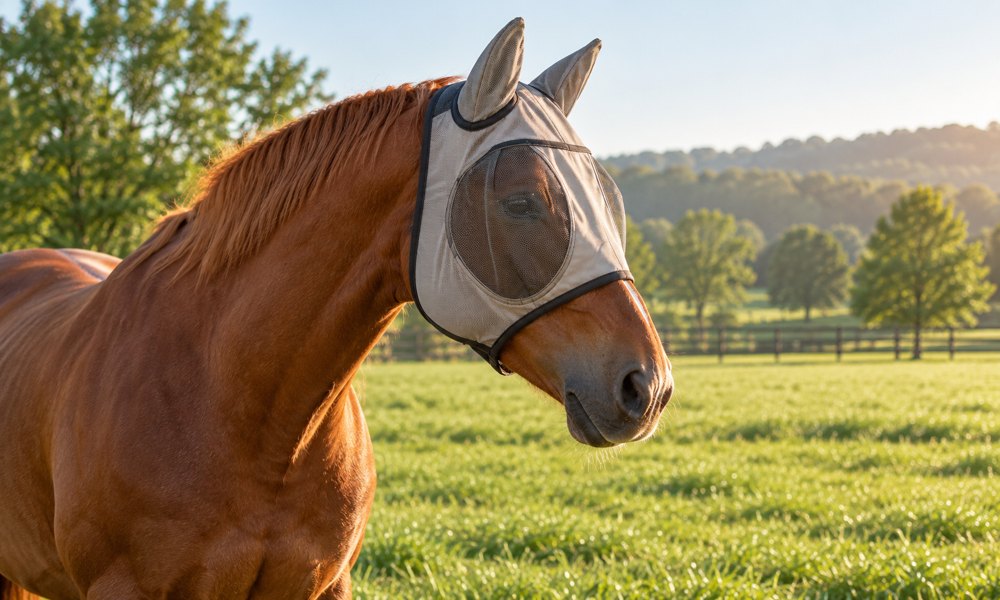
The best fly masks for horses keep irritating insects away from the face while preserving eye clearance and comfortable movement. One horse may tolerate mesh around the ears, while another may resist it or need a longer nose covering. Fit matters more than fashionable colors. This guide compares seven authenticated Amazon listings for their mesh design, coverage, closure styles, and practical tradeoffs. A mask suitable for a broad-headed horse may sit too close to a pony’s eyes, so size charts and careful observation remain essential. Check the mask after turnout for rubbed areas, tears, loose straps, and any obstruction of vision. A mask is a physical barrier, not a treatment for painful eye conditions. Squinting, cloudiness, swelling, or discharge calls for prompt veterinary care. The options below help you compare conventional, ear-covering, and extended-nose designs before making a size-specific purchase. See our guide to fly masks for horses with sensitive eyes for a closely related comparison.
Quick Picks
| Product | Best For | Key Advantage | Buy | |
|---|---|---|---|---|
| Fine Mesh Fly Mask With Ears | horses whose owners want ear coverage | adjustable fine-mesh face mask with ear panels | View on Amazon | Jump to Review |
| Harrison Howard All Round Mesh | horses with an ample forelock | breathable mesh mask with a forelock opening and fleece edges | View on Amazon | Jump to Review |
| Fornyk Fly Mask Without Ears | horses that prefer uncovered ears | mesh turnout mask without ear sleeves | View on Amazon | Jump to Review |
| Fornyk Fly Mask With Ears | owners comparing raised eye space with ear coverage | mesh mask with ear protection and name label | View on Amazon | Jump to Review |
| Shires FlyGuard Pro Fine Mesh | owners emphasizing finer insect barriers | fine-mesh fly mask listed with UV protection and ear-hole style | View on Amazon | Jump to Review |
| Cashel Crusader With Ears | horses whose owners favor a traditional ear-covering shape | standard horse-size mesh fly mask with ears | View on Amazon | Jump to Review |
| Cashel Crusader Long Nose | horses needing additional muzzle coverage | extended-nose Cashel fly mask | View on Amazon | Jump to Review |
1. Fine Mesh Fly Mask With Ears

- Ear protection included
- Fine mesh barrier
- Adjustable closure
- Lightweight concept
- Size variation requires checking
- Check clearance over eyes
The Fine Mesh Fly Mask With Ears pairs a fine-mesh face barrier with ear panels and an adjustable closure. It is a comparison for horses bothered by flies around both the face and ears. That makes it useful to compare, but it does not mean it suits every animal or every setting. Horse turnout equipment should be judged by daily comfort and reliability, not by a single photograph. The practical value of the design appears in the fit around moving ears, eyes, and muzzle.
Two features that stand out are ear protection included and fine mesh barrier. Additional distinctions include adjustable closure and lightweight concept. Mesh density and coverage tradeoffs depend on the individual horse. Remember that comfort can change when the mask gets dirty, wet, stretched, or caught during rolling. Before ordering, check the maker’s current instructions, dimensions, care requirements, and other features that materially affect safe everyday use. The product’s marketing description is useful for identifying its intended function, but it is not independent evidence of a particular outcome. We have not personally tested this item, and no buyer review pattern is assumed here.
Check the exact size and ensure the mesh stays clear of the eyes during movement. A fit check after the first turnout and regular inspections later will tell you more about suitability than broad claims of one-size-fits-all protection. Consider how much time you can realistically spend checking mesh, cleaning fabric, inspecting straps, and replacing worn material. A less complicated design may be preferable to extra features that you rarely use. If an animal seems distressed, painful, or unwell, prioritize appropriate veterinary advice rather than relying on a product.
My Recommendation
Fine Mesh Fly Mask With Ears would be on my shortlist for horses whose owners want ear coverage because the verified listing identifies adjustable fine-mesh face mask with ear panels. Ear protection included and adjustable closure are helpful features to compare. Check eye clearance and size before selecting this adjustable mask. I would check the latest instructions and select the correct model before buying. Another option in this roundup may make more sense when maintenance, coverage, comfort, or available space is the higher priority. This is a documentation-based recommendation, not a claim of personal testing or a guarantee of health outcomes.
2. Harrison Howard All Round Mesh

- Fleece-edged mesh
- Forelock opening
- Adjustable chin strap
- UV-oriented design
- Confirm model-specific UV claims
- Fleece can collect dirt
Harrison Howard All Round Mesh has a forelock opening, fleece edging, and breathable mesh. It is especially worth considering when forelock room and softer contact along the face matter. That makes it useful to compare, but it does not mean it suits every animal or every setting. Horse turnout equipment should be judged by daily comfort and reliability, not by a single photograph. The practical value of the design appears in the fit around moving ears, eyes, and muzzle.
Two features that stand out are fleece-edged mesh and forelock opening. Additional distinctions include adjustable chin strap and uv-oriented design. Mesh density and coverage tradeoffs depend on the individual horse. Remember that comfort can change when the mask gets dirty, wet, stretched, or caught during rolling. Before ordering, check the maker’s current instructions, dimensions, care requirements, and other features that materially affect safe everyday use. The product’s marketing description is useful for identifying its intended function, but it is not independent evidence of a particular outcome. We have not personally tested this item, and no buyer review pattern is assumed here.
Confirm the fleece edge stays clean and the claimed UV features match the exact model. A fit check after the first turnout and regular inspections later will tell you more about suitability than broad claims of one-size-fits-all protection. Consider how much time you can realistically spend checking mesh, cleaning fabric, inspecting straps, and replacing worn material. A less complicated design may be preferable to extra features that you rarely use. If an animal seems distressed, painful, or unwell, prioritize appropriate veterinary advice rather than relying on a product.
My Recommendation
Harrison Howard All Round Mesh would be on my shortlist for horses with an ample forelock because the verified listing identifies breathable mesh mask with a forelock opening and fleece edges. Fleece-edged mesh and adjustable chin strap are helpful features to compare. Forelock space helps only if the fleece edges remain comfortable and clean. I would check the latest instructions and select the correct model before buying. Another option in this roundup may make more sense when maintenance, coverage, comfort, or available space is the higher priority. This is a documentation-based recommendation, not a claim of personal testing or a guarantee of health outcomes.
3. Fornyk Fly Mask Without Ears

- Ear-free layout
- Large eye-space claim
- Writable name tag
- Breathable construction
- Ears remain uncovered
- Careful size check needed
The Fornyk Without Ears design offers mesh facial protection while leaving the ears uncovered. It suits owners who want face coverage but whose horses dislike fabric over their ears. That makes it useful to compare, but it does not mean it suits every animal or every setting. Horse turnout equipment should be judged by daily comfort and reliability, not by a single photograph. The practical value of the design appears in the fit around moving ears, eyes, and muzzle.
Two features that stand out are ear-free layout and large eye-space claim. Additional distinctions include writable name tag and breathable construction. Mesh density and coverage tradeoffs depend on the individual horse. Remember that comfort can change when the mask gets dirty, wet, stretched, or caught during rolling. Before ordering, check the maker’s current instructions, dimensions, care requirements, and other features that materially affect safe everyday use. The product’s marketing description is useful for identifying its intended function, but it is not independent evidence of a particular outcome. We have not personally tested this item, and no buyer review pattern is assumed here.
Uncovered ears remain exposed to flies, even when the face panel fits well. A fit check after the first turnout and regular inspections later will tell you more about suitability than broad claims of one-size-fits-all protection. Consider how much time you can realistically spend checking mesh, cleaning fabric, inspecting straps, and replacing worn material. A less complicated design may be preferable to extra features that you rarely use. If an animal seems distressed, painful, or unwell, prioritize appropriate veterinary advice rather than relying on a product.
My Recommendation
Fornyk Fly Mask Without Ears would be on my shortlist for horses that prefer uncovered ears because the verified listing identifies mesh turnout mask without ear sleeves. Ear-free layout and writable name tag are helpful features to compare. It leaves the ears uncovered, so assess your horse’s particular fly exposure. I would check the latest instructions and select the correct model before buying. Another option in this roundup may make more sense when maintenance, coverage, comfort, or available space is the higher priority. This is a documentation-based recommendation, not a claim of personal testing or a guarantee of health outcomes.
4. Fornyk Fly Mask With Ears

- Ear-covering form
- Extra eye-room concept
- Name label
- Adjustable fit
- More fabric near ears
- Check closure after rolling
The Fornyk With Ears model combines ear panels, adjustable fastening, and a listed large eye-space design. Check whether those features remain comfortable when your horse grazes or rolls. That makes it useful to compare, but it does not mean it suits every animal or every setting. Horse turnout equipment should be judged by daily comfort and reliability, not by a single photograph. The practical value of the design appears in the fit around moving ears, eyes, and muzzle.
Two features that stand out are ear-covering form and extra eye-room concept. Additional distinctions include name label and adjustable fit. Mesh density and coverage tradeoffs depend on the individual horse. Remember that comfort can change when the mask gets dirty, wet, stretched, or caught during rolling. Before ordering, check the maker’s current instructions, dimensions, care requirements, and other features that materially affect safe everyday use. The product’s marketing description is useful for identifying its intended function, but it is not independent evidence of a particular outcome. We have not personally tested this item, and no buyer review pattern is assumed here.
Ear sleeves add contact points, so monitor rubbing and strap security after turnout. A fit check after the first turnout and regular inspections later will tell you more about suitability than broad claims of one-size-fits-all protection. Consider how much time you can realistically spend checking mesh, cleaning fabric, inspecting straps, and replacing worn material. A less complicated design may be preferable to extra features that you rarely use. If an animal seems distressed, painful, or unwell, prioritize appropriate veterinary advice rather than relying on a product.
My Recommendation
Fornyk Fly Mask With Ears would be on my shortlist for owners comparing raised eye space with ear coverage because the verified listing identifies mesh mask with ear protection and name label. Ear-covering form and name label are helpful features to compare. Watch ear comfort and fastening after turnout. I would check the latest instructions and select the correct model before buying. Another option in this roundup may make more sense when maintenance, coverage, comfort, or available space is the higher priority. This is a documentation-based recommendation, not a claim of personal testing or a guarantee of health outcomes.
5. Shires FlyGuard Pro Fine Mesh

- Fine mesh weave
- Ear-hole variation
- Airflow emphasis
- Full-size listing
- Verify exact version
- UV level needs checking
Shires FlyGuard Pro focuses on fine mesh and is sold in an ear-hole configuration. Compare the exact version’s UV claim and whether the weave stays safely clear of the horse’s eyes. That makes it useful to compare, but it does not mean it suits every animal or every setting. Horse turnout equipment should be judged by daily comfort and reliability, not by a single photograph. The practical value of the design appears in the fit around moving ears, eyes, and muzzle.
Two features that stand out are fine mesh weave and ear-hole variation. Additional distinctions include airflow emphasis and full-size listing. Mesh density and coverage tradeoffs depend on the individual horse. Remember that comfort can change when the mask gets dirty, wet, stretched, or caught during rolling. Before ordering, check the maker’s current instructions, dimensions, care requirements, and other features that materially affect safe everyday use. The product’s marketing description is useful for identifying its intended function, but it is not independent evidence of a particular outcome. We have not personally tested this item, and no buyer review pattern is assumed here.
Check the model-specific UV rating, fine-mesh visibility, and ear-hole fit. A fit check after the first turnout and regular inspections later will tell you more about suitability than broad claims of one-size-fits-all protection. Consider how much time you can realistically spend checking mesh, cleaning fabric, inspecting straps, and replacing worn material. A less complicated design may be preferable to extra features that you rarely use. If an animal seems distressed, painful, or unwell, prioritize appropriate veterinary advice rather than relying on a product.
My Recommendation
Shires FlyGuard Pro Fine Mesh would be on my shortlist for owners emphasizing finer insect barriers because the verified listing identifies fine-mesh fly mask listed with UV protection and ear-hole style. Fine mesh weave and airflow emphasis are helpful features to compare. Verify the exact UV claim and eye clearance for this variation. I would check the latest instructions and select the correct model before buying. Another option in this roundup may make more sense when maintenance, coverage, comfort, or available space is the higher priority. This is a documentation-based recommendation, not a claim of personal testing or a guarantee of health outcomes.
6. Cashel Crusader With Ears

- Traditional fly-mask design
- Ear panels
- Horse-size option
- Full-face mesh coverage
- Does not extend over nose
- Measure head carefully
Cashel Crusader With Ears uses a traditional horse-size mesh form with ear sleeves. Its straightforward shape is a useful contrast to extended nose covers and ear-free styles. That makes it useful to compare, but it does not mean it suits every animal or every setting. Horse turnout equipment should be judged by daily comfort and reliability, not by a single photograph. The practical value of the design appears in the fit around moving ears, eyes, and muzzle.
Two features that stand out are traditional fly-mask design and ear panels. Additional distinctions include horse-size option and full-face mesh coverage. Mesh density and coverage tradeoffs depend on the individual horse. Remember that comfort can change when the mask gets dirty, wet, stretched, or caught during rolling. Before ordering, check the maker’s current instructions, dimensions, care requirements, and other features that materially affect safe everyday use. The product’s marketing description is useful for identifying its intended function, but it is not independent evidence of a particular outcome. We have not personally tested this item, and no buyer review pattern is assumed here.
A standard ear-covering mask may not provide extra nose protection. A fit check after the first turnout and regular inspections later will tell you more about suitability than broad claims of one-size-fits-all protection. Consider how much time you can realistically spend checking mesh, cleaning fabric, inspecting straps, and replacing worn material. A less complicated design may be preferable to extra features that you rarely use. If an animal seems distressed, painful, or unwell, prioritize appropriate veterinary advice rather than relying on a product.
My Recommendation
Cashel Crusader With Ears would be on my shortlist for horses whose owners favor a traditional ear-covering shape because the verified listing identifies standard horse-size mesh fly mask with ears. Traditional fly-mask design and horse-size option are helpful features to compare. Extra nose coverage is absent in this standard ear-covering option. I would check the latest instructions and select the correct model before buying. Another option in this roundup may make more sense when maintenance, coverage, comfort, or available space is the higher priority. This is a documentation-based recommendation, not a claim of personal testing or a guarantee of health outcomes.
7. Cashel Crusader Long Nose

- Long nose panel
- More facial coverage
- Classic Cashel style
- Horse-size configuration
- More muzzle fit checks
- No matching ear cover claimed
Cashel Crusader Long Nose extends mesh toward the muzzle rather than relying only on a standard face panel. It deserves a closer fit check at the nose and around the horse’s eyelashes. That makes it useful to compare, but it does not mean it suits every animal or every setting. Horse turnout equipment should be judged by daily comfort and reliability, not by a single photograph. The practical value of the design appears in the fit around moving ears, eyes, and muzzle. Buyers should confirm that the exact size, variation, or configuration matches their circumstances, rather than relying on one attractive product photograph.
Two features that stand out are long nose panel and more facial coverage. Additional distinctions include classic cashel style and horse-size configuration. Mesh density and coverage tradeoffs depend on the individual horse. Remember that comfort can change when the mask gets dirty, wet, stretched, or caught during rolling. Before ordering, check the maker’s current instructions, dimensions, care requirements, and other features that materially affect safe everyday use. The product’s marketing description is useful for identifying its intended function, but it is not independent evidence of a particular outcome.
Long nose panels need a careful fit, and this version does not promise ear sleeves. A fit check after the first turnout and regular inspections later will tell you more about suitability than broad claims of one-size-fits-all protection. Consider how much time you can realistically spend checking mesh, cleaning fabric, inspecting straps, and replacing worn material. A less complicated design may be preferable to extra features that you rarely use. If an animal seems distressed, painful, or unwell, prioritize appropriate veterinary advice rather than relying on a product.
My Recommendation
Cashel Crusader Long Nose would be on my shortlist for horses needing additional muzzle coverage because the verified listing identifies extended-nose Cashel fly mask. Long nose panel and classic cashel style are helpful features to compare. Prioritize nose fit and keep in mind that the ears are not covered. I would check the latest instructions and select the correct model before buying. Another option in this roundup may make more sense when maintenance, coverage, comfort, or available space is the higher priority. This is a documentation-based recommendation, not a claim of personal testing or a guarantee of health outcomes.
How to Choose the Best Fly Masks for Horses
Fit the eyes and head, not just the label
Compare the current maker’s measuring chart with the actual horse. A mask that fits one horse-size head may pinch the cheeks or sit too close to the eyelashes on another. Inspect the space between mesh and eyes while the horse is standing, eating, and grazing. Watch for rolling, head shaking, rubbing, or unexpected reluctance. The closure must stay secure without excessive tightness. Remove a mask that shifts onto the eyes, and repair or replace stretched straps and torn fabric before reuse. Good fit protects comfort and vision while keeping flies from entering around loose edges. Horse turnout equipment should be judged by daily comfort and reliability, not by a single photograph. The practical value of the design appears in the fit around moving ears, eyes, and muzzle. See choosing a horse fly mask for trail riding for additional related guidance.
Choose ear and nose coverage carefully
Ear-covering masks can reduce insect contact around the ears, but some horses dislike them. A long-nose design extends mesh toward the muzzle and adds another dimension that needs accurate sizing. Fine mesh should preserve airflow and useful visibility. Read claims about UV protection cautiously: percentages and treatments can vary by specific version, and not every fly mask offers medically meaningful protection. A mask is not a substitute for veterinary evaluation of a painful or light-sensitive eye. Consider how the design works with a forelock, halter, and daily handling routine. More coverage is not always better if it causes pressure or rubbing. Mesh density and coverage tradeoffs depend on the individual horse. Remember that comfort can change when the mask gets dirty, wet, stretched, or caught during rolling. See choosing fly masks for sensitive eyes for additional related guidance.
Keep masks clean and check every day
Take the mask off periodically and inspect the skin, eyelashes, stitching, and closures. Remove trapped debris and wash according to the manufacturer’s directions. Wet dirt can reduce visibility and comfort, while rough stitching or torn mesh can irritate sensitive areas. Watch how pasture mates interact with fasteners or loose fabric. Combine masks with responsible manure handling and correctly labeled insect-control measures rather than relying on one product to eliminate flies. If your horse develops eye discharge, redness, repeated squinting, or abnormal behavior, stop treating the issue as a simple gear problem and contact a veterinarian. A fit check after the first turnout and regular inspections later will tell you more about suitability than broad claims of one-size-fits-all protection. See fly spray options for horses for additional related guidance.
Frequently Asked Questions
Can a horse wear a fly mask all day?
Follow the maker’s instructions and inspect fit, skin, vision, and cleanliness frequently.
Are masks with ears better?
They offer additional coverage, but only if the horse tolerates them and they fit properly.
Does a fly mask help painful eyes?
It may act as a barrier but cannot diagnose or treat eye pain. Contact a veterinarian.
Do I need a long-nose mask?
Only if additional muzzle coverage is useful and the extended panel fits safely.
What if the mask rubs?
Remove it, check sizing and damage, and choose a better-fitting design.
Final Verdict
A comfortable, properly sized mesh mask is more useful than an elaborate model that rubs or slips. Compare Cashel’s ear and long-nose styles with the Harrison Howard, Fornyk, and Shires offerings. Check visibility and skin contact frequently. For painful or abnormal eyes, veterinary care should take priority over new equipment. Related reading: reducing stable flies through manure management.
As an Amazon Associate, PetAdvisorPro earns from qualifying purchases. We may receive a commission when readers purchase through eligible Amazon links in this article, at no additional cost to them. Our independent editorial comparisons are based on available product information and do not replace veterinary advice, individual animal care, or manufacturer safety instructions.









