How to choose the right fly mask for horses with sensitive eyes begins with matching the mask to your horse’s eye clearance, comfort, and setting. “Sensitive eyes” can mean the horse squints in bright light, reacts to insects, has delicate skin around the face, or has a diagnosed eye problem; those are not interchangeable situations. A mask may reduce exposure to flies or shade an area, but it does not diagnose or treat eye disease. Start by checking fit and eye clearance, then consider mesh, coverage, ventilation, closures, and how easily you can inspect the horse. This guide explains how to choose a comfortable mask, introduce it carefully, maintain cleanliness, and recognize when an eye concern needs veterinary attention instead of a new piece of equipment.
Clarify what the horse needs
Observe the horse and the environment. Are flies gathering around the eyes? Is sunlight a concern? Does the horse rub its face or remove headgear? A standard fly mask, a mask with ears, and a model with a nose extension offer different coverage. More coverage is not automatically better if it makes the mask hot, restricts vision, or irritates the horse. Choose a design for the actual exposure and the horse’s tolerance.
If the horse has tearing, redness, swelling, cloudiness, discharge, squinting, an eye held closed, or sudden light sensitivity, contact a veterinarian promptly. Eye problems can worsen quickly, and a mask should not be used to hide symptoms or delay examination. Follow veterinary instructions about whether and when a protective covering is appropriate.
Make eye clearance the first fit check
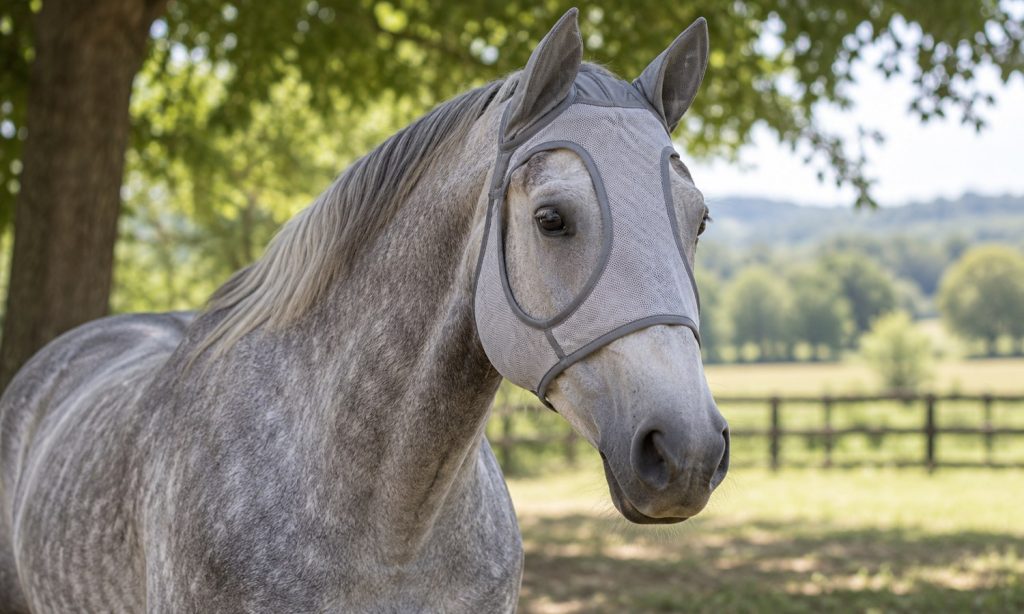
When the mask is on, the mesh or eye cup should stand away from the eye and eyelashes. Check the clearance while the horse raises, lowers, and turns its head, not only while it stands still. A mask that shifts when the horse grazes can brush lashes or press against the eye. Make sure the seams and binding do not sit directly over sensitive areas or create a hard edge against the face.
Do not assume that “one size” or an adjustable strap guarantees fit. Compare the manufacturer’s measurements and size chart with your horse’s head shape. A broad forehead, long nose, or narrow jaw can affect how the mask sits. If the nose extension or ear covers twist, slide, or bunch, choose another shape or size rather than tightening straps excessively.
Choose mesh and coverage thoughtfully
Mesh should allow the horse to see and breathe comfortably while keeping insects from reaching the face. Check whether the product describes UV protection and how that claim is measured; dark color alone is not proof of a particular level of UV protection. If light sensitivity is a concern, ask your veterinarian whether a specific UV-rated covering is appropriate for the horse’s condition.
Some masks include ears or a nose flap, which can help cover additional areas but may be poorly tolerated by some horses. Look for soft, breathable fabric that does not block nostrils or interfere with grazing. Avoid materials that are so fine or dirty that they obscure vision. Dirt, dust, and dried secretions can accumulate in mesh, so coverage needs regular cleaning.
Check closures and construction
Inspect the closures, seams, and edges for secure stitching and smooth finishing. The mask should stay in place without pinching, yet should not be so tight that it presses on the face. Check that hook-and-loop tabs lie flat and do not catch mane or rub skin. A breakaway or safety feature may be useful depending on the horse’s turnout setting, but follow the manufacturer’s instructions and consider local hazards.
Look for worn mesh, frayed seams, bent stays, loose threads, and sharp or stiff parts. A damaged eye panel can collapse toward the eye or create an opening for insects. Replace a mask that no longer keeps its shape. Do not sew or glue a repair in a way that creates a hard surface near the eye unless the repair method is approved by the manufacturer.
Introduce and monitor the mask
Let the horse investigate the mask before putting it on. Introduce it calmly, fasten it according to the product instructions, and watch the horse’s response. Check that the horse can see, move its ears as designed, breathe freely, and graze if the mask is meant for turnout. If the horse panics, rubs intensely, or repeatedly tries to remove it, take it off and reassess the fit and training plan.
Inspect the horse’s face after the first wear and regularly thereafter. Look for dampness, rubbed hair, pressure marks, swelling, or debris caught inside. Check under the mask at least daily and more often if conditions are dusty, wet, hot, or insect-heavy. Do not leave it on continuously without monitoring just because it is marketed for turnout.
Keep it clean and in good condition
Follow the care label for washing and drying. Remove dirt and hair from mesh, closures, and seams, and let the mask dry fully before putting it back on. Clean equipment reduces grit and debris that could irritate the eye or skin. If the mask becomes soaked or muddy, check that it is not sagging and rubbing before deciding whether it should be removed.
Inspect the mask during each cleaning. Replace stretched straps, torn mesh, loose stitching, and any part that could collapse toward the eye. Keep a spare if the horse relies on fly protection, but do not switch to a different style without checking its fit. Store clean masks in a dry location away from chewing animals and sharp tools.
Fit the mask into a broader plan
A mask is one component of fly management. Depending on the horse and facility, other measures may include removing manure, reducing standing water, using shade, or choosing turnout times that avoid peak fly activity. A mask does not protect the entire body. If insects are causing wounds, severe rubbing, or persistent distress, seek veterinary guidance about an overall plan.
Check that the mask is appropriate for the setting. A turnout mask may not be suitable for riding, trailer travel, or competition. Remove it before tacking up unless the product is specifically designed and permitted for that use. Do not attach homemade eye covers, dark fabric, or tape to alter vision or light exposure without veterinary guidance.
Frequently Asked Questions
Can a fly mask help a horse with light sensitivity?
A mask with a documented UV feature may offer shading, but the right option depends on the cause of sensitivity. Ask a veterinarian about persistent or new light sensitivity.
How much space should a fly mask leave around the eyes?
The eye panels should remain clear of the eyes and eyelashes through normal head movement. Follow the maker’s fit directions and recheck after the horse grazes.
Can my horse wear a fly mask all day?
Only if it is intended for that use and you can inspect the horse and mask regularly. Remove it if it becomes wet, dirty, displaced, or irritating.
Should I use a fly mask if the eye is watering?
New tearing, squinting, swelling, redness, cloudiness, or discharge warrants veterinary advice. Do not use a mask as a substitute for an eye exam.
How do I clean a fly mask?
Follow the care label, remove debris from mesh and seams, and dry it fully before reuse. Replace damaged or distorted eye panels.
Final Words
A comfortable fly mask for horses with sensitive eyes keeps eye panels clear of lashes, fits without rubbing, and allows comfortable vision and breathing. Confirm the coverage and care instructions, then check the horse’s face regularly and keep the mesh clean. A mask can provide a physical barrier or shade, but new eye symptoms call for prompt veterinary advice. Choose fit and monitoring over adding unnecessary coverage.