
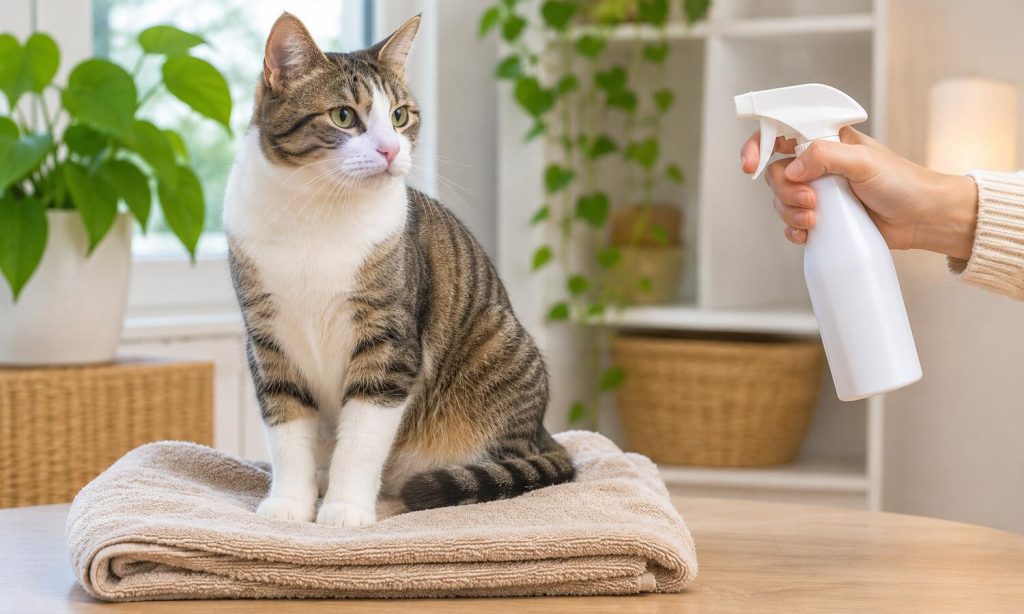
Vet’s Best sells more than one flea-and-tick spray marketed for cat households, but the labels do not all permit the same use. If you are evaluating Vet’s Best flea spray for cats, distinguish an indoor home spray from a product specifically labeled for direct application to cats. We verified three distinct spray formats and compare their intended use, bottle size and handling considerations. Plant-based marketing alone does not guarantee that a product is harmless. Check the minimum age, active ingredients, application method, drying instructions and any health restrictions on the exact package. Fleas also require a broader plan that may include cleaning and veterinarian-recommended preventives. Our Quick Picks make the formats easy to compare; the detailed sections keep species-specific safety ahead of sales promises.
For more practical background, see our guide to identifying fleas on cats.
Quick Picks
These 3 options cover different uses within cat flea control. The quick comparison is a starting point; detailed limits appear below.
| Product | Best For | Key Advantage | Buy | |
|---|---|---|---|---|
| Vet’s Best Flea & Tick Indoor Home Spray for Cats | indoor environmental spray with a 32-ounce bottle | Indoor surface-use 32-ounce bottle | View on Amazon | Jump to Review |
| Vet’s Best Flea & Tick Easy Spray for Cats | directly marketed cat easy-spray in a 14-ounce format | Cat-directed 14-ounce spray | View on Amazon | Jump to Review |
| Vet’s Best Flea & Tick Mist for Cats | small mist product promoted specifically for cats | Compact cat-directed mist format | View on Amazon | Jump to Review |
Our Picks: Vets Best Flea Spray For Cats
Each pick below has a different intended use. Compare its stated features and drawbacks with your own cat flea control needs.
1. Vet’s Best Flea & Tick Indoor Home Spray for Cats

- 32-ounce home spray
- Bedding and carpet use
- Labeled for indoor surfaces
- Cotton-spice scent
- Home-use rules differ from animal-use directions
Vet’s Best Flea & Tick Indoor Home Spray for Cats deserves a closer look when you need indoor environmental spray with a 32-ounce bottle. This 32-ounce product is labeled for indoor home use. The listing identifies bedding, carpets and floors as application areas. Cat flea products must be matched to the precise use described on the label. An indoor surface spray is not automatically safe for direct application to fur. Your cat’s behavior and care needs should determine whether the listed features matter.
It is sold with a cotton-spice scent. A mist, an easy spray and a home bottle involve different handling. Select by the exact surface or animal application you need. Compare this with directly marketed cat easy-spray in a 14-ounce format. The two options address different preferences or setup requirements. Inspect the current label, package quantity and directions before buying. Keep cats away from treated surfaces until the label allows access. Ventilation and contact precautions matter in enclosed rooms. Watch for drooling, tremors or unusual behavior after exposure. Seek immediate veterinary help if a cat appears to react.
A practical limitation: home-use rules differ from animal-use directions. Do not put dog flea products on a cat. Species-specific directions take priority over broad marketing terms. The best fit should solve one identifiable problem in your routine while remaining safe for the animal. Flea control commonly requires both animal treatment and attention to the home environment. One spray may not address every life stage.
My Recommendation
Consider this option if you prefer indoor environmental spray with a 32-ounce bottle. This 32-ounce product is labeled for indoor home use. A limitation to weigh: home-use rules differ from animal-use directions. Check the current directions and compare practical fit, safety and serving requirements before ordering for your animal.
2. Vet’s Best Flea & Tick Easy Spray for Cats

- 14-ounce easy-spray bottle
- Cat-use labeling
- Also lists home surfaces
- Cats and surfaces on label
- Read minimum age and contact guidance carefully
Vet’s Best Flea & Tick Easy Spray for Cats deserves a closer look when you need directly marketed cat easy-spray in a 14-ounce format. The 14-ounce easy spray is specifically labeled for cats. The manufacturer also describes environmental surface uses. Read the species, minimum age, application area and drying instructions. ‘Natural’ does not mean risk-free for cats. Your cat’s behavior and care needs should determine whether the listed features matter.
It includes a cotton-spice scent. Keep cats away from treated surfaces until the label allows access. Ventilation and contact precautions matter in enclosed rooms. Compare this with small mist product promoted specifically for cats. The two options address different preferences or setup requirements. Inspect the current label, package quantity and directions before buying. Do a label check for active ingredients and any household restrictions. Ask a veterinarian when cats are very young or medically fragile. Do not put dog flea products on a cat. Species-specific directions take priority over broad marketing terms.
A practical limitation: read minimum age and contact guidance carefully. If fleas persist, discuss an integrated control plan with your veterinarian. Environmental cleaning and appropriate animal preventives may be needed. Choose for the specific function shown on the label, not because a similar product helped another household. Cat flea products must be matched to the precise use described on the label. An indoor surface spray is not automatically safe for direct application to fur.
My Recommendation
Consider this option if you prefer directly marketed cat easy-spray in a 14-ounce format. The 14-ounce easy spray is specifically labeled for cats. A limitation to weigh: read minimum age and contact guidance carefully. Check the current directions and compare practical fit, safety and serving requirements before ordering for your animal.
3. Vet’s Best Flea & Tick Mist for Cats

- Compact 6.3-ounce mist
- Direct cat-mist labeling
- Bedding and floor applications
- Fine-mist delivery format
- Spraying can stress noise-sensitive cats
Vet’s Best Flea & Tick Mist for Cats deserves a closer look when you need small mist product promoted specifically for cats. The smaller 6.3-ounce mist is marketed for cat use. The label also lists bedding and flooring applications. Flea control commonly requires both animal treatment and attention to the home environment. One spray may not address every life stage. Your cat’s behavior and care needs should determine whether the listed features matter.
Its fine-mist format differs from the larger easy spray. Do a label check for active ingredients and any household restrictions. Ask a veterinarian when cats are very young or medically fragile. Compare this with indoor environmental spray with a 32-ounce bottle. The two options address different preferences or setup requirements. Inspect the current label, package quantity and directions before buying. A mist, an easy spray and a home bottle involve different handling. Select by the exact surface or animal application you need. If fleas persist, discuss an integrated control plan with your veterinarian. Environmental cleaning and appropriate animal preventives may be needed.
A practical limitation: spraying can stress noise-sensitive cats. Watch for drooling, tremors or unusual behavior after exposure. Seek immediate veterinary help if a cat appears to react. Look at what you will do every day: measuring, cleaning, supervision and the time required all influence value. Read the species, minimum age, application area and drying instructions. ‘Natural’ does not mean risk-free for cats.
My Recommendation
Consider this option if you prefer small mist product promoted specifically for cats. The smaller 6.3-ounce mist is marketed for cat use. A limitation to weigh: spraying can stress noise-sensitive cats. Check the current directions and compare practical fit, safety and serving requirements before ordering for your animal.
For a related practical routine, see our guide to removing fleas from the home.
How to choose vets best flea spray for cats
The best match for cat flea control depends on purpose, clear directions, and practical limits. Compare verified product features, then use the checks below to avoid misleading claims and prevent a poor fit.
Separate animal-use and home-use labels
Start by defining the exact buying task. A product described as a home spray must not automatically be used on a cat. Look for the exact species, age, surface, and application directions on each label. Flea control often requires a broader veterinarian-guided plan. The first check is what the package actually says, not the most dramatic benefit claimed in an advertisement. List whether you need direct cat treatment or treatment of bedding, carpet and floors. These are separate label permissions and cannot be inferred from the product name. Then narrow your options to products whose intended use lines up with that list. If the product category touches medical care, ask your veterinarian before making a change. A careful choice is usually a specific choice: it matches a real routine instead of solving an imaginary problem. Keep notes about fit and usability so you can compare two candidates honestly.
Assess ingredients and cat sensitivity
Look beyond the front label to the details you can verify. Inspect active ingredients, species suitability, age restrictions, ventilation and drying instructions. Never transfer a dog-use application method to a cat. Check whether the named listing has variations and whether the exact option you select has the same features. Calculate the floor area and bottle coverage for environmental treatment. A small mist bottle is not automatically a complete house-treatment solution. Think about cleaning, storing, handling, and monitoring over a month, not only a single day. When specifications are missing, do not guess. Contact the maker or select a product with better documentation. The goal is to understand what is really being purchased and whether its conditions of use are realistic.
Treat the whole infestation with a plan
A sound buying decision includes a plan for first use and follow-up. A product described as a home spray must not automatically be used on a cat. Look for the exact species, age, surface, and application directions on each label. Flea control often requires a broader veterinarian-guided plan. If the animal reacts poorly or the product is inconvenient, stop and reassess rather than pushing through. Keep the original package and instructions. Follow the exact label and keep cats away from treated surfaces until safe. Coordinate persistent flea problems with a veterinarian and suitable preventive care. Treat promotional outcomes as uncertain. The best value is a suitable option that you can use correctly and maintain without creating new safety problems. Practical follow-through matters more than a flashy feature list.
For related reading
Useful related guides include reducing flea and tick risks, flea symptoms versus allergies.
Frequently Asked Questions
These answers address common decisions about cat flea control.
Can I spray a home flea product directly on my cat?
Only if the exact label specifically allows use on cats. Home-use instructions alone are not permission to treat an animal.
Are plant-based flea sprays automatically safe?
No. Botanical ingredients can still cause adverse reactions. Follow species, age, and application warnings.
Can I use flea spray on kittens?
Only when the product label permits the kitten’s age and size. Ask a veterinarian before treating very young kittens.
Will one spray remove a home infestation?
Often not. A veterinarian can help plan pet treatment, cleaning, and environmental control.
What if my cat reacts to a flea product?
Stop use and contact a veterinarian or poison-control service promptly. Keep the original container available.
Final Verdict
For Vet’s Best cat flea sprays, read the intended-use label before comparing bottle size. The 32-ounce Indoor Home Spray is primarily an environmental product; the Easy Spray and Mist are advertised for cat application under their specific directions. Never assume a spray for bedding can be applied directly to fur. A persistent infestation requires a coordinated plan, not repeated guessing with different products. Confirm age restrictions, application precautions and a veterinarian-recommended prevention approach for your cat.
Affiliate disclosure: This article contains Amazon affiliate links. If you purchase through them, PetAdvisorPro may earn a commission. As an Amazon Associate I earn from qualifying purchases.









