
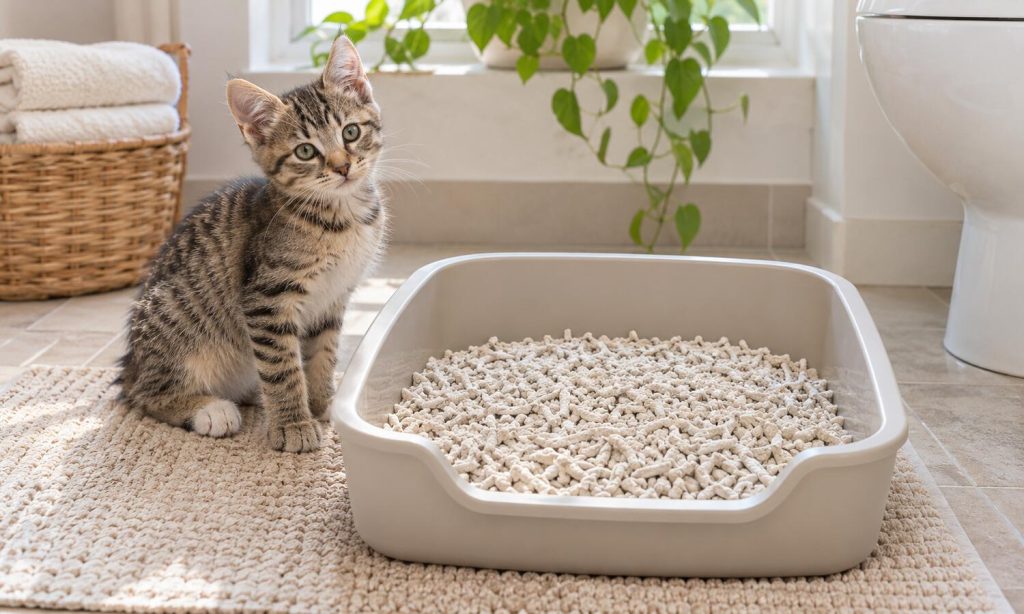
A kitten’s first litter box should be easy to enter, simple to clean and filled with a substrate the kitten can use safely. If you are wondering what cat litter is best for kittens, age and litter-eating behavior matter more than an adult cat’s favorite brand. We compare seven verified options, mainly unscented non-clumping pine, paper and clay products, while explaining how texture, dust, pellet size and tray compatibility affect daily use. Some kittens investigate litter with their mouths, so ask your veterinarian or rescue organization about appropriate material and when to transition. Paper pellets may feel unfamiliar; clay can track; special tray-system pellets need compatible equipment. Use the Quick Picks to identify the basic type, then read each product’s handling limitations before setting up the box.
For more practical background, see our guide to litter box placement in a multi-cat home.
Quick Picks
These 7 options cover different uses within early litter training. The quick comparison is a starting point; detailed limits appear below.
| Product | Best For | Key Advantage | Buy | |
|---|---|---|---|---|
| Feline Pine Platinum Non-Clumping Litter | unscented non-clumping pine-based litter | Unscented plant-based pine granules | View on Amazon | Jump to Review |
| Fresh News MAX Original Paper Litter | recycled-paper pellets with non-clumping design | Absorbent recycled-paper pellets | View on Amazon | Jump to Review |
| Special Kitty Unscented Non-Clumping Clay | plain unscented non-clumping clay granules | Simple non-clumping natural clay | View on Amazon | Jump to Review |
| So Phresh Unscented Paper Pellet Litter | paper pellet litter in a large bag | Large bag of paper pellets | View on Amazon | Jump to Review |
| Ökocat Unscented Non-Clumping Paper Pellets | non-clumping unscented paper pellets | Dust-conscious paper pellet formula | View on Amazon | Jump to Review |
| PetSafe ScoopFree Premium Natural Litter | lightweight unscented non-clumping natural litter | Unscented lightweight natural format | View on Amazon | Jump to Review |
| Purina Tidy Cats Breeze Recycled-Paper Pellets | low-tracking paper pellets intended for a specialized tray system | Low-tracking tray-system pellets | View on Amazon | Jump to Review |
Our Picks: What Cat Litter Is Best For Kittens
Each pick below has a different intended use. Compare its stated features and drawbacks with your own early litter training needs.
1. Feline Pine Platinum Non-Clumping Litter

- Non-clumping pine substrate
- No added fragrance
- 17-pound bag
- Plant-based litter material
- Pine scent and texture may deter some kittens
Feline Pine Platinum Non-Clumping Litter deserves a closer look when you need unscented non-clumping pine-based litter. The pine-based litter is non-clumping. The manufacturer says it contains no added fragrance. For very young kittens, a simple non-clumping, unscented substrate is often a practical starting point. Always consider the kitten’s age and habits. Your cat’s behavior and care needs should determine whether the listed features matter.
A 17-pound package is listed. Look at dust, fragrance and absorbency together. A litter can control odor yet still be a poor match for a sensitive kitten. Compare this with recycled-paper pellets with non-clumping design. The two options address different preferences or setup requirements. Inspect the current label, package quantity and directions before buying. Use an easy-entry, low-sided tray and clean it frequently. A kitten should not have to climb over a high rim. Ask a veterinarian or shelter about age-appropriate transitions to clumping litter. Ingestion habits and medical concerns affect timing.
A practical limitation: pine scent and texture may deter some kittens. Remove wet and soiled areas promptly, especially with non-clumping pellets. Complete substrate changes depend on moisture and manufacturer guidance. Choose for the specific function shown on the label, not because a similar product helped another household. Texture influences acceptance. Small paws may prefer fine granules, while pellets can reduce tracking but feel unfamiliar. Everyday maintenance and safe handling are part of the actual cost of ownership.
My Recommendation
Consider this option if you prefer unscented non-clumping pine-based litter. The pine-based litter is non-clumping. A limitation to weigh: pine scent and texture may deter some kittens. Check the current directions and compare practical fit, safety and serving requirements before ordering for your animal.
2. Fresh News MAX Original Paper Litter

- Recycled-paper pellet material
- Unscented and non-clumping
- Baking soda odor control
- Absorbent paper texture
- Pellets can feel unfamiliar under small paws
Fresh News MAX Original Paper Litter deserves a closer look when you need recycled-paper pellets with non-clumping design. The pellets are made from recycled paper. The litter is non-clumping and unscented. A kitten may taste litter while exploring its box. The risk is different from that of a mature cat that reliably ignores the granules. Your cat’s behavior and care needs should determine whether the listed features matter.
The product highlights baking soda for odor management. Use an easy-entry, low-sided tray and clean it frequently. A kitten should not have to climb over a high rim. Compare this with plain unscented non-clumping clay granules. The two options address different preferences or setup requirements. Inspect the current label, package quantity and directions before buying. If switching litter, offer a gradual change or a second small box. A sudden new texture may lead to avoidance. Remove wet and soiled areas promptly, especially with non-clumping pellets. Complete substrate changes depend on moisture and manufacturer guidance.
A practical limitation: pellets can feel unfamiliar under small paws. Specialized pellet systems require compatible trays. Don’t assume every pellet will work in an ordinary litter box. Look at what you will do every day: measuring, cleaning, supervision and the time required all influence value. For very young kittens, a simple non-clumping, unscented substrate is often a practical starting point. Always consider the kitten’s age and habits. Paper pellets may need more frequent spot changes when a kitten urinates often.
My Recommendation
Consider this option if you prefer recycled-paper pellets with non-clumping design. The pellets are made from recycled paper. A limitation to weigh: pellets can feel unfamiliar under small paws. Check the current directions and compare practical fit, safety and serving requirements before ordering for your animal.
3. Special Kitty Unscented Non-Clumping Clay

- Unscented natural clay
- Non-clumping formulation
- Two 20-pound bags
- Fine-granule texture
- Fine clay can still track or create dust
Special Kitty Unscented Non-Clumping Clay deserves a closer look when you need plain unscented non-clumping clay granules. This is unscented, non-clumping natural clay. It is offered as two 20-pound bags. Texture influences acceptance. Small paws may prefer fine granules, while pellets can reduce tracking but feel unfamiliar. Your cat’s behavior and care needs should determine whether the listed features matter.
Loose granules feel different from paper pellets. If switching litter, offer a gradual change or a second small box. A sudden new texture may lead to avoidance. Compare this with paper pellet litter in a large bag. The two options address different preferences or setup requirements. Inspect the current label, package quantity and directions before buying. Look at dust, fragrance and absorbency together. A litter can control odor yet still be a poor match for a sensitive kitten. Specialized pellet systems require compatible trays. Don’t assume every pellet will work in an ordinary litter box.
A practical limitation: fine clay can still track or create dust. Ask a veterinarian or shelter about age-appropriate transitions to clumping litter. Ingestion habits and medical concerns affect timing. Make a purchase decision based on the documented design and practical fit, not a promise of instant results. A kitten may taste litter while exploring its box. The risk is different from that of a mature cat that reliably ignores the granules. The final decision should reflect the animal’s behavior and the realities of daily use.
My Recommendation
Consider this option if you prefer plain unscented non-clumping clay granules. This is unscented, non-clumping natural clay. A limitation to weigh: fine clay can still track or create dust. Check the current directions and compare practical fit, safety and serving requirements before ordering for your animal.
4. So Phresh Unscented Paper Pellet Litter

- Paper-based litter pellets
- Large bag size
- Unscented formula
- Low-dust positioning
- Large heavy bag requires dry storage
So Phresh Unscented Paper Pellet Litter deserves a closer look when you need paper pellet litter in a large bag. The large bag contains paper pellet litter. The listing identifies an unscented formula. For very young kittens, a simple non-clumping, unscented substrate is often a practical starting point. Always consider the kitten’s age and habits. Your cat’s behavior and care needs should determine whether the listed features matter.
It advertises a low-dust texture. Look at dust, fragrance and absorbency together. A litter can control odor yet still be a poor match for a sensitive kitten. Compare this with non-clumping unscented paper pellets. The two options address different preferences or setup requirements. Inspect the current label, package quantity and directions before buying. Use an easy-entry, low-sided tray and clean it frequently. A kitten should not have to climb over a high rim. Ask a veterinarian or shelter about age-appropriate transitions to clumping litter. Ingestion habits and medical concerns affect timing.
A practical limitation: large heavy bag requires dry storage. Remove wet and soiled areas promptly, especially with non-clumping pellets. Complete substrate changes depend on moisture and manufacturer guidance. Keep a record of how your cat responds, and stop using a product that causes discomfort or concern. Texture influences acceptance. Small paws may prefer fine granules, while pellets can reduce tracking but feel unfamiliar. Everyday maintenance and safe handling are part of the actual cost of ownership.
My Recommendation
Consider this option if you prefer paper pellet litter in a large bag. The large bag contains paper pellet litter. A limitation to weigh: large heavy bag requires dry storage. Check the current directions and compare practical fit, safety and serving requirements before ordering for your animal.
5. Ökocat Unscented Non-Clumping Paper Pellets

- Recycled-paper pellet format
- Non-clumping design
- Recyclable paper packaging
- Odor-control positioning
- Paper pellets need frequent wet-spot removal
Ökocat Unscented Non-Clumping Paper Pellets deserves a closer look when you need non-clumping unscented paper pellets. The product uses unscented recycled-paper pellets. It is expressly non-clumping. A kitten may taste litter while exploring its box. The risk is different from that of a mature cat that reliably ignores the granules. Your cat’s behavior and care needs should determine whether the listed features matter.
The listing promotes longer-lasting odor control. Use an easy-entry, low-sided tray and clean it frequently. A kitten should not have to climb over a high rim. Compare this with lightweight unscented non-clumping natural litter. The two options address different preferences or setup requirements. Inspect the current label, package quantity and directions before buying. If switching litter, offer a gradual change or a second small box. A sudden new texture may lead to avoidance. Remove wet and soiled areas promptly, especially with non-clumping pellets. Complete substrate changes depend on moisture and manufacturer guidance.
A practical limitation: paper pellets need frequent wet-spot removal. Specialized pellet systems require compatible trays. Don’t assume every pellet will work in an ordinary litter box. The best fit should solve one identifiable problem in your routine while remaining safe for the animal. For very young kittens, a simple non-clumping, unscented substrate is often a practical starting point. Always consider the kitten’s age and habits. A careful match will matter more than a broad claim of universal suitability.
My Recommendation
Consider this option if you prefer non-clumping unscented paper pellets. The product uses unscented recycled-paper pellets. A limitation to weigh: paper pellets need frequent wet-spot removal. Check the current directions and compare practical fit, safety and serving requirements before ordering for your animal.
6. PetSafe ScoopFree Premium Natural Litter

- Light mineral pebble formula
- No perfume or dye
- Eight-pound pack
- Non-clumping option
- Verify absorbency and ingestion warnings
PetSafe ScoopFree Premium Natural Litter deserves a closer look when you need lightweight unscented non-clumping natural litter. The light mineral pebble formula contains no perfume or dye. The litter is unscented. Texture influences acceptance. Small paws may prefer fine granules, while pellets can reduce tracking but feel unfamiliar. Your cat’s behavior and care needs should determine whether the listed features matter.
The package is listed at eight pounds. If switching litter, offer a gradual change or a second small box. A sudden new texture may lead to avoidance. Compare this with low-tracking paper pellets intended for a specialized tray system. The two options address different preferences or setup requirements. Inspect the current label, package quantity and directions before buying. Look at dust, fragrance and absorbency together. A litter can control odor yet still be a poor match for a sensitive kitten. Specialized pellet systems require compatible trays. Don’t assume every pellet will work in an ordinary litter box.
A practical limitation: verify absorbency and ingestion warnings. Ask a veterinarian or shelter about age-appropriate transitions to clumping litter. Ingestion habits and medical concerns affect timing. Choose for the specific function shown on the label, not because a similar product helped another household. A kitten may taste litter while exploring its box. The risk is different from that of a mature cat that reliably ignores the granules. The final decision should reflect the animal’s behavior and the realities of daily use.
My Recommendation
Consider this option if you prefer lightweight unscented non-clumping natural litter. The light mineral pebble formula contains no perfume or dye. A limitation to weigh: verify absorbency and ingestion warnings. Check the current directions and compare practical fit, safety and serving requirements before ordering for your animal.
7. Purina Tidy Cats Breeze Recycled-Paper Pellets

- Breeze tray-system pellets
- Very-low-dust positioning
- Low-tracking shape
- Unscented pellets
- Tray-system compatibility must be checked
Purina Tidy Cats Breeze Recycled-Paper Pellets deserves a closer look when you need low-tracking paper pellets intended for a specialized tray system. The litter uses pellets for the Breeze tray system. The maker advertises very low dust. For very young kittens, a simple non-clumping, unscented substrate is often a practical starting point. Always consider the kitten’s age and habits. Your cat’s behavior and care needs should determine whether the listed features matter.
Its pellet shape is intended to limit tracking. Look at dust, fragrance and absorbency together. A litter can control odor yet still be a poor match for a sensitive kitten. Compare this with unscented non-clumping pine-based litter. The two options address different preferences or setup requirements. Inspect the current label, package quantity and directions before buying. Use an easy-entry, low-sided tray and clean it frequently. A kitten should not have to climb over a high rim. Ask a veterinarian or shelter about age-appropriate transitions to clumping litter. Ingestion habits and medical concerns affect timing.
A practical limitation: tray-system compatibility must be checked. Remove wet and soiled areas promptly, especially with non-clumping pellets. Complete substrate changes depend on moisture and manufacturer guidance. Look at what you will do every day: measuring, cleaning, supervision and the time required all influence value. Texture influences acceptance. Small paws may prefer fine granules, while pellets can reduce tracking but feel unfamiliar. Everyday maintenance and safe handling are part of the actual cost of ownership.
My Recommendation
Consider this option if you prefer low-tracking paper pellets intended for a specialized tray system. The litter uses pellets for the Breeze tray system. A limitation to weigh: tray-system compatibility must be checked. Check the current directions and compare practical fit, safety and serving requirements before ordering for your animal.
For a related practical routine, see our guide to how often to replace cat litter.
How to choose what cat litter is best for kittens
The best match for early litter training depends on purpose, clear directions, and practical limits. Compare verified product features, then use the checks below to avoid misleading claims and prevent a poor fit.
Start with age and ingestion risk
Start by defining the exact buying task. Very young kittens explore the box with paws and sometimes mouths. Many caregivers begin with plain, unscented non-clumping substrates and discuss age-appropriate transitions with their veterinarian or shelter. The first check is what the package actually says, not the most dramatic benefit claimed in an advertisement. Start with the kitten’s age, habit of tasting litter and confidence climbing into a tray. Shelters and veterinarians can advise on a suitable non-clumping starting point. Then narrow your options to products whose intended use lines up with that list. If the product category touches medical care, ask your veterinarian before making a change. A careful choice is usually a specific choice: it matches a real routine instead of solving an imaginary problem. Keep notes about fit and usability so you can compare two candidates honestly.
Compare pellet shape, dust, and scent
Look beyond the front label to the details you can verify. Compare fragrance, dust, pellet diameter, absorbency and whether the substrate clumps. Paper pellets, pine and clay may feel quite different under paws. Check whether the named listing has variations and whether the exact option you select has the same features. Estimate how much substrate a small tray needs and how frequently damp areas must be removed. A large bag is useful only if stored dry. Think about cleaning, storing, handling, and monitoring over a month, not only a single day. When specifications are missing, do not guess. Contact the maker or select a product with better documentation. The goal is to understand what is really being purchased and whether its conditions of use are realistic.
Set up a shallow box and simple cleaning routine
A sound buying decision includes a plan for first use and follow-up. Very young kittens explore the box with paws and sometimes mouths. Many caregivers begin with plain, unscented non-clumping substrates and discuss age-appropriate transitions with their veterinarian or shelter. If the animal reacts poorly or the product is inconvenient, stop and reassess rather than pushing through. Keep the original package and instructions. Use a shallow, accessible box away from food and noisy appliances. Watch for litter eating or avoidance, and discuss the timing of litter changes with a veterinarian. Treat promotional outcomes as uncertain. The best value is a suitable option that you can use correctly and maintain without creating new safety problems. Practical follow-through matters more than a flashy feature list.
For related reading
Useful related guides include litter mats for tracking control.
Frequently Asked Questions
These answers address common decisions about early litter training.
Should young kittens use clumping litter?
Many caregivers prefer non-clumping types for very young kittens, especially if they may eat litter. Discuss age and ingestion concerns with a vet.
Are paper pellets easy for kittens to use?
Some kittens adapt quickly; others dislike the texture. A shallow box and gradual introduction can help.
Is scented litter a good idea?
Unscented litter is usually simpler for a kitten with a sensitive nose. Avoid heavily perfumed products.
How often should I clean the box?
Remove waste frequently and change litter as recommended for that substrate. Keep the box dry and accessible.
Can I use automatic litter boxes for tiny kittens?
Follow the device’s minimum age and weight guidance. Many self-cleaning boxes are not suitable for very young kittens.
Final Verdict
For young kittens, a plain unscented non-clumping litter is often a sensible place to start, provided it suits their age and behavior. Feline Pine, paper-based pellets and simple non-clumping clay offer different textures and cleaning needs. Avoid choosing only for fragrance or odor control. Check whether the kitten investigates litter by mouth, use a low-sided box and clean it frequently. Specialized pellet systems need the correct tray. Ask a veterinarian or shelter about a safe transition as your kitten grows.
Affiliate disclosure: This article contains Amazon affiliate links. If you purchase through them, PetAdvisorPro may earn a commission. As an Amazon Associate I earn from qualifying purchases.









