
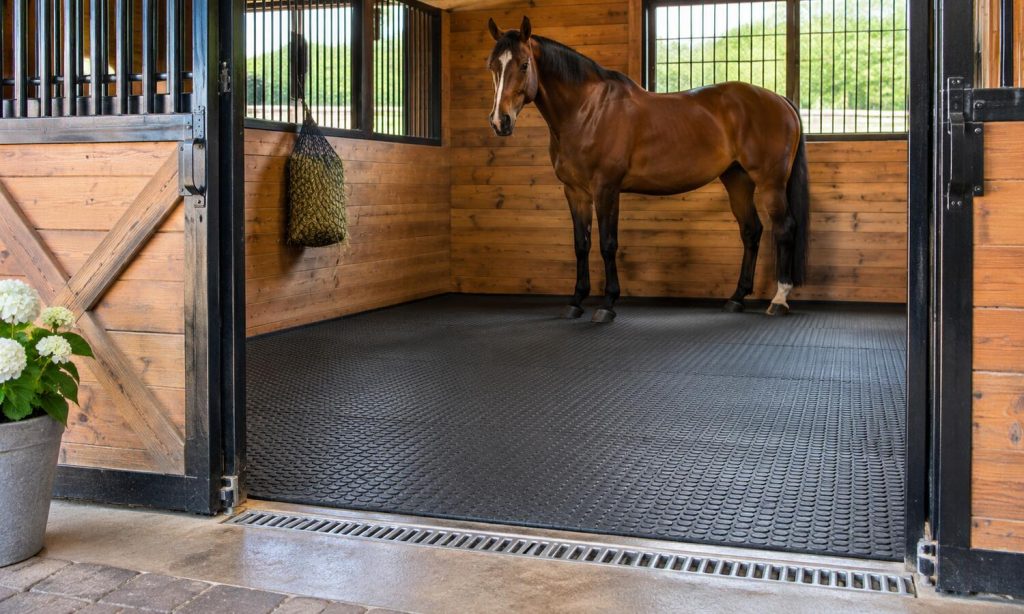
A reliable stall mat needs more than a thick-looking panel. A horse’s floor must have a firm, level base, sensible drainage, secure seams and a surface that provides suitable traction. Our guide to the best stall mats for horses compares seven verified rubber and coated-flooring products, including different thicknesses and an interlocking set. We focus on dimensions, coverage, material descriptions, cleaning effort and installation tradeoffs rather than unsupported comfort promises. A four-by-six-foot panel can be heavy and awkward to move; a thinner mat may need a more carefully prepared foundation. Mats do not replace bedding or routine sanitation. Use the Quick Picks to compare construction and fit, then measure your stall and plan subfloor work before deciding which product makes practical sense.
For more practical background, see our guide to building a horse barn budget.
Quick Picks
These 7 options cover different uses within equine stall flooring. The quick comparison is a starting point; detailed limits appear below.
| Product | Best For | Key Advantage | Buy | |
|---|---|---|---|---|
| Dilunave Heavy Duty Horse Stall Mat | four-by-six heavy rubber-style stall floor mat | Large rubber-format stall panel | View on Amazon | Jump to Review |
| Boomerang Rubber Three-Quarter-Inch Stall Mat | heavy-duty three-quarter-inch 4-by-6 rubber panel | 3/4-inch panel thickness | View on Amazon | Jump to Review |
| American Floor Mats Three-Quarter-Inch Stable Mat | three-quarter-inch thick American Floor Mats stable panel | Heavy-duty 3/4-inch flooring | View on Amazon | Jump to Review |
| American Floor Mats Half-Inch Stable Mat | half-inch thick stable flooring from the same maker | Lighter 1/2-inch flooring option | View on Amazon | Jump to Review |
| Klyyo Clyro Four-by-Six Stall Mat | washable non-slip rubber floor mat for equine spaces | Washable 4-by-6 stall panel | View on Amazon | Jump to Review |
| Dilunave Interlocking Six-Pack Mats | interlocking six-pack stall-floor coverage system | Interlocking multi-panel system | View on Amazon | Jump to Review |
| Faelhacon Horse Stall Mat | thin heavy-duty mat with PVC-coated upper surface | Thin textured mat with coating | View on Amazon | Jump to Review |
Our Picks: Best Stall Mats For Horses
Each pick below has a different intended use. Compare its stated features and drawbacks with your own equine stall flooring needs.
1. Dilunave Heavy Duty Horse Stall Mat

- Four-by-six-foot stall mat
- Rubber-style construction
- Advertised nonslip texture
- Hose-or-sweep cleaning
- Exact material specifications deserve label confirmation
Dilunave Heavy Duty Horse Stall Mat deserves a closer look when you need four-by-six heavy rubber-style stall floor mat. The panel is described as four by six feet. A textured, nonslip rubber-style surface is advertised. Stall-floor performance starts below the mat. A level, firm, draining base prevents trapped water and uneven support. Stall design and each horse’s management needs determine how useful these features are.
The listing highlights hosing or sweeping for cleaning. Drainage should direct moisture away from the stall base. Mats placed over an uneven subfloor can shift or create gaps. Compare this with heavy-duty three-quarter-inch 4-by-6 rubber panel. The two options address different preferences or setup requirements. Inspect the current label, package quantity and directions before buying. Confirm the stated dimensions and thickness before ordering. Sellers sometimes use ‘stall mat’ for much thinner multipurpose floor coverings. Even a good mat still needs bedding and a cleaning plan. Monitor ammonia odor, pooled liquid and the subfloor over time.
A practical limitation: exact material specifications deserve label confirmation. Plan for the combined weight of panels and the people needed to install them. Large rubber sheets can be awkward to maneuver. Make a purchase decision based on the documented design and practical fit, not a promise of instant results. Rubber thickness, weight and seam design change installation effort. A cheaper thin panel is not always the best long-term fit. Check the mat edge height against the stall threshold to avoid an abrupt raised step.
My Recommendation
Consider this option if you prefer four-by-six heavy rubber-style stall floor mat. The panel is described as four by six feet. A limitation to weigh: exact material specifications deserve label confirmation. Check the current directions and compare practical fit, safety and serving requirements before ordering for your animal.
2. Boomerang Rubber Three-Quarter-Inch Stall Mat

- Four-by-six-foot panel
- Three-quarter-inch thickness
- Rubber flooring material
- Livestock cushioning positioning
- Heavy panels may need extra people for installation
Boomerang Rubber Three-Quarter-Inch Stall Mat deserves a closer look when you need heavy-duty three-quarter-inch 4-by-6 rubber panel. This panel is listed at four by six feet. Its thickness is three-quarters of an inch. A 4-by-6 panel covers a large area but may not fit every stall without cuts. Measure around drains, doors and posts first. Stall design and each horse’s management needs determine how useful these features are.
The manufacturer markets cushioning for livestock spaces. Confirm the stated dimensions and thickness before ordering. Sellers sometimes use ‘stall mat’ for much thinner multipurpose floor coverings. Compare this with three-quarter-inch thick American Floor Mats stable panel. The two options address different preferences or setup requirements. Inspect the current label, package quantity and directions before buying. A textured surface should be examined for both hoof traction and easy cleaning. Deep patterns may retain bedding or debris. Plan for the combined weight of panels and the people needed to install them. Large rubber sheets can be awkward to maneuver.
A practical limitation: heavy panels may need extra people for installation. Check the edges and seams after installation. Curling corners and exposed gaps deserve attention before a horse uses the space. Keep a record of how your horse responds, and stop using a product that causes discomfort or concern. Stall-floor performance starts below the mat. A level, firm, draining base prevents trapped water and uneven support.
My Recommendation
Consider this option if you prefer heavy-duty three-quarter-inch 4-by-6 rubber panel. This panel is listed at four by six feet. A limitation to weigh: heavy panels may need extra people for installation. Check the current directions and compare practical fit, safety and serving requirements before ordering for your animal.
3. American Floor Mats Three-Quarter-Inch Stable Mat

- Solid rubber stable flooring
- Three-quarter-inch version
- Multipurpose floor protection
- Easy-clean surface
- Weight and moving effort increase with thickness
American Floor Mats Three-Quarter-Inch Stable Mat deserves a closer look when you need three-quarter-inch thick American Floor Mats stable panel. The stable mat uses solid rubber flooring. The listed variant is three-quarters of an inch thick. Rubber thickness, weight and seam design change installation effort. A cheaper thin panel is not always the best long-term fit. Stall design and each horse’s management needs determine how useful these features are.
It is described as suitable for floor protection beyond stalls. A textured surface should be examined for both hoof traction and easy cleaning. Deep patterns may retain bedding or debris. Compare this with half-inch thick stable flooring from the same maker. The two options address different preferences or setup requirements. Inspect the current label, package quantity and directions before buying. Drainage should direct moisture away from the stall base. Mats placed over an uneven subfloor can shift or create gaps. Check the edges and seams after installation. Curling corners and exposed gaps deserve attention before a horse uses the space.
A practical limitation: weight and moving effort increase with thickness. Even a good mat still needs bedding and a cleaning plan. Monitor ammonia odor, pooled liquid and the subfloor over time. The best fit should solve one identifiable problem in your routine while remaining safe for the animal. A 4-by-6 panel covers a large area but may not fit every stall without cuts. Measure around drains, doors and posts first.
My Recommendation
Consider this option if you prefer three-quarter-inch thick American Floor Mats stable panel. The stable mat uses solid rubber flooring. A limitation to weigh: weight and moving effort increase with thickness. Check the current directions and compare practical fit, safety and serving requirements before ordering for your animal.
4. American Floor Mats Half-Inch Stable Mat
- Half-inch stable mat
- American Floor Mats construction
- Lower-profile flooring
- Solid rubber design
- Thinner panels suit different installation needs
American Floor Mats Half-Inch Stable Mat deserves a closer look when you need half-inch thick stable flooring from the same maker. This American Floor Mats variant is half an inch thick. It shares the solid-rubber stable-flooring concept. Stall-floor performance starts below the mat. A level, firm, draining base prevents trapped water and uneven support. Stall design and each horse’s management needs determine how useful these features are.
The thinner profile changes edge and transition height. Drainage should direct moisture away from the stall base. Mats placed over an uneven subfloor can shift or create gaps. Compare this with washable non-slip rubber floor mat for equine spaces. The two options address different preferences or setup requirements. Inspect the current label, package quantity and directions before buying. Confirm the stated dimensions and thickness before ordering. Sellers sometimes use ‘stall mat’ for much thinner multipurpose floor coverings. Even a good mat still needs bedding and a cleaning plan. Monitor ammonia odor, pooled liquid and the subfloor over time.
A practical limitation: thinner panels suit different installation needs. Plan for the combined weight of panels and the people needed to install them. Large rubber sheets can be awkward to maneuver. Choose for the specific function shown on the label, not because a similar product helped another household. Rubber thickness, weight and seam design change installation effort. A cheaper thin panel is not always the best long-term fit.
My Recommendation
Consider this option if you prefer half-inch thick stable flooring from the same maker. This American Floor Mats variant is half an inch thick. A limitation to weigh: thinner panels suit different installation needs. Check the current directions and compare practical fit, safety and serving requirements before ordering for your animal.
5. Klyyo Clyro Four-by-Six Stall Mat

- Four-by-six-foot mat
- Water-resistant surface
- Full-size stable coverage
- Washable construction
- Check what is actually rubber versus blended materials
Klyyo Clyro Four-by-Six Stall Mat deserves a closer look when you need washable non-slip rubber floor mat for equine spaces. The panel is advertised as a washable four-by-six mat. The product description emphasizes nonslip texture. A 4-by-6 panel covers a large area but may not fit every stall without cuts. Measure around drains, doors and posts first. Stall design and each horse’s management needs determine how useful these features are.
Water resistance is a stated feature. Confirm the stated dimensions and thickness before ordering. Sellers sometimes use ‘stall mat’ for much thinner multipurpose floor coverings. Compare this with interlocking six-pack stall-floor coverage system. The two options address different preferences or setup requirements. Inspect the current label, package quantity and directions before buying. A textured surface should be examined for both hoof traction and easy cleaning. Deep patterns may retain bedding or debris. Plan for the combined weight of panels and the people needed to install them. Large rubber sheets can be awkward to maneuver.
A practical limitation: check what is actually rubber versus blended materials. Check the edges and seams after installation. Curling corners and exposed gaps deserve attention before a horse uses the space. Look at what you will do every day: measuring, cleaning, supervision and the time required all influence value. Stall-floor performance starts below the mat. A level, firm, draining base prevents trapped water and uneven support.
My Recommendation
Consider this option if you prefer washable non-slip rubber floor mat for equine spaces. The panel is advertised as a washable four-by-six mat. A limitation to weigh: check what is actually rubber versus blended materials. Check the current directions and compare practical fit, safety and serving requirements before ordering for your animal.
6. Dilunave Interlocking Six-Pack Mats

- Six interlocking tiles
- Two-foot-square sections
- Textured traction surface
- Modular stall coverage
- Multi-piece seams may trap bedding and moisture
Dilunave Interlocking Six-Pack Mats deserves a closer look when you need interlocking six-pack stall-floor coverage system. The set consists of six interlocking tiles. Each tile is about two feet square. Rubber thickness, weight and seam design change installation effort. A cheaper thin panel is not always the best long-term fit. Stall design and each horse’s management needs determine how useful these features are.
A textured surface is advertised for improved grip. A textured surface should be examined for both hoof traction and easy cleaning. Deep patterns may retain bedding or debris. Compare this with thin heavy-duty mat with PVC-coated upper surface. The two options address different preferences or setup requirements. Inspect the current label, package quantity and directions before buying. Drainage should direct moisture away from the stall base. Mats placed over an uneven subfloor can shift or create gaps. Check the edges and seams after installation. Curling corners and exposed gaps deserve attention before a horse uses the space.
A practical limitation: multi-piece seams may trap bedding and moisture. Even a good mat still needs bedding and a cleaning plan. Monitor ammonia odor, pooled liquid and the subfloor over time. Make a purchase decision based on the documented design and practical fit, not a promise of instant results. A 4-by-6 panel covers a large area but may not fit every stall without cuts. Measure around drains, doors and posts first.
My Recommendation
Consider this option if you prefer interlocking six-pack stall-floor coverage system. The set consists of six interlocking tiles. A limitation to weigh: multi-piece seams may trap bedding and moisture. Check the current directions and compare practical fit, safety and serving requirements before ordering for your animal.
7. Faelhacon Horse Stall Mat

- Under-six-by-four-foot dimensions
- Approximately 7-millimeter thickness
- PVC-coated top surface
- Lower-profile mat
- Thin construction may be unsuitable on rough sub-base
Faelhacon Horse Stall Mat deserves a closer look when you need thin heavy-duty mat with PVC-coated upper surface. The listed panel measures a little under six by four feet. Its thickness is approximately 7 millimeters. Stall-floor performance starts below the mat. A level, firm, draining base prevents trapped water and uneven support. Stall design and each horse’s management needs determine how useful these features are.
The description identifies a PVC-coated upper surface. Drainage should direct moisture away from the stall base. Mats placed over an uneven subfloor can shift or create gaps. Compare this with four-by-six heavy rubber-style stall floor mat. The two options address different preferences or setup requirements. Inspect the current label, package quantity and directions before buying. Confirm the stated dimensions and thickness before ordering. Sellers sometimes use ‘stall mat’ for much thinner multipurpose floor coverings. Even a good mat still needs bedding and a cleaning plan. Monitor ammonia odor, pooled liquid and the subfloor over time.
A practical limitation: thin construction may be unsuitable on rough sub-base. Plan for the combined weight of panels and the people needed to install them. Large rubber sheets can be awkward to maneuver. Keep a record of how your horse responds, and stop using a product that causes discomfort or concern. Rubber thickness, weight and seam design change installation effort. A cheaper thin panel is not always the best long-term fit.
My Recommendation
Consider this option if you prefer thin heavy-duty mat with PVC-coated upper surface. The listed panel measures a little under six by four feet. A limitation to weigh: thin construction may be unsuitable on rough sub-base. Check the current directions and compare practical fit, safety and serving requirements before ordering for your animal.
For a related practical routine, see our guide to reducing flies around horses in a stable.
How to choose best stall mats for horses
The best match for equine stall flooring depends on purpose, clear directions, and practical limits. Compare verified product features, then use the checks below to avoid misleading claims and prevent a poor fit.
Measure thickness, area, and real coverage
Start by defining the exact buying task. A good mat is only one layer of a safe stall floor. Drainage, even sub-base, nonslip texture, sanitation, and correct dimensions matter more than decorative patterns or vague comfort claims. The first check is what the package actually says, not the most dramatic benefit claimed in an advertisement. Measure the clear stall area, doorway height, drainage path and sub-base condition. Include cuts around posts, drains and fixed fittings. Then narrow your options to products whose intended use lines up with that list. If the product category touches medical care, ask your veterinarian before making a change. A careful choice is usually a specific choice: it matches a real routine instead of solving an imaginary problem. Keep notes about fit and usability so you can compare two candidates honestly.
Prepare drainage and a stable sub-base
Look beyond the front label to the details you can verify. Compare thickness, weight, real material composition and slip resistance. Solid rubber panels and thin coated mats are not interchangeable in a heavily used stall. Check whether the named listing has variations and whether the exact option you select has the same features. Calculate floor coverage from the actual dimensions, allowing for trim waste. Check whether a multi-tile kit covers four by six feet or something else. Think about cleaning, storing, handling, and monitoring over a month, not only a single day. When specifications are missing, do not guess. Contact the maker or select a product with better documentation. The goal is to understand what is really being purchased and whether its conditions of use are realistic.
Check installation, cleaning, and footing
A sound buying decision includes a plan for first use and follow-up. A good mat is only one layer of a safe stall floor. Drainage, even sub-base, nonslip texture, sanitation, and correct dimensions matter more than decorative patterns or vague comfort claims. If the animal reacts poorly or the product is inconvenient, stop and reassess rather than pushing through. Keep the original package and instructions. Prepare a level draining base before installation and plan lifting help for heavy panels. Inspect seams, curled edges, water pooling and ammonia odor during routine cleaning. Treat promotional outcomes as uncertain. The best value is a suitable option that you can use correctly and maintain without creating new safety problems. Practical follow-through matters more than a flashy feature list.
Frequently Asked Questions
These answers address common decisions about equine stall flooring.
Are three-quarter-inch horse mats always better?
Not always. Thickness affects weight, handling, and impact absorption. Sub-base preparation matters just as much.
Can I place mats directly over dirt?
A level, compacted, draining base is usually preferable. Follow the flooring manufacturer’s installation guidance.
Do horse stall mats replace bedding?
Not usually. Bedding still helps absorb moisture and supports routine stall hygiene.
Should mats have textured surfaces?
Traction is important, but texture also affects cleaning. Check slip resistance and wear.
How do I clean beneath stall mats?
Inspect seams and lift mats as practical for deep cleaning and drainage checks. Address trapped moisture promptly.
Final Verdict
A stall mat should be chosen only after the floor underneath is prepared. Boomerang’s three-quarter-inch panel provides a thicker rubber option, while the half-inch American Floor Mats variant and thinner coated products involve different installation tradeoffs. Interlocking tiles may be easier to transport but create more seams to inspect. Measure actual coverage, check weight and edge fit, and make sure moisture can drain. Even the best mat needs bedding, cleaning and occasional inspection beneath the panels.
Affiliate disclosure: This article contains Amazon affiliate links. If you purchase through them, PetAdvisorPro may earn a commission. As an Amazon Associate I earn from qualifying purchases.









