
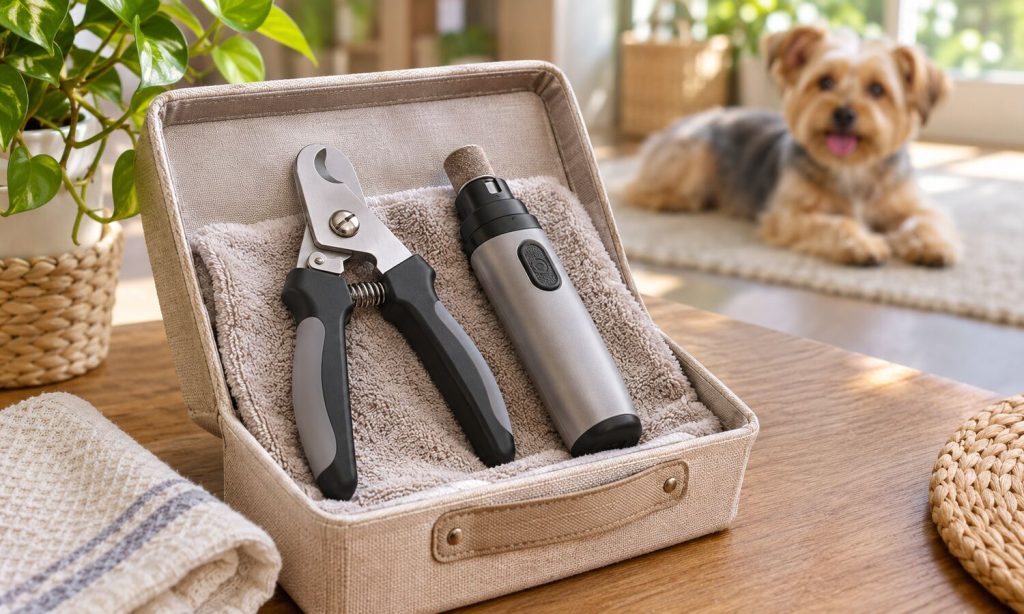
A dog nail trimmer may spend only a few minutes in use, but poor storage can leave its blade dull, rusty, or dangerously exposed. If you want to know how to store a nail trimmer for dogs safely, clean and dry it first, secure the cutting edge, and keep it away from children and curious pets. The best storage method depends on whether you have a scissor-style clipper, guillotine-style tool, or electric grinder.
Good storage keeps grooming equipment ready. Our guide to a nail trimmer for dogs describes different designs, while this article focuses on care between sessions. You will learn how to check the tool after use, choose a dry location, handle rechargeable devices, and decide when worn parts should be replaced. A trimmer should never be left where a dog can chew its handle or a child can reach the cutting edge.
Clean and Inspect the Trimmer After Every Session
Start by removing loose nail clippings and visible debris. Use a soft brush or cloth, following the specific tool instructions. If the manufacturer allows washing or disinfecting, follow its approved method and drying guidance. Metal joints and blades may corrode when moisture remains in a hinge, spring, or cutting slot. Do not soak an electric grinder or use liquid in its motor housing unless the manual specifically permits it. Unplug a corded device and power off a rechargeable grinder before cleaning. Gentle maintenance is safer than aggressive scrubbing that damages the cutting edge.
Inspect the cutting surfaces for chips, distortion, rust, wobble, or misalignment. Check whether the spring, lock, screw, and handles operate smoothly. A blade that no longer cuts cleanly may crush or split a nail rather than trimming it predictably. If the manufacturer offers an approved replacement blade or repair procedure, follow those instructions. Otherwise, retire a damaged tool. Do not attempt to sharpen precision edges with improvised equipment if you are unfamiliar with the mechanism. A cheap replacement may be safer than a poorly repaired sharp instrument.
Check for contamination and keep tools separate
If the trimmer has touched blood or an infected nail, follow veterinary guidance on cleaning and disinfection. Never share visibly contaminated tools between pets without an appropriate sanitation process. Wash hands after grooming and clean the work surface. If a dog has nail disease, severe pain, or bleeding that does not stop, seek veterinary care rather than continuing the session. Cleaning is not treatment for a nail infection. Set the tool aside in a clearly marked container until it can be safely sanitized.
For routine grooming, keep clippers, styptic supplies, a nail file, and a clean towel organized without allowing sharp metal to contact or damage soft items. Discard used cotton or soiled wipes after each session. Avoid putting damp equipment in a closed pouch where moisture can linger. Dry the tool thoroughly before storage. Clean cloths and dry cases are simple safeguards, especially in humid climates or bathrooms where condensation forms quickly.
Protect the Blade and Choose a Safe Location
Engage a built-in blade lock when the design has one, and use the provided protective cover or case. Store the trimmer with its cutting edge enclosed rather than loose in a drawer. A rigid organizer prevents the tool from rubbing against keys, scissors, or other metal objects that can nick the blade. Keep it on a high shelf or in a secured cabinet away from children and pets. Do not rely on a fabric pouch alone if the blades could protrude through it. A locked compartment is appropriate in households with young children.
Pick a clean, dry area with moderate temperatures. Bathrooms, outdoor sheds, and garages can experience dampness or temperature changes that promote rust or affect batteries. Avoid leaving the tool in direct sunlight or near a heater. If moisture builds up inside a cabinet, improve ventilation and move the kit to a drier place. Do not store the trimmer next to household chemicals that can leak, spill, or leave corrosive fumes. Keep it in a dedicated grooming container so it cannot be mistaken for a household cutting tool.
Keep grinders and rechargeable tools secure
For an electric grinder, turn it off and disconnect its power source. Protect the grinding head from impact and dust according to the manual. Store the charging cable loosely coiled without kinks, and check it for exposed wire or a damaged plug. Follow battery-specific storage and charging recommendations for long periods of nonuse. Do not leave a damaged lithium battery near flammable materials or attempt home repairs. If a rechargeable tool overheats, smells unusual, or has a swollen case, stop using and charging it and seek proper disposal guidance.
Store detachable grinding bands or tips in a small labeled container so they do not scatter. Check whether abrasive parts need replacement because worn or clogged surfaces can affect how the grinder works. Prevent the pet from accessing small parts that could be swallowed. Keep the device away from water bowls and damp towels. If a household member shares grooming responsibilities, label the case with the tool’s basic care instructions. This reduces accidental washing of an electronic device or misplacing its protective cap.
Prepare the Kit for the Next Nail-Trim Session
Before storing, make a quick note if the trimmer seemed dull, stuck, or uncomfortable to use. A tool that cuts poorly should not go back into circulation without repair or replacement. On the next grooming day, inspect the lock, blade, and grip before approaching the dog. Keep the tool secure until the pet is settled and the workspace is clear. A calm environment and non-slip surface are as important as sharp equipment. Our article on safe dog nail trimming explains the actual trimming technique and how to recognize the sensitive quick.
Keep useful accessories together but separate from cutting surfaces. Place clean gauze and approved styptic material where you can reach them, while keeping medications and powders sealed and away from animals. Do not store treats inside a tool case if moisture or crumbs could contaminate equipment. Use a small reminder card for replacing grinder tips or checking clipper bolts. An organized kit saves time, but it should never invite a dog to nose through sharp items while you gather supplies.
Choose when to retire or replace the tool
A trimmer with persistent rust, a broken locking mechanism, chipped blade, loose hinge, or damaged electrical cord may no longer be safe. Dispose of sharp parts according to local guidance and prevent contact during transport to waste or recycling. Some models allow manufacturer-approved replacement blades, but a loose or misaligned repair is not worthwhile. When unsure, replace the tool rather than testing it on a living animal. Inspecting a device at storage time makes the decision easier because you are not already holding a nervous dog’s paw.
Dogs with dark nails require particular care because the quick is harder to see. A sharp, reliable tool and conservative trimming method help, but tool storage alone cannot prevent cutting into the quick. Our discussion of clipping dogs with black nails describes suitable handling considerations. If you are worried about hurting the dog, ask a veterinarian or qualified groomer for a demonstration. Never rush a nail trim because the equipment was hard to find or had been left in a damp drawer.
Frequently Asked Questions
The right storage method protects both the cutting edge and the household. Questions about washing, rust, and electric grinders come up frequently after a grooming session.
Always defer to the specific manufacturer’s directions for cleaning agents, blade maintenance, and battery care. Do not guess when a tool has been damaged or contaminated.
Should I wash dog nail clippers after every use?
Remove debris every time and clean as the manufacturer directs. Dry thoroughly before putting the tool in a closed case. Disinfection may be needed after contamination.
Can I store clippers in a bathroom drawer?
A very dry drawer may work, but bathrooms often become humid. A secure, ventilated cabinet away from moisture is generally preferable.
How do I protect the cutting blade?
Close the blade lock or use the intended protective cover, then place the tool in a rigid organizer that prevents rubbing and accidental contact.
What if the nail trimmer has rust?
Do not use a rusty or damaged cutting edge on your dog. Follow approved maintenance instructions or replace the tool if safe function cannot be restored.
Can I leave a rechargeable grinder plugged in?
Follow the manufacturer’s charging and storage instructions. Unplug damaged cables, avoid unsafe heat exposure, and keep charging equipment away from pets.
Final Words
Knowing how to store a nail trimmer for dogs safely is mostly about a repeatable routine: remove debris, follow approved cleaning instructions, dry all parts, inspect for damage, and lock away sharp edges. Choose a secure, dry storage place and keep electrical tools unplugged when appropriate. A few minutes of care can prevent corrosion and accidental contact.
Keep your nail trimmer for dogs in a dedicated kit and inspect it before every grooming session. Use our safe dog nail trimming guide when you need help with the technique. Replace damaged blades, cords, or locks instead of taking chances. The safest tool is not only well designed; it is clean, protected, and ready to use responsibly.









