
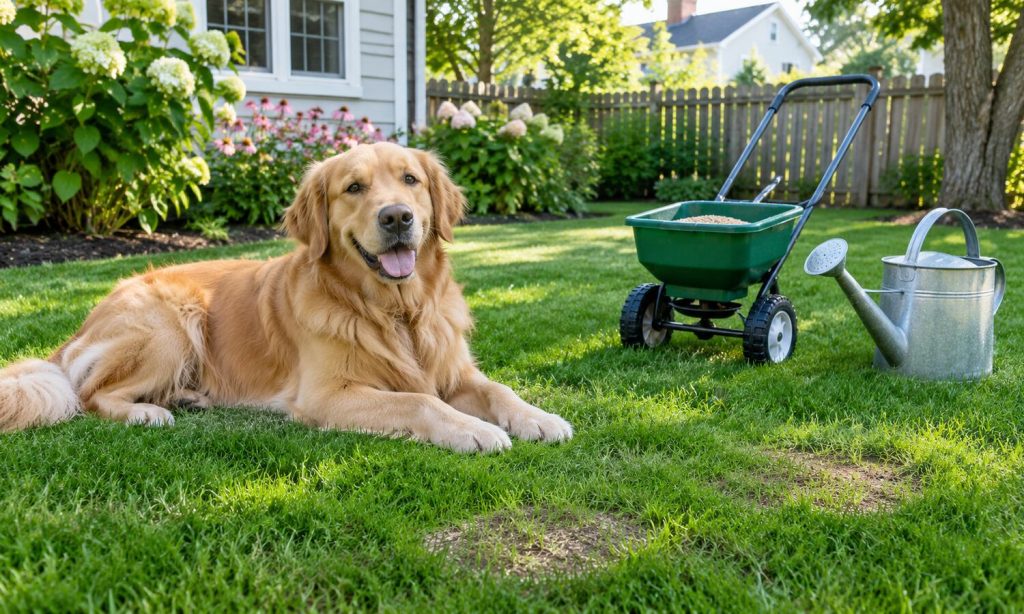
Dog owners know that a beautiful yard and a well-used play area are not always the same thing. Repeated bathroom trips, sprinting, digging, and seasonal heat can leave thin grass and stubborn patches. The best lawn care for dogs depends on what needs fixing: missing turf, stressed soil, surface discoloration, or ordinary wear. This guide compares seven different lawn-repair and appearance products with honest expectations about each one. Some contain grass seed and require establishment time. Others treat an existing area or simply change its color. None replaces regular watering, appropriate mowing, and keeping pets away from freshly treated spaces until the label permits access. Start by identifying your lawn problem before choosing a product. For help with the related decision, see our grass choices for high-traffic dog yards.
Quick Picks
These seven picks address different parts of dog-yard maintenance. Match the product type to your actual lawn problem before choosing.
| Product | Best For | Key Advantage | Buy | |
|---|---|---|---|---|
| Scotts EZ Seed Dog Spot Repair Tall Fescue | Reseeding small worn spots | Seed, mulch, and soil amendment together | View on Amazon | Jump to Review |
| Sunday Pet Lawn Grass Seed Blend | Broad overseeding in dog yards | Five-pound pet-oriented seed bag | View on Amazon | Jump to Review |
| Turf Titan K9 Correcter Lawn Neutralizer | Treating yellowed grass spots | Ready-to-apply liquid approach | View on Amazon | Jump to Review |
| X-Seed Pet Proof Fescue Grass Seed | High-traffic cool-season lawns | Fescue-focused overseeding blend | View on Amazon | Jump to Review |
| Yellow Spot Green Lawn Neutralizer | Concentrated urine-spot maintenance | Dog-spot soil-treatment focus | View on Amazon | Jump to Review |
| Nature’s Way Soil Lawn Revitalizer Bundle | Recurring large-area spot care | Hose-end sprayer plus refill | View on Amazon | Jump to Review |
| LawnStar Dog Spot Repair Grass Paint | Fast cosmetic lawn color | Pre-mixed ready-to-spray grass colorant | View on Amazon | Jump to Review |
1. Scotts EZ Seed Dog Spot Repair Tall Fescue

What We Like
- Tall fescue seed included
- Mulch and amendment in one shaker
- Targets localized dog-worn patches
- Two-pound application format
What We Don’t Like
- Requires suitable germination weather
- Seeded sections need traffic protection
Scotts EZ Seed Dog Spot Repair is a repair blend, not a spray that disguises dead turf. Its listing combines tall fescue seed, mulch, and a soil amendment in one product. That composition makes sense where your dog has worn away actual grass. Tall fescue is generally a cool-season lawn species, so local growing conditions matter. Its integrated mix simplifies buying three separate materials for a small exposed patch. Look beyond a cheerful front-label promise. Climate, soil condition, and the degree of existing damage decide whether the product has a realistic chance of helping.
Prepare the bare patch and follow the label’s soil-contact, watering, and temperature directions. The listing highlights daytime temperatures around 60 to 80 degrees Fahrenheit for germination. Protect the seeded area from digging, running, and repeated urination while the new blades establish. Even a good seed mix needs contact with soil, moisture, and time. A permanent dog route may still need a physical barrier until grass fills in. A household with two energetic dogs may need a different maintenance schedule than a small yard used by one senior dog. Foot traffic matters.
This is best evaluated against the species of turf already growing in your yard. A tall fescue patch may look different within a warm-season lawn. The package is intended for spot work, not replacing a large backyard. Consider the actual damaged square footage and the amount of watering you can provide during establishment. This is a more direct approach to missing turf than a bottle that only addresses soil. For pet access, read the entire use and reentry directions. Marketing terms such as pet friendly are not substitutes for the actual application label.
My Recommendation
Choose this for real gaps in a cool-season lawn, especially when you want seed and mulch together. It requires patience and a temporary dog-free patch. If the grass is still alive but yellowed, a soil-care treatment may fit better. Check climate and the current application directions first.
2. Sunday Pet Lawn Grass Seed Blend

What We Like
- Larger five-pound seed format
- Made for pet-traffic lawns
- Sun and light-shade positioning
- Suited to overseeding plans
What We Don’t Like
- Seed mix needs regional matching
- New growth needs regular watering
Sunday’s pet-oriented lawn seed is aimed at owners planning more than a single tiny repair. The listing presents a five-pound bag for sunny to lightly shaded grass areas. It is positioned for pet traffic and urine exposure, yet no seed is completely immune to repeated abuse. Check the current bag’s actual grass varieties and geographic suitability. For a thin but largely intact lawn, overseeding may preserve the existing look better than full replacement. A household with two energetic dogs may need a different maintenance schedule than a small yard used by one senior dog. Foot traffic matters.
A larger bag can be useful after a summer of high-traffic play, but timing is everything. First identify whether the lawn is merely thin or has underlying drainage problems. Rake lightly and follow the seed label for preparation and irrigation. Rotate dog access during the early growth period so seedlings can establish without repeated paw pressure. Plan sowing around a forecast that avoids extreme heat or heavy downpours. For pet access, read the entire use and reentry directions. Marketing terms such as pet friendly are not substitutes for the actual application label.
The words pet lawn describe an intended use, not a guaranteed resistance level. Different regions require different grass types. Shade, summer heat, and compacted soil may matter more than the name on the package. Compare the seed blend with your existing turf before you buy, or you may create a patchy mix of textures and colors. The bag size helps planning, but area and seeding rate need to match. Dog urine is only one cause of brown grass. Drought, disease, shade, compaction, and inconsistent irrigation can produce similar-looking symptoms.
My Recommendation
Consider this when you need to overseed several dog-worn areas rather than repair one spot. The larger bag is convenient, but local climate and seed composition are decisive. Owners in hot, warm-season turf regions should verify compatibility before committing to a pet-lawn blend.
3. Turf Titan K9 Correcter Lawn Neutralizer
What We Like
- Liquid spot-care format
- Targets urine-affected soil areas
- Coverage guidance on listing
- Useful with existing live turf
What We Don’t Like
- Cannot replace fully dead grass
- Results depend on ongoing lawn care
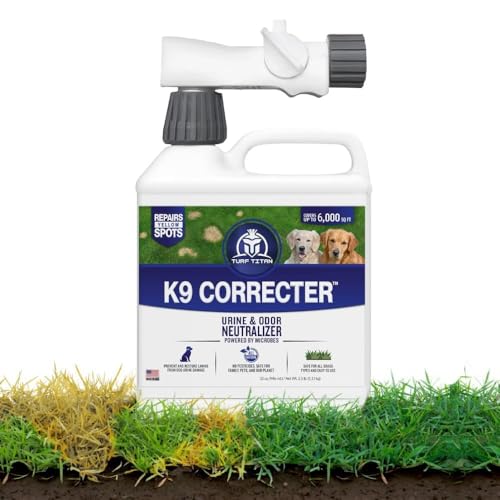
Turf Titan K9 Correcter is a liquid treatment marketed for urine-associated lawn stress. The current listing describes enzymes and microbial components, with a 32-ounce container for repeated application. Unlike a seed blend, this product does not add grass plants to bare soil. Its role is more relevant when existing turf may recover with improved care. It is especially relevant to pet owners who repeatedly see the same yellowed patches. For pet access, read the entire use and reentry directions. Marketing terms such as pet friendly are not substitutes for the actual application label.
Read the directions carefully before applying it around pets. The listing emphasizes a continuing routine rather than a single magical repair. Apply only as directed, avoid letting a dog drink the liquid, and respect any access restrictions on the current package. Watering practices and the severity of grass damage still govern whether yellow patches recover. Avoid expecting a stand-alone liquid application to fix a completely dead section. Dog urine is only one cause of brown grass. Drought, disease, shade, compaction, and inconsistent irrigation can produce similar-looking symptoms.
The manufacturer advertises a broad lawn-coverage figure, but concentrated dog spots can require a different amount than routine treatment. Measure your problem area and compare the usage instructions. Do not treat claims about odor or rapid visual improvements as independently proven for your specific soil. Severe urine burn may require reseeding after the soil is prepared. Compare treated and untreated areas over time rather than judging results immediately. Repairs also require prevention. Rinsing preferred potty spots with water and varying play routes can reduce repeat pressure on a small patch.
My Recommendation
This is a candidate when you still have living grass around recurring dog spots and prefer a liquid routine. It is less suitable for completely bare ground. Follow the application and reentry label, then watch for actual new growth instead of relying on a promised repair timeline.
4. X-Seed Pet Proof Fescue Grass Seed

What We Like
- Pet-traffic positioning
- Fescue seed for thicker cover
- Sun and shade use case
- Three-pound bag size
What We Don’t Like
- Not a universal climate match
- Seedlings remain vulnerable to paws
X-Seed Pet Proof uses a fescue-based approach for lawns dealing with running, digging, and repeated outdoor activity. Its product description emphasizes a dense grass cover and suitability for both brighter and partly shaded locations. That is a relevant design goal for a busy dog yard, but the finished lawn will depend on seasonal temperatures and soil. The product targets a tough-use scenario instead of offering a general ornamental seed mix. Dog urine is only one cause of brown grass. Drought, disease, shade, compaction, and inconsistent irrigation can produce similar-looking symptoms.
Use this when you can give a repair area enough protection to grow. Prepare the surface, follow the listed seeding rate, and water according to the current package. Reseeding only the favorite route from the door to the fence may lead to another worn path. Changing play patterns and reducing compaction often matter alongside choosing grass. Give the new lawn some recovery time after intense outdoor play. Repairs also require prevention. Rinsing preferred potty spots with water and varying play routes can reduce repeat pressure on a small patch.
A fescue mix will not behave like Bermuda or another warm-season species. It may struggle if planted outside its suitable climate or season. Assess drainage, sunlight, and the current lawn type first. The branded promise of urine resistance should be interpreted as a product claim, not immunity to concentrated waste or heavy traffic. A different grass species may be more practical for warmer climates. If a section is bare to the soil, a liquid conditioner cannot create new grass by itself. Seed, plugs, or sod may be necessary.
My Recommendation
Pick this for a fescue-compatible yard where tough play has thinned the lawn across several spots. It is a seed-based rebuilding choice, not instant color restoration. If you cannot close an area during germination, consider a nonseed treatment for existing turf or a designated dog run.
5. Yellow Spot Green Lawn Neutralizer
What We Like
- Targets recurring yellow areas
- Specific pet-yard use case
- Made for spot-maintenance planning
- Can accompany broader lawn repair
What We Don’t Like
- Listing format must be confirmed
- May not regrow dead turf alone
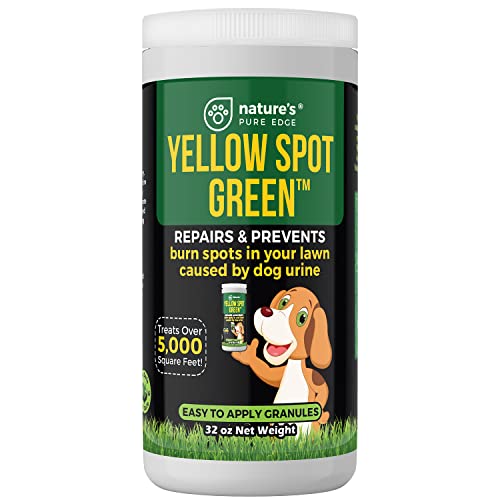
Yellow Spot Green is marketed for dog urine damage and stressed lawn areas. Its listing mentions soil treatment rather than a new seed variety. That makes it worth comparing with other liquid or granular repair aids when the turf remains partly alive. Confirm the current item format before ordering because listing descriptions may use inconsistent application language. The product identity has specific dog-spot positioning, unlike broad lawn fertilizers. Repairs also require prevention. Rinsing preferred potty spots with water and varying play routes can reduce repeat pressure on a small patch.
Start with a small, clearly diagnosed area and follow the package, including quantity and any necessary watering. Repeated use is not automatically better; the label should determine frequency. Keep dogs away during application if instructed and store the product securely. If several patches are bare, plan a separate seeding or turf-replacement step rather than expecting conditioner alone to grow plants. Do not apply more than the label says in response to stubborn yellowing. If a section is bare to the soil, a liquid conditioner cannot create new grass by itself. Seed, plugs, or sod may be necessary.
One seller description combines language about a 32-ounce container with granular coverage, so treat the exact formulation and use directions as a pre-purchase verification point. Avoid relying solely on its broad claim to work across grass types. Your local soil, irrigation, and dog traffic pattern can make a larger difference than brand claims about instant recovery. A clearly labeled and repeatable maintenance method matters more than an aggressive claim. For a yard your dog uses daily, convenience means little unless the product fits the season, grass species, and safe-use instructions.
My Recommendation
Consider this only after confirming whether the current listing is a liquid or a granular product. That distinction changes the application plan. A soil-care option may help you maintain damaged spots, but a seed blend is the more direct choice when no living grass remains.
6. Nature’s Way Soil Lawn Revitalizer Bundle

What We Like
- Hose-end sprayer included
- One-gallon refill bundle
- No cosmetic green dye claim
- Enzyme and humic-acid positioning
What We Don’t Like
- Larger bundle needs storage
- Marketing claims need realistic expectations
The Nature’s Way Soil bundle combines a hose-end applicator and refill product. Its listing specifically says the treatment is not green dye. It describes an enzyme- and humic-acid-based formulation intended for areas stressed by dog urine. That gives this product a different job from LawnStar’s colorant and from grass seed designed to fill bare patches. The included refill may matter if spot treatment becomes a recurring seasonal job. If a section is bare to the soil, a liquid conditioner cannot create new grass by itself. Seed, plugs, or sod may be necessary.
A hose-end format may be convenient when a dog’s preferred route creates several recurring marks. Before spraying, confirm how the attachment should dilute the concentrate and what the label says about pet access. Apply only to intended surfaces, keep drainage away from water features, and rinse tools according to directions. Track actual turf change across several weeks. Use the sprayer setup only in accordance with its dilution and handling instructions. For a yard your dog uses daily, convenience means little unless the product fits the season, grass species, and safe-use instructions.
The package is larger than a small spot bottle, which affects storage and value. The manufacturer makes claims about breaking down residues and discouraging repeat marking, but these outcomes are not independently guaranteed. A hose-end treatment is unlikely to solve compaction, severe shade, poor drainage, or a lawn that has lost its grass completely. For small yards, the large refill may be more than a household needs. Look beyond a cheerful front-label promise. Climate, soil condition, and the degree of existing damage decide whether the product has a realistic chance of helping.
My Recommendation
I would compare this for homeowners managing several dog spots repeatedly and wanting a hose-end approach. It suits a maintenance routine better than a one-time cosmetic fix. Avoid paying for the larger bundle if you only need to patch a tiny area with missing grass.
7. LawnStar Dog Spot Repair Grass Paint

What We Like
- Ready-mixed spray bottle
- Conceals brown-looking patches
- No grass growth wait for color
- Useful for temporary appearance work
What We Don’t Like
- Color does not repair turf roots
- Application requires careful masking
LawnStar is the honest cosmetic choice in this lineup. It is a premixed green colorant marketed for patchy lawns, including areas browned by dog urine. It can change how a worn patch looks without claiming to introduce living grass. That can be useful before a gathering, but it does not reverse the underlying reason for damage. The premixed format avoids measuring seed, fertilizer, or concentrated treatment. For a yard your dog uses daily, convenience means little unless the product fits the season, grass species, and safe-use instructions.
Before applying a colorant, read instructions for surrounding plants, paving, clothing, and pets. Work carefully on the intended patch and avoid unintended overspray. Keep dogs clear until the product instructions permit return. For long-term recovery, inspect the grass underneath after the cosmetic effect fades and decide whether you need reseeding, aeration, or adjusted watering. Check a discreet patch before making a broad color application. Look beyond a cheerful front-label promise. Climate, soil condition, and the degree of existing damage decide whether the product has a realistic chance of helping.
This should not be compared directly with seed on durability of new growth. Its advantage is the quick appearance change, while the disadvantage is that roots and blades remain in their prior condition. The listing describes the formula as designed with pet households in mind, but you should still check the full handling and reentry guidance. Choose a genuine repair system if you want healthier roots rather than a greener surface. A household with two energetic dogs may need a different maintenance schedule than a small yard used by one senior dog. Foot traffic matters.
My Recommendation
Choose LawnStar if your immediate priority is concealing a brown spot rather than growing grass. It is not a substitute for soil care, irrigation, or seed. I would use it only with clear expectations and careful application, particularly around curious dogs and porous paving.
How to choose best lawn care for dogs
Choose lawn products by the type of dog-related damage, not the boldest repair promise. Seed, liquid conditioners, and grass colorants solve different problems. Match the method to local turf, available water, and safe pet access.
Identify whether the grass is damaged, missing, or simply discolored
Begin by looking closely at the patch. Brown blades with some green growth at the base may recover after improved watering and reduced traffic. Bare soil is a different situation. It generally needs viable seed, sod, or another way to restore plant cover. Products marketed as urine neutralizers may be used as part of care for stressed turf. They are not a substitute for grass plants. A green paint spray changes color, but it does not increase root density. Check for other causes, too. Poor drainage, shade, mowing too short, compacted soil, and summer drought can resemble pet-related urine damage. A lawn-care professional or local extension office can help identify turf disease or unsuitable growing conditions. Dog yards usually have both a bathroom problem and a traffic problem. Fixing one without adjusting the other can leave an attractive patch that quickly deteriorates again. Measure the damage before buying. Smaller shaker products are practical for isolated areas, while seed bags or hose-end treatments may cover more space. For more context, explore artificial grass for dog bathroom areas.
Check grass type, application directions, and pet reentry
Grass species should suit the region. Tall fescue is associated with cool-season lawns, while many warmer areas use other turf varieties. Always examine the actual seed mixture and sowing season. Repair blends often include mulch or soil amendments, but they still need clean soil contact and consistent moisture. Keep paws off fragile seedlings where possible. For liquids or colorants, understand the difference between a ready-to-use bottle, a concentrate, and a hose-end refill. Read the current label for water rates, dilution, gloves, and when children and pets may return. Pet-friendly advertising does not mean the contents should be swallowed. If your dog eats grass, digs in recently treated soil, or chews containers, be particularly careful with storage and access. Consider how the product affects nearby flower beds, patios, and drainage. Finally, compare cost against usable coverage and labor, not bottle size alone. A modest repair kit that matches the problem can be a better purchase than a large product with little relevance to your lawn. For more context, explore durable artificial turf options for dogs.
Frequently Asked Questions
Here are the questions dog owners most often need to settle before spending money on lawn-repair products.
What causes yellow spots where my dog urinates?
Concentrated urine can stress grass, but drought, soil conditions, and diseases can produce similar spots. Check the pattern and growing conditions before treating.
Is grass seed safe to use with dogs?
Use seed and associated treatments only according to their directions. Protect fresh seed from chewing, digging, and trampling until it is established.
Can a urine neutralizer regrow dead grass?
A soil-care product does not introduce new grass. Completely bare ground usually needs seed, plugs, or sod, plus suitable water and protection.
Do dog-safe labels mean immediate access?
No. Check the precise application and pet reentry directions for each product. Keep containers and mixtures out of reach.
Is lawn paint a lasting repair?
No. Colorant changes the visible color of damaged turf. It does not fix roots, soil compaction, or the causes of the original damage.
Final Verdict
The best lawn care for dogs starts with the lawn’s actual condition. Scotts EZ Seed and X-Seed suit seed-based repairs where cool-season fescue matches your yard. Sunday is worth comparing for broader overseeding. Turf Titan and Nature’s Way address existing stressed spots through soil-care products, while LawnStar is a cosmetic color option. Yellow Spot Green needs careful format confirmation before purchase. No product prevents damage without regular watering, sensible dog traffic, and patient establishment. Match the treatment to the problem, then follow its current instructions closely.
Affiliate disclosure: This article contains Amazon affiliate links. If you purchase through them, PetAdvisorPro may earn a commission. As an Amazon Associate I earn from qualifying purchases.









