
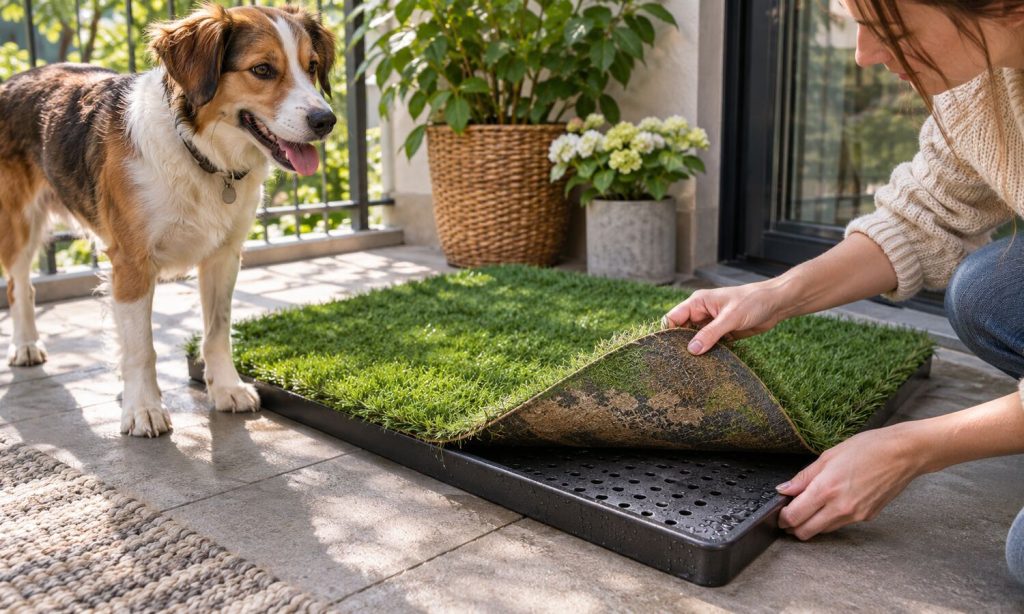
Artificial turf can make a dog potty area practical on a small patio, balcony, or yard. But it does not last indefinitely, especially when urine and weather affect the fibers and backing. If you’re wondering when should you replace a fake grass for dogs, judge the turf by cleanliness, drainage, structural condition, and your pet’s comfort rather than the calendar alone. Some systems use replaceable pads or trays, while others have permanent outdoor backing.
Replacement timing depends on frequency of use, sanitation, sunlight, weather, and whether waste drains away. Our fake grass for dogs guide explains installation styles, but upkeep determines long-term performance. This guide covers warning signs, cleaning limits, and safe removal. It also explains when a drainage problem can be fixed without replacing the whole system. The goal is a hygienic place your dog can use comfortably, not a yard that merely looks green.
Look for Physical Wear That Cleaning Cannot Fix
Walk around the turf and inspect both the pile and backing. Flattened fibers are not always a reason for replacement; ordinary brushing may restore some appearance. More serious signs include widespread fraying, detached tufts, exposed sharp backing, torn edges, holes, and loose sections that bunch under paws. A dog that digs or chews can cause damage well before the expected service life. Check that nothing can be swallowed or caught between toes. Replace damaged pieces if the installation permits safe patching, and remove any small loose fragments promptly.
For tray-style pet grass, inspect the plastic base, fasteners, and edges. A cracked collection tray may leak onto flooring and create a slipping risk. A cracked grid can also have sharp points. Heavy dog use can accelerate wear, especially when multiple animals share the same spot. A permanent outdoor turf area may develop loose seams or uneven edges from weather and ground movement. If the surface cannot be repaired to a stable, nonhazardous condition, replacement is sensible regardless of its age.
Check what the dog is telling you
A dog that suddenly avoids the potty area may have noticed a strong odor, uncomfortable texture, standing water, or an unstable surface. Avoidance can also reflect medical or behavioral issues, so do not assume replacement is the only solution. Look for redness or tenderness on the paws and note whether the dog hesitates at one edge. If a pet is straining to urinate, urinating very frequently, or having accidents unexpectedly, seek veterinary assessment. A new patch of turf will not treat a urinary problem.
Watch especially for chewing. Some dogs pull at turf edges or ingest loose strands, which could create a gastrointestinal hazard. Do not leave access to damaged material while deciding what to do. Secure the potty area and offer a safe alternative until repairs are complete. If you suspect ingestion and see vomiting, abdominal pain, loss of appetite, or repeated retching, contact a veterinarian promptly. Neither turf fibers nor backing should be considered edible play material.
Persistent Odor and Poor Drainage Are Key Signals
Pet turf can retain urine salts, organic material, and debris, particularly when drainage is insufficient. Remove solid waste promptly and clean according to the turf and tray manufacturer’s directions. If strong odor returns immediately after appropriate cleaning and drying, inspect the layers underneath. The problem may be a saturated pad, clogged drain, collection tray, or absorbent sub-base rather than the visible grass. Replacing only the top mat may waste money if contaminated layers remain in place. Examine the full system before choosing the scope of repair.
Puddles that remain after ordinary cleaning or rainfall suggest a drainage or slope issue. Standing liquid can make the area unpleasant for the dog and encourage unsanitary conditions. Lift removable components if the design allows and check for blocked outlets, trapped hair, or sediment. A damaged liner or inaccessible contaminated backing may justify replacement. For permanent outdoor turf, a drainage contractor may need to evaluate the sub-base. Do not attempt to correct repeated flooding with additional fragrances or harsh disinfectants that leave irritating residues.
Clean thoroughly, then reassess
Start with mechanical removal: pick up feces promptly, rinse or wash permitted surfaces, and remove visible debris. Follow the material’s specific cleaning directions, including allowed detergents and drying requirements. General CDC guidance emphasizes cleaning pet supplies and washing hands after handling animal waste. Never mix bleach with ammonia-containing cleaners or with other chemicals, and keep the dog away until a treated surface is safe and dry. Strong chemicals may harm turf materials or create exposure risks; manufacturer compatibility matters.
After cleaning, allow complete drainage and drying, then reassess odor and comfort. If the smell or standing moisture persists, do not mask it with perfume. Identify whether the cause is a replaceable absorbent layer, a blocked tray, or permanently contaminated material. Replace the affected component when safe restoration is not feasible. This distinction is especially important for balcony systems, where trapped urine can damage flooring or affect neighbors. Use suitable containment and follow building rules for drainage and waste disposal.
Set a Replacement Routine Based on Use
A dog using a small turf tray several times a day creates a different maintenance load from a large outdoor area used occasionally. Record cleaning frequency and inspect the setup weekly or after heavy use. Look at odor after drying, drainage speed, fiber integrity, and whether the dog still uses it willingly. Instead of assuming one universal replacement interval, follow the manufacturer’s service guidance and shorten the interval when condition demands it. Replace disposable pads on their stated schedule and sooner if saturated or soiled.
Sunlight and weather also matter. Repeated heat, cold, and ultraviolet exposure can make some backing brittle over time, while indoor areas may wear through concentrated traffic. A pet turf mat used by several large dogs may require more frequent inspection than one used by a single small dog. Rotate removable mats only if the manufacturer allows and the surface stays stable. Do not flip a contaminated mat onto an indoor floor. Keep records of when components were replaced so unusual deterioration is easier to recognize.
Plan a safe changeover
Remove the old surface in a way that contains waste and loose fibers. Wear gloves when handling soiled material and wash hands afterward. Keep children and pets out of the work area. If the backing is glued, use removal procedures that will not damage the floor or expose animals to solvent fumes. Avoid dumping contaminated rinse water where it can enter storm drains. Dispose of old turf according to local waste and recycling rules; artificial turf materials are not always accepted in standard recycling programs.
Before installing a replacement, clean and dry the underlying area. Confirm drainage is working and that no sharp fasteners or loose edges remain. Allow the dog to investigate the new surface calmly, and reward appropriate use without pressure. Some dogs need a short adjustment period because the texture or smell changes. If accidents occur indoors during the transition, focus on hygienic cleanup; our guide to cleaning an indoor urine accident covers that separate concern. Do not punish a dog for avoiding an uncomfortable or unfamiliar surface.
Frequently Asked Questions
There is no fixed month or year that applies to every artificial pet turf installation. What matters is whether it remains cleanable, structurally sound, and comfortable.
The questions below help separate a repairable maintenance problem from a surface that should be replaced. A damaged or unsafe patch should be removed from the dog’s access immediately.
Does bad odor always mean the grass needs replacing?
No. Check drainage, pads, tray, and sub-base first. Persistent odor after proper cleaning and drying may indicate contaminated components needing replacement.
Can flattened turf be restored?
Sometimes gentle brushing according to manufacturer instructions can lift fibers. Replace sections that are frayed, detached, or unsafe rather than merely flat.
What if water pools on the potty grass?
Inspect and clean the drainage path. If pooling persists or backing is damaged, repair or replace the affected system and prevent access to standing waste.
Is artificial turf safe if my dog chews it?
Chewing and swallowing strands is unsafe. Remove damaged material and contact a veterinarian if ingestion is suspected or concerning symptoms appear.
Should I replace only the top mat or the whole tray?
Replace the affected components. A clean top mat will not fix a cracked tray, blocked drainage, or saturated material underneath.
Final Words
When should you replace a fake grass for dogs? Replace it when cleaning no longer restores acceptable hygiene, drainage remains poor, or damage creates an unsafe walking or chewing surface. Inspect every layer before spending money on a whole new system. Sometimes a removable pad or tray is the real problem.
Use an appropriate fake grass for dogs setup, maintain a predictable cleaning routine, and watch how your dog responds to the surface. Contain waste, allow thorough drying, and repair loose edges promptly. A safe, clean potty spot is more important than keeping faded green turf for another season.









