
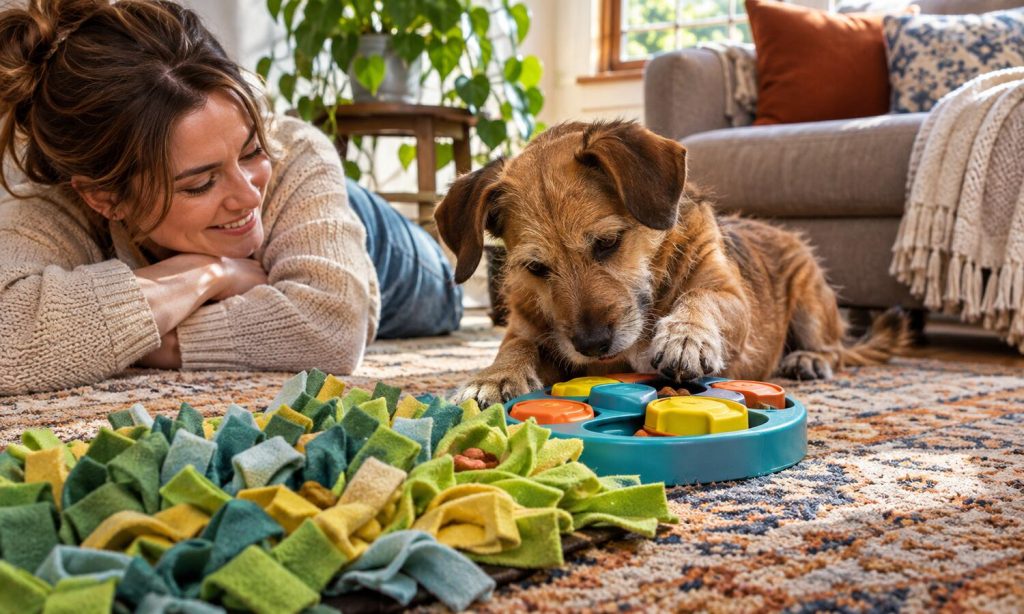
A worried dog may pace, chew furniture, follow you from room to room, or struggle when routines change. Play can give that dog a constructive activity, but a toy cannot diagnose or cure separation anxiety. The best toys for anxious dogs offer safe, manageable enrichment without creating frustration or a choking risk. We compare seven food puzzles, snuffle products, lick mats, and treat-dispensing toys. Each suits a different dog, from a gentle forager to a curious problem-solver. You’ll find practical notes on supervision, cleaning, difficulty, and size. Choose a product based on what your dog already enjoys, then introduce it while your dog is relaxed. Severe distress, panic, or sudden behavior changes call for veterinary or qualified behavior support. For help with the related decision, see our simple dog mental-stimulation ideas.
Quick Picks
Match enrichment difficulty and material to your dog’s body size, chewing habits, and willingness to solve food puzzles.
| Product | Best For | Key Advantage | Buy | |
|---|---|---|---|---|
| Letsmeet Squeaky Snuffle Plush Toy | Gentle fabric foraging | Treat pockets plus squeaker | View on Amazon | Jump to Review |
| Outward Hound Nina Ottosson Lickin’ Layers | Intermediate food puzzles | Rotating layers and lick surface | View on Amazon | Jump to Review |
| LUKITO Two-Pack Suction Lick Mats | Calm supervised licking | Textured mats with suction backing | View on Amazon | Jump to Review |
| AWOOF Portable Snuffle Mat | Scent-based meal searching | Foldable non-slip fabric format | View on Amazon | Jump to Review |
| HIPPIH Treat-Dispensing Ball Two-Pack | Rolling and nudging games | Two different rubber treat balls | View on Amazon | Jump to Review |
| Forfon Nine-Piece Dog Enrichment Set | Trying several enrichment formats | Mat, puzzle, and ball assortment | View on Amazon | Jump to Review |
| PETSTA Interactive Dog Puzzle Board | Slide-and-search games | Several puzzle actions and squeak button | View on Amazon | Jump to Review |
1. Letsmeet Squeaky Snuffle Plush Toy
What We Like
- Soft fabric foraging folds
- Hidden food pockets
- Built-in squeaker
- Machine-washable listing
What We Don’t Like
- Not for aggressive chewers
- Fabric needs drying after washing
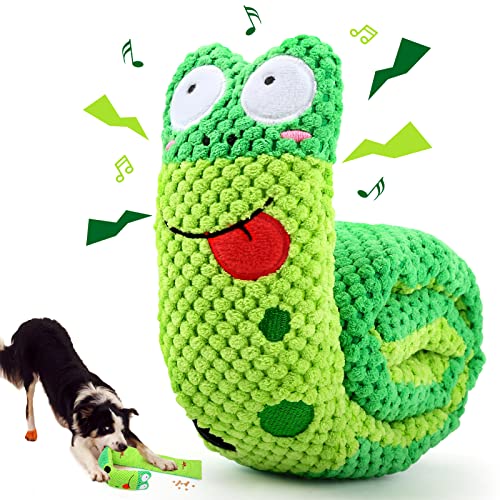
Letsmeet combines fabric folds for hidden treats with a squeaker. The plush design encourages a dog to use its nose rather than repeatedly strike a hard puzzle. The verified listing positions it for small to medium dogs and specifically excludes aggressive chewers. That size-and-material limitation matters far more than its marketing promise of easing boredom. The squeaker gives an optional sound element that some dogs love and others ignore. Begin with the easiest version of the game. A dog that can win quickly often approaches a harder puzzle with more confidence later.
Hide a few pieces of familiar kibble in obvious pockets for the first session. Let the dog discover how the fabric works before making the search more complicated. This is best handled under supervision, especially with dogs that shred cloth or pull out squeakers. Inspect seams and inner components as often as the dog plays. The fabric layout makes you responsible for observing how your dog handles plush objects. Use part of your dog’s normal measured meal when filling a toy. Extra treats still count toward the day’s calories.
Soft enrichment can be comforting for a dog that likes scent searching, yet it does not treat true panic during absences. A powerful chewer may destroy this plush toy quickly. Follow the manufacturer’s washing directions, dry it thoroughly, and discard it if pieces loosen. The best fit is a gentle sniffer who already enjoys soft play. It can be a short activity at home without making a long training session necessary. Supervise the first sessions and remove damaged pieces immediately. Toy durability varies with jaw strength and individual chewing style.
My Recommendation
I would compare Letsmeet for a smaller, gentle dog that enjoys searching for food in soft folds. It offers scent work with an extra squeaker. For dogs prone to swallowing fabric, choose a supervised rigid feeder instead and avoid leaving this plush toy unattended.
2. Outward Hound Nina Ottosson Lickin’ Layers

What We Like
- Three rotating puzzle tiers
- Lick mat and slow-feeder functions
- Large ten-inch format
- Holds a substantial meal portion
What We Don’t Like
- May frustrate absolute beginners
- Needs careful cleaning between layers
Lickin’ Layers uses a three-tier rotating structure with textured feeding areas. Its product information describes an intermediate puzzle that can hold a substantial portion of food. This differs from a simple lick mat because the dog must move layers to reach some of the meal. That challenge can occupy a confident problem-solver without relying on sound or plush fabric. This is a meaningful step up from a plain slow feeder because the dog must manipulate the tiers. Use part of your dog’s normal measured meal when filling a toy. Extra treats still count toward the day’s calories.
Begin with the layers arranged so food is easy to reach. Let the dog learn one movement before asking for a full sequence. A measured portion of wet food or kibble can turn a meal into a longer activity. Stay nearby until you know whether your dog handles the plastic structure gently or tries to bite the moving parts. Spread rewards thinly at first so the dog can succeed without force. Supervise the first sessions and remove damaged pieces immediately. Toy durability varies with jaw strength and individual chewing style.
Dogs with little puzzle experience may become frustrated by the rotating tiers. The grooves and overlapping surfaces also require thorough cleaning. Consider your dog’s jaw strength and persistence before purchasing. For a nervous dog that dislikes obstacles, a flat lick mat may provide a calmer and more predictable introduction to enrichment. The puzzle may be best reserved for relaxed mealtimes rather than periods of distress. Introduce enrichment before leaving, while the dog is calm. A dog already panicking may ignore even a favorite food game.
My Recommendation
Choose this for a dog that already enjoys food puzzles and needs a more engaging meal activity. The layered construction is distinctive, but beginners may prefer a simpler mat. I would avoid presenting a difficult puzzle for the first time immediately before leaving an anxious dog alone.
3. LUKITO Two-Pack Suction Lick Mats

What We Like
- Two mats included
- Multiple textured zones
- Suction-cup backing
- Useful for spreadable food
What We Don’t Like
- Suction depends on surface
- Not a chew-resistant toy
The LUKITO set provides two textured lick mats designed to attach to a smooth surface with suction cups. Its listed use includes spreadable food and slower licking. The simpler activity may appeal to a dog that becomes overwhelmed by complicated puzzle moves. These are flexible mats, however, and should never be treated as indestructible chew toys. A spreadable snack creates a stationary task that can fit into grooming or quiet time. Supervise the first sessions and remove damaged pieces immediately. Toy durability varies with jaw strength and individual chewing style.
Press a clean mat onto a suitable smooth surface and test whether it holds before adding a thin layer of dog-safe food. Introduce the activity while you are present. Some dogs lick steadily; others attempt to pull or chew the whole mat. For the latter group, remove the mat promptly and switch to a more robust feeding approach. Test suction on the exact surface you intend to use instead of relying on the listing. Introduce enrichment before leaving, while the dog is calm. A dog already panicking may ignore even a favorite food game.
The number of suction cups does not guarantee attachment to every wall or floor. Textured rubber or silicone requires detailed washing to remove food. Check food ingredients for pet safety and avoid excess calorie-dense spreads. This product gives a repetitive licking opportunity, not a clinically proven cure for fear or separation-related behavior. A simple task may be preferable when new environments have already increased the dog’s arousal. Clean food-contact surfaces after use according to the maker’s guidance. Damp stuffing and leftover food can become unhygienic.
My Recommendation
LUKITO is a practical entry-level option for dogs that enjoy calm licking with familiar food. Two mats add rotation or cleaning flexibility. I would not leave a dog who chews flexible material unattended with one, even if the manufacturer promotes soothing behavior.
4. AWOOF Portable Snuffle Mat
What We Like
- Non-slip underside described
- Fabric hide-and-seek pockets
- Folds into a bowl shape
- Portable feeding game
What We Don’t Like
- Fabric can be shredded
- Food crumbs need thorough removal
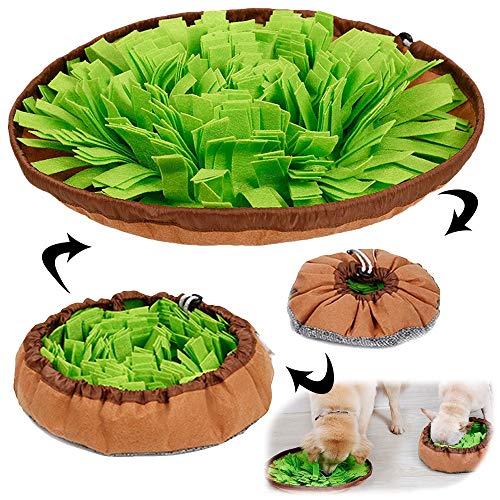
AWOOF’s snuffle mat is built around hiding small treats within fabric. The listing describes a non-slip underside and a foldable design that can also form a bowl. This format encourages sniffing and searching without the rotating mechanisms used in plastic puzzles. It is suitable as a comparison for dogs that enjoy nose work more than vigorous chewing. A soft mat also avoids the clatter of a hard feeder on tile. Introduce enrichment before leaving, while the dog is calm. A dog already panicking may ignore even a favorite food game.
Lay the mat flat and scatter a few pieces of regular kibble visibly across the folds. As the dog gains confidence, place some pieces deeper into the material. Supervise to make sure the dog searches rather than pulls fibers free. The foldable design can be convenient for visits, but cleaning and complete drying remain important. Carry it dry and clean when using it away from home. Clean food-contact surfaces after use according to the maker’s guidance. Damp stuffing and leftover food can become unhygienic.
A snuffle mat can become an unsafe chew object if a dog tears or swallows fabric. A dog frightened by sudden noises may appreciate quiet scent games, but that behavioral response varies. It also works best with dry treats that can be removed cleanly. Consider a hard food puzzle if your pet has a record of destroying bedding. Its best role is supervised foraging rather than a toy left permanently on the floor. Watch body language. Loose muscles and voluntary return to play are better signs than frantic pawing or repeated failed attempts.
My Recommendation
This suits a calm, food-motivated dog that likes sniffing and needs a quiet game. The foldable format is handy for travel and short supervised feeding breaks. For aggressive chewers, I would choose a sturdier, size-appropriate dispensing toy and supervise the first sessions.
5. HIPPIH Treat-Dispensing Ball Two-Pack

What We Like
- Two rubber balls in pack
- Treat-dispensing openings
- Rolling movement prompts play
- Two sizes listed
What We Don’t Like
- Fit depends on dog mouth size
- Rubber still needs damage checks
HIPPIH packages two rubber ball-style food puzzles rather than a mat or layered tray. The balls are intended for rolling, nudging, and retrieving treats through openings. Their different sizes can support more than one play style, but the right match depends on your dog’s mouth and chewing behavior. Active movement makes this distinct from slow, stationary licking. Rubber balls use movement to release food, which adds activity. Clean food-contact surfaces after use according to the maker’s guidance. Damp stuffing and leftover food can become unhygienic.
First show the dog how moving the ball releases kibble on a clear, safe floor. Adjust your expectations to the size of the treat and dispenser opening. Use under supervision while the dog learns not to bite off pieces. In a home with stairs or narrow gaps, choose an area where the rolling toy cannot become trapped. Open space and a non-slip surface make the game easier to follow. Watch body language. Loose muscles and voluntary return to play are better signs than frantic pawing or repeated failed attempts.
A rolling game may energize some dogs rather than calm them. If your pet is already pacing or reactive, begin with a simpler stationary activity and observe the response. Inspect rubber for cracks and discard damaged toys. Confirm the dimensions of both balls rather than assuming a pack labeled for puppies fits every large dog. The two-pack format is useful only if both sizes are appropriate for your dog’s mouth. No dog puzzle should be used as a substitute for exercise, companionship, gradual training, or professional help for serious anxiety.
My Recommendation
Choose HIPPIH for a dog that prefers movement and enjoys pushing a treat ball around. It can turn part of a meal into active problem-solving. For a dog that becomes overexcited by chasing, a lick mat or stationary puzzle may be more suitable.
6. Forfon Nine-Piece Dog Enrichment Set

What We Like
- Multiple toy types in one set
- Lick mats included
- Treat-ball options
- Different challenge styles
What We Don’t Like
- Not every piece suits every dog
- Many items to clean and store
Forfon combines several enrichment formats in a single set, including lick mats, a puzzle, and dispensing balls. The verified listing markets the assortment for small and medium dogs. This is a flexible choice for learning whether a particular pet prefers slow licking, scent-led exploration, or rolling food toys without buying separate packages first. This variety helps a household identify preferences without assuming every dog likes the same game. Watch body language. Loose muscles and voluntary return to play are better signs than frantic pawing or repeated failed attempts.
Do not offer all nine pieces at once. Start with one easy toy, watch how the dog uses it, and store the others out of reach. Gradually rotate activities to preserve interest. The products have different textures and cleaning needs, so read the instructions for each piece rather than using one method for the entire kit. Separate toys by type after play to simplify washing and storage. No dog puzzle should be used as a substitute for exercise, companionship, gradual training, or professional help for serious anxiety.
Variety is useful only when the included objects fit the dog. A powerful chewer may destroy one component even if another holds up well. Check size, attachment points, and any removable parts. A nervous dog can also become frustrated by a sudden collection of new objects, making slow introductions preferable to an elaborate setup. Do not confuse owning many toys with delivering a calm, well-paced enrichment routine. Begin with the easiest version of the game. A dog that can win quickly often approaches a harder puzzle with more confidence later.
My Recommendation
Compare this assortment when you are still discovering which enrichment style your smaller dog enjoys. The broad selection is the benefit, but it requires careful supervision and storage. Owners of large or destructive chewers should prioritize individual size-appropriate products instead.
7. PETSTA Interactive Dog Puzzle Board
What We Like
- Ten-inch square board listed
- Spin-and-slide compartments
- Hide-and-seek treat pockets
- Central squeak element
What We Don’t Like
- Board needs close supervision
- Squeak may unsettle noise-sensitive dogs
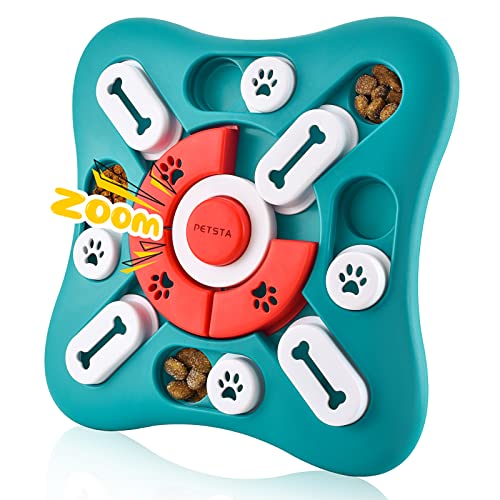
PETSTA’s board is an interactive treat puzzle with sliding and turning elements. The listing describes several ways to hide rewards and a squeak button in the center. That construction offers a more deliberate thinking task than simply licking a textured mat. It can engage a confident dog, but sound-sensitive pets may dislike the additional noise. The squeak button means this is not an entirely silent puzzle. No dog puzzle should be used as a substitute for exercise, companionship, gradual training, or professional help for serious anxiety.
Begin by leaving one hiding compartment open so the reward is obvious. Demonstrate a slide if necessary and reward small successes. Keep the board on a non-slip floor and stay present while the dog explores moving pieces. Avoid forcing a nervous dog to interact with the central squeaker if unexpected sounds cause avoidance. Some dogs will need a demonstration before moving the sliders. Begin with the easiest version of the game. A dog that can win quickly often approaches a harder puzzle with more confidence later.
A rigid puzzle board is not suitable as an unattended chew object. Inspect moving parts frequently and remove it if the dog attempts to pry or swallow components. Puzzle skill is learned; failure on day one does not prove the dog is unwilling or unintelligent. Simpler stages may be a better choice during stressful periods. The board’s complexity is a feature for patient solvers and a limitation for overwhelmed beginners. Use part of your dog’s normal measured meal when filling a toy. Extra treats still count toward the day’s calories.
My Recommendation
This fits an inquisitive dog comfortable with handling plastic food puzzles and some noise. I like its range of actions as a decision factor, but not as an anxiety-treatment claim. For a sound-sensitive dog, choose a quiet snuffle mat or lick surface first.
How to choose best toys for anxious dogs
Choose enrichment by how your dog handles food, movement, sound, and frustration. A safe toy should be sized correctly and introduced gradually. Toys can complement a broader behavior plan, but cannot treat panic alone.
Match puzzle difficulty to the dog’s emotional state
A dog unfamiliar with enrichment needs easy wins. Begin with visible treats on a flat mat, then hide pieces under fabric or behind simple sliders. Moving tiers and multi-step boards can follow once the dog understands the basic game. If your dog walks away, paws frantically, barks, or repeatedly bites the puzzle, the challenge may be too high. Reduce difficulty instead of withholding rewards. Some dogs find quiet licking engaging, while others prefer scent trails and rolling food toys. Observe what actually promotes voluntary, relaxed participation. The size of the toy matters, too. A small puzzle can be swallowed or broken by a large dog, and a heavy one may intimidate a puppy. Check the manufacturer’s size guidance against your pet’s habits. Remember that severe separation distress is a behavioral and medical welfare concern. An enrichment item may distract briefly but cannot replace a gradual behavior plan, appropriate management, and professional support. For more context, explore choosing interactive toys for dogs home alone.
Account for materials, calories, hygiene, and supervision
Food toys enter your dog’s mouth repeatedly. Check materials, removable components, and cleaning instructions before purchase. Plush folds can collect crumbs; rigid moving pieces can trap food; textured mats need careful washing. Flexible mats should never be considered chew-proof. Use a portion of the normal daily ration rather than adding a large snack every time the dog is uneasy. If you use soft spreadable foods, verify the ingredients are dog-safe, especially avoiding xylitol in human food products. Start with supervised sessions in a calm environment. Remove the toy if it cracks, tears, or sheds small pieces. Do not leave a new toy with a dog alone until you have assessed the specific risks, and remember that supervision is still the safer choice for many products. Combine enrichment with routine walks, rest, predictable training, and veterinary guidance. An overly stimulating toy can increase arousal even when a seller calls it calming. Create a predictable routine: offer a familiar puzzle after a short walk and remove it when the session ends. This makes the activity easier to understand and monitor. For more context, explore why dogs chew household items.
Frequently Asked Questions
The following questions help you keep toy-based enrichment realistic, useful, and safe.
Can a puzzle toy cure separation anxiety?
No. It can provide an activity, but serious separation-related distress usually needs a structured behavior plan and professional help.
Are lick mats good for every anxious dog?
Not necessarily. Some dogs enjoy repetitive licking, while others chew the mat or ignore food under stress.
Should I leave food puzzles out when I go to work?
Do not leave an unfamiliar or chewable puzzle unattended. Assess hazards and follow the maker’s safety guidance.
What food can I place inside a puzzle?
Use a measured part of your dog’s usual diet or dog-safe treats. Check ingredients and daily calories.
When should I seek veterinary behavior advice?
Seek help for panic, injury, extreme vocalization, house-soiling linked to departures, or sudden behavioral change.
Final Verdict
For gentle nose work, Letsmeet and AWOOF offer fabric searches with different layouts. LUKITO suits supervised, stationary licking. Outward Hound Lickin’ Layers and PETSTA provide progressively harder manipulation, while HIPPIH adds rolling motion. Forfon lets smaller dogs sample several activity styles. No toy is automatically calming, and none replaces professional treatment for severe anxiety. Choose the safest difficulty for your dog’s size and habits, build success while the dog is relaxed, and remove anything your pet might chew apart or swallow.
You may also find dog beds marketed for separation anxiety useful while making your decision.
Affiliate disclosure: This article contains Amazon affiliate links. If you purchase through them, PetAdvisorPro may earn a commission. As an Amazon Associate I earn from qualifying purchases.









