
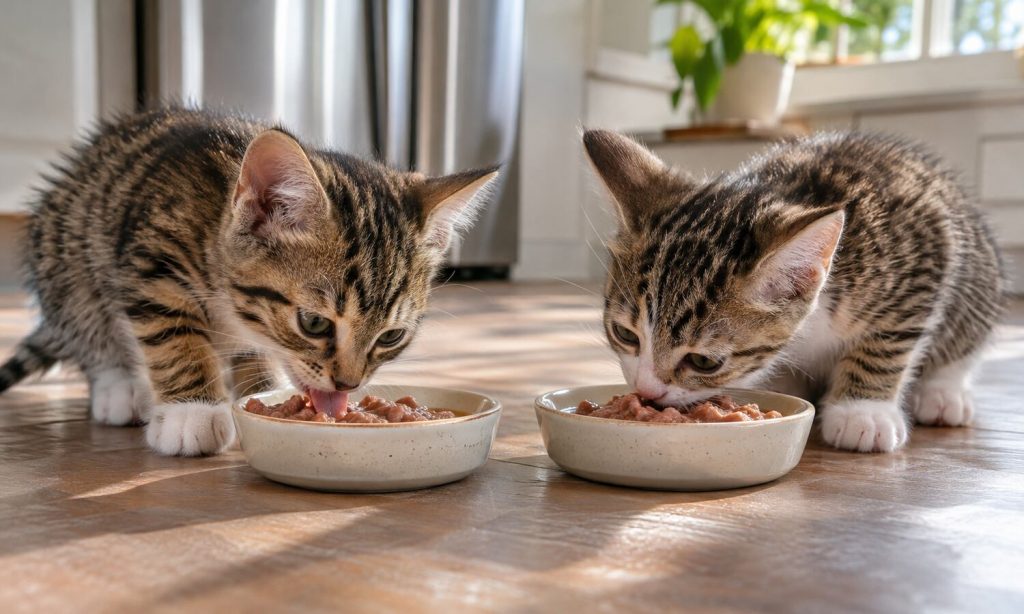
Choosing your kitten’s first regular wet food can feel surprisingly complicated. Shelves are full of smooth pâtés, shreds, mixed-texture recipes, and variety packs. The best brand of wet cat food for kittens is not necessarily the most expensive or the most talked about. It is a brand offering a complete and balanced recipe for your kitten’s life stage, with a texture and feeding plan that actually fit. This guide compares seven named wet-food options from distinct brands, using current verified product identities and useful differences in recipes, texture, and pack formats. Check the nutritional adequacy statement on the exact can before purchase, since products can be reformulated. If your kitten is refusing food, losing weight, or experiencing persistent digestive symptoms, seek veterinary advice promptly. For help with the related decision, see our feeding routines for a six-month-old kitten.
Quick Picks
Our picks span pâté, shredded, and mixed textures. Confirm every current label says the selected recipe is appropriate for growth or the kitten’s life stage.
| Product | Best For | Key Advantage | Buy | |
|---|---|---|---|---|
| Blue Buffalo Baby Blue Kitten Wet Variety Pack | Chicken and salmon sampling | Two recipes with DHA positioning | View on Amazon | Jump to Review |
| Purina Pro Plan DEVELOPMENT Kitten Wet Variety | Multi-flavor pâté planning | Twenty-four three-ounce cans | View on Amazon | Jump to Review |
| Tiki Cat Baby Shreds Kitten Variety Pack | Shredded textures | Four recipes for kittens eight weeks and older | View on Amazon | Jump to Review |
| Nulo Kitten Pâté and Shreds Variety Pack | Exploring mixed textures | Layered pâté-and-shreds format | View on Amazon | Jump to Review |
| Royal Canin Kitten Wet Variety Pack | Soft kitten-focused textures | Kitten formula up to twelve months | View on Amazon | Jump to Review |
| Weruva Kitten Can Jam Variety Pack | Broad flavor exploration | Twelve-can recipe assortment | View on Amazon | Jump to Review |
| Wellness Complete Health Kitten Pâté Variety | Smooth pâté fans | Whitefish and chicken variety pack | View on Amazon | Jump to Review |
1. Blue Buffalo Baby Blue Kitten Wet Variety Pack

What We Like
- Chicken and salmon recipes
- Small six-can variety pack
- DHA included in listing
- Kitten-specific product line
What We Don’t Like
- Only two recipe choices
- Grain-free label is not a necessity
Blue Buffalo’s Baby Blue variety pack combines chicken and salmon wet kitten recipes in small cans. The verified product listing presents a kitten-oriented growth formula with DHA. A six-can arrangement gives owners a manageable way to compare whether their kitten accepts both flavors. The grain-free positioning is a formulation characteristic, not evidence that grain avoidance benefits every kitten. The six-can size makes the initial commitment relatively modest. For growing kittens, the nutritional adequacy statement matters more than words such as premium or grain free on the front of the can.
Offer a measured portion at a calm mealtime and watch whether the kitten handles the texture. Switch gradually from a previously tolerated food. Because the pack contains only two recipes, it provides less texture exploration than a mixed pâté-and-shreds assortment. Read each individual can’s calorie and adequacy statements before treating the whole variety pack as one product. This is a useful distinction for people learning whether poultry or fish is accepted. Texture can determine whether a kitten eats enough. Soft pâté, small shreds, and gravy are not interchangeable for every young mouth.
A DHA claim is common in growth foods, but it should not replace evaluation of the complete nutrient profile. Some kittens react differently to chicken and fish. If vomiting, diarrhea, or appetite refusal occurs, stop making multiple simultaneous food changes and ask the clinic about the cause. The small case is most useful for an initial flavor comparison. Small cases can also reduce waste during early food changes. Calorie density changes by recipe and can size. Use the current feeding guide as a starting point and monitor body condition with your veterinarian.
My Recommendation
This is a sensible small variety pack for a kitten that is ready for chicken and salmon flavors. Its growth-oriented positioning is relevant, but verify the exact label. For a kitten that prefers shreds rather than smooth canned food, Tiki Cat or Nulo may offer a more appealing texture.
2. Purina Pro Plan DEVELOPMENT Kitten Wet Variety

What We Like
- Several poultry and fish entrees
- Twenty-four-can pantry pack
- DHA and taurine listed
- Three-ounce serving format
What We Don’t Like
- Large case for an uncertain eater
- Fish recipes may not suit every kitten
Purina Pro Plan DEVELOPMENT offers a larger wet kitten variety case with poultry and fish recipes. Its listing describes 24 three-ounce cans and includes DHA, vitamins, minerals, and taurine. Those nutrients are relevant to growth, but compare the precise guaranteed analysis and life-stage statement rather than shopping by a headline list alone. The pack is more of a regular-feeding choice than a tiny sampler. The assortment spreads several flavors over a larger quantity of cans. Texture can determine whether a kitten eats enough. Soft pâté, small shreds, and gravy are not interchangeable for every young mouth.
This format can reduce repeat orders for a kitten that already tolerates the included recipes. Portion by calorie guidance rather than assuming that one can is one complete meal for every age. Rotate flavors carefully and refrigerate leftovers as the package directs. A food accepted in a shelter or foster setting may still require a gradual transition at home. Plan refrigerator space for leftovers from any opened can. Calorie density changes by recipe and can size. Use the current feeding guide as a starting point and monitor body condition with your veterinarian.
The bulk case raises the stakes if your kitten dislikes a particular fish or poultry recipe. Some young cats are sensitive to sudden changes, so resist opening several different flavors on the same day. Review ingredient lists for known dietary problems and ask a veterinarian if the kitten has recurrent digestive upset or poor growth. Large packs reward a known preference more than a guess. A variety case can introduce several flavors, but change meals gradually rather than replacing every food at once in a sensitive kitten.
My Recommendation
Choose this when your kitten already accepts the included textures and you value a larger pantry pack. The multi-flavor format is convenient for established feeding. If you are still testing acceptance, a smaller sampler like Baby Blue may involve less waste and fewer unused cans.
3. Tiki Cat Baby Shreds Kitten Variety Pack

What We Like
- Four recipes in one pack
- Shredded wet-food texture
- Eight-weeks-plus listing guidance
- DHA included in formula description
What We Don’t Like
- Shreds may challenge very young kittens
- Multiple proteins complicate trigger tracking
Tiki Cat Baby Shreds distinguishes itself with small shredded pieces and several recipe combinations. The verified listing describes a 12-can variety pack and positions the food for kittens from about eight weeks old. This is a different eating experience from uniformly smooth pâté. It may suit kittens already comfortable chewing soft shredded meat and enjoying a wetter bowl. Visible shreds differentiate the food from a uniform mousse or pâté. Calorie density changes by recipe and can size. Use the current feeding guide as a starting point and monitor body condition with your veterinarian.
Introduce the shredded texture at a familiar mealtime and check that your kitten can take manageable bites. If it struggles, ask your veterinarian about suitable softer alternatives rather than assuming the kitten will learn immediately. The pack’s four recipes offer variety, but a slow transition helps you notice which flavor is accepted and whether stool changes. Make sure each piece is comfortable for the kitten to chew. A variety case can introduce several flavors, but change meals gradually rather than replacing every food at once in a sensitive kitten.
The product is not intended as a one-size-fits-all weaning solution for kittens younger than its stated age. A mixture of several proteins can make it harder to identify dietary triggers. Confirm each recipe’s life-stage adequacy before using it as a sole diet. For a kitten with mouth discomfort or poor appetite, a smoother texture might be preferable. Do not choose an adult shred formula simply because the texture looks similar. Wet foods add moisture to meals. Fresh drinking water must still be available, and opened food needs prompt safe storage.
My Recommendation
Compare Tiki Cat Baby Shreds for kittens that enjoy visible meat pieces and are old enough for the listed texture. Four recipes are a helpful choice set. For very young or texture-sensitive kittens, I would start with a softer, veterinarian-appropriate pâté.
4. Nulo Kitten Pâté and Shreds Variety Pack

What We Like
- Pâté and shreds in one format
- Twelve-can assortment
- Multiple animal proteins
- Kitten growth positioning
What We Don’t Like
- Mixed texture may be rejected
- Harder to isolate protein sensitivity
Nulo’s kitten variety pack combines pâté and shredded food in individual cans. The product description lists several animal proteins across the assortment, including poultry and fish. This layered texture is the main buying distinction. Some kittens enjoy the contrast while others prefer every mouthful to be consistent. Packaging details should be confirmed at checkout as assortment contents can change. The layered structure gives your kitten more than one mouthfeel per bite. A variety case can introduce several flavors, but change meals gradually rather than replacing every food at once in a sensitive kitten.
Try one recipe at a time and observe whether the kitten eats both portions of the layered food. Stirring may make the texture easier for some eaters, but follow appropriate serving directions and do not dilute a complete food carelessly. Monitor intake, not merely enthusiasm during the first few bites. Kittens need enough calories for growth. A hesitant eater may need time to explore this unfamiliar format. Wet foods add moisture to meals. Fresh drinking water must still be available, and opened food needs prompt safe storage.
A complex assortment is less useful when your veterinarian is investigating a food reaction. Multiple proteins and textures create several variables. Check the specific growth adequacy statement and calorie details on the actual cans. If your kitten consistently leaves one texture behind, consider a straightforward pâté or shred product rather than wasting part of each meal. Flavor variety is useful only if daily calorie intake stays adequate. Check the recommended age range. Early weaning, ordinary growth, and adult maintenance are not the same nutritional life stages.
My Recommendation
This suits an adventurous kitten that handles both smooth and shredded textures. The mixed format is an interesting way to test preference. I would use a simpler single-texture food for a kitten with an established sensitivity or one struggling to meet calorie needs.
5. Royal Canin Kitten Wet Variety Pack

What We Like
- Kitten-specific age positioning
- Soft texture for growing mouths
- Twelve three-ounce cans
- Texture variety in assortment
What We Don’t Like
- Check recipes before switching
- Case costs more than some basic cans
Royal Canin’s kitten wet assortment is positioned for cats up to twelve months old, with soft textures designed for developing mouths. The current listing identifies a twelve-pack of three-ounce cans. Its age-specific approach may appeal to owners who want food explicitly labeled for kittens instead of selecting a general adult recipe. Verify the exact included textures and package statement. A predictable kitten-age label simplifies the shortlist, not the portion calculation. Wet foods add moisture to meals. Fresh drinking water must still be available, and opened food needs prompt safe storage.
Use the food’s feeding guide alongside your kitten’s age, weight, and growth trend. Soft texture can help a young cat manage meals, but preference still varies. Introduce one type gradually and watch stool, appetite, and body condition. If the kitten has a prescribed diet, do not change to this consumer assortment without asking the veterinarian who manages that plan. A soft food choice can be useful in a carefully planned feeding routine. Check the recommended age range. Early weaning, ordinary growth, and adult maintenance are not the same nutritional life stages.
A kitten age range does not mean the same portion suits an eight-week-old and a ten-month-old. Requirements change quickly during growth. Compare actual calories per can and the instructions rather than equating a single can with a daily requirement. If the price is high for your budget, compare equal feeding amounts rather than can count alone. Track growth with a clinic rather than judging weight by appearance alone. Kittens need consistent meals. A product that sounds impressive but is routinely refused is a poor fit for a growing animal.
My Recommendation
Consider this for a kitten whose owner values a clearly kitten-oriented soft-food range. The age positioning is easy to understand, though portion details need close attention. Tiki Cat is a different option if your kitten strongly prefers clearly shredded meat.
6. Weruva Kitten Can Jam Variety Pack

What We Like
- Kitten-specific variety case
- Multiple flavors for sampling
- Three-ounce cans listed
- No artificial flavors claim
What We Don’t Like
- Flavor switching needs a gradual plan
- Check adequacy for each recipe
Weruva’s Kitten Can Jam offers several wet kitten recipes in a twelve-can package. The listing emphasizes real ingredients and the absence of several optional additions, including certain thickeners and artificial flavors. These exclusions are not by themselves a measure of nutritional quality. The more important question is whether each actual can provides complete nutrition for the growth stage. A smaller twelve-can assortment can be easier to test than a large monthly case. Check the recommended age range. Early weaning, ordinary growth, and adult maintenance are not the same nutritional life stages.
A variety assortment can help reveal preferred flavors after the kitten has settled into a routine. Introduce one new recipe at a time so you can recognize any digestive change. Because different cans can have different calories, measure according to the exact label. Serve at appropriate temperature and handle opened containers using the package’s storage guidance. Write down which recipe the kitten eats well before opening another. Kittens need consistent meals. A product that sounds impressive but is routinely refused is a poor fit for a growing animal.
A brand’s facility or ingredient claims should not be treated as independent proof of better kitten health. Compare the label statement, calories, and what your kitten reliably consumes. Some kittens respond best to consistency, particularly after adoption or illness. If the goal is diagnosing intolerance, a controlled veterinary diet plan is preferable to rotating many proteins. The label’s actual nutrition statement is still the decisive check. For growing kittens, the nutritional adequacy statement matters more than words such as premium or grain free on the front of the can.
My Recommendation
Weruva makes sense for an owner seeking several kitten-targeted flavors in a manageable case. It can support a careful preference trial, not rapid daily changes. For a kitten with a fragile appetite or medical issue, choose consistency and veterinary guidance first.
7. Wellness Complete Health Kitten Pâté Variety

What We Like
- Complete-and-balanced listing
- Smooth pâté food texture
- Whitefish and chicken options
- Twelve-can wet-food format
What We Don’t Like
- Limited texture diversity
- Fish flavor not ideal for all kittens
Wellness Complete Health Kitten Pâté is a smooth wet-food variety featuring chicken and whitefish options. The verified listing describes complete and balanced kitten nutrition and a twelve-can pack. That explicit growth-focused positioning is useful, though owners should still confirm the nutritional adequacy statement on the package they receive. The pâté style is simpler than mixed-texture cans. A smooth texture can be a gentler introduction to a regular bowl routine. Kittens need consistent meals. A product that sounds impressive but is routinely refused is a poor fit for a growing animal.
Smooth pâté can be convenient for kittens still learning to manage solid food, but suitability depends on age and individual development. Offer measured portions based on the current label and ask the veterinarian about your kitten’s daily calorie target. If switching from another food, introduce the change gradually and watch the consistency of eating, stool, and weight gain. The chicken and whitefish pairing gives two clear flavors to compare. For growing kittens, the nutritional adequacy statement matters more than words such as premium or grain free on the front of the can.
The choice of two flavors makes this less exploratory than a four-recipe case, which can be positive for a kitten that needs consistency. A grain-free marketing claim is not a reason by itself to choose the food. If your pet consistently refuses fish, the pack may leave unused cans. Check recipe-specific details before bulk purchase. A few consistent meals often reveal more than frequent product changes. Texture can determine whether a kitten eats enough. Soft pâté, small shreds, and gravy are not interchangeable for every young mouth.
My Recommendation
This is a solid pâté-format candidate for kittens that favor a smooth meal. The two-flavor variety keeps the assortment relatively simple. If your kitten seeks chunky food, compare Nulo or Tiki Cat instead, while confirming appropriate growth nutrition on every current label.
How to choose best brand of wet cat food for kittens
Choose wet kitten food by nutritional adequacy first, then texture, calories, and realistic feeding convenience. Brand reputation alone cannot guarantee that every recipe meets growth needs. Compare the exact current cans before ordering a large pack.
Confirm growth adequacy and understand the feeding guide
Start with the nutritional adequacy statement on the can or carton. It should indicate that the food is complete and balanced for the kitten’s relevant life stage, such as growth. A brand may sell excellent adult maintenance food alongside recipes that are specifically for kittens; the label makes the distinction. Examine calorie content per can and feeding instructions, then monitor your kitten’s weight trend with a veterinarian. Very young kittens, large-breed kittens, and pets recovering from illness can have different needs. Do not assume a single three-ounce can is one meal for every body size. Frequent small meals may be practical during early growth, while the total daily intake remains important. DHA and taurine may be advertised, but they are individual nutrients within a broader complete diet. Avoid choosing solely because of words such as premium, natural, or grain free. If your kitten has an established medical issue, the veterinarian’s feeding plan takes priority over a general product roundup. For more context, explore how to read cat food labels.
Choose a texture and package size your kitten accepts
Wet kitten food comes as smooth pâté, shreds, chunks, and combinations of textures. Small mouths may find a softer format easier, but preference differs substantially. Test one new texture gradually while keeping mealtimes predictable. A kitten that sniffs but refuses a bowl may dislike temperature, aroma, or texture, not the brand’s nutrient profile. Avoid repeatedly switching flavors in one day, especially during adoption or after digestive trouble. Compare pack size with the quantity your kitten actually eats. A six-can trial costs more per ounce in some cases but may prevent wasting a much larger carton. A twelve- or twenty-four-can case makes better sense once acceptance is established. Refrigerate opened cans as directed, use clean bowls, and avoid leaving wet food out for long periods. For any persistent refusal, vomiting, or poor growth, seek veterinary assessment rather than relying on a different flavor every meal. Note the actual flavor and texture your kitten accepts at several consecutive meals. That information is more useful than one excited first taste when purchasing a large case. For more context, explore estimating daily cat-food portions.
Frequently Asked Questions
A few label and feeding questions matter more than choosing a fashionable brand name.
What matters most in wet kitten food?
Choose a food labeled complete and balanced for growth, then confirm calories, texture, and appropriate feeding amounts.
Is grain-free wet food better for kittens?
Not automatically. The whole nutritional profile and life-stage adequacy matter more than the absence of grains.
Can a kitten eat adult wet cat food?
Adult maintenance food may not meet a growing kitten’s needs. Use an appropriate kitten or growth formula unless your veterinarian directs otherwise.
How should I introduce a new wet food?
Transition gradually when the kitten is healthy, offer measured meals, and watch appetite and stool. Ask your veterinarian about special situations.
How long should I feed kitten food?
Many kittens transition toward adult food around a year, but timing depends on development, breed, and veterinary advice.
Final Verdict
Blue Buffalo Baby Blue is a compact two-recipe sampler, while Purina Pro Plan DEVELOPMENT suits households ready for a larger variety case. Tiki Cat Baby Shreds and Nulo offer texture differences. Royal Canin focuses clearly on kitten age, Weruva provides additional flavor exploration, and Wellness offers smooth pâté options. The best brand of wet cat food for kittens is the one whose exact recipe meets growth needs and is eaten consistently. Confirm current labels, transition patiently, and monitor the kitten’s weight and health with your veterinarian.
You may also find signs of digestive upset in cats useful while making your decision.
Affiliate disclosure: This article contains Amazon affiliate links. If you purchase through them, PetAdvisorPro may earn a commission. As an Amazon Associate I earn from qualifying purchases.









