
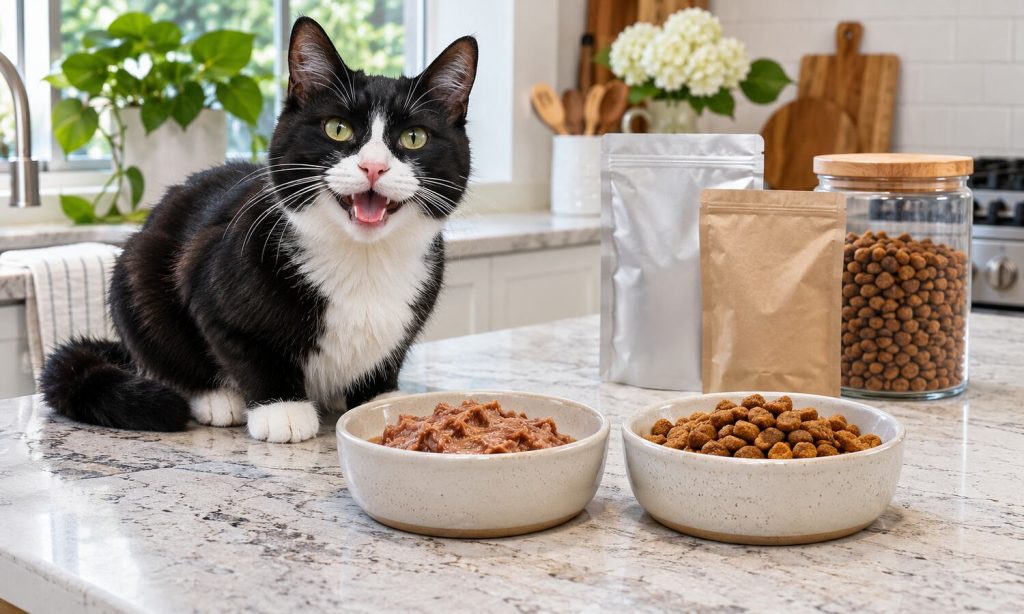
A cat food brand may sell dozens of recipes, yet one popular bag or can never tells the entire story. If you are comparing the best brands for cat food, begin with your cat’s age, health, food preferences, and the precise recipe on the label. This guide examines one verified, representative adult food from seven established brands. We compare everyday indoor kibble, grain-inclusive and grain-free recipes, and a wet-food assortment. The goal is practical product comparison, not a blanket claim that one manufacturer is medically superior. A nutritional adequacy statement, calorie content, current ingredients, and a feeding plan matter more than packaging slogans. Cats with kidney disease, urinary problems, allergies, or other diagnosed conditions may need a veterinarian-selected diet rather than these general adult foods. For help with the related decision, see how to read cat food labels.
Quick Picks
Each selection illustrates one brand’s particular adult formula. It does not grade every food that brand makes or replace checking your cat’s life-stage needs.
| Product | Best For | Key Advantage | Buy | |
|---|---|---|---|---|
| Purina Pro Plan Adult Indoor Chicken & Rice | Indoor adult high-protein kibble | Chicken-first indoor dry recipe | View on Amazon | Jump to Review |
| Hill’s Science Diet Adult Indoor Chicken | Indoor adults needing portion discipline | Chicken recipe with fiber positioning | View on Amazon | Jump to Review |
| Royal Canin Indoor Adult Dry Cat Food | Indoor cats ages one to seven | Fiber and calorie-focused adult recipe | View on Amazon | Jump to Review |
| IAMS Proactive Health Indoor Chicken & Turkey | Everyday indoor poultry kibble | Chicken-and-turkey dry recipe | View on Amazon | Jump to Review |
| Wellness Complete Health Adult Chicken with Grains | Grain-inclusive adult kibble | Chicken recipe with whole grains | View on Amazon | Jump to Review |
| Tiki Cat After Dark Wet Variety Pack | Moist chicken-based adult meals | Wet shredded recipes with organ meat | View on Amazon | Jump to Review |
| Blue Buffalo Wilderness Adult Indoor Chicken | Grain-free chicken kibble seekers | Chicken-first dry adult formula | View on Amazon | Jump to Review |
1. Purina Pro Plan Adult Indoor Chicken & Rice

What We Like
- Adult indoor formulation
- Chicken-first ingredient claim
- Small three-and-a-half-pound bag
- Protein-focused product positioning
What We Don’t Like
- Dry food adds little moisture
- Chicken formula may not suit all cats
Purina Pro Plan’s Indoor Chicken & Rice dry food illustrates a protein-focused adult indoor formula. The selected listing is a 3.5-pound bag with chicken as the first ingredient. Its focus is normal adult feeding and body-condition support rather than a therapeutic veterinary diet. This specific bag is the comparison product, not every Purina recipe under the broader brand. A small bag gives useful flexibility before a long-term pantry commitment. A brand name is not the same as a nutritional adequacy statement. Check whether the exact product fits adult maintenance or another life stage.
This small package can be helpful when testing a kibble your cat has not previously eaten. Measure by calorie guidance and transition gradually from a tolerated food. Cats offered dry diets should have reliable fresh drinking water. Monitor body weight instead of assuming indoor branding automatically manages calories. A feeding puzzle may help slow a cat that bolts its food. Its indoor positioning is relevant to many adult pet owners, but the portion still needs measuring. Compare calories per measured amount. Similar-looking bags and cups can deliver different energy, especially for inactive indoor cats.
High protein on the front panel is a marketing emphasis; evaluate the full nutrition statement and individual medical needs. Chicken is relevant if your cat has an established sensitivity, but allergies require veterinary diagnosis. A small bag may cost more per pound than bulk packaging. The best value is the food your cat can eat consistently and appropriately. Compare the price per appropriate daily ration rather than the price per bag alone.
My Recommendation
Compare this for a healthy adult indoor cat whose owner prefers measured dry meals. The smaller bag limits commitment, and the formula’s intended use is clear. If moisture intake through food is a priority, contrast it with the Tiki Cat wet assortment before choosing.
2. Hill’s Science Diet Adult Indoor Chicken

What We Like
- Adult one-to-six-year label
- Chicken indoor formula
- Fiber included in product description
- Seven-pound middle-size bag
What We Don’t Like
- Not intended for every life stage
- Dry format requires water access
Hill’s Science Diet Adult Indoor Chicken is designed for cats approximately one to six years old, according to the selected label. The verified listing describes a seven-pound bag, protein for lean body condition, and natural fiber. Those are specific formulation goals rather than proof this food works best for every adult cat. Its middle bag size can suit regular household use. The seven-pound bag sits between tiny samples and very large packages. Compare calories per measured amount. Similar-looking bags and cups can deliver different energy, especially for inactive indoor cats.
For an indoor cat prone to gradual weight gain, begin with the current feeding guide and track body condition. The phrase indoor does not allow unlimited kibble. Feed measured meals, note treat calories, and adjust only with appropriate guidance. A gradual transition may be especially helpful for a cat that currently eats a very different protein or fiber profile. A predictable dry-food routine can simplify tracking, but should not hide symptoms. Dry and wet foods need different storage routines. A choice that does not fit your schedule may lead to waste or inconsistent portions.
This is a general adult formula, so an older cat or kitten may need another product. Manufacturers often offer separate life-stage and prescription ranges under the same brand; don’t confuse them. Fiber claims also should not replace an examination for chronic constipation, vomiting, or hairball problems. Confirm ingredients on the exact bag before buying. The selected product’s age range is worth checking as your cat grows older. Ingredients are useful for identifying known intolerances, but the first ingredient alone cannot establish overall nutritional quality.
My Recommendation
This fits an owner seeking a defined adult-age indoor formula and a moderate bag size. It can support a measured feeding routine, but isn’t a universal medical solution. If you need a smaller trial package, compare Purina’s selected bag or another suitable size.
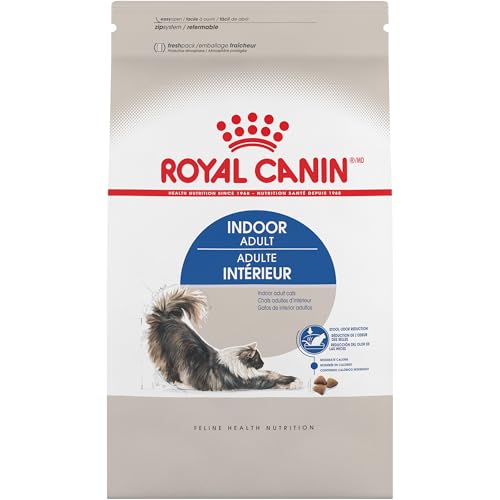
3. Royal Canin Indoor Adult Dry Cat Food
What We Like
- Indoor adult age range stated
- Fiber and hairball positioning
- Seven-pound bag option
- Calorie-control emphasis in listing
What We Don’t Like
- May not fit outdoor active cats
- Specific age range limits use
Royal Canin Indoor Adult is a dry recipe positioned for cats around one to seven years old. Its product description emphasizes fiber, hairball management, and controlled calorie content for less-active animals. The selected seven-pound package is intended for regular adult feeding. Those features may align with an indoor routine, but individual energy needs vary even among cats that spend all day inside. Its emphasis on hairball-related fiber is a specific marketing difference to evaluate. Dry and wet foods need different storage routines. A choice that does not fit your schedule may lead to waste or inconsistent portions.
This is worth comparing when activity level and measured portions are your main concerns. Use the bag’s daily feeding chart as a starting point, then check weight trends over several weeks. An indoor cat with high play activity may need a different portion than a sedentary one. Offer clean drinking water and consider moisture from suitable wet meals. Track stool and vomiting honestly rather than assuming every hairball claim is an outcome guarantee. Ingredients are useful for identifying known intolerances, but the first ingredient alone cannot establish overall nutritional quality.
Hairball wording does not mean frequent vomiting is normal or should be ignored. Seek veterinary advice if your cat retches repeatedly, loses appetite, or loses weight. Royal Canin sells many life-stage and condition-specific formulas, so buy the exact adult indoor item rather than assuming similar packaging describes the same nutrition. Check current bag details carefully. A healthy indoor routine includes play and weight checks beyond the food choice. An indoor label may signal a feeding focus, yet it does not guarantee weight control. Daily calories and body condition still matter.
My Recommendation
Choose this for comparison if your healthy adult cat is primarily indoors and you value an explicitly age-targeted kibble. Fiber and calorie positioning are useful discussion points. Do not rely on the brand name alone when a pet has medical or age-related requirements.
4. IAMS Proactive Health Indoor Chicken & Turkey

What We Like
- Poultry-first formulation
- Seven-pound standard bag
- Indoor cat feeding focus
- Fiber-focused product positioning
What We Don’t Like
- Only dry texture in this choice
- Not suitable for all protein restrictions
IAMS Proactive Health Indoor Chicken & Turkey illustrates a mainstream adult indoor kibble. The selected product is a seven-pound bag with poultry emphasized in the ingredient description. It is marketed for normal daily feeding and indoor concerns such as weight or hairballs. That makes it relevant to the same shopper as the Hill’s or Royal Canin options, though the exact nutrition differs. This formulation offers a familiar chicken-and-turkey flavor profile. Ingredients are useful for identifying known intolerances, but the first ingredient alone cannot establish overall nutritional quality.
If your cat already enjoys poultry-flavored dry food, this may be straightforward to introduce in measured portions. Compare calorie content to your current kibble before deciding that the same cup volume is appropriate. Wash feeding bowls and maintain fresh water. In a multi-cat household, consider separate bowls so you can see which animal eats what. A cup of this kibble may not match the calories in a cup of the previous recipe. An indoor label may signal a feeding focus, yet it does not guarantee weight control. Daily calories and body condition still matter.
A brand statement that veterinarians recommend a product should not replace advice for your particular cat. Check full ingredient and adequacy labels, especially when food sensitivities are suspected. This choice may be less appealing for cats that reliably prefer wet textures. Changing brand alone will not solve a medical problem without diagnosis. Use the label and your cat’s response to decide whether the switch fits. The listed price of a bag or case is not a complete feeding cost. Calculate cost per appropriate daily serving once you know calorie needs.
My Recommendation
IAMS is worth considering for a routine adult indoor poultry-kibble comparison, particularly if your cat is already comfortable with dry food. I would compare calories per day rather than only bag price. A wet option may better suit a cat that favors soft meals and moisture-rich feeding routines.
5. Wellness Complete Health Adult Chicken with Grains

What We Like
- Grain-inclusive adult formula
- Five-pound package
- Chicken recipe positioning
- Balanced protein-and-fat emphasis
What We Don’t Like
- Not ideal for every preference
- Check individual grain intolerance history
Wellness Complete Health Adult Chicken with Grains provides a useful contrast to grain-free marketing. The selected dry formula is sold in a five-pound bag and is positioned for adult cats, with chicken and a combination of nutrients. Grain-inclusive is not a drawback by itself. The full recipe and its adequacy statement should decide whether it suits your cat. Its inclusion of grains offers a meaningful contrast in the shortlist. An indoor label may signal a feeding focus, yet it does not guarantee weight control. Daily calories and body condition still matter.
This middle-sized bag allows a household to compare a different ingredient approach without purchasing a very large case. Transition gradually and measure portions using the current calorie information. Watch the cat’s appetite, stool, and body condition rather than attributing every change to the presence or absence of grains. Keep treats and extra food consistent during the transition. Routine monitoring is more useful than attributing all problems to one ingredient category. The listed price of a bag or case is not a complete feeding cost. Calculate cost per appropriate daily serving once you know calorie needs.
Food intolerance cannot be determined by guessing from a grain-free or grain-inclusive label. Veterinary evaluation may be needed if vomiting, itching, or chronic loose stool persists. Check the current bag for life-stage suitability and specific ingredients, especially if your cat has a documented diagnosis. Do not replace a therapeutic diet with this general formula. Compare serving cost after accounting for different calorie densities. Recipe names, package sizes, and formulations change. Confirm the current item and its label before committing to regular purchases.
My Recommendation
Compare Wellness when you want a grain-inclusive dry adult option rather than automatically avoiding grains. Its five-pound size is practical for some households and regular pantry storage. The decisive factors remain adequate nutrition, tolerance, and appropriate portions, not the recipe’s grain marketing.
6. Tiki Cat After Dark Wet Variety Pack

What We Like
- Wet food adds dietary moisture
- Chicken-forward recipes
- Organ-meat ingredients listed
- Twelve small cans in pack
What We Don’t Like
- Opened cans need refrigeration
- Higher handling effort than kibble
Tiki Cat After Dark is the wet-food comparison in a list dominated by dry indoor formulas. The selected assortment contains small cans with chicken, organ meats, and broth according to its listing. Texture and moisture are the most immediate differences. For a cat that dislikes kibble or needs wet meals as part of an agreed feeding plan, this format may be more appealing. The small can format can be practical for measured wet meals. The listed price of a bag or case is not a complete feeding cost. Calculate cost per appropriate daily serving once you know calorie needs.
Wet meals require a different routine. Serve the appropriate portion, refrigerate leftovers promptly, and wash bowls after feeding. Check calories per can rather than replacing a cup of dry food with an equal-looking volume of wet food. Introduce the new texture gradually and confirm that the product is nutritionally adequate for your cat’s age and health status. A food with more moisture still requires free access to drinking water. Recipe names, package sizes, and formulations change. Confirm the current item and its label before committing to regular purchases.
A high-meat presentation is not a universal indicator of superior nutrition or a medical benefit. The selected recipes may cost more per daily calorie than dry food and create more packaging waste. Some cats refuse visible shreds or organ-meat textures. A food that is not eaten reliably offers no practical advantage regardless of the ingredient story. Wet feeding adds safe-handling steps that every household should plan for. A brand name is not the same as a nutritional adequacy statement. Check whether the exact product fits adult maintenance or another life stage.
My Recommendation
I would compare Tiki Cat for a healthy adult cat whose owner prefers moist, chicken-focused meals. It is a genuine format alternative to the kibble choices here. Be prepared to measure calories, store leftovers correctly, and confirm full nutritional adequacy on each current can.
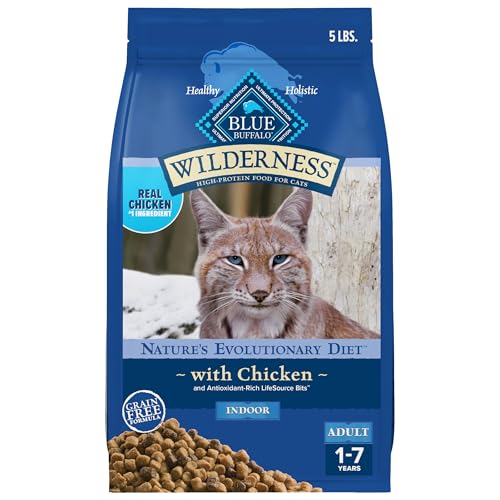
7. Blue Buffalo Wilderness Adult Indoor Chicken
What We Like
- Adult indoor positioning
- Chicken first ingredient listed
- Five-pound trial-friendly bag
- Grain-free recipe option
What We Don’t Like
- Grain-free is not inherently better
- Dry formula offers limited moisture
Blue Buffalo Wilderness Indoor Chicken is a grain-free adult dry food with chicken emphasized as its first ingredient. Its selected five-pound bag targets ordinary indoor feeding. The recipe is distinct from Wellness’s grain-inclusive chicken option, which makes comparing those two especially helpful. A grain-free formulation is a product characteristic, not a proven advantage for every cat. This is a grain-free counterpoint to the Wellness chicken formula. Recipe names, package sizes, and formulations change. Confirm the current item and its label before committing to regular purchases.
If your cat already eats a dry chicken recipe, assess the calories and ingredient differences before switching. Introduce the new kibble slowly, monitor appetite, and measure the daily ration. Provide fresh water and watch weight over time. In multi-cat homes, feeding separately may help distinguish the reaction of each animal to the changed formula. Compare the actual nutritional panel rather than treating grains as a quality verdict. A brand name is not the same as a nutritional adequacy statement. Check whether the exact product fits adult maintenance or another life stage.
Do not select grain-free food merely because it sounds closer to a natural diet. Cat nutrition should be judged on the complete formula, feeding evidence, and the animal’s needs. If a veterinarian has prescribed a special diet, ask before switching. Ingredient claims may change after formulation updates, so verify the exact product label. A healthy adult’s individual preference still determines whether the bag is useful. Compare calories per measured amount. Similar-looking bags and cups can deliver different energy, especially for inactive indoor cats.
My Recommendation
This is an option for a healthy adult indoor cat whose owner prefers a grain-free chicken dry recipe. Compare it directly with Wellness, IAMS, and Purina by calories and actual feeding cost. I would not treat grain-free labeling as a stand-alone quality score.
How to choose best brands for cat food
Choose a cat-food brand by examining the specific complete recipe you would feed, not a logo alone. Age, health, nutritional adequacy, portions, and household logistics shape the best choice. Brand reputation is only one consideration.
Evaluate the exact formula and appropriate life stage
Begin with a current nutritional adequacy statement. A cat-food company may make kitten, adult maintenance, senior, and veterinary therapeutic foods. A single product from that brand cannot represent all those categories. Confirm the selected recipe is complete and balanced for the life stage you need. Compare calorie content, feeding directions, and any known ingredient restrictions. The front label may emphasize chicken first, natural fiber, grain-free positioning, or a high-protein formula. Those descriptions can explain the intended product, but they do not establish a complete quality ranking. A cat with kidney or urinary disease may need specialized veterinary nutrition that none of these general adult picks supplies. Ask your veterinarian before switching a prescribed diet. For everyday feeding, use the package guide as a starting point and follow weight and body-condition trends. Treats and food from other family members contribute calories too. A brand that suits one cat may not suit the other cat living in the same home. For more context, explore cat nutrition made easy.
Compare wet versus dry routines, cost, and acceptance
Wet food and dry kibble differ in moisture, texture, portioning, storage, and waste. A can of wet food provides dietary water but needs safe handling and refrigeration after opening. Dry food is convenient to measure and store, yet its calorie density can make accidental overfeeding easy. Compare cost per day at a suitable calorie target, not price per pound or can alone. For a household with two cats, separate feeding can help you check intake and prevent one animal eating the other’s meal. Introduce any brand change gradually when the cat is healthy, and observe appetite, stool, weight, and activity. If a cat refuses new food, do not force a prolonged fast. Contact your veterinarian, especially if the cat is overweight, unwell, or stops eating. Remember that the manufacturer’s recipe lineup can change. Recheck the exact packaging whenever you order a new size or variety. The best brand for your family is the one with an appropriate formula that can be fed consistently. For more context, explore estimating daily portions of cat food.
Frequently Asked Questions
These questions help make brand comparisons more useful and less dependent on slogans.
Is one cat-food brand best for every cat?
No. Life stage, health conditions, complete nutrition, daily calories, and preference determine the fit of a particular recipe.
Does chicken as the first ingredient prove a food is better?
No. The whole formulation and its nutritional adequacy matter more than the position of one ingredient.
Is grain-free food always healthier?
No. Grain-free labeling is a recipe characteristic, not a universal quality measure for cats.
Should indoor cats only eat indoor-labeled formulas?
Not necessarily. A complete adult diet and an appropriate calorie plan may suit many indoor cats.
How can I compare the cost of wet and dry cat food?
Compare the cost of the actual daily calorie amount your cat needs, while accounting for storage, waste, and preference.
Final Verdict
The seven brands here illustrate different adult feeding approaches. Purina Pro Plan, Hill’s Science Diet, Royal Canin, and IAMS focus on distinct indoor kibble formulas. Wellness gives a grain-inclusive adult chicken option, Blue Buffalo offers a grain-free comparison, and Tiki Cat provides a wet-food alternative. There is no universal winner for the best brands for cat food. Verify the exact product’s life-stage adequacy, feeding directions, and calories. Choose a sustainable routine based on your cat’s appetite, weight, and veterinary needs rather than a brand slogan.
You may also find wet cat foods for indoor cats useful while making your decision.
Affiliate disclosure: This article contains Amazon affiliate links. If you purchase through them, PetAdvisorPro may earn a commission. As an Amazon Associate I earn from qualifying purchases.









