
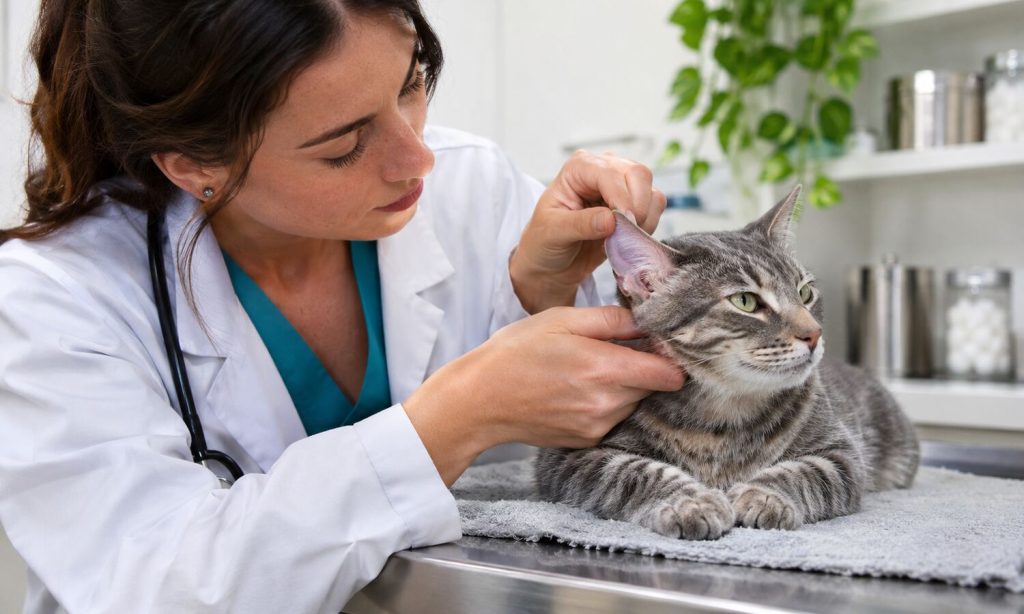
A cat that scratches its ears, shakes its head, or develops dark ear debris may have ear mites. But similar signs can arise from bacterial or yeast infections, inflammation, allergies, and other problems. Learning how to compare treatment for ear mites in cats options by fit and use begins with a veterinarian confirming the cause. The correct medicine depends on the cat's age, health, eardrum condition, other medications, and contact with pets in the household.
This guide explains diagnostic steps, treatment routes, cleaning precautions, and follow-up questions without ranking medicines. If you are searching for the best treatment for ear mites in cats, begin with a diagnosis rather than a general shopping list. Ear discomfort can be painful, and using the wrong medication or cleaning method may delay care. Early veterinary guidance protects both the affected cat and its animal companions.
Confirm That Mites Are Actually Present
Ear mites are tiny parasites that can cause inflammation of the outer ear canal. Common signs include frequent scratching, head shaking, dark debris, redness, and sometimes skin damage from repeated scratching. None of these signs proves that mites are present. A cat with an ear infection may look very similar, and more than one problem may exist at once. Your veterinarian will take a history and examine the ears, often using an otoscope and a microscopic sample of debris.
The examination can reveal whether mites, bacteria, yeast, foreign material, or other causes require attention. An ear canal that is extremely painful or swollen may need special handling. Do not push cotton swabs deep into the canal to look for mites at home. That can cause injury or drive debris inward. Our guide to medicine for a cat ear infection explains why distinguishing types of ear disease matters before medicine is chosen. Treatment choice follows diagnosis, not the appearance of wax alone.
Understand the Main Treatment Routes
Veterinarians may use appropriately labeled antiparasitic medications applied to the skin or medication directed into the ears, depending on the individual case and current prescribing guidance. These approaches differ in how they are administered, what parasites they cover, and the precautions they require. A skin-applied treatment is not interchangeable with an ear-cleaning solution, and a cleaning product does not necessarily kill mites. Do not assume that any medicine marketed for fleas will be suitable for ear mites.
Ask the veterinarian whether the prescribed plan targets the mite itself, associated inflammation, or a secondary infection. Those can be different treatment goals. If the cat also has an ear infection, additional therapy may be needed. Never place a preparation into a painful ear without guidance, particularly if eardrum integrity has not been checked. How to compare treatment for ear mites in cats options by fit and use means understanding what each prescribed step is intended to achieve and how success will be reassessed.
Compare Practical Fit for Your Cat and Household
Administration matters. Some cats tolerate gentle handling and medicine reliably, while others become very distressed when their ears are touched. Discuss the handling plan honestly with your veterinarian. An approach that caregivers cannot administer accurately may require adjustment. Consider the cat's weight, age, medical conditions, and any other parasite medications already given. A medicine that is safe for one species or age group may be dangerous for another, so never share a pet's prescription.
Ear mites are contagious among cats and can affect dogs, especially where animals have close contact. Tell the veterinary team about all household pets, recent introductions, and any animals showing ear symptoms. Your veterinarian may advise assessment or treatment of in-contact animals to reduce reinfestation. Keep records of which animal receives which medicine and on what date. Avoid confusing multiple packages or dosing schedules. A household-wide plan should be individualized; treating only the most visibly itchy cat may leave the underlying exposure problem unresolved.
Use Ear Cleaning Only as Directed
Wax and debris may interfere with treatment, but aggressive home cleaning can injure an inflamed ear. The veterinarian should decide whether cleaning is needed, what solution is appropriate, and whether the first cleaning should occur in the clinic. Do not use alcohol, peroxide, oils, or household disinfectants in the ear. Avoid deep swabbing. For a very painful cat or a suspected damaged eardrum, a professional examination is particularly important before any liquid enters the canal.
If the veterinarian prescribes home cleaning, ask for a demonstration. Follow the frequency and technique carefully, and stop if the cat becomes very painful, dizzy, or distressed. Use clean materials, wash hands, and separate the cleaner from the actual antiparasitic medicine so you do not omit either step. Our overview of medicines for feline ear infections offers related discussion, but it cannot replace instructions for the current infection. More cleaning is not automatically better, especially when tissue is already inflamed.
Follow the Full Plan and Monitor Response
Follow the prescribed schedule and do not discontinue treatment just because the cat scratches less after a few days. The exact course depends on the medicine and the veterinarian's instructions. Keep a log of administration dates, appetite, head shaking, ear discomfort, and any adverse signs. If the cat spits out a medicine, resists application, or a dose is missed, contact the clinic for advice instead of guessing at a replacement quantity.
Improvement should include greater comfort and declining abnormal debris, but appearance alone cannot always confirm mite elimination. A recheck may be recommended to inspect the canal and assess any remaining infection. If symptoms worsen, the ears become painful, discharge develops, or the cat seems unwell, seek veterinary care promptly. How to compare treatment for ear mites in cats options by fit and use also includes the reliability of follow-up and your ability to complete the plan safely. A partial course can leave the household facing the same problem again.
Recognize Urgent Signs and Treatment Reactions
A severe head tilt, loss of balance, eye movements, significant pain, marked swelling, or sudden decline in general condition requires prompt veterinary assessment. These signs may reflect deeper ear disease or another serious problem. Do not wait for a routine appointment if the cat cannot walk normally or appears acutely distressed. Significant self-trauma from scratching can also produce wounds or a swollen ear flap. Keep the cat calm and prevent further injury while arranging care.
After applying a prescribed medication, watch for unexpected skin reactions, excessive drooling, vomiting, weakness, or unusual behavior. Contact the prescribing veterinarian if these occur. Do not use dog-only treatments on cats or combine parasite medicines without professional approval. Products can differ substantially in active ingredients and safety margins. A neighbor's successful experience does not establish that the same treatment fits your cat. When the problem is medical, individual instructions matter more than anecdotal shortcuts.
Prevent Reinfection and Protect Other Pets
Tell the veterinarian about recent rescues, foster animals, and shared sleeping or grooming areas. Follow the household advice for in-contact pets and any recommended environmental hygiene. Wash bedding and clean grooming tools when appropriate, but do not rely on household spraying to replace treatment of infected animals. Avoid using pesticide products around cats without suitable labeling and veterinary guidance. Routine parasite prevention may be considered based on the animal's lifestyle and veterinary plan.
Use follow-up visits to clarify whether the original diagnosis was correct and whether lingering itch requires a different investigation. Persistent ear disease may involve infection, allergy, or other causes in addition to, or instead of, mites. Our guide to early signs of infections in cats helps put accompanying symptoms in context. A complete plan treats the diagnosed problem, monitors the cat's comfort, and prevents avoidable recurrence through sensible care of all animals involved.
Frequently Asked Questions
Cat ear problems are often mistaken for one another because scratching and dark debris are common signs. These answers emphasize why diagnosis comes first. Treatment route, duration, and cleaning technique depend on the exact findings and the medicine prescribed to the individual cat.
Do not begin an improvised treatment while waiting for a veterinary appointment. Keep the cat comfortable, prevent injury from scratching where practical, and provide the clinic with a clear history of symptoms and any products already used.
Can dark ear wax confirm ear mites?
No. Dark debris can occur with mites but also with infections and other ear conditions. Veterinary examination and microscopy help identify the cause.
Are ear cleaners enough to kill mites?
Usually not. Cleaning may remove debris, but antiparasitic medication is needed to treat an actual mite infestation. Follow the veterinarian's plan for both steps.
Must other pets be treated too?
Possibly. Ear mites spread through close contact. Tell the veterinarian about all cats and dogs in the household so each pet can be assessed and treated appropriately.
Can I use a dog's ear mite medicine on a cat?
No, unless a veterinarian specifically prescribes it for that cat. Species, weight, age, ingredients, and dosing can change safety considerably.
What if the scratching continues after treatment?
Arrange a recheck. Mites may persist, reinfestation may occur, or a secondary infection or different diagnosis may explain the symptoms. Do not repeatedly change medicines yourself.
Final Words
How to compare treatment for ear mites in cats options by fit and use starts with an accurate diagnosis. Then discuss the chosen antiparasitic route, cleaning needs, handling practicality, and care of in-contact pets. Complete the prescribed plan and keep the follow-up appointment when recommended. Severe pain, balance problems, or worsening illness need prompt veterinary attention.
If you are looking for the best treatment for ear mites in cats, remember that 'best' means appropriate for a particular diagnosed patient. The plan should be safe, realistic to administer, and effective against the identified problem. A veterinarian can explain why one route makes sense for your cat and what improvement should look like.
Reference
The following veterinary sources explain the signs, diagnosis, transmission, and management of ear mites and related feline ear disorders. They support the need for professional examination and appropriately prescribed antiparasitic treatment. They do not justify diagnosing ear disease by appearance alone or using products intended for another species.
Treatment recommendations may change as medicines and labeling change. The veterinarian caring for your cat should interpret these resources in light of the current examination, medical history, age, and household contacts. Follow the prescribed instructions even when general educational material describes different treatment routes.









