
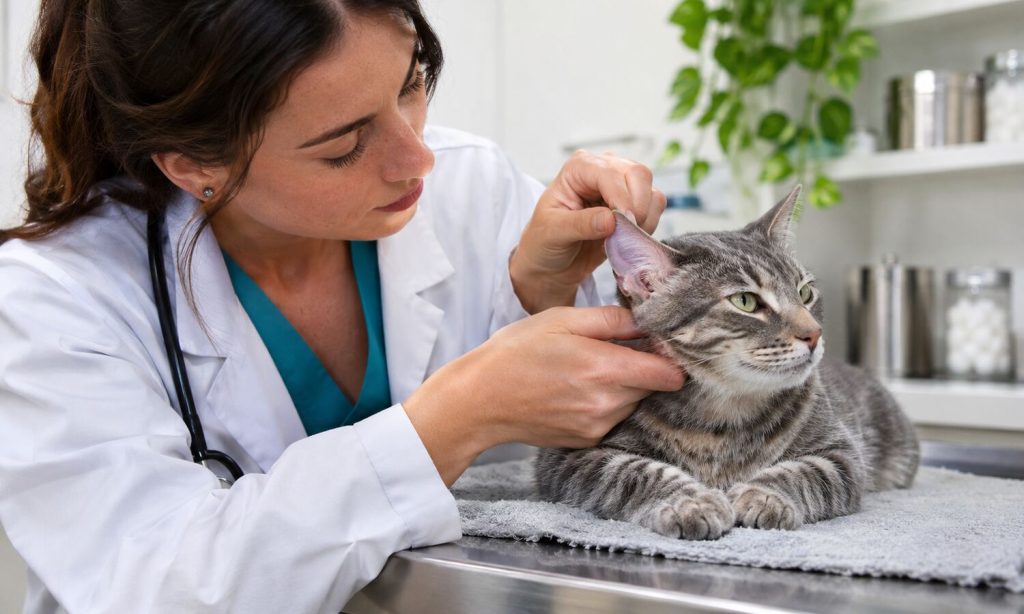
An itchy, painful cat ear is not a problem to solve by guessing at a bottle. Owners searching what to look for in a medicine for cat ear infection should first ask what is causing the inflammation. Ear mites, bacteria, yeast, allergies, foreign material, and deeper ear disorders need different care. An ear medication that helps one condition may fail or cause harm in another. This guide explains what a veterinarian checks and which safety questions matter.
Watch for head shaking, scratching, discharge, odor, swelling, or a cat avoiding touch near its ears. These signs warrant a veterinary examination. An overview of cat ear drops may introduce common medication formats, but it cannot determine the correct treatment for your cat. The ear canal and eardrum must be assessed before applying solutions. Seek prompt help if a cat has marked pain, head tilt, loss of balance, or neurologic changes.
Diagnosis Comes Before Medication
Cornell’s feline health resources describe otitis externa as inflammation of the outer ear canal and emphasize a complete examination. A veterinarian looks at the ear, checks the history, and may examine discharge under a microscope. This helps distinguish mites, yeast, bacteria, and other causes. Ear infections can be secondary to another problem, such as an underlying allergy or growth. Treating only the visible discharge can leave that trigger unresolved and allow symptoms to return. Tell the clinician whether one ear or both are affected and whether the cat has had previous episodes.
An otoscope may help the veterinarian inspect the canal and eardrum if the cat can tolerate it. Painful cats sometimes need sedation for a safe examination and cleaning. An intact eardrum is an important safety consideration because certain ear preparations may be unsuitable if the membrane is damaged. Do not force cotton swabs down the canal or flush it deeply at home. Excessive cleaning can push debris inward or worsen pain. A veterinarian will decide whether cytology, culture, imaging, or further workup is justified.
What the type of problem changes
Ear mites are parasites that often cause intense scratching and dark debris. A mite-directed treatment differs from an antibiotic intended for bacterial infection. Yeast-associated otitis may call for an antifungal approach, while severe inflammation can require additional control. Sometimes the veterinarian recommends addressing a systemic disease or environmental factor. Never assume dark wax proves mites or foul odor proves bacterial infection; appearances overlap. A medication should match the diagnosis, not a photograph found online.
If the cat has had several episodes, ask what underlying conditions are being considered. The clinician may evaluate allergies, anatomical changes, polyps, or chronic inflammation. Long-standing disease can narrow or damage the canal and reduce hearing. Prompt diagnosis helps limit those complications. Our article on early signs of infection in cats explains broader symptoms that can indicate illness beyond the ear. A cat with a fever, low appetite, or unusual behavior needs assessment of its overall health rather than only local treatment.
Important Questions About Any Prescribed Ear Medicine
Ask the veterinarian to name the medication’s intended target and explain whether it is for bacteria, yeast, mites, inflammation, or a combination. Confirm the dosing amount, number of applications per day, duration, and whether the ear needs cleaning first. Some medicines are designed for clinic administration, while others are given by the owner at home. Do not apply extra doses because the ear still looks dirty. Repeated or excessive use can irritate tissue, and the wrong medication may delay effective treatment. Record the instructions before leaving the appointment.
Discuss possible side effects, including irritation, redness, pain, drooling after grooming, or worsening balance. Ask what to do if a dose is missed or the cat shakes its head immediately afterward. Check whether other ear medicines, topical parasite products, or medications could conflict. Store the medicine as directed and keep it out of children’s and animals’ reach. Do not share an old prescription between cats; even similar symptoms can have different causes. If the label conflicts with verbal instructions, call the veterinary practice before proceeding.
Why eardrum status matters
Some ear medications and cleaning agents are potentially harmful when they enter the middle ear through a ruptured eardrum. A cat with head tilt, abnormal eye movements, unsteady walking, or sudden hearing changes needs urgent veterinary evaluation. Do not test the ear with hydrogen peroxide, alcohol, essential oils, or other home mixtures. These substances can irritate already inflamed tissue. The safest fluid is the one your veterinarian has specifically approved for this ear and this diagnosis, with clear instructions on how to use it.
For an especially anxious or painful cat, request a demonstration of the application technique. The clinic may show gentle restraint, how to hold the ear flap, and how to avoid placing the applicator too far into the canal. Follow your cat’s stress signals and avoid wrestling that risks a bite or injury. If the cat cannot be medicated safely at home, ask about alternative administration options. Completing the prescribed course matters, but safe handling matters too; contact the veterinarian rather than silently stopping or improvising.
Monitoring, Follow-Up, and Prevention
Signs may improve before an infection is fully controlled. Follow the prescribed schedule and attend the recheck if recommended. Your veterinarian may want to inspect the ear or repeat cytology to confirm that the selected treatment worked. Keep notes about discharge, odor, scratching, and discomfort, but do not equate one quiet day with cure. Contact the clinic if symptoms worsen, the cat refuses food, or balance changes occur. For severe pain or neurologic signs, seek urgent care instead of waiting for a routine appointment.
Most cats do not need frequent ear cleaning when their ears are healthy. Examine the visible ear gently during normal grooming, and ask for a safe cleaning routine if the cat has a diagnosed recurring problem. Overcleaning can irritate the canal. Avoid putting cotton swabs deep into the ear. For cats with confirmed mites, the veterinarian may advise treatment or assessment of other pets in the household. Our guide to ear mite treatments for cats provides background on that distinct parasite problem, which should not be confused with all ear infections.
Avoid leftover drops and self-diagnosis
Medicine saved from an earlier episode may be expired, contaminated, or unsuitable for the current infection. Even a previous diagnosis of ear mites does not prove that today’s redness has the same cause. Never use human ear drops without veterinary direction. Some ingredients or dosing methods are not appropriate for cats, and certain agents have risks when the eardrum is compromised. The question of what to look for in a medicine for cat ear infection is ultimately about confirmed cause, dosing clarity, and safety—not the strongest-sounding label.
If cost or scheduling limits care, call the clinic and explain the symptoms rather than experimenting with unverified remedies. Staff can advise how urgently your cat should be seen. Take clear photos of visible discharge, but do not try to photograph deep inside the canal with an object. Keep the ear dry until assessed unless directed otherwise. Watch for scratching that causes wounds around the face and head. A cone or other protection should be used only on professional advice and with safe fit.
Frequently Asked Questions
Medicine choice depends on examination findings. These questions highlight common risks while reinforcing the need to diagnose the actual cause of an ear problem.
If your cat shows a head tilt, unsteady walking, seizures, severe pain, or sudden hearing changes, seek urgent veterinary attention. Do not wait for a home treatment to work.
Can I use leftover ear drops from a previous infection?
No. The cause may be different, and the product may be expired or unsafe if the eardrum is damaged. Ask a veterinarian to reassess the ear.
Are ear mites the same as a bacterial ear infection?
No. Mites are parasites, while bacterial and yeast infections require different diagnostic and treatment considerations. They can occasionally occur together.
Should I clean the ear before giving medicine?
Only if your veterinarian directs you to do so. Some ears need professional cleaning, and improper flushing or swabbing can worsen injury.
How will I know the medicine is working?
Less discomfort, discharge, or scratching can be encouraging, but a recheck may be needed. Follow the prescribed course and contact the clinic if signs persist.
Is an ear infection an emergency?
Marked pain, neurologic changes, head tilt, loss of balance, or severe illness warrant urgent care. Milder symptoms still need a timely veterinary appointment.
Final Words
What to look for in a medicine for cat ear infection is not a secret ingredient list. The essential checks are an accurate diagnosis, an examination of the ear and eardrum, clear dosing instructions, and a plan for monitoring. Ear mites, yeast, bacteria, and noninfectious inflammation can look alike to an owner, yet they demand different responses.
Read about cat ear drops only as background, and let the veterinarian select the treatment appropriate to your cat. Do not use leftover medicine or unapproved home mixtures. With proper diagnosis, safe administration, and follow-up, many outer-ear problems can improve while limiting the risk of longer-term damage.
Reference
The following veterinary-school sources informed the medical and safety explanations. They discuss diagnosis and common causes but do not replace an examination.
Only a treating veterinarian can decide which medication is appropriate after checking the individual cat and the condition of its ear.









