
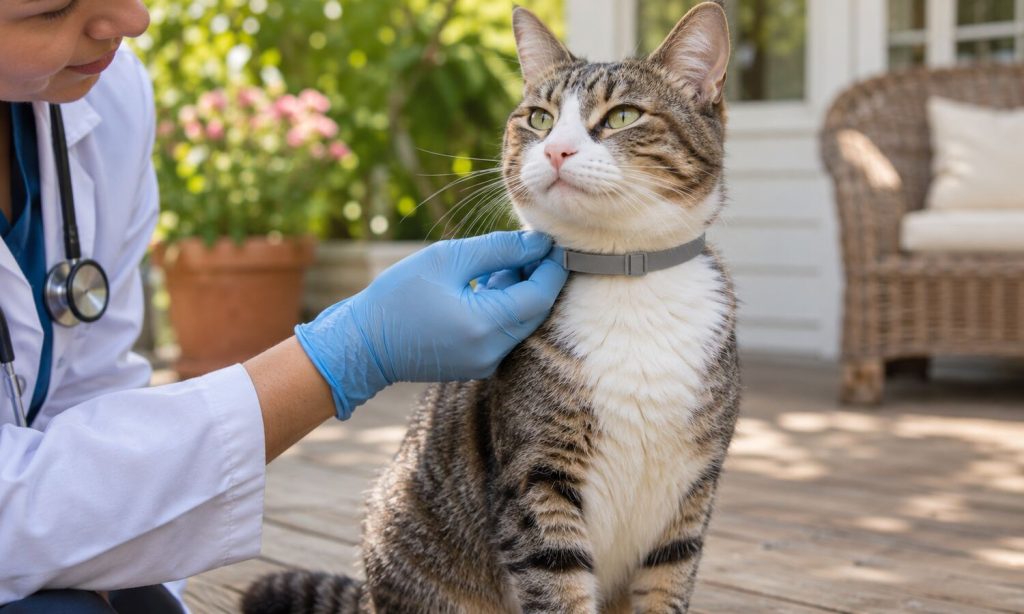
A flea collar seems simple until the label, fit, and safety questions come into focus. Common mistakes when choosing a flea and tick collar for cats include using a dog-only product, overlooking the age restrictions, and assuming every collar controls the same parasites. Collars can cause adverse effects. This guide focuses on reading the label and discussing parasite prevention with a veterinarian rather than choosing a brand for you.
Before selecting a collar, confirm that fleas or ticks are actually part of your cat’s risk profile. Cats that go outdoors, share homes with dogs, or live in areas with heavy parasite activity may need tailored plans. A guide to a cat flea collars can help you understand the form factor, but a cat-safe label and your veterinarian’s advice should decide whether a collar is appropriate. A collar cannot replace treatment for illness or a heavy infestation.
Mistake One: Ignoring Species, Age, and Health Restrictions
The most dangerous shortcut is assuming a flea-control product labeled for dogs is also safe for cats. Certain pesticide ingredients and concentrations tolerated by dogs can be very harmful to cats. The US Environmental Protection Agency says to use flea and tick products only on the animal species specified on the label. Read the entire carton and the collar directions, including minimum age or weight, warnings, replacement timing, and whether concurrent parasite products are restricted. Do not rely on a product name or an online photo when the printed directions differ.
A cat with a history of skin disease, seizures, sensitivity to pesticides, or other medical conditions deserves a veterinary review before starting a new treatment. Kittens, pregnant or nursing cats, and seniors may have additional restrictions. Do not combine a collar with a topical or oral pesticide simply because the protection sounds stronger. Ingredients can overlap, and using multiple products may increase the risk of adverse reactions. Keep the original packaging so you can identify active ingredients and emergency contact details if a problem appears later.
Read what the label actually promises
Some labels specify flea control but not tick control, while others cover particular tick species or life stages. A statement about repelling a parasite is not necessarily the same as a statement about killing it. Match the legally approved label to your local risk with help from your veterinarian. EPA registration and FDA oversight depend on the type of product and claims; registration does not mean a collar has zero risk. Avoid interpreting a longer advertised duration as proof of greater safety or suitability.
Also check instructions about water exposure, bathing, swimming, storage, and disposal. A collar may work differently if it is worn too loosely, damaged, or removed repeatedly. Product labels can change, so the packaging in your hand is the relevant instruction set. Never trim, reuse, or modify a medicated collar unless its instructions explicitly permit it. If you have several pets, prevent them from chewing each other’s collars and ask the veterinarian about household exposure.
Mistake Two: Overlooking Fit and Breakaway Safety
A collar must be fitted according to its own directions, not a universal rule copied from a standard identification collar. Too loose, and the cat may snag it or get a jaw or paw caught. Too tight, and it can rub, cause pressure, or irritate skin. Check the manufacturer’s fit method and any specified adjustment or trimming steps. Monitor a new collar closely. The safety features of an ordinary breakaway ID collar are not necessarily the same as those on a medicated collar, so do not assume they operate identically.
Cats climb fences, hide in brush, squeeze through gaps, and groom themselves vigorously. Any collar can create mechanical hazards in certain situations. Ask whether a collar is a suitable prevention method for a cat that spends time outdoors or often gets caught on objects. Inspect the neck for hair loss, redness, sores, or discomfort. Do not leave a poorly fitting collar in place because it is still within its advertised treatment period. If the cat resists the collar, contact your veterinarian for a safer alternative rather than forcing prolonged wear.
Respond quickly to a possible reaction
The EPA instructs owners to remove a flea and tick collar immediately if an adverse reaction occurs. Signs may include marked itching, redness, abnormal behavior, drooling, vomiting, weakness, tremors, or seizures. Contact a veterinarian or animal poison-control service immediately for concerning signs, and keep the package available to identify ingredients. Do not apply oils, human creams, or home remedies to counteract a pesticide reaction unless directed by a professional. Never wait for severe neurologic symptoms to resolve on their own.
After removing the collar, follow veterinary advice about skin cleaning or other treatment. A reaction report can help regulators identify safety patterns, but medical care comes first. The FDA and EPA provide reporting pathways depending on the product’s regulatory category. Record when the collar was applied, when signs began, what other treatments were used, and whether another pet contacted it. This information is more valuable than guessing from social-media comments about which ingredient caused the event.
Mistake Three: Treating a Collar as the Entire Flea Plan
Even an appropriate prevention product may not eliminate an established home infestation by itself. Fleas develop through egg, larval, pupal, and adult stages, and immature stages often remain in bedding and household environments. Use a veterinarian-recommended plan addressing the animal and its environment. Wash washable bedding, vacuum appropriate areas, and follow safe environmental control directions. Our guide on how to reduce fleas in the home explains why consistency matters. Preventing reinfestation is a process, not a single afternoon of putting on a collar.
Look for actual evidence of fleas instead of assuming scratching is diagnostic. A flea comb may reveal adults or dark flea dirt, but itching can also result from allergies, infection, or other skin disease. Our article on how to identify fleas on cats describes useful observations. If your cat develops pale gums, extensive hair loss, significant sores, or persistent itching, arrange veterinary care. Fleas can transmit some pathogens and may cause anemia in vulnerable animals. Addressing health effects is more important than experimenting with several over-the-counter formats.
Consider tick risk separately
Tick species and disease risks vary by region, habitat, season, and local wildlife. Not all cat collars protect against the same ticks, and cats may require a different prevention strategy than dogs in the household. Ask a local veterinarian which parasites are prevalent and whether the collar’s labeled claims match them. Examine your cat’s coat and skin after outdoor activity when practical, using safe handling if ticks are found. Do not apply unlabeled pesticides to the animal or attempt harsh chemical baths in response to a bite.
For outdoor cats, review indoor shelter, grooming checks, and a sustainable parasite-control schedule. Our broader discussion of flea prevention for outdoor cats explains the different needs of cats with outdoor exposure. If several animals share a home, coordinate their plans so one untreated pet does not undermine control efforts. The safest parasite plan is one everybody in the household understands and follows; an impressive-looking collar is no substitute for that consistency.
Frequently Asked Questions
Collars should be assessed individually, with the specific label and your cat’s medical history in view. The following questions address common points of confusion but do not replace veterinary guidance.
If a cat has signs of pesticide toxicity or severe illness, remove the collar if it is safe to do so and seek professional help immediately. General fitting advice is not emergency treatment.
Can a dog flea collar be used on a cat?
No. Use only a product specifically labeled for cats and for the cat’s age and weight. Some dog treatments contain ingredients that are dangerous to felines.
Do all flea collars protect against ticks?
No. Review the product’s actual tick claims and species coverage. Ask your veterinarian whether they match the risks in your area.
What if the collar irritates the skin?
Remove it promptly and contact your veterinarian. Redness, sores, hair loss, or behavioral changes may indicate a reaction or poor fit.
Can I pair the collar with another flea treatment?
Only if a veterinarian confirms that the specific combination is appropriate. Overlapping pesticides can increase the risk of adverse effects.
How often should I inspect a cat wearing a collar?
Check fit and skin frequently, especially during the first days. Follow the label for routine replacement, inspection, and any bathing-related limitations.
Final Words
The most important way to avoid common mistakes when choosing a flea and tick collar for cats is to slow down and read the exact directions. Confirm species approval, age and health limitations, labeled parasite coverage, and fit before use. Observe the cat and remove the collar if a possible adverse reaction develops. A veterinarian can help determine whether a collar is appropriate at all.
Use information about cat flea collars as background, not a substitute for a cat-specific prevention plan. Effective flea control includes checking the pet, managing environmental exposure, and responding promptly to symptoms. The right decision is the one that protects the animal without creating unnecessary pesticide or snagging risks.
Reference
The following government guidance informed the species-label, product-safety, and reaction precautions above. Product labels and a veterinarian’s advice control the use of any specific collar.
Regulatory agencies may revise labels and safety information. Check the current official label and seek veterinary care when symptoms arise.









