
When a cat vomits, changing food may seem like the quickest solution. Yet frequent vomiting can signal illness, not merely a sensitive stomach. If you are researching how to introduce a dry cat food for sensitive stomach vomiting to your pet, begin with a veterinary assessment when episodes recur. This guide covers gradual switching, measuring portions, and reasons to stop. Food cannot diagnose the cause of vomiting.
A complete and balanced food suitable for your cat’s life stage is the starting point. Our overview of dry cat food for sensitive stomach vomiting explains relevant food-label considerations, but a new bag is not treatment for ongoing vomiting. Cats may vomit because of hairballs, rapid eating, intestinal conditions, parasites, foreign objects, toxins, or other diseases. A careful transition helps you assess tolerance; it does not replace finding the underlying cause. Keep a simple symptom record from the beginning.
Check the Symptoms Before You Change the Diet
One isolated episode in an otherwise bright, eating cat may not require an emergency visit, but repeated vomiting deserves attention. Cornell’s feline health guidance advises prompt veterinary evaluation for cats vomiting more than once per week or those with weakness, lethargy, reduced appetite, blood, diarrhea, or changes in thirst or urination. Seek urgent care for repeated unproductive retching, suspected foreign-body or toxin exposure, difficulty breathing, collapse, or substantial abdominal pain. Young kittens and medically fragile cats can deteriorate quickly. Do not wait through a lengthy diet trial when these signs appear.
Describe what comes up and when. Regurgitation often occurs with less abdominal effort than true vomiting, but distinguishing them can be difficult at home. Note whether the material contains whole kibble, foam, bile, blood, or hair. Record the timing relative to meals, frequency, and any changes in litter-box habits. Photograph an episode if doing so is safe and share it with your veterinarian. This history may help identify whether diagnostics are needed. An apparent food sensitivity can coexist with disease, so do not assume a different protein or smaller kibble will solve it.
When a diet change is actually appropriate
A veterinarian may suggest a food change after considering a cat’s history, examination, and possible tests. Sometimes a slow transition to a complete maintenance food is reasonable. In other situations, a prescribed diet, controlled elimination trial, medication, or another treatment plan is necessary. Food allergy cannot be diagnosed reliably by casual ingredient swapping. Avoid adding several supplements, toppers, and treats during the same period. Multiple changes obscure what your cat tolerates and can complicate a veterinary elimination diet.
Read the new food’s nutritional adequacy statement and calorie density. Confirm it is formulated for your cat’s age and whether it is intended for long-term feeding. Different calorie concentrations mean that the old and new foods may require different scoop amounts, even when their weights are similar. If a clinician prescribed a specific diet, follow that instruction rather than mixing it with another food unless permitted. The safest response to repeated vomiting is medical guidance first, then a feeding plan that fits the diagnosis.
Use a Slow, Measured Transition
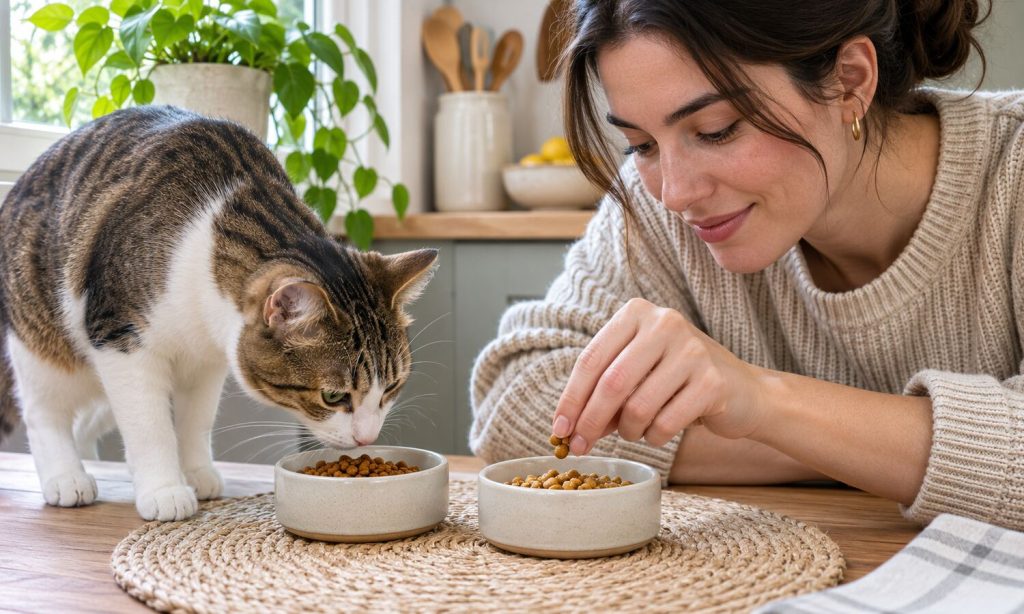
For a healthy cat cleared for a routine switch, many veterinary nutrition resources describe a gradual transition over roughly seven to ten days. Some cats need longer. Start with approximately 75% of the previous daily ration and 25% of the new food for a few days. If stool, appetite, and behavior remain normal, move toward an even mix. Follow with roughly 25% old and 75% new, then complete the change. These are flexible steps, not deadlines. A cat already vomiting actively may need a different plan from a veterinarian.
Measure portions by calories or grams rather than assuming equal volumes provide equal nutrition. If the new food has more calories per cup, a cup-for-cup replacement may cause overfeeding. Work out the daily allowance from the food label and your cat’s body condition. Divide that allowance among meals to avoid large portions and track each serving. Our guide to cat feeding portions provides extra context. Never abruptly deprive a cat of food or impose prolonged fasting at home as a remedy. Cats that are not eating require prompt veterinary advice, especially if overweight or ill.
A practical transition log
On day one, record the amount of old food, new food, and any wet meals or treats. Note appetite, stool consistency, vomiting episodes, and body weight when possible. Give food in a quiet area and wash the bowl regularly. Keep mealtimes consistent so changes are easier to interpret. If a cat refuses the mixture, do not force-feed or hide medication in it without professional instruction. Pause and ask the veterinarian for a palatable alternative, particularly if the cat is eating less overall.
If vomiting or diarrhea begins during the switch, stop advancing the proportion. Contact your veterinarian about whether to return to the previously tolerated diet or seek testing. Do not repeatedly restart the schedule without addressing persistent symptoms. Some cats benefit from smaller, more frequent meals, but meal size and frequency should fit the diagnosis and current appetite. Patience is useful; missing a medical problem is not. A successful food transition means your cat eats reliably, maintains body condition, and has no concerning signs.
Keep the Feeding Setup Simple and Observe Closely
Feed a cat away from household commotion and other pets that steal food. Some cats eat too fast when they feel crowded, though fast eating is not the only possible cause of bringing food back up. Try measured portions and a calm setting before assuming a specialty label is necessary. Keep fresh water accessible and clean the bowls. Store unopened and opened food according to the package directions in a dry place. Discard kibble that becomes damp, moldy, or contaminated. Consistency matters more than inventing a complicated feeding ritual.
Evaluate the cat rather than the marketing phrase on a bag. Look for stable appetite, regular stool, comfortable behavior, and a healthy weight. A new ingredient list may look gentler, but vague language such as “sensitive digestion” does not prove that a food will resolve vomiting. The relevant question is whether the diet is nutritionally appropriate and tolerated by this individual cat. Our guide to signs of digestive upset in cats helps owners recognize symptoms that need attention. Recurrent vomiting, weight loss, increased thirst, or poor appetite should be discussed with a veterinarian regardless of food choice.
Avoid common transition mistakes
Switching several foods rapidly, adding rich treats during the trial, and assuming vomiting is always a hairball are common errors. Keep treats limited and consistent. If your veterinarian has arranged a strict dietary trial, ask which treats are allowed rather than improvising. Never give human anti-nausea medicine without veterinary direction. Also avoid sudden changes to a senior cat’s prescribed diet because of online testimonials. A reassuring anecdote is not evidence that the same food is safe for another cat.
Do not judge the diet solely by one day’s stool. Look for a consistent trend, and keep the clinician informed if symptoms persist. If your cat suddenly refuses food, becomes lethargic, or repeatedly vomits water, seek timely care. For cats with suspected urinary, kidney, endocrine, or intestinal disease, food changes may interact with treatment goals. Follow the veterinary plan even when a routine seven-to-ten-day transition template suggests otherwise. The goal is safe feeding and a clear diagnosis, not merely completing a switch on schedule.
Frequently Asked Questions
These questions address the moments when a food switch becomes confusing. They do not replace a veterinary diagnosis for recurrent vomiting, especially in a kitten, senior, or cat with other symptoms.
Keep the answers anchored to your pet’s actual condition. An apparently simple diet change is not an appropriate reason to delay an examination when warning signs occur.
Can I switch foods immediately if my cat vomits?
Not usually. An abrupt diet change may worsen digestive upset. Seek veterinary advice for repeated vomiting, then use a gradual transition when the clinician considers it appropriate.
How long should a transition take?
Often around seven to ten days for a healthy cat, but tolerance varies. A cat with illness or ongoing vomiting may need a different veterinary-supervised schedule.
What if my cat refuses the new kibble?
Do not force a food change or let your cat go without eating. Ask your veterinarian how to maintain adequate intake and whether another suitable diet is needed.
Is vomiting whole kibble always a food allergy?
No. Fast eating, regurgitation, gastrointestinal disease, and other problems are possible. Discuss a repeated pattern with a veterinarian before assuming an ingredient allergy.
Should I add probiotics during the switch?
Do not introduce a supplement simply to mask symptoms. Ask your veterinarian whether it fits the diagnosis; adding multiple variables makes it harder to judge a food’s tolerance.
Final Words
Learning how to introduce a dry cat food for sensitive stomach vomiting to your pet starts with the right question: why is the cat vomiting? When a veterinarian approves a food change, use measured portions, a gradual schedule, and a daily symptom log. Do not regard recurring vomiting as normal, and stop a transition that causes concerning changes.
A suitable dry cat food for sensitive stomach vomiting choice is only one part of responsible care. Stable hydration, adequate calorie intake, and timely veterinary follow-up matter just as much. Keep notes, avoid unnecessary supplements and treat changes, and prioritize medical guidance when symptoms persist. A calm, evidence-based approach gives you a much better chance of identifying what your cat actually needs.
Reference
The following veterinary and veterinary-nutrition resources informed the warning signs and transition guidance. They provide general education and are not individual treatment instructions.
A veterinarian may advise a different schedule for a cat with active vomiting, other illness, or a prescribed therapeutic diet. Follow that individualized plan.









