
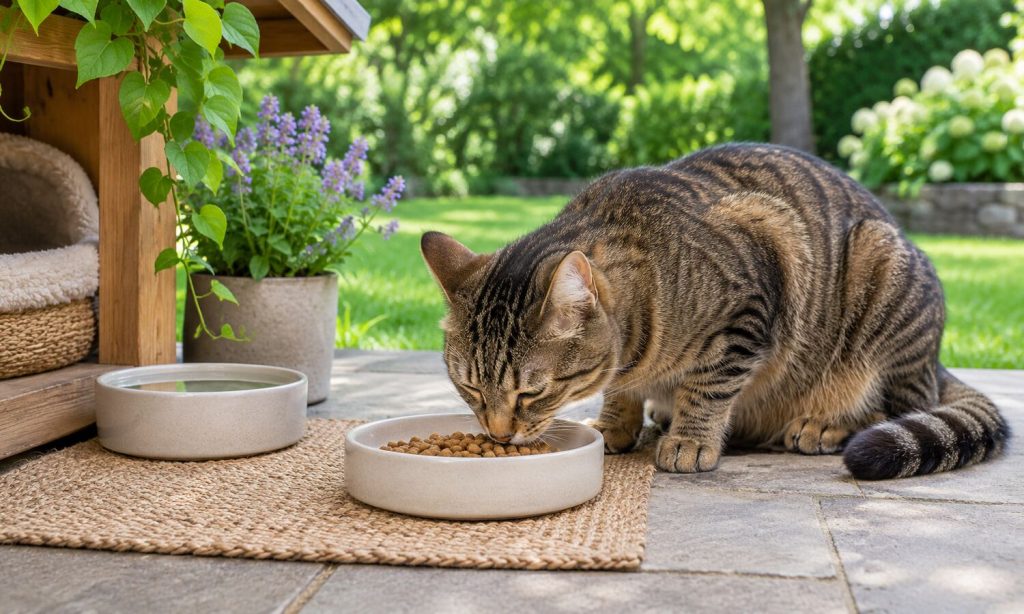
An outdoor cat may burn more energy than a quiet indoor companion, yet its appetite is a poor measuring cup. If you are asking how to size a dry cat food for outdoor cats, start with calories, body condition, and a reliable feeding routine. A cat that patrols the yard all afternoon needs a different assessment from one that naps on a porch. This guide explains how to make a starting estimate without assuming every outdoor cat needs extra food.
Before changing portions, confirm that the food suits your cat’s age and health. Our guide to dry cat food for outdoor cats explains the basic nutrition considerations, while this article focuses on serving size. A measured daily allowance, regular weigh-ins, and fresh water make adjustments much safer than leaving a bowl continuously topped up. Your veterinarian can individualize the plan for kittens, seniors, pregnancy, or medical concerns.
Start With Calories, Not the Size of the Scoop
The most useful number on a dry-food package is its calorie statement, often shown as kcal per cup and sometimes kcal per kilogram. Two kibbles that look similar can have very different energy densities. Reading the package before measuring prevents a common mistake: carrying the old scoop amount into a new diet. Check that the food is labeled complete and balanced for your cat’s life stage. Food intended only for intermittent feeding should not become the entire daily ration. If the label is hard to interpret, ask your veterinary team to explain it.
A veterinarian can estimate your cat’s daily energy needs using current weight, ideal weight, body condition, age, and activity. That estimate is a starting point, not a guaranteed prescription. For a healthy adult, divide the agreed daily calories by the food’s kcal-per-cup value to get cups per day. Suppose the target is 240 kcal daily and the kibble provides 400 kcal per cup. That equals 0.6 cup daily before accounting for any other meals or treats. The example is arithmetic only; it is not the right ration for every cat.
Translate the daily budget into a real portion
Keep the calculation consistent: total daily kibble calories = target daily calories minus calories from wet food and treats. Then divide by the label’s calories per cup. If the bag lists only kcal per kilogram, weigh food on a kitchen scale and convert the package’s energy value to calories per gram. A gram scale can be more accurate than an uneven scoop, especially for small adjustments. Write the result down so every household member follows the same plan. The question of how to size a dry cat food for outdoor cats becomes simpler when everyone measures the same way.
Do not count calories from only the bowl you personally fill. Neighbors may feed an outdoor cat, and hunting can change intake unpredictably. Ask neighbors not to offer extra meals if possible and keep an eye on weight trends. For cats managed by several caretakers, a shared feeding log avoids accidental double portions. If the cat is underweight or losing weight unexpectedly, do not merely increase food indefinitely. Unexplained weight change deserves a veterinary examination, especially if thirst, urination, vomiting, or appetite changes accompany it.
Adjust for Activity, Weather, and Body Condition
Outdoor access does not automatically mean a cat is highly active. Some cats roam extensively, while others stay close to a sheltered patio. Activity, age, neuter status, season, and available shelter can affect energy use, but their effect varies. Start with the veterinary or label-based amount and watch what happens over several weeks. Outdoor cats in cold conditions may have increased energy needs, but adequate dry shelter and safe indoor access matter as much as feeding adjustments. Avoid turning every cool day into a reason to add another full meal.
Body condition helps you judge whether the ration fits. You should generally be able to feel the ribs beneath a light covering of tissue, and a waist should be visible from above in an ideal-condition adult. Thick fur can hide body shape, so use touch as well as sight. The World Small Animal Veterinary Association’s cat body condition chart provides a useful visual framework. Record weight at regular intervals using the same scale when practical. Ask a veterinarian to determine the goal for a cat that is very thin, obese, or has chronic illness.
Use a measured feedback loop
Check your cat’s appetite and weight rather than reacting to a single hungry meow. A cat may demand food from habit, boredom, anxiety, or competition with other animals. If weight climbs while body condition worsens, discuss a modest calorie reduction with your veterinarian. If weight falls and the cat is active but otherwise well, ask whether the daily budget should rise. Rapid changes or persistent poor appetite require assessment, not a home experiment. Your aim is a stable healthy condition, not a fixed cup count forever.
When adjusting, change one factor at a time. Altering food, serving size, and meal timing together makes it hard to know what helped. Note the date, daily ration, weekly weight, stool quality, and any treats. This simple record is more useful than trying to remember last month’s scoop size. Keep adjustments gradual unless your veterinarian directs otherwise. FYI, a bigger bowl does not make the calories disappear; the label and your cat’s changing body condition remain the useful evidence.
Build an Outdoor Feeding Routine That You Can Monitor
Offer measured meals at predictable times and use a quiet, protected location away from traffic and busy animal paths. Remove leftovers rather than letting food sit outside indefinitely. Dry kibble exposed to moisture can spoil, and an unattended feeding area may attract wildlife, insects, or other cats. Use clean bowls and provide fresh water near the feeding space. In freezing conditions, check that the water remains accessible and unfrozen. A routine also helps you notice if your cat misses a meal or suddenly eats much less than usual.
Multiple cats complicate portions. The boldest cat may eat both dishes while a shy companion goes hungry. Feed separately when possible, observe each animal, and pick up bowls after meals. If a free-choice arrangement is unavoidable, understand that it makes intake hard to measure. Our guide on how much to feed your cat helps with routine feeding questions, but outdoor life adds uncertainty from weather, other feeders, and opportunities to hunt. Keep food in a sealed, dry container, follow storage instructions, and do not leave an open bag where rodents can reach it.
Notice when the plan is not working
Watch for a change in eating speed, food avoidance, repeated vomiting, diarrhea, excessive drinking, or a marked appetite increase. These are not simply signs that a serving is too small. Dental pain, parasites, gastrointestinal disease, diabetes, and thyroid disease can affect intake and body weight. An older cat that eats eagerly but loses weight should be examined promptly. Kittens and pregnant or nursing cats require different nutrition and schedules. A tailored veterinary feeding plan is especially important for cats with kidney disease, urinary problems, or prescribed therapeutic diets.
Keep safe handling part of the routine. Wash hands and bowls, do not mix stale leftovers into fresh food, and discard kibble that becomes wet, moldy, or contaminated. Avoid feeding next to litter or waste areas. If wildlife regularly visits the feeding station, change its location or timing and use a supervised meal schedule. Humane outdoor-cat care also includes identification, vaccinations, parasite prevention, and access to a safe shelter. Food portions are one piece of the picture, not the whole care plan.
Frequently Asked Questions
Owners often want one cup measurement for every outdoor cat. There is no reliable universal serving because calorie density, size, body condition, and activity vary. The questions below explain what to measure and when to seek individual guidance.
Use these answers alongside the feeding label and an assessment of your cat. For a cat with a medical condition, the veterinarian’s personalized plan takes priority over general online examples.
Does an outdoor cat always need more dry food?
No. Some outdoor cats use more energy, but others are relatively sedentary. Start with an individual calorie estimate and adjust according to weight, body condition, and veterinary advice.
Can I use a standard measuring cup?
Yes, if the food label provides kcal per cup and you measure consistently. A kitchen scale usually gives a more repeatable portion, particularly when the daily amount is small.
Should I leave kibble outside all day?
Supervised, timed meals are easier to track and less likely to attract pests or wildlife. If you cannot supervise, choose a protected spot and check it often for contamination.
How quickly should I change the serving amount?
Use gradual, measured changes after reviewing the cat’s weight and condition. Contact a veterinarian before making major changes or if weight shifts rapidly or without a clear reason.
What if my cat eats at a neighbor’s house?
Coordinate feeding with neighbors and keep a shared log if possible. Extra meals can make portion calculations inaccurate and may complicate an existing medical diet.
Final Words
Learning how to size a dry cat food for outdoor cats means translating a calorie goal into a measured daily serving, then checking whether that amount keeps your cat in healthy condition. Evaluate the food’s calories per cup, account for other food, and revisit the amount as activity or health changes. A simple written feeding log is worth more than guessing with a scoop.
Use a suitable dry cat food for outdoor cats formula as the nutritional foundation, then focus on consistent portions, clean water, and observation. For help with food labels and life stages, consult our overview of balanced cat nutrition. If your cat is losing weight, persistently vomiting, or showing a sudden appetite change, involve your veterinarian promptly. The best serving is one you can measure, monitor, and adjust responsibly.









