
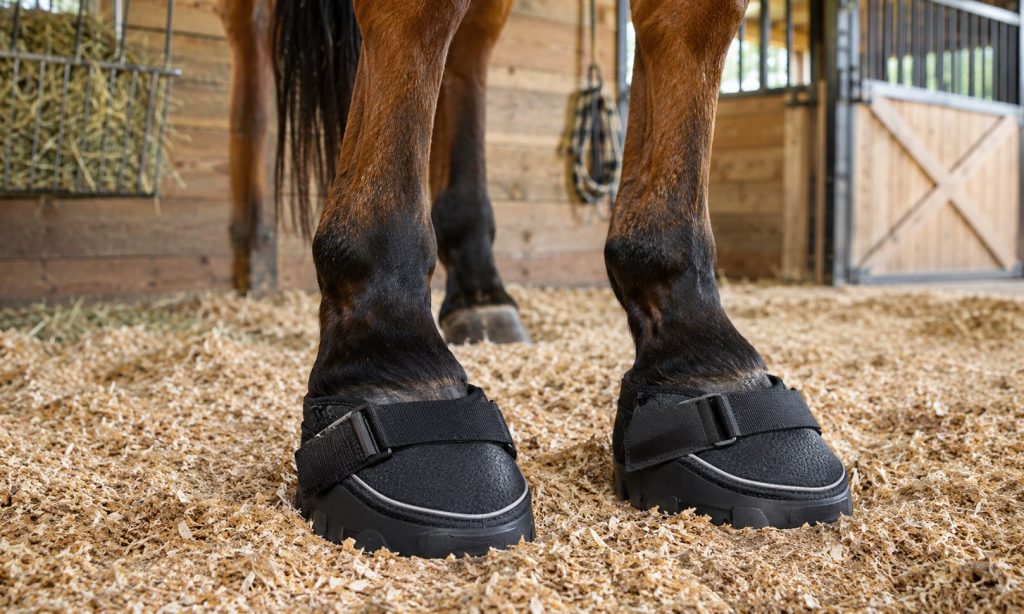
Laminitis is an urgent veterinary problem, and a boot is not a treatment by itself. The best horse boots for laminitis must be chosen around hoof measurements, sole support, and the clinician's plan. We found two clearly identified therapeutic designs among the available verified listings. Other ordinary riding boots should not be presented as interchangeable medical support. This focused comparison explains what each option offers and where the evidence stops.
Contact a veterinarian immediately if a horse is reluctant to move, rocks back, or has a strong digital pulse. Support pads, breakover, and rest can require professional adjustment. Our guide on when to replace hoof boots explains wear checks between uses. Read the fit discussion below before purchasing a size; the wrong boot can rotate, rub, or alter the intended pressure distribution. For supporting background, see when hoof boots need replacing.
Quick Picks
These 2 verified selections address different needs. Compare the use case first, then jump to the detailed discussion and cautions.
| Product | Best For | Key Advantage | Buy | |
|---|---|---|---|---|
| Easyboot Cloud (3) | cushioned stall and recovery support | therapeutic cushioning | View on Amazon | Jump to Review |
| Easyboot Rx2 3 | an alternative therapeutic Easyboot fit | a second recovery-boot design | View on Amazon | Jump to Review |
Product Comparisons
The choices below are compared from authenticated product listings and practical suitability criteria. They are not represented as personally tested items.
Easyboot Cloud (3)

- Cushioned Cloud recovery design
- Therapy-focused intended use
- Sold as individual boots
- Supportive hoof-boot format
- Sizing needs professional checks
Easyboot Cloud (3) is a candidate for cushioned stall and recovery support rather than a universal solution. The current product description highlights easyboot cloud hoof boots provide comfort and support for horses with laminitis, thin soles, abscesses, or founder. It also identifies helps horses recover after workouts, strenuous exercise, and relieves stress from shipping or stalling on hard surfaces. These details make this option worth comparing with different formats in the roundup. Confirm the exact purchasable variation before ordering.
The practical attraction is therapeutic cushioning. Another published feature mentions a therapeutic cushioning design marketed for hoof comfort. Consider how that changes daily preparation, storage, cleaning, or handling. A hoof-care professional should determine whether this boot matches the current recovery plan. Inspect heel bulbs and pastern skin for rubbing when the care team permits a fit check. Always check the actual package details; nearby variations can differ in size, ingredients, or included accessories.
There is a meaningful tradeoff: The listed size may not fit your horse's hoof or prescribed support pad. Do not walk an acutely painful horse to test fit without direct veterinary instruction. The manufacturer information also mentions intended for therapy use only, not for riding or exercise. Decide whether that feature earns its place in your care routine. Review hoof dimensions, intended pad support, closure pressure, and the manufacturer's use restrictions. Any worsening lameness or new pressure mark deserves prompt professional reassessment. Our comparison is based on verified listing identity and documented features. Make the final choice against your needs, not the number of bold claims on a product page.
My Recommendation
I would consider Easyboot Cloud (3) for cushioned stall and recovery support because its key distinction is therapeutic cushioning. However, the listed size may not fit your horse's hoof or prescribed support pad. Check the current variation. If you prioritize an alternative therapeutic Easyboot fit, compare the neighboring option before deciding.
Easyboot Rx2 3

- Lightweight recovery-boot design
- Integrated midsole
- Rocker-bottom rubber sole
- Hook-and-loop closure
- Support must match veterinary plan
For an alternative therapeutic Easyboot fit, Easyboot Rx2 3 takes a different approach from the previous pick. Its main distinction is a second recovery-boot design. According to the current product information, it offers easyboot rx2 by easycare, inc. The maker also describes lightweight therapy hoof boot. Those details give readers a concrete starting point for comparing materials, preparation, and handling. A technically attractive design can be inconvenient if its format does not fit the existing routine or the specific animal.
Examine the actual application before ordering. Inspect heel bulbs and pastern skin for rubbing when the care team permits a fit check. A further listing point concerns integrated midsole. That may matter if you regularly need an alternative therapeutic Easyboot fit. At the same time, verify the exact size, packaging, and compatible accessories. Some claims relate to only one product variant, so do not transfer them to every available option. Choosing for a real routine produces a more useful comparison than shopping from a photograph alone.
The principal drawback is clear: Correct size and clinician-directed sole support remain essential. The listing additionally refers to rocker bottom is made of rubber. That detail should be weighed against the product limitation, not used to erase it. Review hoof dimensions, intended pad support, closure pressure, and the manufacturer's use restrictions. Do not walk an acutely painful horse to test fit without direct veterinary instruction. Any worsening lameness or new pressure mark deserves prompt professional reassessment. This item is best treated as one option among several identifiable designs. A product name cannot verify personal suitability or guarantee results. If another format handles your most important constraint better, the alternative deserves priority.
My Recommendation
I would consider Easyboot Rx2 3 for an alternative therapeutic Easyboot fit because its key distinction is a second recovery-boot design. However, correct size and clinician-directed sole support remain essential. Check the current variation. If you prioritize cushioned stall and recovery support, compare the neighboring option before deciding.
How to choose best horse boots for laminitis
Consider your actual use, maintenance routine, and safety needs first. These three checks help narrow the products above without relying on exaggerated claims. Verify the exact package and the guidance that applies to your animal or household.
Veterinary plan comes before boot selection
Laminitis damages the sensitive support structures inside the hoof. A veterinarian should assess the episode and coordinate with an experienced farrier. Never ask a painful horse to walk around merely to test a new purchase. The right support may vary with imaging, the stage of disease, and whether the horse is stalled. A boot that feels soft in your hand may still create pressure where the horse cannot tolerate it. Ask whether a particular pad shape, cushioning density, or mechanical adjustment is indicated. The boot is an adjustable part of a clinical plan, never a substitute for pain control, diagnosis, or careful management. For more context, see our guide to when hoof boots need replacing.
Measure the hoof and protect the skin
Follow the brand's current sizing chart and measure cleanly trimmed hooves, ideally with professional help. Length and width both matter. A large boot can twist; a small boot can pinch. Inspect the pastern, heel bulbs, and coronary band for rubbing after limited, supervised use. Recheck straps and closures each time. Choose padding only when it matches the clinician's intended load distribution. Dirt or damp bedding trapped inside may increase skin irritation. Product images cannot establish fit. Keep records of the size and any adjustments so the care team can troubleshoot before damage accumulates. For more context, see our guide to forage considerations for laminitic horses.
Use, maintenance, and clear limitations
Therapeutic stable boots and ordinary trail boots are not equivalent. Some recovery styles prioritize support on soft bedding rather than mileage or traction outdoors. Respect the manufacturer's instructions on walking, turnout, and time worn. Remove and inspect equipment as the veterinary team directs. Clean and dry the shell and pad before reuse. Replace flattened or damaged support materials promptly. If the horse becomes more reluctant to bear weight, stop relying on the boot and call the veterinarian. Compare the exact model, package quantity, and fit range before purchasing; similar names may represent different sizes. For more context, see our guide to feeding discussions for horses with laminitis.
Frequently Asked Questions
These practical answers address the questions buyers should settle before placing an order.
Can a hoof boot cure laminitis?
No. A boot may be used as part of veterinary-directed hoof support, but it does not cure the underlying disease.
Should I use a trail boot during acute laminitis?
Do not substitute an ordinary trail boot without the veterinarian's and farrier's approval.
Are cushioning pads always helpful?
Not necessarily. Pressure distribution and pad shape must match the specific hoof and clinical findings.
How do I check boot fit?
Measure after proper trimming, follow the model's size guide, and watch for movement or rubbing.
When is laminitis an emergency?
New reluctance to move, a characteristic leaning stance, and painful warm feet warrant prompt veterinary assessment.
Final Verdict
The best choice depends on the actual job, not an absolute ranking. Easyboot Cloud (3) offers therapeutic cushioning, while Easyboot Rx2 3 emphasizes a second recovery-boot design. Neither removes the need to check fit, ingredients, care instructions, or safety. Do not walk an acutely painful horse to test fit without direct veterinary instruction. Compare product details and decide which tradeoff you can manage over time.
Affiliate disclosure: This article contains Amazon affiliate links. If you purchase through them, PetAdvisorPro may earn a commission. As an Amazon Associate I earn from qualifying purchases.









