
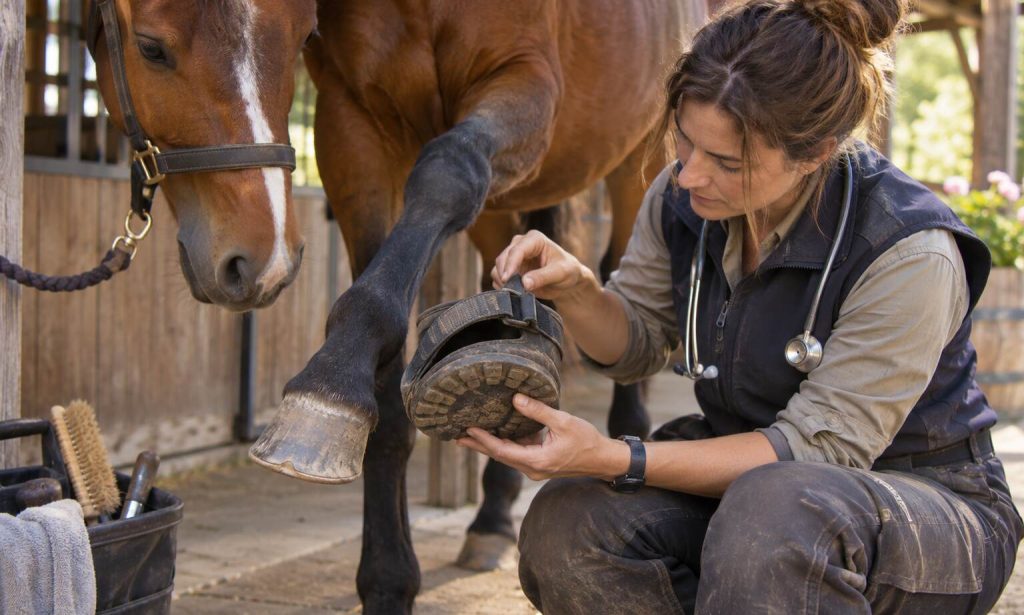
Hoof boots for horses protect the foot during turnout, riding, or a specific hoof-care plan. Yet a boot that looked perfect last month may no longer fit or grip today. Knowing when to replace hoof boots for horses means checking both the equipment and the changing shape of the hoof. A worn boot can trap debris, rub the heel, or twist unexpectedly. Regular checks also protect the horse from avoidable downtime and discomfort.
There is no universal replacement date. Mileage, terrain, material, trim cycles, and the way each horse moves all affect wear. This guide gives a practical inspection routine for deciding when to repair, refit, retire, or replace a pair. It also explains which warning signs call for a farrier or veterinarian, rather than another purchase.
Start With Fit Rather Than Age
Boots must match the horse’s current hoof dimensions and the intended use. A well-made boot can become unsuitable as hooves grow between trims or change after a farrier adjusts the balance. Measure the hoof as directed for that boot style, using the maker’s fit criteria. Do not assume the number printed on an old boot still fits. Check both front feet and both hind feet separately where boots are worn.
An unexpected twist, repeated slipping, gaps at the heel, and pressure above the hoof wall are warning signs. Some designs use replaceable components, but replacing a strap will not correct a badly mismatched shell. Our hoof boot fit and rubbing checklist explains which contact areas deserve attention. When should you replace hoof boots for horses? Start by comparing the current fit with a safe, stable fit.
Inspect Sole Tread and Traction
Turn the boot over and inspect the tread in good light. Look for a sole worn smooth, uneven heel wear, deep gouges, peeling layers, or a hole that exposes the hoof to stones. Traction matters most on the ground where the horse works. Wear that looks acceptable on soft footing may be unsafe on slick rock, wet pavement, or a steep trail. Compare left and right wear patterns.
If a boot slips on terrain it previously handled, stop the ride and examine both fit and sole condition. Do not attempt to restore grip with improvised adhesives or sharp attachments. Use manufacturer-approved repairs only when the design permits them. Replacing worn soles before complete failure helps avoid abrupt changes during work. The hoof boot options for muddy ground article discusses how footing changes practical equipment demands.
Check Straps, Cables, Seams, and Closures
Fastening parts often fail before the main boot body. Inspect hook-and-loop surfaces for packed hair and mud. Check buckles for cracking, cables for fraying, and seams for spreading. Tightening a worn closure harder can pinch skin without keeping the boot secure. A closure that repeatedly opens or loses adjustment should take the boot out of riding use until repaired correctly.
Not every loose strap means the whole boot needs replacing. If the manufacturer supplies a correctly matched spare and the shell is sound, a component repair may be reasonable. A split shell, broken load-bearing attachment point, or distorted sole usually changes that calculation. Never improvise fasteners with wire or sharp hardware. Keep a spare set of the right parts when the model supports repairs.
Look for Rubbing, Heat, and Hoof Changes
After each session, remove the boots and inspect the pastern, bulbs of the heel, coronary band, and nearby skin. Look for hair loss, redness, pressure marks, swelling, heat, or tenderness. Repeated rubs suggest a fit or gait problem. Padding may hide early warning signs if it is added without understanding the source of pressure. Avoid riding through an injury to finish a planned route.
A hoof may change after trimming, weather shifts, recovery from injury, or altered workload. In some cases the boot fits one part of the trim cycle but not another. Ask a knowledgeable farrier to assess shape and sizing. Consult a veterinarian for lameness, bleeding, or painful swelling. If sensitive soles are involved, protective options for sensitive hooves provides broader context, though professional care still comes first.
Use a Short Pre-Ride and Post-Ride Routine
Before riding, inspect each boot while it is clean and dry. Feel inside for grit, cracked padding, sharp edges, or foreign objects. Confirm the closures engage and the sole is not separating. Fit the boot on a dry hoof according to instructions, then watch the horse walk and turn on safe ground. Stop if the boot rotates, snags, or changes the horse’s stride.
After the ride, remove boots promptly, check the hoof, and wash away mud as the material permits. Dry parts fully before storage to reduce trapped moisture and unwanted odors. Our guide to drying horse boots after a muddy ride explains a practical care sequence. Regular maintenance makes it easier to tell normal cosmetic scuffs from a dangerous crack.
Choose Repair, Refit, or Replacement
Repair only when the manufacturer provides an approved replacement part and the rest of the boot remains structurally sound. Refit when a healthy boot has become loose or tight after hoof changes. Replace when the shell cracks, tread loses needed grip, closures cannot secure it, or the inner surface repeatedly causes rubbing. If the horse is uncomfortable, retire the equipment from work while you investigate.
Keep notes on purchase date, approximate riding hours, terrain, repairs, and trim dates. Photos of the sole taken under the same lighting can show progressive wear. Track each boot individually; one may fail earlier than its partner. When should you replace hoof boots for horses? The best answer combines observed condition, current fit, and professional hoof assessment when indicated.
Avoid Common Replacement Mistakes
Do not wait for complete failure or assume visible tread alone proves safety. An intact-looking boot can have stretched closures or an inner edge that rubs. Likewise, a dusty or stained boot is not automatically worn out. Cleaning before inspecting prevents false alarms. Resist the urge to buy a larger size solely because the horse has outgrown the prior one without checking actual measurements.
Replacing both boots at once is not always necessary, but mismatched sole height, grip, and fit can change movement. Ask a farrier whether mixing old and new boots is appropriate for the intended task. When terrain or work changes, reassess the model itself. The overview of hoof boot styles and riding uses can help frame these differences without substituting for a fitting session.
Frequently Asked Questions
Owners often want a fixed mileage or calendar schedule for hoof boot replacement. Real-world wear varies too much for one number to be dependable. The questions below focus on observable safety checks.
Use these answers alongside the particular boot maker’s care and fitting guidance. A farrier or veterinarian should evaluate persistent rubbing, hoof pain, or movement changes.
Can hoof boots last for several years?
Possibly, with limited use and careful storage, but years alone do not establish safety. Check fit, structure, and traction each session.
Should I replace both hoof boots together?
Not automatically. Compare sole thickness, grip, and fit on each hoof, and ask a farrier if mismatched wear could affect movement.
Can a damaged strap be replaced?
Only when the maker supplies or approves a compatible repair and the shell and sole remain intact.
Why does a boot rub after a hoof trim?
Trim-related shape changes can alter contact points. Re-measure and refit; stop using the boot while skin is injured.
What if the boot twists on the trail?
Stop in a safe place, remove it, and inspect fit and damage. Do not continue on a twisting boot.
Final Words
Hoof boots are ready for replacement when they no longer fit securely, protect the foot, or provide reliable traction. Check tread, closures, inner surfaces, and the horse’s skin after every use. Clean and dry the boots so subtle damage stays visible. Repair a replaceable part only when the boot is otherwise safe.
If you’re asking when should you replace hoof boots for horses, start with the next hoof check and compare notes across the trim cycle. Revisit hoof boots for horses if the existing pair no longer fits the intended use. Revisit horse boot fit checks whenever equipment or hoof shape changes. The horse’s comfort is always the deciding factor.









