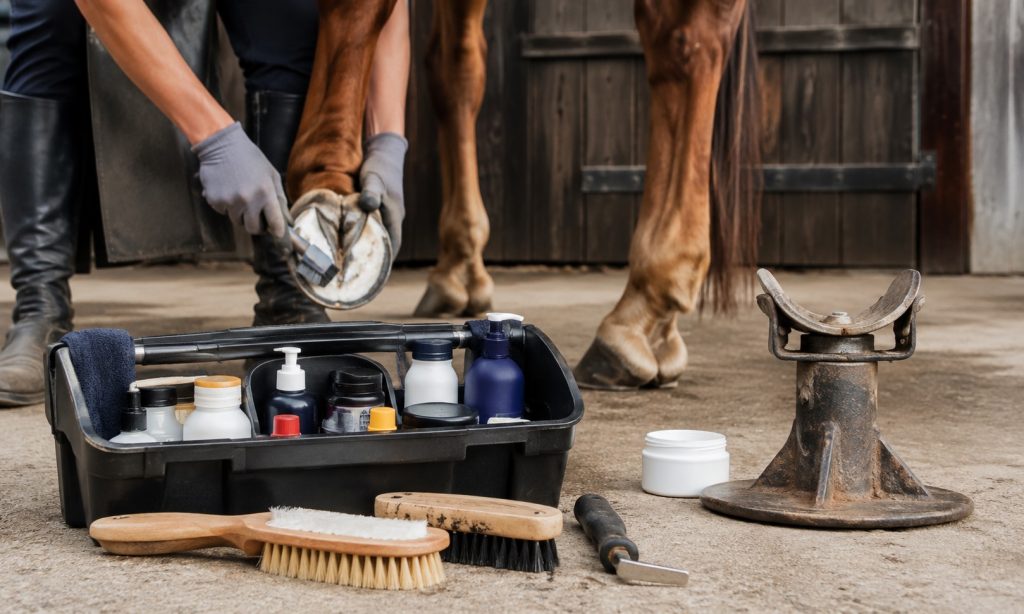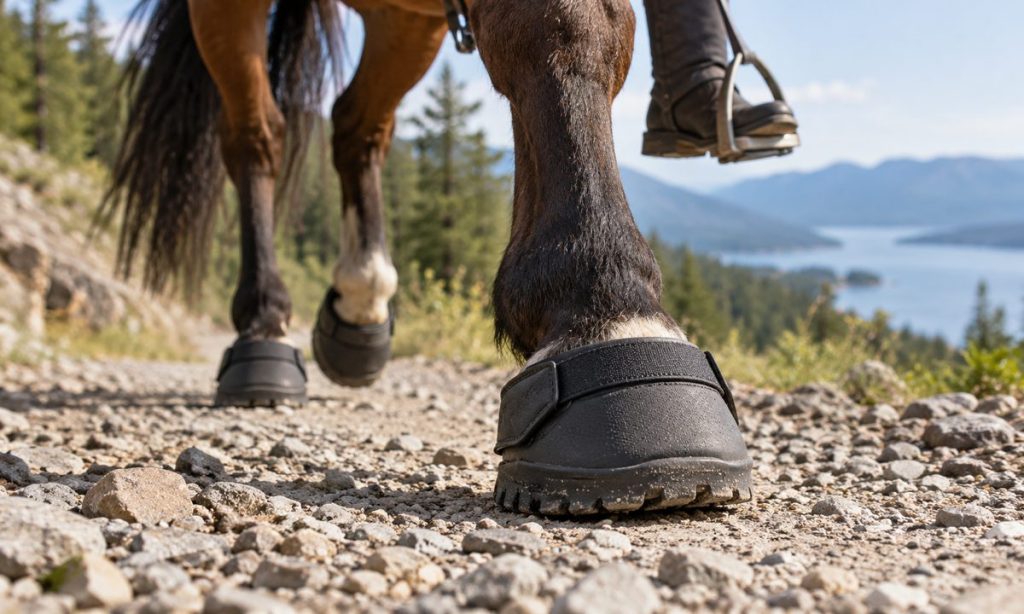
If your horse reacts to gravel or hard footing, hoof boots can seem like a simple fix. They are equipment, though, and the right model depends on whether your horse needs riding protection, a therapeutic covering, or help through a barefoot transition. A boot that rubs or fits poorly may create a new problem. This comparison focuses on verified product identities and listing details, with no claim that any model treats hoof disease.
Sudden lameness, heat, swelling, or marked tenderness can signal an injury or condition needing prompt veterinary or farrier attention. The British Horse Society notes that hoof injuries and disease can require professional care. Measure after trimming and follow each manufacturer’s model-specific chart.
Quick Picks
| Product | Best For | Key Advantage | Buy | |
|---|---|---|---|---|
| Easyboot Cloud | Therapeutic cushioning for stalls and trailering | Support pads; not intended for riding per listing | View on Amazon | Jump to Review |
| Swiss Galoppers SG Boot Kit | All-year trail protection | TPU kit offered in multiple sizes | View on Amazon | Jump to Review |
| Cavallo Simple Regular Sole | Straightforward regular-sole boot | Regular sole; size-specific listing | View on Amazon | Jump to Review |
| Cavallo Horse & Rider Trek | Trail riding and walking protection | Trek regular sole model | View on Amazon | Jump to Review |
| Easyboot Glove Soft | A soft gaiter design | Neoprene gaiter and all-terrain tread in title | View on Amazon | Jump to Review |
| Easycare Easyboot Sneaker | Flexible everyday hoof protection | Front boot listing | View on Amazon | Jump to Review |
| Easyboot Trail Original | Easy on/off for light to medium riding | Polyurethane sole and hook-and-loop closure | View on Amazon | Jump to Review |
1. Easyboot Cloud

What We Like
- Support pads included
- Therapeutic use for stall or trailer per listing
- Pair format
- Therapy system compatibility
What We Don’t Like
- Listing says not intended for riding
- Therapeutic use needs professional guidance
The Easyboot Cloud is a therapeutic boot with comfort pads, intended for stalling, trailering, or rehabilitation. Its listing explicitly says it is not intended for riding, so it belongs in a care or transport discussion rather than a trail-boot shortlist. The cushioned pads may be relevant when a veterinarian or farrier recommends protective support during rest or recovery. Confirm that the boot’s coverage, fit, and pad setup match the individual hoof and treatment plan before use. A stall boot can retain moisture or hide changes in the hoof, so follow the care team’s instructions for wear time and inspection. Do not substitute it for a riding boot or use it to diagnose sole pain, laminitis, or an abscess. If comfort changes or new heat, swelling, or discharge appears, remove the boot as directed and contact the horse’s professional.
Fit and pad use should be guided by the horse’s care team. It is not a substitute for diagnosing sole pain, laminitis, or an abscess. Ask your vet or farrier whether the support and use case match the individual hoof. Ask the care team how long the boot should remain on and how often to inspect the hoof. A boot can hold moisture or conceal changes, so follow the treatment plan and check skin contact. Do not change pads or apply products without professional instructions. Padding and fit should be reassessed as swelling or treatment needs change. Keep the vet informed if the horse’s comfort changes. Regular checks help catch changes that a boot can otherwise hide.
My Recommendation
Therapeutic cushioning for stalls and trailering. Choose only after checking the sizing chart and confirm with your farrier or veterinarian if the horse has pain or a diagnosed hoof condition.
2. Swiss Galoppers SG Boot Kit
What We Like
- TPU boot kit
- All-year trail protection claim
- Sizes 3–8 in title
- Pair kit
What We Don’t Like
- Size range requires exact measurement
- Trail kit may not suit therapeutic needs
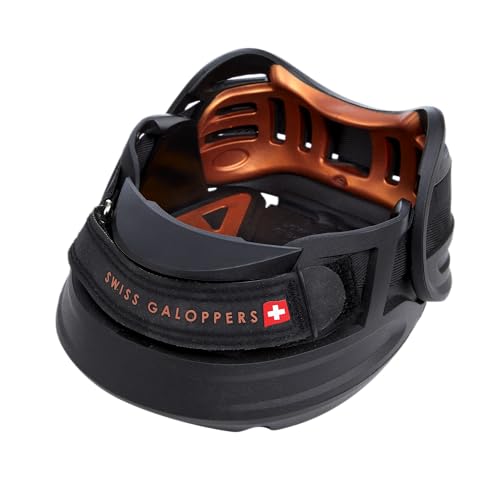
The SG kit is listed as a TPU hoof-boot pair for all-year trail riding, with sizes shown in the product title. A riding boot may help protect a hoof from rough ground when a barefoot horse is otherwise comfortable and the fit is correct. Measure after trimming and use the manufacturer’s sizing directions. The SG kit is described as a TPU pair for trail riding, with several sizes. For a barefoot horse that is comfortable on ordinary footing but sensitive on rough trails, removable trail protection may be a different use case from a recovery boot. The product is a riding-oriented pair, so compare it with the horse’s discipline, trim cycle, and expected footing before deciding. Compare sizing at the same stage of the trim cycle each time, because hoof dimensions can shift as the hoof grows. Ask for a fit check if twisting returns.
A trail-oriented boot is not automatically therapeutic, and fit can vary with hoof shape. Check for rubbing, twisting, retained grit, or a boot that loosens. Ask your farrier to help assess fit if the horse has persistent tenderness. Use the size chart for each hoof after trimming and check closure and stability during a short trial. Terrain debris can affect fit and comfort. If the horse remains sore after riding or becomes lame, stop and consult a veterinarian or farrier rather than changing models repeatedly. Check both boots after mounting and again at the first rest stop. A loose closure can allow debris to enter. Use the product’s instructions for cleaning and drying after wet trails.
My Recommendation
All-year trail protection. Choose only after checking the sizing chart and confirm with your farrier or veterinarian if the horse has pain or a diagnosed hoof condition.
3. Cavallo Simple Regular Sole

What We Like
- Regular-sole model
- Specific size-4 listing
- Black color listing
- Removable protection for riding
What We Don’t Like
- Specific size may not fit other hooves
- Regular sole is not a therapeutic pad
The Simple is a regular-sole Cavallo boot, and the returned listing is a specific size and color. Regular-sole models provide a protective barrier between hoof and terrain, but no boot can compensate for an incorrect size. Measure the trimmed hoof using the exact chart for this model. Cavallo Simple is a regular-sole riding boot, and this verified listing is size-specific. A standard sole is one way to add a removable protective layer on rocky or abrasive ground, but it does not indicate therapeutic cushioning. The listing is a size-specific regular-sole product, so confirm the model and size before purchase. A regular sole is not the same as a therapeutic pad, so match the design to the need. Stop and reassess if the boot shifts repeatedly.
Because the product listing is size-specific, confirm fit before ordering and do not assume another size’s listing is equivalent. Inspect the hoof and boot after short initial wear for rubbing or trapped stones. A sore or newly lame horse needs assessment, not simply a tighter boot. Confirm the exact model’s width and length chart after a trim. A boot that is too loose may twist; one that is too tight can rub. Inspect the horse’s heel bulbs and coronet after initial wear, and consult a farrier if shape or fit is difficult to judge. Try it in a controlled setting and note any movement or rub. A farrier can help interpret a difficult hoof shape. A boot should remain stable without forcing the hoof into an unnatural position.
My Recommendation
Straightforward regular-sole boot. Choose only after checking the sizing chart and confirm with your farrier or veterinarian if the horse has pain or a diagnosed hoof condition.
4. Cavallo Horse & Rider Trek

What We Like
- Regular sole
- Trek model identity
- Size-4 listing
- Trail boot format
What We Don’t Like
- Size-specific listing needs careful selection
- Not evidence of suitability for painful hooves
Cavallo’s Trek is listed as a regular-sole hoof boot for trail use. It may suit riders who want a removable barrier for rocky or uneven footing, provided the horse’s hoof dimensions match the manufacturer’s chart. A boot’s purpose is mechanical protection; it does not establish why a horse is sensitive. The Trek regular-sole model is positioned for trail riding. Riders may compare its design with boots that use different closures or upper shapes, but the horse’s individual hoof measurements decide whether it is a candidate. This model is another regular-sole option for trails; compare its fit and closure with the exact chart rather than choosing by brand alone. Record the footing and duration of each ride while evaluating tolerance.
Sizing and hoof preparation matter. Follow the brand’s chart, keep the boot clean, and check the coronet and heel area after use. If sensitivity persists on ordinary footing or the horse becomes lame, stop riding and consult a veterinarian or farrier. Start with a short supervised outing and inspect for grit, twisting, heat, or rub marks. Clean and dry the boot between uses. If your horse is sensitive across multiple surfaces, not only on trails, arrange an exam before relying on equipment. Short initial use makes it easier to spot movement or rubbing early. Clean and dry it after each ride. A comfortable fit in the barn does not guarantee comfort after several miles.
My Recommendation
Trail riding and walking protection. Choose only after checking the sizing chart and confirm with your farrier or veterinarian if the horse has pain or a diagnosed hoof condition.
5. Easyboot Glove Soft

What We Like
- Neoprene gaiter
- Elastic upper
- All-terrain tread in title
- Soft boot identity
What We Don’t Like
- Gaiter fit may rub
- Hoof dimensions still determine compatibility
The Easyboot Glove Soft listing identifies a neoprene elastic gaiter and all-terrain tread. The upper/gaiter construction may matter to owners whose horse dislikes stiff closures, but comfort depends on correct sizing and individual hoof shape. Compare its sizing directions with current trimmed hoof measurements. The Glove Soft’s neoprene gaiter and tread are identified in its title, distinguishing it from rigid-cuff models. Some riders may prefer a softer upper, but hoof shape, trim, and correct sizing still determine comfort. The neoprene gaiter is a distinguishing feature to compare with other uppers. Soft upper material still needs correct fit and routine inspection. This inspection is especially useful when changing footing or increasing ride length. during a short initial trial.
A close fit can be useful for stability but should never pinch or rub. Check gaiter contact after a short supervised trial, especially if the horse has skin sensitivity. The item listing alone does not verify suitability for an injured or painful hoof. Inspect the gaiter edge carefully after a short trial, particularly if the horse has skin sensitivity or hair loss. Remove the boot to clean out grit and allow the area to dry. Stop use if rubbing appears; a softer material does not guarantee a rub-free fit. Monitor hair and skin at contact points, and stop use promptly if irritation appears. Keep an eye on moisture and friction after use, especially in warm weather.
My Recommendation
A soft gaiter design. Choose only after checking the sizing chart and confirm with your farrier or veterinarian if the horse has pain or a diagnosed hoof condition.
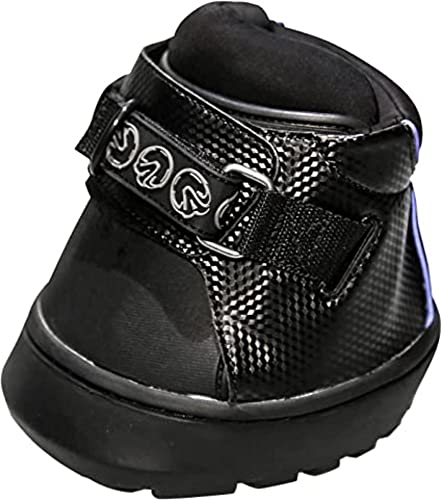
6. Easycare Easyboot Sneaker
What We Like
- Front hoof orientation
- Easyboot Sneaker model
- Size-0 listing
- Single front boot identity
What We Don’t Like
- Front-only product does not cover hind feet
- Size 0 is not universal
This Easyboot Sneaker listing is a front boot in a specific size. For horses that need protection on the front feet, an individual front boot may be more practical than buying a pair, but the product identity makes clear that this listing is not a full set for all four hooves. The Sneaker item is specifically a front boot and a particular size, useful for owners who need to protect only the front feet. It should not be confused with a pair or an all-four-hooves package. A front-specific listing can be useful when only front hoof protection is intended. Confirm the quantity included and the intended front-foot use from the package. Ask for a fit check if twisting returns.
Confirm whether the horse needs front or hind protection and check sizing for each hoof. Do not assume the same size fits all feet. If sensitivity is new or one-sided, ask a veterinarian to assess the cause before using equipment to mask discomfort. Measure each foot separately; front and hind hooves can differ. If protection is needed on one foot because of recent pain, have a veterinarian identify the cause before riding. Avoid using equipment to make an unsound horse appear ready for work. If one foot needs protection because it is painful, confirm the diagnosis and allowed exercise with a veterinarian first. Do not assume a single listing includes both front boots.
My Recommendation
Flexible everyday hoof protection. Choose only after checking the sizing chart and confirm with your farrier or veterinarian if the horse has pain or a diagnosed hoof condition.
7. Easyboot Trail Original

What We Like
- Wide opening
- Hook-and-loop closure
- Polyurethane sole
- Drainage holes
What We Don’t Like
- Light-to-medium mileage positioning
- Closure needs monitoring during a ride
The Trail Original listing describes a wide opening, hook-and-loop closure, polyurethane sole, drainage holes, and light-to-medium mileage use. These details can help a rider compare convenience and intended use with more specialized boots. It is a trail boot rather than a therapeutic recovery model. Easyboot Trail Original is listed for light-to-medium riding and has a wide opening, hook-and-loop closure, drainage holes, and a polyurethane sole. Those features make it easy to compare against more close-fitting or therapeutic designs. Drainage holes and hook-and-loop closure are among the listed features to compare with other designs. Check how the boot drains and how easily you can remove grit from its interior. Stop and reassess if the boot shifts repeatedly. after each scheduled trim as well.
Its stated use is casual to moderate riding, so it may not suit every discipline or terrain. Check closure security and debris after each ride, and verify fit against the current trim. Persistent tenderness or altered gait warrants professional assessment. Its stated use may not fit intense mileage or every horse’s hoof shape. Check the closure after mounting, inspect for debris at stops, and remove the boot after the ride to check skin and hoof. Consult the sizing chart after each trim. Make sure the closure remains secure during use and inspect the hoof after removal. Reassess fit after each trim rather than assuming sizing stays constant.
My Recommendation
Easy on/off for light to medium riding. Choose only after checking the sizing chart and confirm with your farrier or veterinarian if the horse has pain or a diagnosed hoof condition.
How to choose best hoof boots for sensitive hooves
Choose a hoof boot for its intended job, the horse’s hoof shape, and the conditions where it will be used. Persistent sensitivity needs veterinary or farriery assessment; a boot can add protection but cannot identify or treat the underlying cause.
Match the boot to its intended use
First separate riding boots from therapeutic or stall boots. Use each product only for the activities stated in its verified listing and manufacturer directions. Consider the surface, ride duration, and whether the boot is designed for turnout, trail work, or rest. A boot intended for therapeutic coverage should not be assumed suitable for riding. Ask your veterinarian or farrier to advise if the horse is recovering from an injury or has ongoing sensitivity. The boot should complement a hoof-care plan, not replace diagnosis, trimming, or treatment.
Measure and check fit
Measure each hoof according to the selected brand’s current chart, ideally after a trim because shape and dimensions can change. Do not choose by shoe size or by another horse’s fit. Compare closure style, sole shape, gaiter coverage, and how the boot handles debris and moisture. During a short supervised trial, check that it stays secure without rubbing, pinching, or twisting. Recheck after movement and inspect the hoof and skin when removing it. If sizing falls between options, consult the manufacturer or a qualified professional instead of forcing a fit.
Break in, inspect, and maintain
Introduce a riding boot gradually and inspect it before and after each use. Clean out grit, confirm fasteners are sound, and watch for rub marks, heat, or a changed stride. Follow the manufacturer’s cleaning and wear guidance; a damaged or poorly fitted boot can create new problems. Keep notes about trim date, hoof measurements, terrain, distance, and any rubbing or loss. If sensitivity persists, worsens, or is accompanied by lameness, heat, or swelling, stop using the boot as appropriate and contact a veterinarian or farrier. The most suitable choice is the one that fits correctly and matches professional advice and the intended activity. Recheck boot fit after trims because hoof shape changes.
Final Verdict
The best boot is the correctly fitted model for the horse’s actual need. Confirm the sizing chart, introduce it gradually, and stop use if rubbing or discomfort appears. Do not use a boot to delay veterinary care for lameness or persistent pain.
Affiliate Disclosure
As an Amazon Associate, PetAdvisorPro earns from qualifying purchases.