
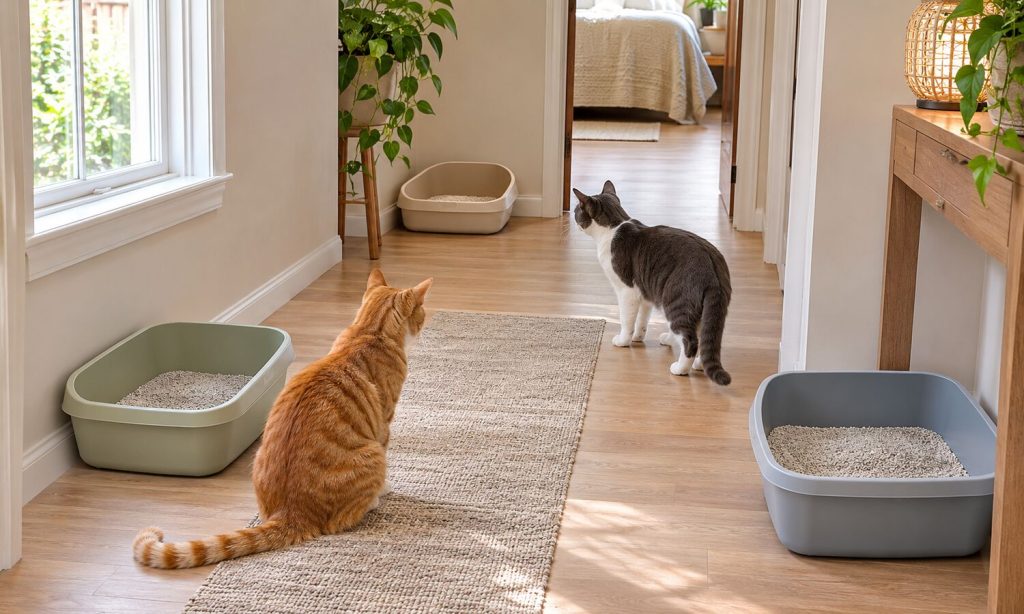
How to introduce a cat litter box for 2 cats to your pet begins with giving each cat safe, predictable access to a toilet area. One shared box is rarely a comfortable long-term setup for two cats. Feline behavior guidance commonly recommends one box per cat plus one extra, placed in separate locations. That usually means three litter boxes for two cats, not three boxes crowded together in one corner.
The introduction should be calm. Cats need to investigate a new box on their own terms and retreat without being trapped by another pet. A guide to litter box placement in multi-cat homes explains location choices in more detail. Here, we’ll cover choosing boxes, introducing them gradually, adjusting litter, preventing guarding, cleaning, and responding to accidents. The goal is an easy routine that respects both cats.
Plan the Number and Location Before Setup
For a two-cat household, start with three accessible litter boxes in at least two separate areas. Cats sometimes prefer to urinate and defecate in different boxes, and one cat may block the other at a narrow doorway. A spare box gives both cats another route. The exact layout may need more thought in a multi-story home or a space with closed doors.
Choose quiet, visible-enough areas that allow an easy exit. Avoid placing a box next to loud appliances, busy hallways, feeding stations, or an intimidating dog. A cat should not have to cross the other cat’s favorite resting or guarding location to eliminate. How to introduce a cat litter box for 2 cats to your pet works best when the box feels safe before the cat even steps inside.
Keep Boxes Truly Separate
Three trays lined up shoulder-to-shoulder may function like one contested location. Spread them across rooms or different zones with visual separation. Keep at least one convenient box on each floor a cat uses, when possible. Think about how an older cat or a cat with mobility issues will reach a box, especially at night. Comfort and easy access are more important than hiding the trays from visitors.
Choose a Size and Style Both Cats Can Use
Most cats need enough room to enter, turn around, dig, and exit without brushing against every wall. Choose an appropriately large tray and a low enough entry for the individual cat’s mobility. Many cats prefer open boxes that allow them to see approaching animals. Covered boxes may retain odor or create blind corners, particularly when household cats do not get along.
Consider differences between the cats. A kitten may need a low entry, while a larger adult may need a wide tray. A nervous cat may avoid a box near a door that opens suddenly. How to introduce a cat litter box for 2 cats to your pet should account for both cats rather than assuming identical preferences. You may discover that they choose different boxes even when all are available.
Start With Familiar Litter
If the cats already use a litter type successfully, keep that familiar texture during the box introduction. Avoid changing box design, litter scent, and location all on the same day. Unscented litter may be more acceptable to cats sensitive to fragrance. If the goal includes changing litter, offer a choice or transition gradually after the cats feel secure with the additional boxes.
Introduce the New Box Without Pressure
Set up the clean box in its intended location and let the cats approach voluntarily. A small amount of familiar clean litter may help them recognize its purpose. Do not place cats inside the tray repeatedly or hold them there. Instead, allow brief inspection, sniffing, and departure. Praise or reward calm use if the cat appreciates that interaction, but avoid crowding the area.
Leave the established boxes available while the new one becomes familiar. Cats may investigate for a day or two before using the tray, and preferences are individual. A new box should expand choice, not suddenly remove a safe option. How to introduce a cat litter box for 2 cats to your pet often succeeds because nothing urgent changes from the cats’ perspective.
Watch Which Cat Arrives First
Observe whether each cat can approach and leave without being stared at, chased, or ambushed. If one cat waits nearby, move the box to a more open location or add another route. If tension is persistent, address the relationship and access to food, water, resting places, and play areas too. A litter box cannot solve every resource-conflict problem on its own.
Keep the Boxes Clean and Predictable
Scoop waste daily or more often when needed. Replace litter and wash trays according to the litter and box directions. Rinse away cleaning residue and dry fully before refilling. Strong fragrances can be unpleasant to some cats, so choose gentle cleaning practices. Keep the litter depth reasonably consistent and avoid sudden changes that might make the surface feel unfamiliar.
Each box should remain accessible all day. Do not close the only room containing a preferred tray while you are out. Track which cat uses which location, while recognizing that sharing is not necessarily a problem if both have choices. How to introduce a cat litter box for 2 cats to your pet also means maintaining the arrangement after the first successful visit.
Clean Accidents Without Punishment
If a cat eliminates outside the box, clean the area thoroughly and calmly. Avoid yelling, rubbing the cat’s nose in waste, or physically forcing them into a tray. These reactions can increase anxiety. Consider whether the location, litter, access, cleanliness, or a medical issue contributed. Our guide to litter-box avoidance in multiple cats explores these broader causes.
Troubleshoot Avoidance and Inter-Cat Tension
If one cat refuses the new box, do not immediately remove the old favorite. Try a more private location with an open escape route, then check the litter texture and tray dimensions. Some cats avoid a box because it is too small or because another cat controls the entrance. Slow, single-variable changes make it easier to learn what helped.
Medical problems can also cause litter-box avoidance. Frequent attempts to urinate, blood in urine, straining, pain, or a sudden change in elimination need veterinary attention. Inability to pass urine is an emergency. How to introduce a cat litter box for 2 cats to your pet should never become an excuse to wait through signs of illness. Rule out medical causes before treating the issue only as behavior.
Do Not Use the Box as a Meeting Place
When two cats are still adjusting to each other, keep their toileting areas separate from forced face-to-face introductions. Avoid feeding them beside the tray to create ‘positive’ associations. Instead, build trust through separate resources, play, and controlled, rewarding interactions away from the box. A cat needs privacy and the ability to leave when another animal appears.
Adapt the Plan for Different Homes and Ages
A small apartment may still accommodate separate boxes in a bathroom, bedroom corner, or quiet living area. Separate placement matters more than perfectly matching furniture. In a large home, a distant third box may be impractical for a kitten or senior cat. Choose locations based on routes the cats actually use. Accessibility at night or during household gatherings matters as much as daytime placement.
For older cats, arthritis or weakness may make high sides and stairs difficult. For kittens, select safe litter and an entrance they can manage. If mobility changes, add a nearer tray rather than expecting the cat to adapt instantly. How to introduce a cat litter box for 2 cats to your pet remains a flexible process as the household changes. IMO, a convenient tray that gets used is better than an invisible one nobody can reach.
Make Changes One at a Time
When you move a box, provide a transition period with access to the old location if possible. Keep scent, litter type, and general routine familiar. Observe use before changing another variable. If the cats are stressed by renovation, visitors, or a new pet, consider extra temporary boxes. Stability usually helps more than constant experimentation.
Frequently Asked Questions
New litter-box setups raise predictable questions about number, placement, and shared use. The short answers below focus on reducing competition and making a new tray easy to accept.
Keep an eye on each cat as an individual. A box arrangement that works for one cat may still need adjustment for the other. Sudden elimination changes deserve veterinary attention.
Can two cats share one litter box?
They may choose to use the same box, but a single shared tray limits choice and increases conflict risk. The common starting recommendation for two cats is three boxes in separate areas.
Should I put all three boxes in one room?
Usually not. Distributing boxes across multiple locations gives cats escape routes and reduces the chance that one cat blocks access to all of them.
Should I carry a cat to the new box?
Let the cat approach voluntarily. Repeatedly placing or holding a cat in the box can create a negative association. Keep familiar options available.
What litter is easiest during introduction?
Keep a familiar, tolerated litter while introducing the new tray. Consider unscented litter if fragrance is a concern. Make changes gradually when possible.
When is litter-box avoidance a veterinary issue?
Sudden accidents, straining, blood in urine, pain, or changes in urination warrant veterinary attention. A cat unable to urinate needs emergency care.
Final Words
How to introduce a cat litter box for 2 cats to your pet begins with enough well-placed trays, familiar litter, clean surfaces, and freedom to investigate. For most two-cat homes, three boxes in separate areas are a useful starting point. Watch both cats’ behavior and adjust locations if access is blocked. Never punish a cat for an accident.
The most effective cat litter box for 2 cats arrangement may look less tidy than a single hidden tray, but it respects each cat’s needs. Revisit our guide to choosing multi-cat litter-box locations when planning a small or multi-story home. If accidents continue or urinary symptoms appear, involve your veterinarian instead of making endless box changes.









