
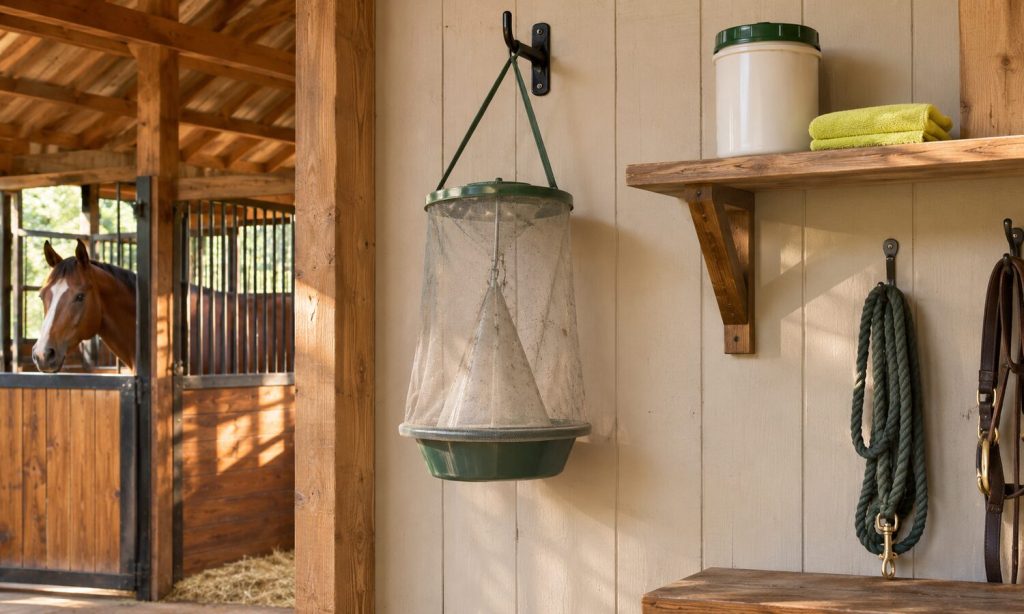
How to store a fly traps for horse barns safely begins by checking whether the trap is reusable, disposable, baited, sticky, or electrically powered. Each design has different cleaning and storage requirements. A trap that has been hung near livestock may contain dead insects, attractant residue, moisture, or damaged parts. Putting it away without cleaning can create odors, pests, and accidental exposure for horses and people.
The safe method is to follow the trap’s instructions, empty or dispose of components as directed, and store any reusable equipment dry and beyond animal reach. Our overview of fly traps for horse barns explains common design differences. This guide covers seasonal shutdown, bait handling, safe placement, equipment inspection, and preparations for the next fly season. A clean barn still needs manure and moisture management alongside trapping.
Identify the Trap Type and Its Instructions
Sticky strips, disposable bags, reusable baited containers, and electrical insect traps do not share a universal storage routine. Some are meant to be discarded once full. Others allow replacement of attractants or cleaning of the housing. Check the manufacturer’s instructions before attempting to disassemble anything. A unit designed to be used once may not be safe to refill or wash.
How to store a fly traps for horse barns safely requires keeping all safety and setup information. Retain labels for chemicals, attractants, batteries, and electrical ratings. Do not transfer unknown bait into food containers. If the directions are lost, identify the product before handling residue. Never assume the contents are harmless because the trap was sold for barn use.
Handle Contaminated Traps Carefully
Wear gloves or other protection when indicated by the instructions. Avoid touching dead insects, leaked bait, or unknown liquids. Bag disposable components according to local waste requirements and wash hands after handling. A leaking bag or cracked container may require disposal rather than cleaning. Do not dump used attractant beside feed or water.
Empty and Clean Reusable Parts Correctly
For a reusable trap, remove insects and used attractant as directed. Wash permitted surfaces with the cleaning method specified for that material. Rinse away residue when required, then dry completely to discourage mold and corrosion. Do not use strong cleaners that damage plastic, coating, wiring, or bait containers. Electrical components should never be soaked.
How to store a fly traps for horse barns safely includes cleaning hooks, lids, and crevices where insects collect. Inspect for cracking, brittle edges, and missing seals. Some odors persist despite washing and may indicate trapped residue. If the manufacturer says the component should be replaced, follow that direction rather than trying to make it last another season.
Keep Electricity and Water Apart
For electric traps, disconnect power and follow the manufacturer’s cooldown, cleaning, and storage steps. Do not open sealed electrical housings or expose them to water unless expressly permitted. Check plugs and cords for damage. Store the unit away from damp floors and areas where rodents might chew wiring. A damaged cord is a reason to seek qualified service or replacement.
Store Bait and Attractants Separate From Feed
Some bait materials have strong odors or contain ingredients that must be kept away from people and animals. Leave unused attractant in its original labeled container, follow its temperature and expiry instructions, and secure it beyond reach. Never store it in a feed scoop, water bucket, or food jar. Separate chemical materials from hay, grain, grooming supplies, and veterinary medicines.
How to store a fly traps for horse barns safely also means preventing a spill during winter storage. Put reusable containers upright in a suitable tray or protected box if permitted. Keep the area ventilated when the label requires it and avoid heat sources. If a product is classified as a pesticide, EPA storage and disposal guidance and its actual label control how it should be handled.
Do Not Save Expired or Unidentified Bait
An attractant with no label or a damaged container is not worth the uncertainty. Follow applicable disposal rules rather than mixing it with new bait. Do not pour unidentified liquids down drains. Keeping a small inventory with lot, expiration, and opening dates helps prevent abandoned chemicals from collecting in a barn.
Choose a Safe Storage Location
Use a dry, clean, secure shelf or cabinet that horses, children, dogs, and wildlife cannot access. Keep traps away from direct sunlight or freezing conditions when the material is sensitive. Avoid stacking heavy tack on fragile housings. Cover sharp hooks and secure cords so they cannot snag people or animals. A high shelf is useful only if items cannot fall into stalls.
How to store a fly traps for horse barns safely is partly a barn-layout task. Do not place old trap parts over a feed preparation counter or near buckets. Keep cleaning supplies and insect-control items in their designated area. Label the storage bin clearly for caretakers, but never replace the original product label with a handwritten guess.
Prevent Rodent and Moisture Damage
Inspect the storage area during the off-season. Rodents may chew cords and bait containers, and dampness may corrode metal or grow mold. Use sealed storage where appropriate without trapping moisture inside an inadequately dried device. Check that hooks and fasteners remain intact before reinstalling a trap.
Inspect Before the Next Fly Season
At the start of the season, examine every reusable trap for cracks, missing parts, weak suspension points, and contamination. Confirm that replacement bait or sticky components are compatible. Follow the correct assembly directions and place traps where horses cannot reach, chew, or knock them loose. Do not place attractant traps so close to stalls that they draw flies toward the animals.
How to store a fly traps for horse barns safely should make spring setup easier. A dated maintenance note can record when the trap was last cleaned and whether parts need replacement. For positioning issues, see our guide to common fly trap setup problems in horse barns. Never reuse a trap that has a damaged electrical supply or unsafe suspension.
Remember That Traps Have Limits
University of Minnesota Extension notes that trap effectiveness varies and that fly management works best as an integrated program. Some traps target particular species, and not all provide meaningful protection from disease-carrying insects. Manure removal, bedding hygiene, and water management remain important. A well-maintained trap is only one tool in the plan.
Combine Storage With Good Barn Hygiene
Do not leave full traps hanging indefinitely simply because the fly season is fading. Remove waste, manage spilled attractant, and inspect the surrounding area. Regular manure cleanup and drainage can reduce fly breeding opportunities. Horse comfort depends on the overall environment, not just the condition of a stored device.
How to store a fly traps for horse barns safely can be part of a broader seasonal checklist. Record repairs, dispose of used consumables, clean storage surfaces, and prepare safe equipment for the next period of high fly activity. A tidy shelf is useful; a consistently clean barn is even more useful.
Keep Caretakers Informed
Different staff may handle fly control at different times. Leave written directions for approved trap models, cleaning schedules, storage locations, and disposal rules. Do not ask an untrained person to service electrical or chemical components. Encourage reporting of leaks, broken hooks, and unexpectedly strong odors promptly.
Frequently Asked Questions
Fly trap storage depends on whether a component is reusable, disposable, chemical, or electrical. These answers address common off-season decisions.
When product instructions are unclear, ask the manufacturer or a qualified professional. Never guess how to clean a chemical or electrical device.
Can I store a used sticky fly strip for next season?
Typically, used disposable sticky strips should be discarded according to their instructions. Reuse is unlikely to be safe or effective.
Should I leave old bait inside a reusable trap?
Follow the manufacturer’s directions. Many systems require disposal of used attractant and cleaning before storage.
Can I wash an electrical fly trap with water?
Do not expose electrical components to water unless the instructions explicitly permit it. Disconnect power and follow the approved cleaning procedure.
Where should I keep trap supplies in a horse barn?
Use secure dry storage away from animals, feed, water, children, and heat sources, following any specific label requirements.
When should I replace the entire trap?
Replace it when important parts crack, wiring is damaged, suspension is unsafe, or the manufacturer says the device cannot be serviced.
Final Words
How to store a fly traps for horse barns safely starts with identifying the design, discarding used components properly, and cleaning only what is meant to be reused. Dry equipment thoroughly, protect hooks and cords, and keep bait secure and separate from feed. Inspect before the next season.
Safe storage extends the useful life of suitable fly traps for horse barns without compromising animal welfare. For better results, pair trapping with manure control and appropriate placement. An organized, well-maintained barn makes the whole fly-control plan easier to manage.









