
When should you replace a fly prevention for horses? The answer depends on which part of the prevention plan has stopped doing its job. A torn mesh mask, expired repellent, overflowing trap, and poorly managed manure pile have different replacement or maintenance schedules. There is no single date when every fly-control measure must be discarded. Assess the item, follow its label, and watch the horse’s comfort and insect pressure.
Effective fly prevention for horses usually combines stable hygiene, physical barriers, and carefully used treatments when appropriate. Seasonal changes can make a previously adequate routine insufficient. This guide explains when to replace masks, boots, traps, and chemical products, when to change barn-management practices, and when to ask a veterinarian about skin or eye irritation. The aim is steady welfare through the fly season, not an endless cycle of buying new supplies.
Start With the Type of Fly-Control Measure
Physical barriers such as fly masks, sheets, or boots depend on intact fabric, safe closures, and proper fit. They need replacement when their protective function fails. Chemical repellents or treatments depend on formula stability, expiry, and label-approved application. Traps may need bait, refill cartridges, or complete replacement according to their instructions. Environmental management relies on repeated work rather than disposable accessories.
When should you replace a fly prevention for horses during a busy summer? First identify the actual weak point. A horse repeatedly rubbing its face may have a poor mask fit, a skin problem, or insects reaching through damaged mesh. A new bottle of spray will not repair a torn mask. Likewise, a new mask cannot compensate for manure and standing water that encourage insect breeding.
Use Observation Rather Than Guesswork
Check fly activity around eyes, legs, and body during normal care. Note rubbing, stomping, tail swishing, and changes in skin condition. These behaviors can reflect insect pressure, but persistent or severe discomfort deserves veterinary evaluation. Different fly species and local conditions may require different controls. Avoid assuming one product solves every problem.
Replace Worn Fly Masks, Boots, and Sheets
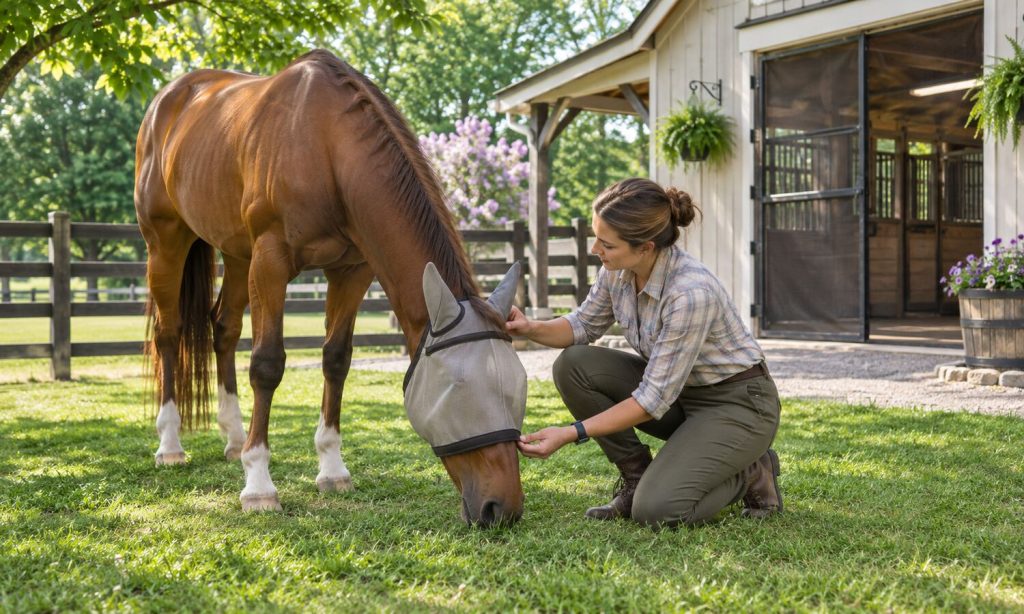
Inspect mesh for holes, stretched panels, broken seams, failed closures, and frayed edges. A mask should preserve space over the eyes and should not rub the face. Boots should remain secure without constriction and should not trap debris against the legs. If the material cannot be safely cleaned or its fit changes, replace it rather than continuing with damaged protection.
When should you replace a fly prevention for horses if a barrier still looks mostly intact? Check function, not appearance alone. A weakened hook-and-loop closure or seam at a rubbing point may cause injury before the entire item looks worn. Our guide to replacing fly boots for horses covers specific wear signs. Remove any item that catches on fencing or restricts movement.
Clean Before Deciding a Mask Is Finished
Dirt and hair buildup may make a usable mask uncomfortable. Wash according to the manufacturer’s instructions, dry it thoroughly, and inspect again. A mask with restored cleanliness but torn mesh still needs replacement. For fitting and daily care, our guide to horse fly mask design and fit provides additional context.
Check Chemical Repellents and Their Labels
Use only products labeled for the animal and intended application. Follow the stated expiry, storage, reapplication, safety, and disposal directions. A leaking bottle, missing label, altered liquid, or damaged container may be unsafe even before the printed expiry. Do not dilute old chemicals or pour them into unlabeled bottles. Never use a larger amount to compensate for a product that appears less effective.
When should you replace a fly prevention for horses in spray form? Replace it when the label says it has expired or when you cannot verify safe storage and integrity. An application wearing off is different from a bottle becoming unusable. The correct repeat interval depends on the formulation. Our guide to using fly sprays safely with horses covers label-based handling and exposure precautions.
Do Not Spray Close to Eyes Without Direction
Some fly-control products have strict restrictions for the face, damaged skin, young animals, or other situations. Follow the actual label rather than generalized advice. If a horse develops swelling, rash, or discomfort after treatment, stop further use and contact the veterinarian. Record the product name and exposure details for assessment.
Maintain Traps and Replace Components When Required
Traps vary in placement, attractant, design, and servicing needs. Some require bait replacement, while others need emptying or replacement of an adhesive surface. Follow the manufacturer’s directions. A full or damaged trap may become ineffective, and poorly placed traps can attract insects toward the horse rather than away from it. Do not hang equipment where a horse can bite or knock it over.
When should you replace a fly prevention for horses based on a trap? Inspect it at the frequency stated in the instructions and whenever catch volume or weather conditions change. Keep traps away from animal reach and feed areas. Avoid spilling attractants near stalls. Be cautious about claims that a particular trap alone prevents all fly-related disease; environmental control remains important.
Change Placement if the Trap Creates More Exposure
If a trap appears to draw flies into the horse’s resting or eating area, reassess its location according to manufacturer and extension guidance. Never create a hazard with cords, hooks, or exposed chemicals. A safe placement should support stable hygiene, not make the barn less comfortable.
Refresh Environmental Controls Through the Season
Manure removal, wet bedding management, water-container cleaning, and proper drainage are ongoing practices. They are not one-time replacements. Fly pressure often rises when breeding sites accumulate. University of Minnesota Extension advises integrated fly control and notes that keeping facilities clean can reduce fly breeding. A fly program should adapt as weather, stocking, and insect activity change.
When should you replace a fly prevention for horses that seems ineffective despite intact equipment? Inspect the barn first. A new repellent may not overcome persistent breeding conditions. Our guide to reducing flies with stable and manure management explains this preventive foundation. Combine methods rather than relying on one item to carry the whole burden.
Plan for Weather and Regional Differences
Wet periods, warm temperatures, and local insect populations affect timing. Review the program before peak fly season and after heavy rain or major barn changes. The correct interval depends on the site, not a universal calendar date. Continue to consider horse comfort and insect-borne health concerns with the veterinarian.
Know When the Horse Needs Veterinary Attention
Persistent rubbing, painful skin, crusts, swollen eyes, discharge, or excessive stomping can indicate irritation or another condition. A horse with a suspected eye injury needs timely clinical assessment. Insect bite hypersensitivity may require a veterinary plan and more consistent fly avoidance. Do not mask symptoms by adding multiple chemicals without knowing the cause.
When should you replace a fly prevention for horses is sometimes the wrong first question. If the animal shows serious illness or a severe reaction, treatment and diagnosis come before gear replacement. Keep a record of current products, application dates, and affected body areas. A veterinarian can help determine whether a chemical exposure, fly bite reaction, or unrelated problem is involved.
Avoid Unnecessary Product Stacking
Combining several repellents can increase exposure and may conflict with label directions. Do not assume multiple substances are safer or more effective together. Ask a veterinarian about compatibility and follow applicable instructions. Physical barriers and environmental management may reduce the need for frequent chemical application.
Frequently Asked Questions
Fly-control replacement depends on the specific measure and its condition. These answers help separate normal maintenance from genuine equipment failure.
Always follow product labels and local safety requirements. Seek veterinary advice for skin or eye problems that persist despite routine care.
How often should I replace a horse fly mask?
There is no universal schedule. Replace it when mesh, closures, shape, or fit no longer protects the horse safely.
Can I use a fly spray after it expires?
Follow the printed expiry or use-by directions. Do not keep using an expired, damaged, or unidentified chemical treatment.
Do fly traps need replacement every season?
It depends on the design and instructions. Some need cleaning or new bait; others have disposable components or a finite useful life.
Will replacing a spray solve a fly problem in a dirty barn?
Probably not by itself. Manure, wet bedding, and breeding areas require ongoing management alongside other controls.
What if my horse reacts badly to fly protection?
Remove or stop the suspected source of irritation when safe, follow any label first-aid directions, and contact a veterinarian promptly.
Final Words
When should you replace a fly prevention for horses? Replace a physical barrier when fit or structure fails, a chemical product when its label or condition makes it unusable, and trap components when their instructions require it. Refresh stable hygiene continually. Let actual horse comfort and local insect pressure guide the plan.
Effective fly prevention for horses is a combination of appropriate barriers, safe treatment use, and environmental care. Check gear regularly and record chemical applications. For a wider management overview, revisit our guide to stable and manure fly prevention. Seek veterinary help for persistent eye, skin, or systemic signs.
Reference
Integrated fly control and equine care: University of Minnesota Extension — Fly Control Around Horses; and UC Davis Center for Equine Health — Insect Bite Hypersensitivity.
Chemical storage and label safety: U.S. EPA — Storing Pesticides Safely; and U.S. EPA — Pesticide Labeling Questions and Answers.









