
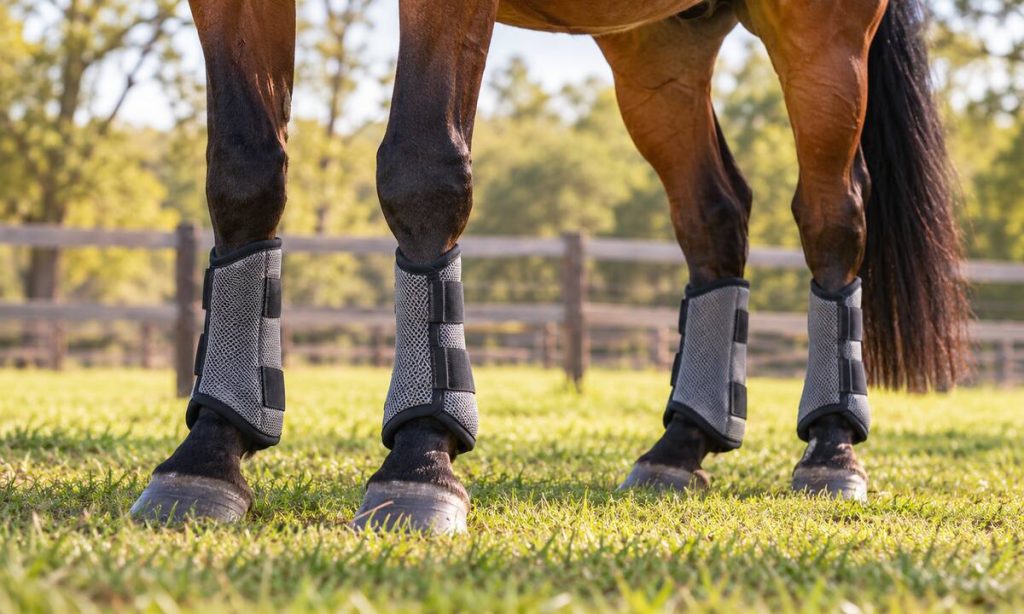
When should you replace a fly boots for horses? Replace protective leg coverings when damage or fit changes make them uncomfortable, unsafe, or unable to stay in place. A boot does not need to look completely destroyed before it becomes unsuitable. Frayed mesh, failing closures, rubbing, or repeated slipping are all reasons to inspect the equipment closely. Seasonal wear varies with turnout conditions, washing, movement, and the horse’s behavior, so no fixed calendar date works for every pair.
This guide explains how to recognize wear, distinguish washable dirt from structural damage, and check whether a leg covering still fits. Owners using fly boots for horses can use these checks regardless of the original style. It also describes a simple maintenance schedule and when a damaged boot should stay off the horse. The purpose is comfortable fly protection without creating new leg irritation or turnout hazards.
Look for Damage That Compromises Protection
When should you replace a fly boots for horses? Begin with the mesh. Hold the clean boot in good light and inspect for large holes, detached seams, stretched fabric, sharp edges, and rough patches. A small cosmetic discoloration is not necessarily a problem, but torn mesh may catch on fencing or allow insects through. Check the binding around top and bottom edges. If the material no longer forms a smooth barrier or rubs against the leg, replacing it is safer than forcing another season of use.
Inspect fastening straps with the same care. Hook-and-loop closures can collect hay and hair until they barely hold. A buckle or elastic panel can weaken with repeated use. If a fastener opens during normal movement or leaves an exposed hard edge, discontinue use. Never use pins, wire, adhesive tape, or improvised ties to secure the boot to the leg. Repairs that introduce new pressure points are not worthwhile. A secure but nonrestrictive fit matters more than making a worn item last.
Check for Rubbing, Swelling, and Slippage
Even an intact boot may need replacement if it no longer fits properly. Watch the horse walking, turning, standing, and grazing. A fly boot should not bunch into folds, twist around the cannon bone, travel into the fetlock, or slide down over the hoof. Observe the skin after removal, especially around the edges and closure points. Heat, hair loss, rubbed patches, tenderness, or swelling suggest a problem that needs prompt attention. Remove the boot and investigate rather than tightening it further.
When should you replace a fly boots for horses after a size change? Reassess the fit if the horse’s weight, leg condition, or turnout routine changes. Swelling should not be treated simply by choosing a larger boot; contact a veterinarian if it is unexplained or painful. Follow the maker’s sizing instructions and leave no tight bands. The site’s guide to cleaning and inspecting horse boots provides general equipment checks. Any boot that repeatedly shifts despite correct adjustment is a poor fit for that horse.
Separate Normal Dirt From Material Failure
Grass stains and dusty mesh do not automatically mean a fly boot is finished. Remove the covering, brush away dried debris, and clean it according to the care label. Rinse thoroughly when washing is permitted and allow complete drying before it touches the horse again. Check the material after cleaning, because dirt can hide torn seams or deteriorating elastic. A boot that keeps its structure and remains comfortable may still be serviceable, even if it no longer looks new.
On the other hand, washing cannot restore broken fibers, lost elasticity, or a closure that will not fasten securely. Avoid bleach or harsh chemicals unless the manufacturer explicitly permits them, since residues and material damage can irritate skin. Do not return a damp, heavily soiled boot to the leg, particularly in wet weather. Consider turnout conditions: mud, rain, and rough fences increase the need for inspection. Maintaining protection should never require ignoring signs of rubbing or contaminated fabric.
Create a Practical Inspection and Replacement Routine
A dependable routine begins each time boots are fitted. Inspect the leg for new swelling or skin changes, then examine mesh and straps. After turnout, remove coverings for a complete skin check and to let the legs dry when needed. Watch the horse move during initial fitting, and check more frequently when weather or activity changes. Note which pair needs frequent adjustment. If one boot becomes difficult to fasten, do not assume the other pieces remain in equal condition.
Store boots clean and dry between uses, away from rodents, direct damage, and substances that may contaminate the fabric. Keep paired items together and label sets if several horses share a barn. An inspection log can record tears, closure repairs, and recurring rub locations. When comparing replacement timing, consider the actual condition rather than price or age alone. FYI, a fly boot that has survived multiple seasons is not necessarily safer than a newer one; fit and material integrity determine that.
Understand Fly Control Beyond the Boots
Fly boots are only one part of horse comfort during insect season. Pasture hygiene, manure management, suitable screens, and other physical barriers can help reduce insect exposure. The University of Minnesota Extension notes that mesh masks and leggings may assist with fly management, alongside clean and dry facilities. If a horse stamps vigorously, check whether insects, skin irritation, or a poorly fitted boot is involved. Replacing equipment without addressing the underlying issue may not solve the behavior.
Do not substitute a leg boot for medical attention when a horse has wounds, swelling, or a severe reaction to insects. Depending on conditions, the safe horse fly-spray guide offers additional general prevention information, while fly sheets protect other body regions. Make every protection choice suit the individual horse. Check turnout fencing and nearby obstacles that might catch straps. A well-designed fly-control routine uses clean facilities and comfortable gear rather than relying on one worn accessory.
Frequently Asked Questions
Owners often ask whether boots need replacement after a season or only after serious damage. The correct answer depends on condition and fit.
Inspect the horse as well as the equipment. Skin changes should take priority over an arbitrary equipment-replacement schedule.
How often should I inspect horse fly boots?
Check equipment and the horse’s skin before fitting and after removal. Look more often during wet weather, heavy turnout, or when a boot slips.
Does fading mean a fly boot must be replaced?
Not necessarily. Color change alone is less important than intact mesh, secure fasteners, safe edges, and a comfortable fit.
Can I tighten loose fly boots to stop slipping?
Only within the manufacturer’s fit guidance. A boot that requires excessive tension or repeatedly shifts may need replacing or resizing.
Can I leave fly boots on wet legs?
Avoid trapping moisture and dirt against the skin. Remove and dry equipment when needed, and watch for irritation or swelling.
Should I replace just one damaged boot?
You can assess each item separately, but confirm matched sizing, closure security, and comfort. Do not keep an unsafe boot in use.
Final Words
When should you replace a fly boots for horses? Replace a covering when torn material, failed closures, persistent slipping, or skin rubbing makes safe use doubtful. A clean but faded boot may be fine; a new-looking one with a sharp edge is not. Regular leg checks, gentle cleaning, and secure storage make these decisions easier. If there is swelling or pain, remove the equipment and seek veterinary guidance instead of compensating with tighter straps.
When considering fly boots for horses, measure the individual horse and evaluate how the gear performs in daily turnout. A safe fit allows comfortable movement and dependable closure. Repair only when the manufacturer supports it and no pressure or snag hazard remains. Your horse’s skin and behavior provide more useful feedback than the date printed on a purchase receipt.









