
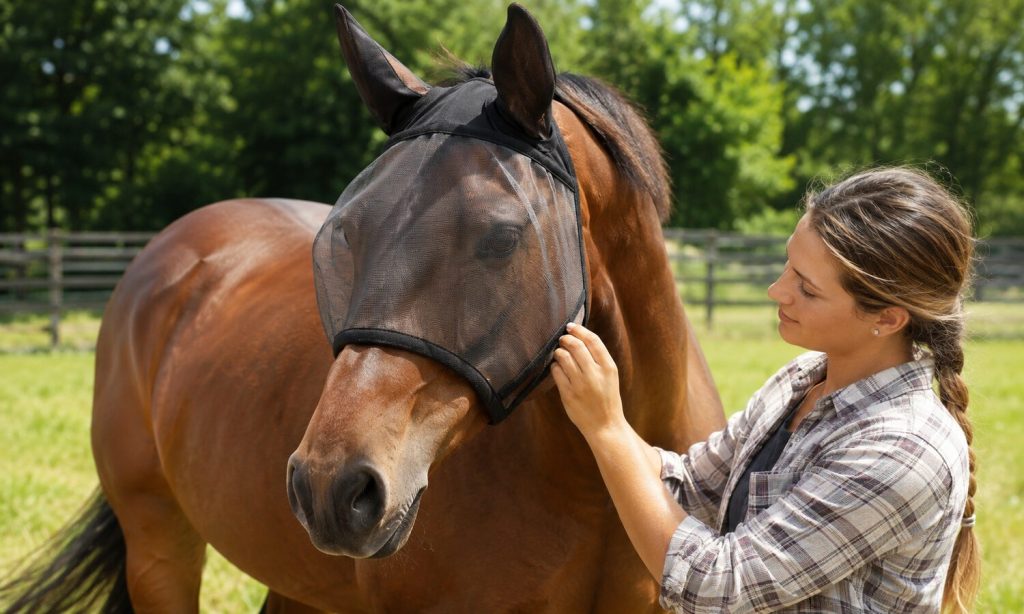
How to use and care for a fly masks for horses starts with a comfortable fit that protects the face without pressing on the eyes. A fly mask can form a physical barrier against insects, but a poorly fitted or damaged mask can rub skin, obstruct vision, or become caught on fencing. The horse should be able to blink, move its ears, graze, and see appropriately while wearing it. Daily inspection matters as much as the initial purchase.
The right routine includes gentle introduction, careful fit checks, safe turnout, prompt cleaning, and timely replacement. Our guide to fly masks for horses explains design considerations. This article focuses on practical use and maintenance rather than product rankings. If the horse has an eye injury, discharge, swelling, or a prescribed eye-protection plan, follow your veterinarian’s directions before using an ordinary mask.
Check the Fit Before the First Use
Place the mask so it sits securely without tightening against the poll, cheeks, or ears. The mesh should stand away from the eyes rather than folding inward. Check clearance when the horse lowers its head to graze. Ensure straps fasten as intended and do not create loops that can catch on objects. A loose mask may slide; an overly tight one may rub.
How to use and care for a fly masks for horses also means observing the horse in motion. Watch it walk, eat, turn, and shake its head. The mask should remain in place without blocking nostrils or restricting normal movement. Check whether ear covers or nose extensions suit the individual, and never assume one size fits all horses of the same breed.
Introduce the Mask Gradually
Let the horse see and smell the mask before putting it on. Use calm handling and reward relaxed cooperation when appropriate. Start with a brief period under supervision, then recheck fit and behavior. Do not leave a frightened horse alone with an unfamiliar mask. If the animal repeatedly panics or tries to remove it, pause and reassess the design and introduction.
Inspect Skin, Eyes, and Vision Every Day
Remove or lift the mask safely to inspect the eyes and surrounding skin. Check for redness, discharge, swelling, hair loss, rubbed areas, or trapped debris. A fly mask should not conceal an emerging eye problem. If the horse squints, keeps an eye closed, tears excessively, or has a cloudy eye, seek veterinary attention promptly. Eye conditions can worsen quickly.
How to use and care for a fly masks for horses requires checking both the outside and the inside of the mesh. Mud, dust, hay fragments, and insects may collect where the mask touches the face. Ensure visibility remains adequate in the conditions where the horse is turned out. Do not rely on a damaged mesh panel simply because the straps still close.
Use Medical Masks Only as Directed
For certain diagnosed eye conditions, a veterinarian may recommend a protective visor or a specialized mask. That is a medical plan, not an ordinary fly-management choice. UC Davis notes that fly masks may help reduce exposure in some equine eye-care contexts. The type, fit, and wearing schedule should follow the clinician’s instructions.
Clean the Mask Without Damaging It
Brush off loose dirt and hair, then follow the care label for hand washing or machine washing. Gentle soap and water may be appropriate for many fabric masks, but do not assume every mesh, coating, or UV-protective material tolerates the same cleaning method. Rinse away residue and let the mask dry fully before use. Avoid bleach or harsh chemicals unless specifically permitted.
How to use and care for a fly masks for horses includes cleaning closures and seams where grit accumulates. Hook-and-loop straps can lose grip when packed with hair. Gently remove debris as directed. Examine stitching, ear seams, and nose sections after washing. A mask that looks clean but has broken fasteners is not ready for turnout.
Prevent Odor and Skin Irritation
A damp dirty mask can rub or trap debris against sensitive skin. Store a clean dry spare when possible so the horse is not forced to wear a wet one. If irritation appears, remove the mask and discuss care with a veterinarian. Do not apply strong fragrances or insecticides to the fabric unless the label expressly permits it and the horse’s care plan supports it.
Decide When and Where It Is Safe to Wear
Fly pressure varies with season, region, weather, and pasture conditions. Some horses benefit from daytime use; others may need a different schedule. Consider visibility in low light, the horse’s history of rubbing, and the risk of snagging on fencing or branches. Follow product safety directions and inspect turnout areas. There is no universal rule that every horse must wear a fly mask for the same number of hours.
How to use and care for a fly masks for horses also involves regular removal for inspection. Do not leave a mask on continuously without checking the face. A mask that slips during play or grazing should be adjusted or replaced. If a horse shares turnout with others, observe whether herd mates chew or pull on the fabric.
Combine Masks With Broader Fly Control
Manage manure, wet bedding, and standing water where appropriate. University of Minnesota Extension identifies mesh barriers as one element of fly management. For complementary safety practices, read our guide on safe fly spray handling around horses. Avoid spraying the eye area or the mask itself unless a product label explicitly allows it.
Store a Clean Mask Between Uses
Before storage, wash as directed, dry fully, and close straps to prevent snagging. Keep it in a clean, dry location away from pests, sunlight, chemical fumes, and moisture. Do not crush the eye-clearance structure under heavy tack. Seasonal storage is a good time to check mesh condition, stitching, and elastic components.
How to use and care for a fly masks for horses is easier with an organized routine. Label masks for individual horses when several share a barn. Keep a note about fit changes, rubbing, and wear. Our separate guide to storing a horse fly mask safely covers storage details. If a mask is contaminated or cannot be cleaned, do not return it to use.
Replace When Protection or Fit Fails
Signs include torn mesh, seams that rub, weak closures, loss of shape over the eyes, or sizing that no longer fits the horse. A wash cannot restore broken structural clearance. Repair only if the manufacturer approves a safe method; otherwise replace the item. Continue to inspect the horse’s face until any rubbing or irritation resolves.
Avoid Common Fly Mask Mistakes
Avoid fastening too tightly, leaving debris against the eye, using a mask during unsafe conditions, or relying on a torn panel for protection. Do not assume a horse’s reluctance means disobedience. Discomfort, poor vision, or unfamiliar material can explain resistance. A calm reintroduction or different fit may solve the issue without force.
How to use and care for a fly masks for horses also means noticing when the mask is not helping. If flies continue to bother the eyes or the horse develops discharge or swelling, evaluate the whole insect-control plan and seek veterinary care. A mask is a practical barrier, not a guarantee against every insect or eye disease.
Keep the Horse’s Comfort First
Watch whether the horse grazes, drinks, and interacts normally while wearing the mask. Remove it when there are signs of distress or restricted vision. Maintain safe fencing and avoid low branches that might snag straps. Comfortable use should be observable, not assumed.
Frequently Asked Questions
Fly mask care is mostly about fitting, monitoring, cleaning, and safe storage. These answers address common management questions.
For eye disease or injuries, follow a veterinarian’s specific wearing and cleaning instructions. General fly masks are not medical devices for every condition.
Should the mesh touch my horse’s eyes?
No. The mask should maintain adequate clearance so the horse can blink and move comfortably. Replace or refit one that collapses inward.
Can I wash a fly mask in a machine?
Only if the care label permits it. Follow the specified method and dry completely before use.
Can a horse wear a mask overnight?
There is no universal schedule. Consider visibility, safety, fly activity, the horse’s behavior, and the manufacturer’s instructions.
When should I replace a fly mask?
Replace it when mesh tears, closures fail, eye clearance collapses, or the fit causes rubbing. Do not keep using damaged gear.
What if my horse’s eye looks red or cloudy?
Remove the mask safely and seek prompt veterinary care. Eye symptoms should not be managed solely by adjusting fly protection.
Final Words
How to use and care for a fly masks for horses comes down to fit, eye clearance, daily inspection, gentle cleaning, and proper storage. A clean intact mask can reduce insect contact, but it should never rub the face or hide an eye problem. Check wear before every turnout and replace damaged items.
If selecting or maintaining fly masks for horses, let the horse’s comfort and the mask’s condition guide decisions. Combine the barrier with stable hygiene and other appropriate fly controls. Seek veterinary attention for eye pain, discharge, swelling, or a change in vision.









