
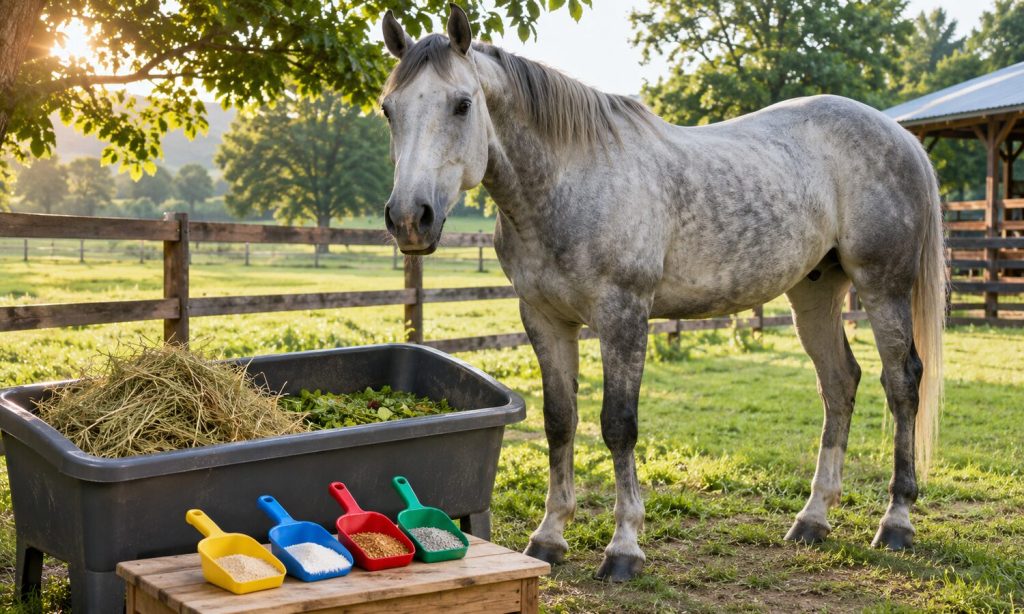
How to compare vitamins for horses options by fit and use begins with the existing ration. Horses do not need the same vitamin supplement simply because they share a stable. Forage quality, fortified feeds, workload, age, pasture access, and medical conditions influence whether an additional nutrient source is necessary. A product that duplicates an already adequate ration may create imbalance without improving health. The useful comparison is nutritional fit, not the number of vitamins advertised.
Start with a complete inventory of hay, pasture, concentrate, salt, mineral mixes, and supplements. A guide to vitamins for horses provides background on common nutrient categories. This article explains how to compare labels, serving forms, daily intake, storage, and cost per usable amount without promoting particular products. When a horse is ill, growing, pregnant, or losing condition, ask a veterinarian or equine nutrition professional to lead the assessment.
Compare the Ration Before Any Supplement
Forage should form a major part of most horse diets. Hay nutrient content varies with plant species, soil, harvest maturity, weather, and storage. Commercial feeds can supply vitamins and minerals when fed at the labeled rate. Horses receiving less than the recommended amount of fortified feed may need a ration review, but adding a generic supplement is not automatically the right correction.
How to compare vitamins for horses options by fit and use requires knowing what the horse already receives. List the daily amounts of every feed and additive, and keep their labels. Ask whether a forage analysis or professional ration calculation is appropriate. A nutritionist can identify gaps rather than guessing from coat color or a marketing claim.
Vitamins and Minerals Are Different
Vitamins such as A, D, and E are required in particular amounts, while minerals such as copper, zinc, and selenium must also remain balanced. Some products contain both groups. Compare the actual stated nutrient quantities and units rather than the general name ‘multivitamin.’ A horse may need a specific correction, an overall ration adjustment, or no addition at all.
Check Life Stage, Workload, and Health
A growing foal, broodmare, retired horse, and hard-working athlete have different feeding circumstances. However, workload or age alone does not establish a vitamin deficiency. Body condition, forage quality, energy intake, and medical history all matter. Do not use a high-intake plan for a large athletic horse on a small companion pony without professional evaluation.
How to compare vitamins for horses options by fit and use should identify the stated target animal and purpose. Check whether the label describes a complete feed, ration balancer, mineral supplement, or isolated nutrient product. These are not interchangeable categories. If endocrine disease, liver disease, or another condition is present, consult the treating veterinarian before adjusting the diet.
Consider Pasture and Forage Conditions
Fresh pasture, stored hay, and restricted grazing can provide different nutrient patterns. A horse in a drought-affected region may be eating forage unlike that of a horse on lush pasture. If grazing is limited for laminitis or metabolic reasons, a carefully balanced ration may be needed. The full feeding plan must address both nutrient adequacy and the horse’s health risks.
Read the Label’s Units and Serving Directions
A large number on a label does not necessarily mean a better product. Compare nutrient amounts per actual daily serving, not merely per pound or kilogram of supplement. Units may differ, and percentages can be difficult to compare without calculating the amount fed. Ask a nutrition professional to verify a calculation when unfamiliar units or overlapping ingredients appear.
How to compare vitamins for horses options by fit and use includes how accurately the material can be administered. A small granular measure, powder, or liquid may have different handling and feeding instructions. The form should not interfere with the horse’s willingness to eat the ration. Do not estimate a serving by eye or borrow a scoop from another formula.
Look for Clear Quality Information
Read ingredient names, guaranteed analysis, expiration, storage instructions, lot identification, and manufacturer contact details. Vague proprietary blends may make it difficult to assess total intake. Avoid unsupported claims that a nutrient mix cures disease, repairs every hoof problem, or transforms performance. Transparent information helps veterinarians and nutritionists evaluate suitability.
Compare Form, Storage, and Everyday Practicality
Powders and granules may mix into a regular feed meal, while liquids require spill-resistant measuring and careful closure. Blocks and free-choice forms depend on intake behavior, which can vary between horses. A horse that consumes too little or too much of a free-choice product may not meet the planned nutrient target. Ask which form fits the actual feeding environment.
How to compare vitamins for horses options by fit and use also involves temperature, humidity, pests, and shelf life. Keep products in original packaging with clear labels, away from feed contamination and chemical supplies. If a powder clumps unexpectedly or a liquid changes appearance, contact the manufacturer before feeding. Discard unidentified or expired materials according to directions.
Fit the Plan to Other Caregivers
A feeding program should be simple enough for every authorized caretaker to follow. Write the horse’s name, approved serving measure, time, and any restrictions in a stable log. This helps avoid double dosing. For a related introduction routine, see our guide to introducing vitamin and mineral supplements to horses.
Avoid Over-Supplementation and Duplicated Nutrients
Combining a fortified feed, ration balancer, hoof formula, and multivitamin may create a surprisingly large total intake. Excesses of some vitamins and minerals can be harmful, and certain nutrients interact. More is not always better. Review the ingredients and amounts from every source before adding another supplement. A professional ration calculation provides more reliable evidence than advertising.
How to compare vitamins for horses options by fit and use should end with a clear reason for the addition. If no specific gap exists, maintaining a balanced ration may be the best decision. If the horse has unusual weight loss, fatigue, appetite changes, or other illness signs, veterinary examination takes priority over experimental vitamin combinations.
Do Not Ignore Feed Consistency
If a veterinarian approves a change, introduce it as directed and observe feed acceptance, manure, and general behavior. Changing several feeds and supplements at once makes reactions difficult to interpret. Monitor body condition over time, not merely hair shine after grooming. Vitamins support normal physiology, but they are not substitutes for appropriate calories, protein, forage, and veterinary care.
Make a Fair Comparison Without Product Rankings
Compare each option against the same criteria: intended nutrient purpose, amount per daily serving, duplication with the ration, safe feeding form, storage conditions, and suitability for the horse. Calculate cost only after verifying the actual serving size. A cheaper tub is not economical if it supplies unneeded nutrients or expires before use.
How to compare vitamins for horses options by fit and use is ultimately about reducing uncertainty. If two labels seem similar, ask which one addresses a measured gap and whether the horse will reliably receive its dose. Do not select based on popularity alone. A qualified professional can often simplify the choice by adjusting the existing feed rather than adding another container.
Document the Decision
Record why the supplement was considered, the professional’s recommendation, the calculated intake, and any follow-up date. Keep labels and lot numbers for traceability. If the horse’s forage, health, or workload changes, reassess the plan instead of automatically continuing the same dose. Practical notes prevent a reasonable decision from becoming an outdated habit.
Frequently Asked Questions
Vitamin comparisons are most useful when tied to a horse’s whole diet. These answers cover common label questions and feeding decisions.
Nutrition requirements vary with the individual animal and its circumstances. Consult a veterinarian for suspected deficiency or illness rather than treating the label as a diagnosis.
Does every horse need a vitamin supplement?
No. A balanced forage and feed program may already meet needs. Assess the complete ration before adding nutrients.
Is a higher vitamin amount always better?
No. Excess intake or imbalance may be harmful. Compare actual amounts per day with the horse’s requirements.
Should I choose powder or liquid?
Use the form that safely fits the feeding plan and permits accurate measurement. The nutrient content and purpose matter more than the texture.
Can I combine several supplements?
Only after checking overlapping ingredients and total intake with a qualified professional. Multiple products can duplicate nutrients.
When should I reassess the ration?
Reassess after major changes in forage, health, age, workload, body condition, or feeding program, and according to professional follow-up advice.
Final Words
How to compare vitamins for horses options by fit and use means starting with the ration and working toward a documented need. Review forage, fortified feeds, life stage, nutrient amounts, delivery form, and storage. Do not assume that the supplement with the longest ingredient list is the most appropriate.
When considering vitamins for horses, use published information to prepare better questions for your veterinarian or nutritionist. An accurate, repeatable feeding plan matters more than marketing. If the ration is already complete, there may be nothing useful to add.









