
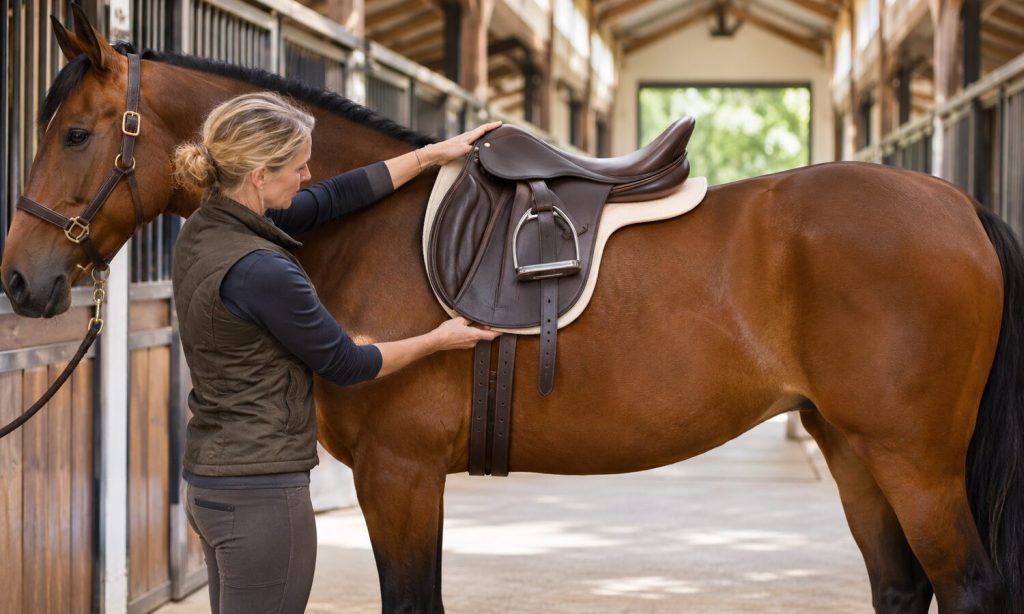
How to size a half pads for horses starts with the saddle, not merely the horse’s height or breed. A half pad sits between the saddle and the underlying pad or directly against the horse as intended by its design. It should provide appropriate coverage without bunching, restricting the withers, or placing seams under pressure points. The wrong size can alter how the saddle sits and may cause discomfort even when the pad looks attractive.
Correct sizing depends on saddle panel length, shape, wither clearance, thickness, and the horse’s back. Our guide to half pads for horses covers relevant construction details. This article explains what to measure, how to inspect the fit on a standing horse, what changes under a rider, and when a qualified saddle fitter should be involved. A pad cannot fix an unsuitable saddle tree or major pressure problem.
Check the Saddle Fit Before Adding Thickness
A well-fitted saddle should distribute weight appropriately and maintain adequate clearance over the withers and spine. If the saddle is already too narrow or unbalanced, adding a thick half pad can make fit worse. Start by observing the saddle without the extra pad, ideally with a trained fitter. A half pad is not a substitute for assessing the saddle’s tree, panels, or balance.
How to size a half pads for horses becomes much clearer after the underlying saddle fit is documented. The University of Minnesota Extension stresses appropriate wither clearance, weight distribution, and balance. If the horse has back soreness, uneven sweat patterns, swelling, or resistance under saddle, seek a qualified fitting assessment and veterinary advice where appropriate.
Know the Intended Purpose
Some half pads are used for modest cushioning or specific fit adjustments, while others provide removable shims. Different designs have different effects on pressure. Do not add or remove shims by guesswork when a saddle does not fit correctly. Ask the saddle fitter what the pad is intended to achieve and how the result will be checked.
Measure the Saddle Panels and Pad Coverage
Place the saddle on an appropriate surface and measure the length of the panels that rest along the horse’s back. Compare that measurement with the pad maker’s size chart. The pad should cover the relevant contact area without exposing a panel edge or creating bulky folds. Check the front and rear shape, not just a single overall length printed in inches.
How to size a half pads for horses also involves where the seams and binding sit. A seam directly under a loaded saddle panel can become a pressure point. Too much material at the front may crowd the shoulder or withers, while a pad that is too short may leave the rear panels unsupported. Follow the design instructions and visually inspect all edges.
Distinguish Saddle Size From Pad Size
A saddle’s seat size does not always predict panel length or shape. Two saddles labeled with the same rider-seat measurement can have different contact footprints. Likewise, a large horse does not necessarily need the largest half pad. Measure the actual saddle and check the horse’s back profile rather than assuming a universal mapping.
Inspect Wither and Spinal Clearance
Position the half pad according to its construction, ensuring that the central channel or cutout stays clear when intended. The pad should not pull tightly across the withers or compress into the spinal area. When a conventional saddle pad is underneath, confirm that the two layers remain smooth without rolling, twisting, or bunching.
How to size a half pads for horses requires evaluating the full layered setup. An extra layer can reduce saddle clearance or change balance. Run a careful visual check and have a fitter assess pressure distribution. Do not assume that a soft material automatically creates more comfort. Incorrect thickness or placement may concentrate forces.
Watch How the Horse Moves
Fit must be observed beyond a stationary photograph. A qualified fitter should assess movement and, where appropriate, ridden work. Look for saddle slipping, excessive bouncing, altered balance, or signs of discomfort. If the horse reacts negatively, stop and investigate rather than tightening the girth to compensate. A pad should support a properly evaluated tack setup.
Consider Material Thickness and Shape
Foam, wool, felt, and other materials can differ in thickness, rebound, and moisture handling. A thicker pad is not automatically better. The right material depends on the saddle’s existing fit, the horse’s needs, and how the pad is intended to be used. Check whether the material compresses unevenly or becomes bulky around the saddle’s edges.
How to size a half pads for horses must account for how a chosen pad changes the overall fit. A shaped contour may work differently from a flat rectangle. Pads with shims require careful positioning. A good fit should remain balanced and stable after normal use, not just for the first few minutes of tacking up.
Avoid the ‘More Cushion Solves Everything’ Mistake
Adding several pads to compensate for an ill-fitting saddle can create an unstable or excessively narrow setup. If pressure or bridging is suspected, ask for a professional saddle evaluation. For a related comparison, our article on comparing saddle pads by fit and use discusses broader pad considerations.
Check Fit During and After Riding
After a short appropriate session, remove the tack and inspect for rubbing, trapped hair, or unusual pressure marks. Sweat patterns can offer clues but do not independently prove correct fit. Assess the saddle and horse together. A pad that shifts backward, folds, or causes new discomfort should be reassessed.
How to size a half pads for horses is not a one-time decision if the horse gains muscle, loses weight, or changes workload. Saddle fit can evolve with body condition. Recheck after meaningful physical changes or whenever behavior suggests discomfort. Clean and dry the pad according to its care instructions so accumulated grime does not affect fit or skin.
When to Involve a Veterinarian
Persistent back pain, swelling, lameness, bucking, or marked reluctance during tacking up deserves veterinary assessment. A fitter can evaluate tack, but medical causes must not be ignored. UC Davis notes that poor saddle fit can contribute to back pain in some horses. Do not treat serious discomfort as a simple padding-size problem.
Common Half-Pad Sizing Errors
Typical mistakes include selecting solely by the rider’s seat size, failing to measure panel length, using excessive thickness, ignoring the central channel, and allowing bindings under pressure areas. Another is assuming a pad can permanently correct a saddle that fits poorly. These choices can lead to rubbing or unstable tack.
How to size a half pads for horses should follow an ordered check: verify saddle fit, measure actual coverage, compare the manufacturer’s chart, position the pad correctly, and assess movement with a professional. Our guide to half-pad construction and fit factors may help prepare questions, but the final check must happen on the horse.
Write Down the Setup
Record the saddle model, panel measurement, half-pad size, thickness, and any fitter adjustments. Note the horse’s current body condition and reassessment date. A simple record helps avoid accidental changes by different riders. If the horse is sharing tack, confirm the setup fits each animal separately.
Frequently Asked Questions
Half-pad sizing can be confusing because saddle measurements and horse body shapes vary. These answers emphasize fit rather than a universal number.
When an animal shows pain, stop using the questionable setup until it has been properly assessed. Cushioning should not mask a medical or tack problem.
Should I size a half pad from the horse’s height?
Not alone. Saddle panel dimensions, shape, and the horse’s back matter more than height as a single measurement.
Can a half pad make a saddle too narrow?
Yes. Additional thickness may reduce clearance or change balance. Check the complete tack setup with a qualified fitter.
Should a half pad extend beyond saddle panels?
It should cover the intended contact area according to its design without putting bindings under pressure points. Follow the manufacturer’s chart and fitting advice.
Is a thicker pad always more comfortable?
No. Excess padding can create new pressure or instability. Thickness should fit a specific purpose in a properly evaluated saddle setup.
When should half-pad fit be rechecked?
Recheck after changes in body condition, tack, padding, workload, or signs of discomfort. Routine periodic fitting is also sensible.
Final Words
How to size a half pads for horses means measuring the saddle’s real contact area, checking pad coverage and spinal clearance, and confirming that the complete setup remains balanced. Do not rely only on the horse’s size or saddle-seat number. A properly fitted saddle is the starting point.
Use half pads for horses only when their design and thickness suit the actual tack fit. Ask a qualified saddle fitter to assess movement and pressure, especially when shims are involved. Consult a veterinarian for back pain or behavior that suggests discomfort.









