

Finding the best half pads for horses starts with saddle fit, not the softest-looking fabric. A half pad can change how a saddle sits, how much space remains at the withers, and where its panels make contact. Some designs use movable shims for carefully assessed adjustments. Others use sheepskin, fleece, gel, or layered foam. Extra padding can help in a suitable setup, but it can also create pressure under a tight saddle. This guide compares seven identifiable half pads with distinct materials and fitting approaches. We explain their verified construction details, practical tradeoffs, and the situations that warrant professional help. No product here can repair a saddle with the wrong tree shape or width. Ask a qualified saddle fitter to assess the horse and tack before adding corrective shims.
Quick Picks
These options use different materials and adjustment approaches. Consult a qualified saddle fitter before making corrective changes.
| Product | Best For | Key Advantage | Buy | |
|---|---|---|---|---|
| Ovation Europa Sheepskin Vari-Shim Half Pad | Fitter-guided removable shimming | Sheepskin with two shim materials | View on Amazon | Jump to Review |
| ECP Sheepskin Deluxe Half Saddle Pad | Traditional Merino contact layer | Merino sheepskin and quilted cotton | View on Amazon | Jump to Review |
| LeMieux Merino+ Half Saddle Pad | Premium merino-focused layering | Merino+ large English half pad | View on Amazon | Jump to Review |
| Kavallerie 3D Air-Mesh Fleece Half Pad | Air-mesh and gel-layer construction | 3D mesh with gel padding | View on Amazon | Jump to Review |
| Back on Track Aurora Impact Half Pad | Layered-foam cushioning design | Four-foam and 3D mesh approach | View on Amazon | Jump to Review |
| Shires ARMA Corrective Lined Half Pad | Fleece-lined shim customization | Four-pocket correction system | View on Amazon | Jump to Review |
| ECP Adjustable Memory Foam Half Saddle Pad | Accessible corrective-shim option | Four pockets and twelve inserts | View on Amazon | Jump to Review |
1. Ovation Europa Sheepskin Vari-Shim Half Pad

What We Like
- Genuine sheepskin listed
- Two shim materials
- Adjustable pocketed design
- Regular saddle size noted
What We Don’t Like
- Shims require expert setup
- Natural-fiber care needs attention
Ovation Europa Sheepskin Vari-Shim Half Pad is included for fitter-guided removable shimming. According to its verified product listing, the seller lists sheepskin construction with memory-foam and felt shim sets. The adjustable inserts distinguish it from a simple padded layer. Different inserts may affect balance and panel contact in different ways. A fitter should determine whether any are needed. These features are descriptions of construction, not independent proof of injury prevention or therapeutic pressure relief. The correct size and location under the saddle matter more than soft marketing language. Check the current manufacturer’s information for the exact variation before purchasing.
A horse changing topline during conditioning might need a fresh saddle evaluation. A shim configuration should be documented rather than copied from another horse. The listing’s regular sizing needs checking against the actual saddle. Do not judge saddle fit only by whether the pad looks smooth while the horse is standing still. Check balance and clearance with the rider mounted, using guidance from a qualified fitter. A comfortable horse should move willingly, but behavior alone cannot measure saddle pressure. A pad works as part of the whole tack setup rather than as a standalone treatment.
Added inserts can create uneven pressure if placed incorrectly. Genuine sheepskin also needs material-appropriate cleaning and drying. This is not a cure for a saddle with the wrong tree shape. Compare cost, material care, and whether the design directly meets a demonstrated need. More cushioning is not necessarily better for an already snug saddle. Observe the horse after a normal ride for changes in behavior, rubbing, or sensitivity, and consult a veterinarian if pain is suspected. Any insert-based adjustment should remain reversible and documented.
My Recommendation
Choose Ovation Vari-Shim when a saddle fitter recommends a sheepskin half pad with selectable insert thickness. Its flexibility is useful only when the adjustments are purposeful. For a well-fitting saddle needing no correction, a simpler, thinner design may be preferable.
2. ECP Sheepskin Deluxe Half Saddle Pad

What We Like
- Merino sheepskin contact
- Cotton quilted top
- Billet straps included
- Traditional simple construction
What We Don’t Like
- No removable correction shims
- Special care may be needed
ECP Sheepskin Deluxe Half Saddle Pad is included for traditional merino contact layer. According to its verified product listing, the listing identifies Merino sheepskin, a cotton-quilted top, and billet straps. This traditional construction contrasts with pocketed correction pads. The product emphasizes a fleece contact area rather than user-adjustable front or rear inserts. That difference helps clarify its intended role. These features are descriptions of construction, not independent proof of injury prevention or therapeutic pressure relief. The correct size and location under the saddle matter more than soft marketing language. Check the current manufacturer’s information for the exact variation before purchasing.
Check the full saddle’s panel contact before adding more thickness. A soft-feeling material may still change the saddle’s height and clearance. Align straps neatly and keep the surface free from dirt or hardened sweat. Do not judge saddle fit only by whether the pad looks smooth while the horse is standing still. Check balance and clearance with the rider mounted, using guidance from a qualified fitter. A comfortable horse should move willingly, but behavior alone cannot measure saddle pressure. A pad works as part of the whole tack setup rather than as a standalone treatment.
The design offers no stated shim-adjustment system. Merino sheepskin may require more careful washing than straightforward synthetic fabrics. Avoid using extra thickness to hide persistent discomfort. Compare cost, material care, and whether the design directly meets a demonstrated need. More cushioning is not necessarily better for an already snug saddle. Observe the horse after a normal ride for changes in behavior, rubbing, or sensitivity, and consult a veterinarian if pain is suspected. Any insert-based adjustment should remain reversible and documented.
My Recommendation
ECP Sheepskin Deluxe suits riders looking for a conventional Merino surface beneath a saddle with adequate room. Its main appeal is its material approach rather than a correction mechanism. Have fit checked first, because natural cushioning cannot fix a tight or poorly balanced saddle.
3. LeMieux Merino+ Half Saddle Pad

What We Like
- Merino+ material specified
- English half-pad format
- Large size listed
- Natural-white option
What We Don’t Like
- Limited technical specs available
- Adds thickness under the saddle
LeMieux Merino+ Half Saddle Pad is included for premium merino-focused layering. According to its verified product listing, the identified variant is a large Merino+ half saddle pad in natural white. The product’s recognizable material and intended English-saddle format give it a distinct position in this list. Its listing supplies limited measurable construction information. Claims beyond the stated variant should not be assumed. The correct size and location under the saddle matter more than soft marketing language. Check the current manufacturer’s information for the exact variation before purchasing.
Before ordering, confirm how the large pad extends beneath the chosen saddle. A mismatch in length or panel coverage can cause bunching or leave unsupported areas. Inspect wither space and the spine channel. Do not judge saddle fit only by whether the pad looks smooth while the horse is standing still. Check balance and clearance with the rider mounted, using guidance from a qualified fitter. A comfortable horse should move willingly, but behavior alone cannot measure saddle pressure. A pad works as part of the whole tack setup rather than as a standalone treatment.
The exact product listing does not verify a particular pressure-reduction benefit. Merino-style layers add material between saddle and horse. They may be unnecessary when a proper fit requires minimal extra bulk. Compare cost, material care, and whether the design directly meets a demonstrated need. More cushioning is not necessarily better for an already snug saddle. Observe the horse after a normal ride for changes in behavior, rubbing, or sensitivity, and consult a veterinarian if pain is suspected. Any insert-based adjustment should remain reversible and documented.
My Recommendation
LeMieux Merino+ is worth considering for riders who want a merino-focused pad and already have a suitable saddle fit. Verify the large size against your tack. If adjustment is needed, a fitter-directed shim pad may offer clearer control than a fixed layer.
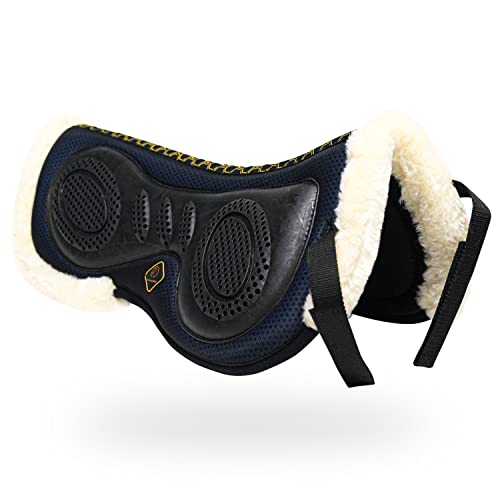
4. Kavallerie 3D Air-Mesh Fleece Half Pad
What We Like
- Three-dimensional mesh
- Gel padding listed
- Fleece layer
- Breathable construction concept
What We Don’t Like
- Gel changes overall thickness
- Grip cannot cure saddle slip
Kavallerie 3D Air-Mesh Fleece Half Pad is included for air-mesh and gel-layer construction. According to its verified product listing, the product combines an air-mesh design, fleece, and a gel-padded layer. The combination differs from traditional full sheepskin or removable shim systems. Ventilation and grip are manufacturer-positioned benefits rather than independent pressure-test findings. The design should be assessed as a complete layer. These features are descriptions of construction, not independent proof of injury prevention or therapeutic pressure relief. The correct size and location under the saddle matter more than soft marketing language. Check the current manufacturer’s information for the exact variation before purchasing.
On warmer rides, check whether the pad dries between uses. If a saddle slides, inspect balance and girthing before relying on a gripping surface. Even well-ventilated materials can trap sweat when layered improperly. Do not judge saddle fit only by whether the pad looks smooth while the horse is standing still. Check balance and clearance with the rider mounted, using guidance from a qualified fitter. A comfortable horse should move willingly, but behavior alone cannot measure saddle pressure. A pad works as part of the whole tack setup rather than as a standalone treatment.
The gel component adds material, which may change clearance. It is not an appropriate substitute for correcting a saddle that consistently moves, pinches, or leaves sore spots. Confirm laundering instructions. Compare cost, material care, and whether the design directly meets a demonstrated need. More cushioning is not necessarily better for an already snug saddle. Observe the horse after a normal ride for changes in behavior, rubbing, or sensitivity, and consult a veterinarian if pain is suspected. Any insert-based adjustment should remain reversible and documented.
My Recommendation
This Kavallerie design is relevant when a fitter confirms room for a mesh-and-gel half pad. It offers a different construction from wool and shimmed options. If saddle slip persists, evaluate the saddle itself rather than purchasing a thicker or grippier pad.
5. Back on Track Aurora Impact Half Pad

What We Like
- Four-foam arrangement
- 3D mesh sections
- Suede contact patches
- Anatomical form listed
What We Don’t Like
- No stated shim pockets
- Foam thickness affects fit
Back on Track Aurora Impact Half Pad is included for layered-foam cushioning design. According to its verified product listing, the listing describes a four-foam cushioning system, three-dimensional mesh, and suede contact patches. Its construction focuses on multiple foam layers and airflow. That makes it distinct from Merino fiber or adjustable pockets. Therapeutic wording in product marketing should not be treated as proof of medical benefit. The correct size and location under the saddle matter more than soft marketing language. Check the current manufacturer’s information for the exact variation before purchasing.
Place the pad smoothly so the suede patches do not fold under load. Check that the saddle maintains adequate wither clearance and stable balance after the added layer. Reassess if the horse changes condition. Do not judge saddle fit only by whether the pad looks smooth while the horse is standing still. Check balance and clearance with the rider mounted, using guidance from a qualified fitter. A comfortable horse should move willingly, but behavior alone cannot measure saddle pressure. A pad works as part of the whole tack setup rather than as a standalone treatment.
There is no verified removable shim system for targeted corrections. Lightweight marketing does not guarantee low pressure on a particular horse. More layers may be unnecessary when the saddle already fits well. Compare cost, material care, and whether the design directly meets a demonstrated need. More cushioning is not necessarily better for an already snug saddle. Observe the horse after a normal ride for changes in behavior, rubbing, or sensitivity, and consult a veterinarian if pain is suspected. Any insert-based adjustment should remain reversible and documented.
My Recommendation
Aurora Impact gives riders a layered-foam alternative when their saddle accommodates a half pad. The mesh and suede details are tangible points to compare. It is not a medical treatment, and saddle discomfort should prompt professional fitting or veterinary assessment.
6. Shires ARMA Corrective Lined Half Pad

What We Like
- Four-pocket adjustability
- Included low-compression shims
- Fleece-lined contact
- Stated 17–18-inch fit range
What We Don’t Like
- Fit range needs checking
- Shims can be misplaced
Shires ARMA Corrective Lined Half Pad is included for fleece-lined shim customization. According to its verified product listing, the white 17–18-inch variant lists a fleece lining, four pockets, and several low-compression shims. This gives adjustable front-and-rear support within a fleece-lined format. The ability to move inserts can matter when a qualified fitter identifies a narrow balancing issue. It should not be used by guesswork. The correct size and location under the saddle matter more than soft marketing language. Check the current manufacturer’s information for the exact variation before purchasing.
Confirm the exact saddle size and panel contact area. Too-small pads can create pressure edges, while oversized material may shift. A correction plan should specify where shims sit and when to change them. Do not judge saddle fit only by whether the pad looks smooth while the horse is standing still. Check balance and clearance with the rider mounted, using guidance from a qualified fitter. A comfortable horse should move willingly, but behavior alone cannot measure saddle pressure. A pad works as part of the whole tack setup rather than as a standalone treatment.
The pad cannot compensate for a wholly unsuitable saddle. Fleece can accumulate sweat and dirt, so check maintenance instructions. Keep the shims matched to the fitted configuration. Compare cost, material care, and whether the design directly meets a demonstrated need. More cushioning is not necessarily better for an already snug saddle. Observe the horse after a normal ride for changes in behavior, rubbing, or sensitivity, and consult a veterinarian if pain is suspected. Any insert-based adjustment should remain reversible and documented.
My Recommendation
Shires ARMA Corrective Lined is appropriate when a saddle fitter recommends a fleece-lined shim pad in its stated size range. Its adjustable pockets are the useful distinction. Choose a fixed, simpler half pad when no targeted balancing correction is indicated.
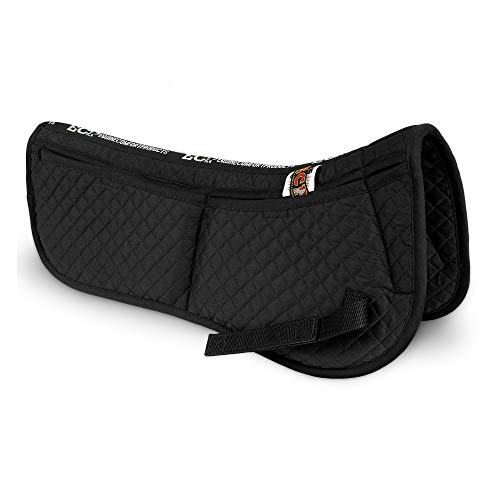
7. ECP Adjustable Memory Foam Half Saddle Pad
What We Like
- Twelve foam inserts
- Four correction pockets
- Quilted poly-cotton top
- Several adjustment positions
What We Don’t Like
- Incorrect shimming can pinch
- Not a replacement for fitter
ECP Adjustable Memory Foam Half Saddle Pad is included for accessible corrective-shim option. According to its verified product listing, the listing identifies a quilted poly-cotton top, four pockets, and twelve memory-foam shims. These inserts offer several adjustment positions within a single half pad. This flexibility can help a qualified saddle fitter fine-tune balance in a suitable setup. It does not establish pressure reduction in every horse. The correct size and location under the saddle matter more than soft marketing language. Check the current manufacturer’s information for the exact variation before purchasing.
Horses can change muscle shape throughout a season. Recheck the exact shimming plan when the topline changes rather than leaving inserts permanently in place. A smooth fit and correct saddle tree remain essential. Do not judge saddle fit only by whether the pad looks smooth while the horse is standing still. Check balance and clearance with the rider mounted, using guidance from a qualified fitter. A comfortable horse should move willingly, but behavior alone cannot measure saddle pressure. A pad works as part of the whole tack setup rather than as a standalone treatment.
Multiple inserts may overfill a saddle already snug at the withers. Incorrect placement can destabilize the seat or create uneven contact. A lower-priced shim pad is not automatically an adequate correction. Compare cost, material care, and whether the design directly meets a demonstrated need. More cushioning is not necessarily better for an already snug saddle. Observe the horse after a normal ride for changes in behavior, rubbing, or sensitivity, and consult a veterinarian if pain is suspected. Any insert-based adjustment should remain reversible and documented.
My Recommendation
ECP Adjustable Memory Foam is a practical starting point when a qualified fitter wants a configurable half pad and the saddle has room. Its four-pocket design is easy to distinguish. Avoid adding shims simply because the horse looks uneven without a proper saddle assessment.
How to choose best half pads for horses
The best half pads for horses are chosen after checking the saddle itself. Match thickness, material, and adjustability to a real fitting need. The ideal half pad maintains clearance and balanced contact rather than merely adding softness.
Check saddle balance and wither clearance
Begin with the horse and saddle, not a product list. A half pad changes the space beneath the saddle and can affect panel contact. A saddle that is already tight may become worse with an extra layer. Ask a qualified saddle fitter to check tree shape, balance, and wither clearance before adding shims. Evaluate the horse under the saddle during normal movement, not only while standing still. Monitor behavior during tacking up, mounting, and riding. If the horse shows soreness or resistance, stop and investigate. Our comparison of saddle pad styles for horses explains why a full pad and a half pad are not interchangeable. Professional assessment matters more than the manufacturer’s comfort claims.
Compare shims, wool, fleece, gel and foam
Shims are intended for targeted adjustments. A fitter may choose different insert thicknesses or placements based on actual balance. Sheepskin and merino pads provide a different contact material, while mesh and gel designs emphasize construction and grip. None of these material choices guarantees pain relief for every horse. Check the saddle’s seat size and panel shape before ordering, since half pads have specific dimensions. Align the pad along the spine without bunching or folded edges. Avoid combining several thick pads without an assessed reason. For movement problems, our guide to non-slip pads for trail riding provides related considerations. Slipping may reflect saddle fit rather than the surface material.
Recheck changing toplines and routine care
A horse’s back may change with conditioning, age, weight, or workload. A shim combination that once helped may need reassessment. Record the saddle fitter’s selected configuration and review it after a meaningful change. Remove dirt, dried sweat, and hair according to the pad’s care instructions. Replace worn inserts and avoid uneven compression. Do not place hard seams or folded material under the panels. Check the horse’s reaction each ride and note new rubs or back sensitivity. A pad should complement an appropriate saddle, never disguise a chronic problem. The long-term purchase is the one that fits reliably and can be maintained properly without compromising the animal’s comfort.
Frequently Asked Questions
The following answers explain common half-pad fitting questions before your final choice.
Can a half pad fix an incorrectly sized saddle?
No. It may support limited fitter-directed adjustments but cannot correct the wrong saddle tree or panel shape.
Are sheepskin pads better than adjustable shims?
They serve different roles. Material feel and targeted correction should not be treated as interchangeable.
Can adding a half pad increase pressure?
Yes. Added thickness or misplaced shims can worsen balance and clearance.
Do all half pads fit every English saddle?
No. Verify seat size, panel coverage, wither clearance, and manufacturer sizing.
When should I have saddle fit checked again?
Reassess after topline changes or if the horse shows discomfort, unusual behavior, or movement problems.
Final Verdict
The best half pads for horses are those that complement a correctly fitted saddle. Shimmed models offer controlled adjustment when a qualified fitter recommends it. Sheepskin, fleece, mesh, and foam provide other material choices. Do not use padding as a substitute for diagnosing and correcting poor saddle fit.
Affiliate disclosure: This article contains Amazon affiliate links. If you purchase through them, PetAdvisorPro may earn a commission. As an Amazon Associate I earn from qualifying purchases.









