
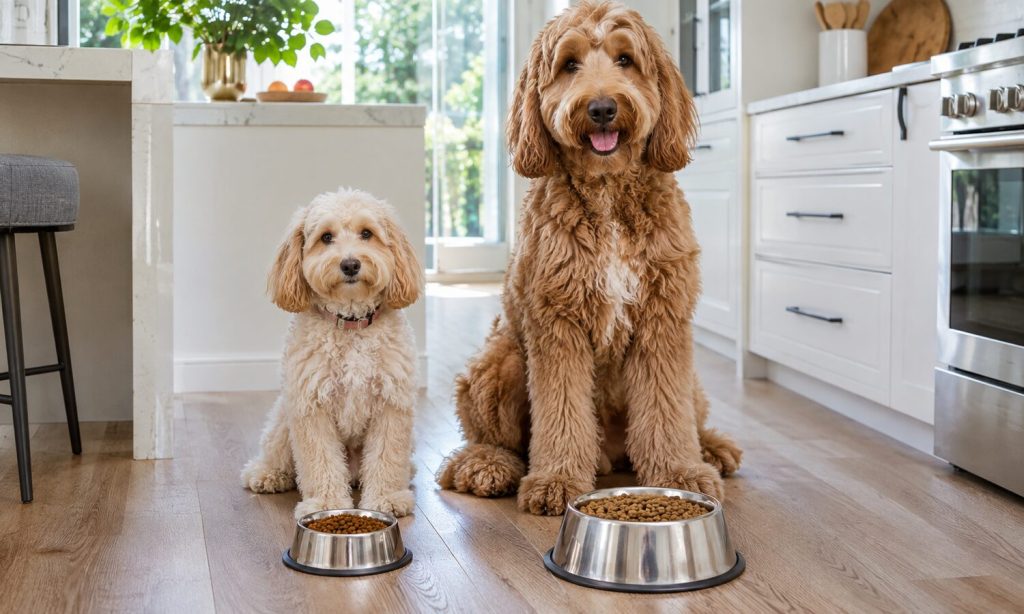
The word doodle can describe a tiny companion dog or a tall, highly active crossbreed. That range makes shopping for dog food for doodles more complicated than choosing a bag with a curly-coated dog pictured on it. A recipe should meet the needs of an individual dog’s growth stage, body size, activity, and health, rather than a marketing category. No single ingredient list or brand label automatically suits every doodle.
This guide explains how to choose the right dog food for doodles using nutritional adequacy statements, calorie information, feeding history, manufacturer questions, and your veterinarian’s assessment. It also covers puppy growth, adult weight management, common digestive concerns, and safe diet transitions. You will learn which claims deserve skepticism and how to monitor whether a chosen food is truly working for your dog over time.
Start With Life Stage and Expected Adult Size
A doodle puppy needs complete and balanced food intended for growth, while a healthy adult often needs an adult-maintenance formula. A large or giant doodle puppy may require a diet specifically adequate for growth of large-size dogs, rather than an ordinary small-breed puppy recipe. Read the nutritional adequacy statement, which explains the intended life stage and how the formula’s adequacy was established. A bag labeled ‘all ages’ still deserves careful scrutiny for a particular puppy.
Expected adult size varies widely among Goldendoodles, Labradoodles, Bernedoodles, and other crosses. Parent size, actual growth trajectory, and current body condition help the veterinarian select an appropriate approach. Do not assume curly hair predicts nutrient needs or that all doodles have the same allergy profile. For a dog with existing kidney disease, pancreatitis, urinary issues, or another diagnosed condition, therapeutic diet advice takes priority over a generic breed guide.
Large doodle puppies need measured growth
Large-breed growth nutrition is about controlled calories and correct mineral balance, not making the puppy gain weight quickly. Select a food whose label supports the growth needs of large-sized dogs when appropriate, and ask your veterinarian about body-condition targets. Avoid independently adding calcium or high-calorie supplements. A puppy may look hungry while already receiving enough energy. Check weight and body condition regularly, then adjust portions rather than using a fixed food scoop for months.
Read Nutritional Evidence Beyond the Front Label
Look for a clear complete-and-balanced statement, calories per cup or can, life-stage suitability, and accessible manufacturer contact information. The World Small Animal Veterinary Association provides questions for assessing pet-food manufacturers, including whether a qualified nutrition expert formulates diets, what quality-control processes are used, and whether feeding research supports the products. These questions are more informative than slogans like ‘premium,’ ‘ancestral,’ or ‘perfect for doodles.’
Ingredient lists reveal what was included, but they do not by themselves show whether the finished diet is balanced or consistently manufactured. Avoid assuming a ‘grain-free’ claim is inherently healthier for a dog without a specific medical need. Similarly, high protein percentages cannot be interpreted without moisture and calorie context. If a package makes dramatic medical promises, discuss those with your veterinarian before making it the basis of a long-term diet.
Compare calories before comparing portion sizes
Two foods with similar-looking kibble can have markedly different calories per cup. Start with the manufacturer’s feeding guide, then adapt it to your doodle’s actual weight, body-condition score, neuter status, age, and activity with veterinary help. Use a kitchen scale when consistent portions matter. Treats, chews, and training rewards count toward the daily total. A change in food may require a change in measured quantity even when the dog’s appetite stays the same.
Consider Size, Eating Style, and Daily Routine
Small doodles may prefer manageable kibble pieces, while a larger dog may find tiny pieces inconvenient. Shape and texture should support comfortable eating, but there is no evidence that a specific kibble silhouette suits every crossbreed. A healthy doodle that eats well may not need a switch simply because a different formula markets coat shine. Confirm that food type, bowl arrangement, and feeding schedule fit the dog’s chewing ability and household routine.
High-energy dogs in regular activity may need different calorie portions from sedentary adults with the same body weight. Feed measured meals instead of assuming free feeding is always appropriate. For dogs that gulp, a slow feeder may help pace meals, though it does not replace assessment of regurgitation or gastrointestinal symptoms. Fresh water should be available. Any persistent appetite change, weight loss, or abdominal discomfort deserves a veterinary conversation.
Treat coat and skin claims with caution
A doodle’s curls can trap allergens and create grooming challenges, but coat type alone does not establish food allergy. Excessive itching, recurrent ear inflammation, or chronic loose stools may have several causes that require a veterinarian’s diagnosis. Do not repeatedly rotate proteins or introduce an elaborate elimination diet without guidance. A diet trial, when indicated, must be planned and followed consistently to yield useful results. Good nutrition supports skin health, yet it is not a substitute for grooming or medical care.
Assess the Food Over Weeks, Not One Meal
After an appropriate transition, monitor stool consistency, appetite, energy, weight, and skin condition. Keep a note of daily portions and treats so you can identify patterns without guesswork. A shiny coat is welcome, but it is not the only measure of a balanced diet. Your doodle should maintain suitable muscle and body condition across life stages. If the dog is rapidly gaining weight, a calorie adjustment may help more than an entirely new brand.
Ask your veterinarian to reassess food at puppy wellness visits, annual checks, and whenever the dog changes activity level or develops a health condition. Older doodles do not all require a special senior formula purely because of age. A healthy older dog with good muscle condition may have different needs from one losing weight or coping with chronic disease. The right food is a current fit, not a permanent label.
Transition Gradually and Store Food Correctly
When changing formulas, mix increasing portions of new food with decreasing portions of old food over several days or longer if the dog has a sensitive stomach. Sudden changes can contribute to loose stools. If significant vomiting, diarrhea, or other illness develops, stop experimenting and contact a veterinarian. Never use an expired or recalled product as transition food. Keep track of which formula and lot is being fed so any adverse reaction can be investigated.
Follow FDA storage guidance by keeping dry food in its original closed bag, ideally inside a clean secure container if extra protection is needed. Refrigerate opened wet food according to its label and wash feeding utensils. Do not buy oversized bags merely because they appear cheaper if your small doodle cannot finish them while fresh. Choosing dog food for doodles also means choosing a storage arrangement that preserves its quality.
Avoid common selection shortcuts
Price alone cannot prove a formula is better, and an unfamiliar scientific-sounding ingredient does not guarantee better nutrition. Do not choose based only on a social-media review, an attractive bag, or whether another doodle owner reports a dramatic improvement. Check the nutritional adequacy claim and manufacturer information first. Keep copies of labels for any food trial and compare calories when switching. For chronic disease, a veterinarian’s individual feeding plan takes precedence over broad breed advice.
Frequently Asked Questions
Doodle owners often face conflicting advice because their dogs vary so much in adult size and lifestyle. These answers focus on practical nutritional decisions.
If your dog has a medical diagnosis or persistent symptoms, obtain individualized veterinary guidance before making a significant diet change.
Do doodles need a breed-specific food?
Not necessarily. Choose a nutritionally complete diet appropriate for the dog’s life stage, expected size, health, and body condition.
Should a large doodle puppy eat large-breed puppy food?
Often a growth formula suitable for large-size dogs is appropriate, but check the adequacy statement and ask your veterinarian to assess expected size and growth.
Are grain-free foods automatically better for doodles?
No. A grain-free label is not proof of superior nutritional quality or suitability. Discuss any specific dietary indication with your veterinarian.
How do I know whether a doodle food is working?
Track body condition, growth, stool quality, energy, appetite, and veterinary findings rather than relying on a single outward sign.
Can I change foods whenever my doodle seems bored?
Frequent unnecessary changes can confuse symptom tracking and cause digestive upset. Consider feeding habits and health before changing formulas.
Final Words
To choose the right dog food for doodles, focus on the individual dog’s age, size, growth pattern, calories, and overall health. Look for a clear nutritional adequacy statement and ask sensible questions about formulation and quality control. Monitor body condition and adjust portions as needs change. Coat type and marketing language should not outweigh evidence that a diet is complete and suitable.
For a related look at dog food for doodles, see our format comparison. Owners of younger large crosses may also find the Goldendoodle puppy food discussion useful. Review diet choices with your veterinarian when growth, weight, digestion, or skin concerns make a generic recommendation inadequate.









