
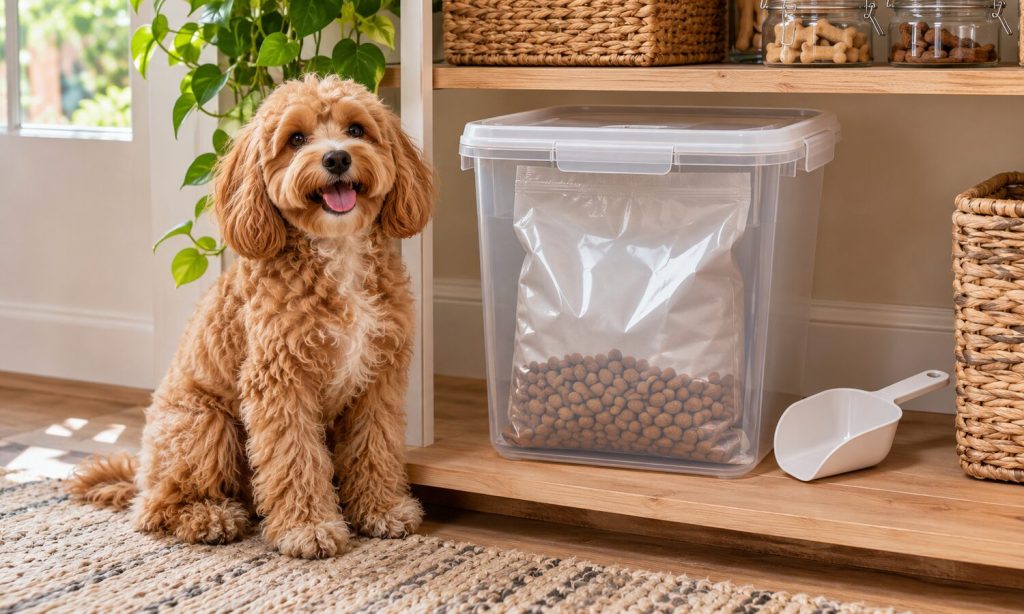
A Cavapoo’s meals may come in small portions, but even a little dog needs safe food storage. Kibble left in an open bag can take up moisture, while canned or fresh food spoils if mishandled after opening. The best way to store a dog food for cavapoo safely is to follow the original product directions, protect it from contamination, and retain the packaging information. Breed size does not change basic food-safety rules.
This guide covers safe storage of Cavapoo food in a pantry, refrigerator, freezer, and travel bag. It explains original-bag storage, sealed containers, clean scoops, portion handling, leftover management, and signs food should be discarded. You will also find a practical routine for small households that may take longer to use a large package. The goal is fresh, traceable meals without unnecessary waste or risk.
Keep Dry Food in Its Original Packaging
The U.S. Food and Drug Administration recommends keeping dry pet food in the original bag and closing its top tightly. This protects the manufacturer label, lot code, expiration date, ingredients, and storage guidance. If you like a lidded container, place the entire bag inside instead of pouring loose kibble directly into the bin. Clean and dry the container before putting in a replacement bag. Do not combine the last handfuls from several old bags with a fresh purchase.
Store a dog food for cavapoo safely in a cool, dry indoor location rather than a hot garage, damp shed, or sunny window. Heat and moisture can accelerate loss of quality and encourage pests. Keep bags away from cleaning products, fertilizers, and areas where insects or rodents are active. Position the container where the Cavapoo cannot open it or reach plastic packaging. Check the bag for tears, damaged seals, or unusual odor whenever you refill the bowl.
Buy a quantity your Cavapoo will finish
A small Cavapoo may eat relatively little each day, so the largest bag is not automatically the most economical. Estimate how many days a package will last using the current daily ration, then compare that with the manufacturer’s after-opening guidance. Choose manageable bag sizes and avoid stockpiling products close to their best-by dates. Date the opening of each bag on a removable note rather than writing over the lot code. Always use the oldest safe, properly stored package first.
Handle Canned and Wet Food Differently
Unopened canned food should be kept according to its label, away from excessive heat, puncture hazards, and contamination. Once opened, refrigerate unused portions promptly in a covered food-safe container, following the product’s time and temperature guidance. Do not leave an open can or wet food bowl out longer than recommended. A small dog may leave a considerable fraction of a can, so planning serving sizes is especially useful for avoiding spoiled leftovers.
Use a clean utensil to portion wet food and avoid returning saliva-contaminated leftovers to the original container. Keep refrigerated food separate from raw meat spills and other household contaminants. Some products can be frozen only if the manufacturer allows it; packaging and texture may change after thawing. If food has an off odor, visible mold, bulging package, unusual discoloration, or uncertain temperature history, discard it. Do not taste pet food to decide whether it is safe.
Separate food safety from feeding temperature
A refrigerated meal may be less appealing to some dogs, but leaving it on the counter for an extended period to warm is not a safe solution. Check product directions for a safe serving method. Any warming should be gentle and uniform, without creating hot spots. Never microwave sealed metal cans or reheat an entire large container repeatedly. Serve a measured portion and return the rest promptly to cold storage. A pleasant feeding experience still depends on sound hygiene.
Wash Bowls, Scoops, and Storage Bins
A dirty scoop can transfer moisture, saliva, or residue into a bag of dry food. Keep a dedicated scoop clean and dry, and avoid leaving it buried in kibble if that makes handling unhygienic. Wash food and water bowls regularly with dish soap and rinse thoroughly. Let everything dry before refilling. The FDA advises washing feeding utensils and the surrounding area, particularly after handling raw pet food, which carries additional pathogen concerns.
When a food bag is emptied, remove it and inspect the bin before placing a new original bag inside. Wipe or wash the container as its material permits, then dry it completely. A damp bin can undermine otherwise careful storage. If a Cavapoo receives both wet and dry food, use separate clean serving tools to reduce cross-contamination. Avoid sprays, fragrance residues, or household disinfectants touching food contact surfaces unless they are specifically intended and adequately rinsed.
Make a simple weekly hygiene checklist
Look for crumbs around pantry shelves, insects near the container, and sticky food residue on measuring tools. Confirm that the bag clip closes securely and that the label remains readable. Check the date and smell of any wet-food leftovers without relying on smell alone. Wash the food mat and discard leftover food from the bowl according to safe-handling guidance. A five-minute check each week is more useful than a complex routine no one follows.
Plan Safe Portions, Travel, and Deliveries
Measure Cavapoo meals with a consistent scale or cup, using calorie information and your veterinary feeding plan. Scoop only what is needed rather than exposing the bag repeatedly at busy mealtimes. If food arrives by delivery, inspect packages for heat damage, punctures, dampness, and incorrect product information. Keep shipments out of direct sunlight while waiting to unpack them. Follow special instructions for chilled or frozen deliveries immediately.
For a short outing, carry portions in a clean food-grade container and avoid leaving them inside a hot parked car. Bring enough safe drinking water and a clean collapsible bowl. Wet food or fresh refrigerated meals need suitable cooling and must follow their labeled storage limits. For longer trips, retaining a photo of the original label and lot code can help if a food problem arises. Never transfer food to an anonymous bag and lose track of what your Cavapoo is eating.
Keep treats and supplements separate
Store treats according to their own labels; they may have different moisture content and shelf life from regular kibble. Do not pour treats into the main food bag or add oils and supplements to a storage bin for convenience. Mixing products can introduce moisture and make ingredients or amounts difficult to track. If your Cavapoo is on a veterinary diet for a health condition, use a clearly labeled storage area so another household member does not serve the wrong food by mistake.
Recognize When Food Must Be Discarded
Discard food affected by a recall, pests, visible mold, water damage, a broken seal with questionable history, or a clearly expired safety window. Keep the packaging and lot details if you suspect a product defect and contact the seller, manufacturer, veterinarian, or FDA as appropriate. If your Cavapoo becomes ill after eating, seek veterinary advice promptly. Do not feed the questionable product again while waiting for an answer.
If food appears normal but a storage mistake occurred, use caution. Extended heat, improper refrigeration, and contamination may not produce obvious warning smells. It is safer to replace a questionable portion than to risk gastrointestinal illness. Buying the right package size, using a secure container, and labeling opened wet food can prevent many of these decisions. A routine that protects traceability also helps you respond quickly to a recall.
Frequently Asked Questions
These answers cover the most common questions about safe Cavapoo food storage at home and while traveling.
Follow the exact package directions when they are stricter than any general rule, and contact your veterinarian for a dog on a prescribed feeding plan.
Should I pour Cavapoo kibble into a plastic bin?
The FDA recommends keeping dry food in its original bag. You can place the whole sealed bag inside a clean, dry lidded bin.
How long can opened wet dog food stay in the refrigerator?
Use the manufacturer’s labeled refrigeration window and food-safety instructions. Do not assume all formulas have the same storage life.
Can I mix a new bag with the remains of an old one?
Avoid doing so. Mixing can obscure dates and lot numbers, and older crumbs or residue can compromise a new package.
Is an airtight container enough in a hot garage?
No. A lid does not prevent excessive heat exposure. Choose a cool, dry indoor location as directed on the packaging.
What should I do if the food smells rancid?
Stop feeding it, retain the package and lot code for reporting, and replace it with safe food. Seek veterinary advice if your dog has symptoms.
Final Words
To store a dog food for cavapoo safely, keep dry food in its original closed bag, refrigerate opened wet food as directed, and maintain clean bowls and utensils. Buy packages that match a small dog’s consumption rate, check storage temperatures, and keep lot information available. Safe food handling depends on the specific product and environment, not on a Cavapoo’s breed label alone.
Our related Cavapoo food overview provides context on feeding formats, while puppy food storage and utensil hygiene explains similar practical steps. Use the label and the FDA’s advice as your baseline, and discard food whenever contamination or improper handling makes safety uncertain.









