
When a dog is itchy or has recurring stomach trouble, owners may wonder whether their kibble has stopped helping. But “replace the food” can mean two different things: discard stale or unsafe kibble, or change the diet as part of an allergy assessment. When should you replace a dry dog food for allergies? The answer depends on the food’s condition, your dog’s symptoms, and the veterinarian’s plan.
A bag labeled dry dog food for allergies is not a diagnosis. This guide explains what spoilage signs to watch for, how to handle recalls and storage, and when to discuss a controlled elimination diet. It also covers the risks of frequent random switches. The goal is safe, consistent nutrition and clearer evidence about what actually triggers your dog’s symptoms.
First Decide Whether the Food Is Unsafe or the Diet Is Unsuitable
Kibble may need discarding because it is spoiled, contaminated, recalled, damaged, or beyond its intended storage period. That decision is about food safety, regardless of allergies. Another situation is a dog whose skin or digestive signs persist despite a diet. In that case, changing foods without a structured plan may make it harder to identify the cause.
Food allergies are not the only cause of itching, ear trouble, vomiting, or diarrhea. Fleas, environmental allergens, parasites, infections, and other illnesses can resemble food reactions. Ask the veterinarian to evaluate ongoing signs instead of assuming that the current ingredient list is responsible. The guide to skin allergy signs in German Shepherds offers examples of why symptom patterns need context.
Treat an unsafe bag as a separate problem
If you discover mold, insects, moisture damage, a broken seal, a strong rancid odor, or a recall affecting the exact lot, stop feeding that food. Keep the package and lot details if a report or veterinary investigation is needed. Do not offer a suspicious bag to another pet simply because the first dog is allergic.
Check Dates, Bag Condition, and Storage
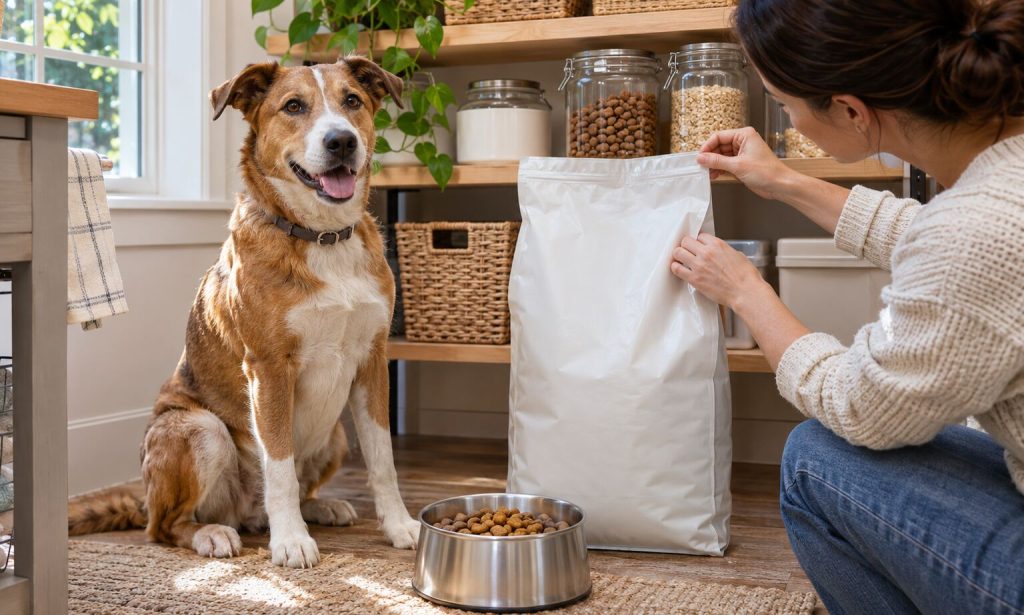
The FDA advises storing dry pet food in a cool, dry place and retaining the original packaging. It also suggests placing the whole original bag inside a clean storage bin rather than pouring kibble directly into a container. This helps preserve the lot number and best-by date while limiting contamination from old food residue.
Keep the top of the bag tightly closed and away from pests, heat, humidity, and direct sunlight. Wash and thoroughly dry reusable scoops or bins as directed. Do not mix a fresh bag into an old container with crumbs stuck to the bottom. Record when you opened the bag and follow any manufacturer storage instructions.
Understand best-by dates
A best-by date is not a guarantee of safety up to midnight or a magic deadline after which every kibble becomes dangerous. It indicates the producer’s quality window under expected storage conditions. Damage or contamination can make food unsafe earlier. If food looks or smells unusual, do not rely on the date alone.
Know When an Allergy Diet Should Change
A dog with suspected food allergy may need a veterinarian-selected elimination diet using a properly controlled novel or hydrolyzed protein formulation. This is a diagnostic trial, not a casual rotation among “sensitive” foods. Strict adherence is essential because flavored treats, chews, table scraps, and some medications can introduce unwanted ingredients.
Cornell veterinary guidance notes that multiple diet trials can be necessary for suspected allergies. The veterinarian should choose the formulation, trial length, and follow-up steps. Do not assume a dog has a chicken allergy based solely on an ingredient list or online symptom chart. A response to diet must be interpreted within the broader clinical picture.
Why frequent switching causes confusion
If you change protein sources every week, introduce new treats, and start supplements simultaneously, you cannot know what helped. A successful elimination trial needs stable feeding and clear symptom records. Ask how to manage training rewards and medications during the trial. Discuss reintroduction or challenge only under veterinary direction.
Signs That Deserve a Veterinary Reassessment
Persistent itching, recurring ear inflammation, paws that are chewed raw, repeated vomiting, chronic diarrhea, or unexpected weight loss merit evaluation. A dog who suddenly develops facial swelling, breathing trouble, collapse, or severe distress needs urgent help. Food cannot be assumed to be the cause of every symptom, even when the dog already has allergies.
Bring the food label, feeding history, treat list, symptom timeline, and photographs of skin changes. Include the exact date of diet changes and any medications. This information helps the veterinarian distinguish a food reaction from environmental allergy or unrelated disease. If infection is present, changing kibble alone will not treat it.
Track meaningful outcomes
Use a simple weekly log of itching, ear signs, stool, vomiting, appetite, body weight, and treats. Be consistent about the way you score symptoms. Share the record with the vet rather than judging improvement only by memory. Controlled trials rely on observing patterns over time.
Plan a Safe Diet Transition When Approved
If the veterinarian confirms that a change is appropriate, ask for exact instructions. A routine shift between regular foods may be introduced gradually across several days. A diagnostic elimination diet can require a different plan because only permitted ingredients should be given. Do not mix old food into the trial unless your veterinarian explicitly directs it.
Compare calorie content because serving sizes may change when the formula changes. Monitor stool, appetite, weight, skin comfort, and energy. Feed pets separately if another dog eats a different diet. Store the designated food so housemates do not accidentally offer the wrong kibble. Keep the feeding plan simple enough for every caregiver to follow.
What if the dog refuses the new food?
Contact the veterinary team rather than improvising with flavored toppers that compromise a trial. Ask about appropriate texture, transition adjustments, and underlying nausea or dental problems. Never starve a dog into acceptance. A suitable plan must protect nutritional intake while preserving diagnostic usefulness.
Keep a Reliable Long-Term Feeding Routine
Once the veterinarian identifies a diet that controls symptoms and meets nutritional needs, consistency becomes valuable. Changing food just because the bag design changed or a new ingredient trend appears can reintroduce uncertainty. Review labels carefully if the manufacturer reformulates the recipe. Ask whether a change affects the suspected trigger.
Check for recalls by lot rather than by appearance or rumor. If a recall applies, stop feeding the affected product and follow official instructions. Keep the original bag information until the food is finished. For broader context on dietary claims, see our discussion of food choices when allergies and yeast-related skin concerns overlap. A diagnosis and treatment plan matter more than marketing language.
Avoid storage practices that weaken the plan
Do not keep old kibble indefinitely in a garage, damp shed, or sunny porch. Buy an amount that can be used during the intended storage window. Do not add new kibble to a container with lingering crumbs. Store treats separately and label them when a household has multiple pets with different diets.
Frequently Asked Questions
Food freshness and allergy management overlap, but they are not the same decision. These answers clarify when to discard a bag and when to consult the veterinarian about a formula change.
Use official recall information and the dog’s actual medical plan. A “hypoallergenic” label does not establish what an individual dog can tolerate.
Should I replace food as soon as my dog scratches?
No. Scratching has many causes. Ask the veterinarian to evaluate recurring symptoms before changing diets.
Can expired kibble cause an allergy?
Spoiled food can cause illness, but spoilage is different from a true food allergy. Discard suspicious food and seek veterinary advice for symptoms.
How should I store allergy-focused dry food?
Keep it cool and dry in its original sealed bag, ideally placed inside a clean bin. Retain lot and date information.
Can treats ruin a food-elimination trial?
Yes. Unapproved treats, chews, scraps, or flavored medications may introduce excluded ingredients. Follow the veterinarian’s strict plan.
When should I switch after an allergy trial?
Only as directed after the veterinarian reviews the response. Premature switching can make results hard to interpret.
Final Words
When should you replace a dry dog food for allergies? Discard food that is unsafe, recalled, contaminated, or badly stored. Change the formula for medical reasons only through a careful veterinary assessment. Keep accurate records and avoid random rotations that hide patterns. The right decision protects both nutritional safety and diagnostic clarity.
If you are managing dry dog food for allergies, focus on freshness, consistent feeding, and symptom monitoring. A stable diet that works is worth preserving. When signs change, let veterinary evidence guide the next food change rather than an urgent-looking label or a guess.
Reference
These government and veterinary sources support safe food storage, allergy evaluation, and nutrition decisions in this article.
They provide general principles and cannot replace an examination or a veterinarian-supervised diet trial.









