
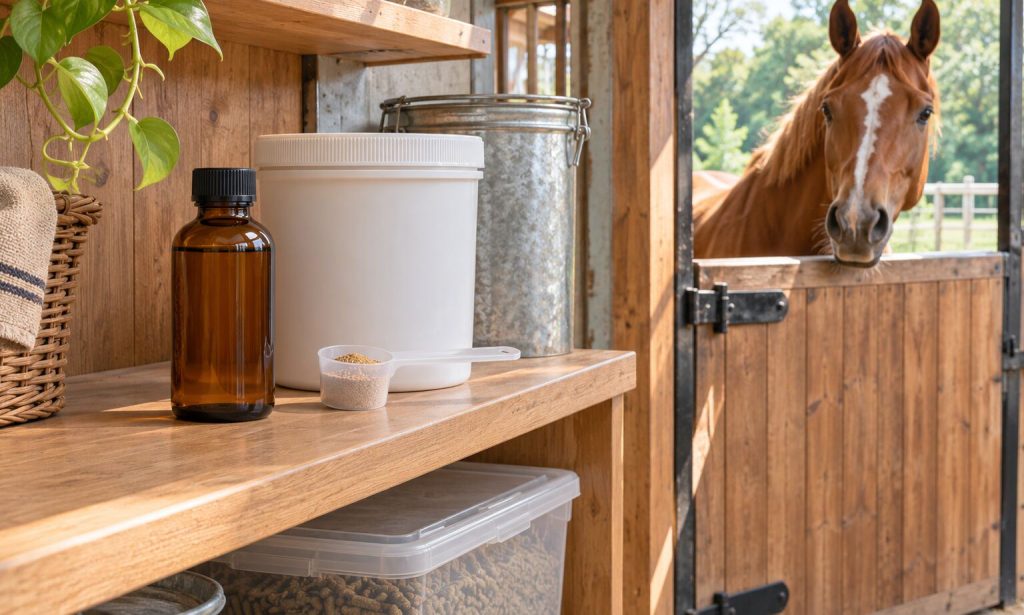
Vitamin E supports normal cell function in horses, and a veterinarian may discuss supplementation when pasture access, diet, or medical conditions raise concerns. Yet the phrase “clean a supplement” needs clarification. How to clean a vitamin e supplement for horses and keep it in good condition does not mean washing the powder, liquid, capsule, or feed additive. Moisture and handling can damage some products and make their quality uncertain.
The useful routine for a vitamin e supplement for horses is clean equipment, correct storage, sound packaging, and a veterinary-approved feeding plan. This guide explains how to wipe containers, avoid contamination, understand storage labels, and recognize when a supplement should be replaced. It also explains why vitamin E form and dosage need professional attention. Keeping a product tidy is not the same as proving that its nutrients remain potent.
Start With the Vitamin E Form and Veterinary Plan
Vitamin E is a fat-soluble nutrient, commonly discussed in horse nutrition as alpha-tocopherol. Its role includes antioxidant protection. Horses grazing adequate green pasture may receive different amounts than horses eating mainly stored hay. Exercise, health status, and forage quality can influence the discussion. The University of Minnesota Extension advises evaluating vitamin supplementation in the context of the whole ration.
Products may be powders, granules, liquids, capsules, or premixed feed components. Packaging, ingredient forms, stability, and serving tools differ. Do not assume that two labels showing the same number of international units are interchangeable in absorption or suitability. Equine veterinary resources describe differences among forms of vitamin E. Ask the veterinarian or equine nutritionist to assess the specific formulation and dose.
Why blood testing can matter
A veterinarian may measure serum vitamin E when deficiency or particular neurological and muscular conditions are suspected. The test must be interpreted with the exam and history. Supplements do not diagnose or cure every weakness or gait problem. New stumbling, muscle loss, weakness, or other neurological signs warrant prompt veterinary assessment rather than an unplanned dose increase.
Clean the Outside, Never the Edible Contents
Wipe dust and feed residue from the outside of a closed container using a clean, slightly damp cloth when the packaging tolerates it. Keep the lid closed so water cannot enter. Dry the exterior before placing it back on the shelf. If the label is damaged, preserve instructions, lot number, serving information, and expiration details before the printing becomes unreadable.
Do not wash capsules, powders, pellets, or liquid contents. Do not transfer a supplement into an unmarked jar or introduce water to make it look cleaner. Moisture, dirt, or detergent residue can compromise safety or stability. If contents become wet, contaminated, or mixed with an unknown substance, isolate the product and seek veterinary or manufacturer guidance before feeding.
Keep scoops and dispensing tools hygienic
Use the dedicated dry scoop supplied or approved for the product. Wash a reusable scoop only when the instructions allow it, then dry completely before putting it near powder. Do not reach into containers with feed-covered hands. For liquids, avoid touching a dispensing tip to a horse’s mouth or dirty feed. Close the cap immediately after measuring.
Protect Potency From Air, Heat, Light, and Moisture
Storage conditions affect many nutrients, but stability varies by formulation and packaging. Follow the label first. In general, keep equine feed supplements in a cool, dry location away from direct sunlight, damp floors, heaters, and extreme temperature swings. Do not assume that a hot tack room or freezing trailer is suitable simply because the product is sealed.
Keep the original container tightly closed. A covered shelf or dry feed room is often more practical than a sunny windowsill. Avoid leaving a bottle open during morning feeding while dust and moisture circulate. Liquid formulas may have different requirements than dry powders, so read the instructions for refrigeration, mixing, and shelf life after opening.
Understand what appearance cannot reveal
A supplement may look normal even after potency declines. Conversely, harmless settling can occur in some liquids if the label explains how to mix them. Do not guess which changes are acceptable. Ask the maker or veterinarian about unexpected clumps, separation, odor, leaks, or discoloration. A visual check is not a laboratory assay of vitamin content.
Keep Labels, Lot Codes, and Opening Dates
Retain the package and record the lot number, best-by date, date opened, and storage location. If a feed concern or recall occurs, those details help identify the affected batch. This is especially important in a barn with several horses receiving different diets. Use a simple feeding chart so the correct animal receives the correct approved amount.
The FDA emphasizes the value of lot and date information in animal-food safety reporting. Never combine leftover contents from different lots without a clear need and manufacturer guidance. Avoid topping off an unwashed dispenser with a new batch when old powder remains inside. Keep a record of who feeds each horse so servings are not accidentally doubled.
Check for changes before every use
Inspect the seal, closure, container damage, moisture, pest evidence, and unusual smell. If something seems wrong, stop and ask before feeding. Keep feed-room pests away from supplements and secure containers from horses that might investigate them. A sealed container is only useful if it stays out of reach of curious noses.
Reduce Cross-Contamination During Feeding
Prepare supplements on a clean, dry surface away from spilled grain, open water buckets, and chemicals. Measure with the correct tool and return it to its designated place. Do not use one scoop for multiple additives without cleaning it appropriately. Cross-contamination can confuse portions and complicate a veterinary assessment of what the horse actually consumes.
Mix the supplement with feed only as directed and offer it promptly according to instructions. Do not pre-soak or heat it unless explicitly approved. Check whether your horse leaves residue in the feeder. An apparently consistent serving means little if half the supplement remains stuck to a wet feed tub. Ask for alternative administration advice if intake is unreliable.
Consider the full daily ration
A ration already containing fortified concentrate, pasture, or other vitamins may deliver substantial vitamin E. Adding a separate product without calculation can create unnecessary duplication. Our horse vitamin nutrition guide provides related feeding context. An equine nutritionist can evaluate forage, feeds, and all supplements together.
When to Replace a Supplement
Replace a supplement that is past its stated use period, subject to a relevant recall, visibly contaminated, or stored outside the conditions required by the label when quality cannot be confirmed. Damaged packaging, pests, water intrusion, or unexplained odor are other reasons to stop using it. Do not attempt to restore questionable contents by drying, heating, or filtering them.
If you cannot confirm an opened product’s stability, contact the manufacturer with the lot and date details. If a horse has been receiving a compromised product, ask the veterinarian whether reassessment is needed. Do not automatically compensate by doubling doses. Follow the ongoing care plan and document what happened.
Review the reason for supplementation periodically
A horse’s needs may change with pasture season, workload, age, and medical status. A supplement should not continue indefinitely merely because the jar is still on the shelf. Ask whether blood work, a diet review, or a revised schedule is appropriate. Our supplement discussion checklist for horse owners reinforces the value of recording the whole feed plan.
Frequently Asked Questions
Good supplement care is mainly a matter of correct handling and storage, not cleaning the edible product. These questions address common feeding-room uncertainties.
Always use the formulation’s own instructions and the veterinary feeding plan. Generic temperature or shelf-life rules cannot substitute for a specific label.
Can I wash vitamin E powder for my horse?
No. Do not wash or add water to the edible product unless the instructions expressly require preparation that way.
Should I refrigerate liquid vitamin E?
Only if its label instructs you to. Storage depends on formulation; refrigeration is not universally appropriate.
Can I use a damp scoop?
Avoid introducing moisture into dry powder. Use a clean, completely dry tool approved for the product.
What if the liquid separates?
Check the label for mixing instructions. If the change is unexplained, ask the manufacturer or veterinarian before feeding.
Can I double a dose if storage was poor?
No. Do not compensate with extra supplement. Discuss the issue and the horse’s needs with the veterinarian.
Final Words
How to clean a vitamin e supplement for horses and keep it in good condition really means protecting the supplement from contamination and storing it correctly. Keep lids closed, wipe only suitable exterior surfaces, use clean dry tools, and record dates and lots. Discard or investigate products whose quality cannot be trusted.
Before adding any vitamin e supplement for horses, confirm the need and formulation with a veterinarian or equine nutritionist. Feeding the right amount of a reliable product matters more than a spotless container. Good barn habits preserve clarity, consistency, and horse welfare.
Reference
These equine veterinary, university, and government sources inform the article’s nutrient and feed-handling guidance.
They do not establish a universal dose or storage method for every formulation. Follow the individual label and veterinary care plan.









