
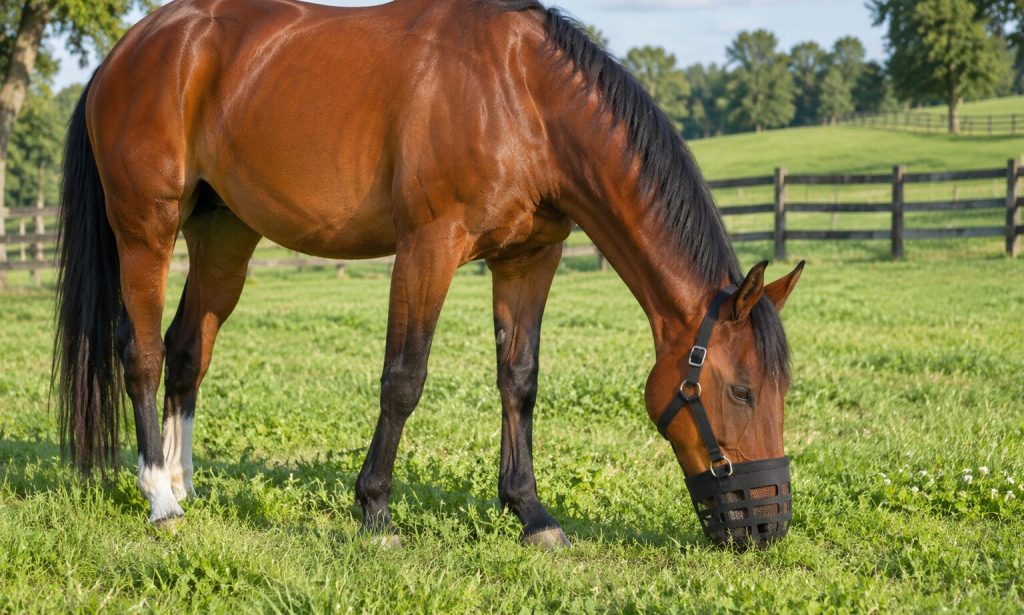
Pasture time supports a horse’s movement and social life, but abundant grass can add unwanted calories for some easy keepers. Owners often ask what features matter most in a grazing muzzle for horses when trying to balance turnout with a controlled feeding plan. The answer starts with comfort and safety: a muzzle must allow normal breathing and drinking while slowing access to grass. It cannot make an unsuitable pasture automatically safe.
A well-fitted grazing muzzle for horses can be one tool in veterinarian-guided weight management. This guide covers fit, muzzle openings, materials, breakaway features, adjustment, supervision, and maintenance. It also explains how to monitor body condition and when a different pasture strategy is needed. The horse’s health and welfare—not merely the amount of grass consumed—should shape the decision.
Begin With the Horse’s Need for Restricted Grazing
Grazing muzzles reduce access to pasture rather than eliminating it. The University of Minnesota Extension summarizes research showing that muzzles can reduce pasture intake, but the effect varies among horses and conditions. They can support overweight-horse management, yet they are not a stand-alone treatment for insulin dysregulation, laminitis risk, or other metabolic problems.
Before fitting equipment, discuss your horse’s body condition, forage access, exercise, and medical history with a veterinarian or equine nutritionist. Some horses need dry-lot turnout and carefully analyzed hay instead of pasture. For related nutrition questions, our guide to forage for insulin-resistant horses provides context, while clinical decisions remain with the veterinarian.
Do not use the muzzle as an emergency fix
A horse with signs of laminitis, sudden lameness, severe distress, or suspected metabolic illness requires veterinary evaluation. Restricting grass with equipment does not address acute pain or replace a feeding plan. Keep all horses supplied with clean water and appropriate forage as directed. Prevent long periods without adequate intake.
Feature One: Safe Fit Around the Nose and Head
Fit matters more than the label size. The muzzle should sit securely without pressing into nostrils, eyes, lips, or delicate skin. Check clearance at the muzzle base, the bridge of the nose, and beneath the jaw. A device that slides too low can interfere with grazing or breathing, while a tight one can rub or restrict movement.
Measure the horse according to the specific sizing instructions and check the fit while the horse stands, lowers its head, and walks. Horses vary widely in muzzle shape, head dimensions, and sensitivity. A small pony and a large horse need different adjustments, and the shape of the muzzle matters as much as the strap length.
Check for rubbing after every early session
Lift the muzzle and inspect the chin, lips, nose bridge, and behind the ears. Look for hair loss, red skin, pressure marks, or swelling. Remove the device if soreness develops and seek advice before reusing it. Padding may change fit, so do not add improvised material without checking comfort and safety.
Feature Two: Drinking, Breathing, and Grazing Access
The muzzle opening must permit comfortable airflow and drinking. Test water access with the actual trough or automatic waterer before leaving the horse unattended. A design that works with a large trough may not fit into a narrow water bowl. Fresh water must remain continuously accessible. Observe the horse taking a normal drink rather than assuming the hole is big enough.
The grazing opening should slow intake without making normal behavior impossible. Too restrictive an opening may increase frustration or reduce intake excessively; too open an opening may have little effect. Actual intake depends on grass length, density, horse technique, and hours worn. Use weight and body condition trends, not visual guesses, to assess results.
Watch how the horse adapts
Some horses learn to graze effectively through the opening, while others initially struggle. Introduce the device gradually and observe breathing, drinking, walking, and interactions with herd mates. Do not leave a distressed horse wearing it until it “gets used to it.” Reassess whether the planned management method is appropriate.
Feature Three: Secure but Safe Fastenings
Straps should allow adjustment without leaving loose loops that can snag. Hardware must be smooth, secure, and free of sharp edges. Consider whether the attachment has a safe release feature for foreseeable hazards and whether it stays in place during normal head movement. No design eliminates all entanglement risk in a pasture.
Before turnout, inspect fencing, low branches, feeders, and other surfaces that might catch equipment. Keep the pasture free of avoidable hazards. A muzzle that frequently falls off is ineffective, but making it impossible to release under dangerous tension can create another problem. Seek a knowledgeable professional’s help for complex fitting concerns.
Herd dynamics matter
Watch whether another horse grabs the muzzle, whether the wearer can groom socially, and whether the device changes interactions. Some horses become isolated or frustrated. Adjust turnout management if the horse cannot behave comfortably and safely with its companions. Equipment should not cause repeated conflict or fear.
Feature Four: Material, Weight, and Maintenance
Lightweight, durable materials may be more comfortable, but the structure still needs to retain its shape during daily use. Check edges, seams, stitching, ventilation, and how the material behaves when wet with rain or saliva. The surface touching the horse should be smooth and easy to inspect for trapped dirt.
Clean the muzzle according to its care instructions, removing mud, grass, and saliva before they build up. Rinse only as appropriate for the materials and allow complete drying. Inspect worn straps and openings before each use. Replace the equipment when damage threatens fit or safety instead of patching critical sections with unsafe wire or stiff adhesives.
Build a daily check routine
Before turnout, inspect the fit, closure, water access, and pasture hazards. During the initial adjustment, supervise more often. After removal, check the skin and clean the equipment. Record any sore spots or unusual feeding behavior. A two-minute inspection can prevent a small problem becoming a painful one.
Feature Five: A Measurable Weight and Welfare Plan
A muzzle is useful only when it contributes to an appropriate total diet. A horse may compensate by eating faster when the muzzle is removed or may consume more concentrated feed elsewhere. Track pasture time, hay intake, concentrates, and treats alongside body condition. Our horse body condition monitoring guide can support a consistent record.
Work with the veterinarian on a gradual weight-management target and safe exercise. Horses should not be deprived of adequate forage to speed loss. For horses with insulin dysregulation, a forage analysis and medical plan may be more important than muzzle selection. The goal is healthier body condition while preserving natural behavior, hydration, and comfort.
Review the plan as seasons change
Grass growth, weather, pasture species, and body condition change throughout the year. A muzzle that is useful during lush spring pasture may be unnecessary when turnout shifts to a dry lot. Recheck fit after weight changes, because a horse’s head and body condition may change. Update the plan rather than assuming one adjustment lasts forever.
Frequently Asked Questions
Muzzles are simple-looking tools with important welfare implications. These answers focus on the conditions that make them safe and useful.
Use them alongside real-world observation and an equine veterinary or nutrition plan. No opening size or wear schedule is universally appropriate.
Can a grazing muzzle prevent all grass intake?
No. It limits access but does not block all intake. Effectiveness varies with horse, pasture, opening, and duration.
Can a horse drink while wearing one?
A correctly fitted design should permit drinking. Always observe the horse using the actual water source first.
How often should I check the fit?
Check before each use and inspect skin after removal. Supervise closely during the first sessions or after adjustment.
Is rubbing normal during the adjustment period?
No. Persistent rubbing or soreness means the fit or method needs correction. Remove the muzzle and address the cause.
Will a muzzle cure insulin resistance?
No. It may support a broader feeding plan, but metabolic disease requires veterinary evaluation and management.
Final Words
The most important features in a grazing muzzle for horses are comfortable fit, reliable water and breathing access, safe fastenings, easy inspection, and suitability for the actual grazing plan. Monitor whether your horse remains relaxed and healthy. Adjust or remove equipment that causes rubbing, distress, or difficulty eating appropriately.
A grazing muzzle for horses works best when paired with forage planning, body condition records, and veterinary advice. Measure outcomes rather than trusting appearances. A good turnout strategy protects both the waistline and the horse’s welfare.
Reference
These university extension resources cover equine nutrition, grazing restriction, body condition, and pasture management.
They provide general guidance; veterinary assessment is especially important for horses with metabolic or hoof disease.









