
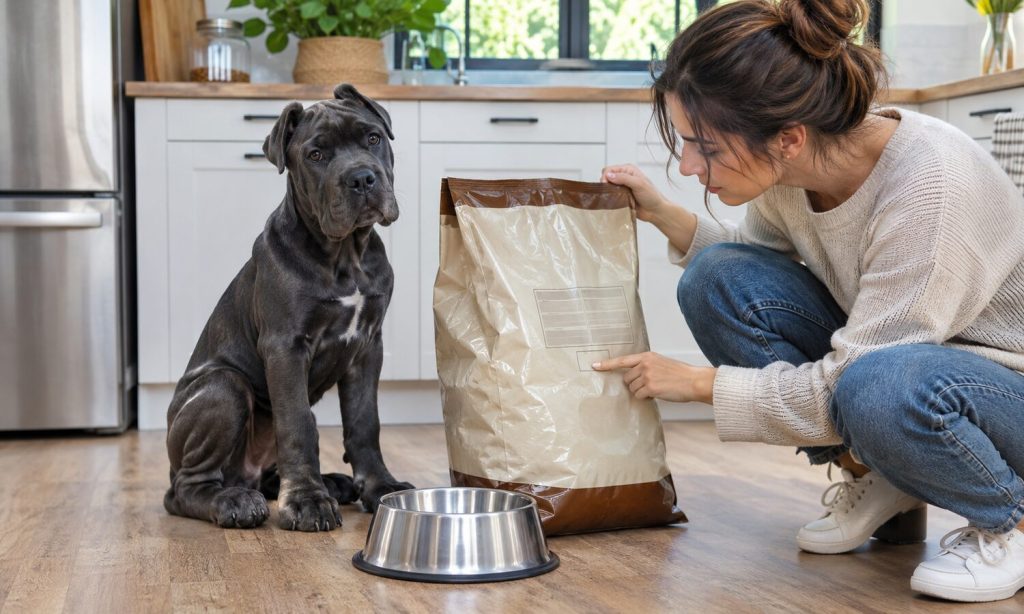
A Cane Corso puppy grows into a powerful, large dog, so changes in feeding deserve more thought than a simple calendar reminder. When should you replace a dog food for cane corso puppy? The answer depends on whether you mean discarding an old bag, changing from a puppy diet to adult food, or switching a formula that does not suit the dog. These decisions have different safety and nutritional triggers.
This guide explains when to replace Cane Corso puppy food, what signs call for immediate disposal, and how to decide whether a growing dog is ready for a different formula. It covers label dates, storage, large-breed growth statements, body condition, digestive changes, and gradual transitions. Instead of promising a universal switch date, the goal is a practical review plan you can use with your veterinarian.
Replace Unsafe Food Immediately
Check the label before every new bag enters your pantry. Look for the best-by or expiration date, the lot code, the package seal, and storage instructions. A torn bag, water exposure, unusual mold, rancid odor, visible insects, or unexplained damp clumps can make food unsuitable for your puppy. Do not rely on a normal smell as proof that every batch is safe. If there is a recall affecting the exact product and lot, stop feeding it and follow the manufacturer’s and regulator’s guidance.
A food bowl can also contain food that should be replaced even when the main bag is sound. Discard leftover wet food according to package instructions, and clean food dishes after meals. Avoid leaving dampened kibble out for prolonged periods. Wash and dry scoops and storage containers, and keep your puppy away from spilled food. The FDA recommends preserving original packaging and lot information so a potential safety complaint can be investigated accurately.
Keep the original bag and lot details
Store dry puppy food in its original bag, tightly folded or clipped. If you use a storage bin, place the whole bag inside rather than pouring kibble loosely into plastic. This helps protect the product and preserves its label, date, and lot number. Keep it somewhere cool and dry, away from heat, humidity, pests, and cleaning chemicals. Buy a bag size that your puppy can finish while the contents stay fresh under the manufacturer’s guidance. Do not mix old kibble into the bottom of a newly opened bag.
Review the Growth-Stage Nutrition Statement
Cane Corso puppies need a complete and balanced diet appropriate for growth, with special attention to large-sized dogs. A label should identify the nutritional adequacy claim and whether the formula is suitable for the growth of large-size dogs. Do not infer suitability from a large puppy pictured on the front. Controlled energy intake and appropriate mineral balance support measured growth. Adding calcium or rich supplements without veterinary direction may disturb that balance.
Switching to adult food too early can leave a growing puppy without the right nutrient profile; staying on an unsuitable formula too long may also be unhelpful. Individual maturity varies by body size, condition, development, activity, and medical history. Ask your veterinarian to determine when your Cane Corso has reached the stage where an adult maintenance diet fits. The timing should be part of routine growth examinations, not a guess based on one birthday.
Use body condition instead of chasing rapid growth
A sturdy Cane Corso puppy should not be encouraged to gain weight as quickly as possible. Check for a visible waist and an appropriate covering over the ribs, and review weight trends with your veterinary team. Rapid growth or excess calories may stress developing joints. Adjust daily food amounts as the puppy gains size, because the label’s feeding chart is only a starting estimate. Treats and table scraps still count toward total energy. A larger bag is not a solution to a puppy that needs a different feeding quantity.
Know When a Formula Change Is Appropriate
Besides reaching skeletal maturity, a food change may be needed when your veterinarian identifies an allergy, intolerance, recurring digestive issue, abnormal weight trend, or other medical condition. Occasional picky eating alone is not proof that the diet is wrong. Before replacing dog food for cane corso puppy, check whether overfeeding, treats, irregular meal times, or spoiled storage are contributing to the problem. Keep notes on the current product, portions, stools, appetite, body condition, and any symptoms.
Persistent vomiting, diarrhea, lethargy, pain, or refusal to eat in a puppy warrants prompt veterinary attention. Do not repeatedly switch foods in an attempt to solve medical symptoms without a diagnosis. If the formula is appropriate but the puppy’s portion has become too small or large, adjusting the measured quantity may be more sensible than changing the food. Ask for a feeding plan that reflects the puppy’s latest weight and growth curve.
Compare the replacement label before buying
Examine the intended life stage, calorie content, feeding instructions, and nutritional adequacy statement of any replacement. The World Small Animal Veterinary Association offers questions to ask food manufacturers about qualified formulators, quality control, and nutritional research. Avoid judging a formula only by its ingredient-list marketing. For a fast-growing giant-type puppy, the quality and suitability of the entire diet matter more than an appealing first ingredient. Keep the new and old labels so you can compare calories rather than assuming scoop sizes are interchangeable.
Transition to Another Food Gradually
When a change is appropriate and no urgent safety issue exists, introduce the new food over roughly a week, or longer if your veterinarian recommends. Start with a small amount of the new product mixed into the usual food and increase it gradually while reducing the old formula. Monitor stools, appetite, energy, and itching. If your puppy develops significant digestive symptoms, call the clinic rather than pushing through a fixed transition schedule. Different foods may contain substantially different calories per cup or can.
Do not transition by combining an expired or recalled food with fresh food. In that situation, contact your veterinarian for advice on an immediate safe substitute. Similarly, a therapeutic veterinary diet should not be replaced casually with an ordinary puppy food. Update measured portions after the switch and keep mealtimes consistent. Review the puppy’s response after the transition, because a successful formula should support steady body condition and comfortable digestion.
Plan a regular food check
Set a reminder to inspect the bag and review feeding amounts each time you buy a new supply. Record purchase date, opened date, best-by information, product name, and lot code. At puppy wellness visits, ask whether the current formula still matches the dog’s growth stage. If you use a different bag size or brand, compare expiration dates and realistic consumption rates. This routine prevents last-minute decisions made only because the old bag has run out.
Common Food-Replacement Mistakes
One frequent mistake is treating the phrase ‘large-breed puppy’ on the front panel as sufficient proof of nutritional suitability. Another is changing to adult food at a fixed age without considering individual skeletal development. Frequent flavor changes can obscure a pattern of digestive symptoms, while oversized purchases can leave food open longer than intended. Leaving food in a sunny garage or washing the original bag compromises safe storage rather than preserving freshness.
The opposite problem is keeping a questionable bag because it appears expensive to replace. If food is moldy, recalled, contaminated, or clearly past its safety instructions, the cost of continuing to feed it can be far higher. Use a veterinarian for suspected disease and the FDA’s resources for pet-food complaints. Keeping accurate records protects your puppy and helps you distinguish a food-quality issue from a feeding-quantity problem.
Frequently Asked Questions
The phrase ‘replace food’ can describe both food safety and nutrition changes. These questions separate the most common situations.
Use the current package information and your veterinarian’s advice for decisions that affect a growing large-breed puppy.
When should a Cane Corso puppy switch to adult food?
There is no universal calendar date. Ask your veterinarian to assess growth, body condition, and skeletal maturity before changing the life-stage formula.
Can I feed a puppy food after its expiration date?
Follow the label date and storage instructions. Do not use food showing spoilage or affected by a recall, regardless of its printed date.
Is a large bag always economical?
Only if the food stays in good condition until it is finished. Choose a quantity your household can use within the manufacturer’s recommended period.
Should I change food if my puppy has soft stools?
Not automatically. Digestive symptoms have many causes, including rapid transitions. Seek veterinary guidance, especially if symptoms are persistent or severe.
Can I use the same scoop size after switching brands?
Not safely as an assumption. Calorie density differs between foods. Recalculate the daily ration and measure it consistently.
Final Words
When deciding when to replace a dog food for cane corso puppy, separate three questions: Is this bag still safe, does the formula meet current growth needs, and is the feeding amount appropriate? Discard unsafe food promptly, retain lot information, and follow storage directions. For nutrition changes, use growth assessments and the complete-and-balanced statement rather than switching simply because another bag looks more specialized.
For broader context on Cane Corso puppy food formats, compare labels alongside veterinary guidance. Our large-breed puppy feeding mistakes guide explains related risks. The safest plan pairs careful storage, steady portion review, and gradual transitions when a genuine change is needed.









