
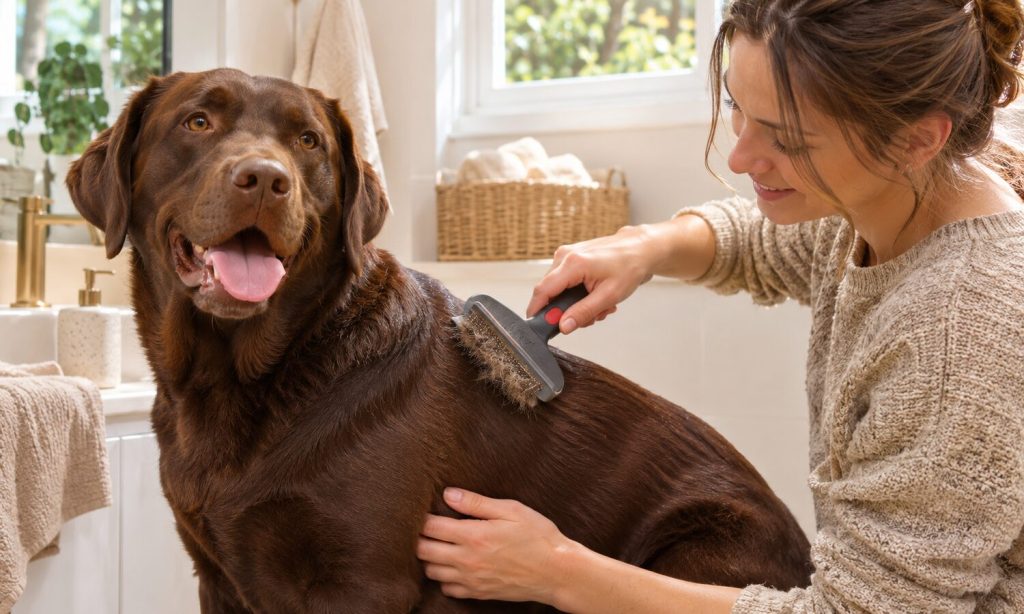
A Labrador Retriever may have short hair, but its dense double coat can shed heavily throughout the year. A dog brush for labradors should lift loose hair without scraping the skin or stripping the protective outer coat. Using that brush correctly matters just as much as choosing its shape. Brushing offers an opportunity to notice burrs, irritated skin, or parasites, but an overenthusiastic grooming session can leave a dog uncomfortable.
This guide explains how to use and care for a dog brush for labradors in an everyday home routine. It covers preparation, pressure, coat direction, shedding seasons, cleaning the tool, and signs that grooming needs to pause. You will also learn how rubber curry brushes, soft slickers, and undercoat tools differ. The aim is a healthy coat and a relaxed Labrador, not the complete elimination of normal shedding.
Understand the Labrador’s Coat Before Brushing
A Labrador has a short outer coat over a dense undercoat. The outer layer helps protect the dog from weather and daily activity, while the undercoat sheds naturally as conditions change. A brush that reaches loose hair can be helpful, but forcing sharp teeth into the skin will not make shedding healthier. Begin by running clean hands through the fur. Check whether the coat feels dry, gritty, tangled, or tender, particularly after swimming, field play, or a muddy walk.
Observe how your dog responds when touched along the spine, shoulders, flanks, and tail base. Some Labradors enjoy firm massage yet dislike a metal tool near sensitive areas. Dogs with dermatitis, wounds, hot spots, lumps, or parasites may need veterinary care before brushing. The ASPCA recommends regular gentle coat grooming to remove debris and support skin cleanliness; it is not a reason to ignore redness or discomfort.
Pick a tool for the task, not a dramatic fur pile
Different coats call for different tools, as our Goldendoodle brush guide illustrates. A rubber curry brush can loosen surface hair through gentle circular movements on a dry coat. A soft slicker may collect loose undercoat, provided its pins are flexible and pressure is light. A shedding rake or blade demands more caution, because repeated passes can irritate skin or damage coat. Match brush head size to the dog’s body and use a smaller, softer approach on legs. A good dog brush for labradors has smooth construction, a secure handle, and no bent or exposed sharp teeth.
Prepare a Calm Brushing Area
Choose a familiar surface where your Labrador can stand or lie comfortably without slipping. A nonslip mat and a few treats may improve cooperation. Allow the dog to inspect the brush, touch it briefly to the shoulder, reward calm behavior, and end before frustration builds. Grooming after a walk can work well if the dog is dry and relaxed. Avoid vigorous brushing immediately after intense exercise when the dog is hot, panting hard, or reluctant to stand.
Gather a small towel, a waste bag for fur, and a comb to check stubborn spots. Make sure the brush is clean, dry, and free of cracked plastic or sharp pins before starting. If the coat is caked with grit, gently remove surface dirt rather than dragging it through the skin with a fine tool. A clean coat and tool make a pleasant session easier and help you recognize new bumps or irritated areas.
Teach puppies and sensitive dogs to accept the brush
For a Labrador puppy, practice a few light strokes followed by a reward instead of beginning with a lengthy full-body session. Touch the chest and shoulders before approaching feet or tail. If your dog leans away, freezes, mouths the tool, or tries to escape, pause and shorten the next attempt. Cooperative grooming is a learned skill. Choose a softer tool until the dog accepts being handled; forcing restraint can turn a routine coat check into a recurring battle.
Use a Gentle, Consistent Brushing Technique
Start at the neck or shoulder and work toward the tail, generally following the direction of hair growth. Use short overlapping strokes with light pressure. Let the brush collect loose fur rather than pushing it into the skin. Remove collected hair from the tool as needed so its teeth do not become clogged. For a rubber brush, use modest movements without rubbing the same patch repeatedly. Keep your free hand on the coat to notice heat, flaking, or sore areas.
Give the sides, chest, and hindquarters attention while avoiding force on bony joints, belly skin, eyes, ears, and genitals. Lift the leg gently if the dog is willing, and use a softer brush on thin-furred regions. Labradors do not usually need long haircuts to manage shedding; shaving a healthy double coat can interfere with coat protection. If you uncover a mat or stuck object, work slowly and seek a groomer when removal would pull skin.
Adjust frequency during seasonal shedding
Many Labradors benefit from routine weekly brushing, while more frequent short sessions may be helpful when the undercoat blows heavily. The actual schedule depends on the individual dog, home climate, coat condition, and comfort. Watch how much loose fur is collected after a few passes; if very little remains, stop. Avoid repeatedly scraping the same spot simply to fill a grooming bag. A dog brush for labradors should help maintain the coat, not become a daily source of friction.
Clean and Dry the Brush After Use
After each session, pull trapped fur from the bristles with fingers or a suitable cleaning comb. Check for dander, dirt, dampness, and debris between rows of pins. Follow the brush manufacturer’s cleaning instructions for its material. Some plastic or rubber tools tolerate mild soapy water, while wooden handles, padded heads, and certain metal mechanisms should not be soaked. If washing is allowed, rinse thoroughly and let the brush dry completely before storage.
Do not share a brush between animals when one has a contagious skin condition or suspected parasites. Keep grooming tools away from household cleaning chemicals, human hair sprays, and scented disinfectants not approved for the tool. Inspect the brush for rust, loose teeth, splintering, or warped rubber. Replace damaged equipment promptly because it can snag hair or scratch skin. A maintained dog brush for labradors is safer and more comfortable over repeated sessions.
Store grooming tools away from moisture
Use a clean, dry drawer or ventilated grooming caddy away from direct heat and wet towels. Store bristles so they are not crushed under heavy objects. If the Labrador has just swum or been bathed, dry both coat and tool according to directions before putting anything away. A sealed wet bag can trap moisture around bristles, especially in humid weather. Keep small removable parts out of reach of curious puppies that might chew or swallow them.
Watch the Skin and Adjust the Routine
Normal shedding creates loose fur, but bald patches, persistent scratching, scales, sores, or a sudden dramatic increase in hair loss require closer attention. Check for fleas and ticks during grooming, especially after outdoor activity. Do not assume a more aggressive undercoat tool will solve coat thinning caused by illness, allergies, or infection. Document when symptoms started and consult a veterinarian when skin looks inflamed or the dog seems uncomfortable.
Our shedding shampoo comparison guide explains related bath-care considerations. Brushing can be paired with bathing when appropriate, but bath frequency and product selection depend on the dog’s skin and lifestyle. The ASPCA advises gentle grooming and caution around sensitive skin. A professional groomer can demonstrate technique for a thick coat, and a veterinarian can address medical causes of abnormal shedding. Keep your brushing routine flexible as the Labrador ages, develops mobility problems, or needs shorter sessions.
Frequently Asked Questions
Brushing a Labrador is straightforward once the tool, pressure, and timing are right. These questions address common home-grooming decisions.
Observe the dog’s comfort throughout each session. If a technique causes redness or avoidance, stop and adjust it before trying again.
Should I brush my Labrador every day?
Not necessarily. Many Labradors do well with weekly brushing, with additional short sessions during heavy shedding if the skin remains comfortable.
Is a slicker brush safe for a Labrador?
A soft, appropriate slicker can be useful with light pressure. Avoid sharp, damaged pins or repeated scraping over one spot.
Can I brush a wet Labrador coat?
Follow the tool’s instructions and avoid aggressive pulling on wet hair. Towel-dry after swimming or bathing and use a suitable tool once the coat is manageable.
How do I clean a Labrador brush?
Remove hair after each use. Wash only if the manufacturer allows, rinse away residue, dry thoroughly, and inspect pins or rubber for wear.
When does shedding mean a health problem?
A sudden change, bald patches, painful skin, persistent scratching, or redness deserves veterinary evaluation rather than more intensive grooming.
Final Words
Using and caring for a dog brush for labradors means balancing loose-hair removal with comfort and coat protection. Choose a tool suited to a dense short double coat, make gentle strokes in the hair-growth direction, and work in brief sessions that your dog accepts. Clean trapped fur after use, dry the brush properly, and replace any damaged or rusty components before they scratch sensitive skin.
A steady grooming habit makes it easier to notice changes in your Labrador’s coat and overall condition. You can explore our Labrador brush guidance for related brush formats, and seek professional advice for persistent skin problems or painful mats. The ideal result is a comfortable dog with a well-maintained coat, not a completely fur-free home.









