
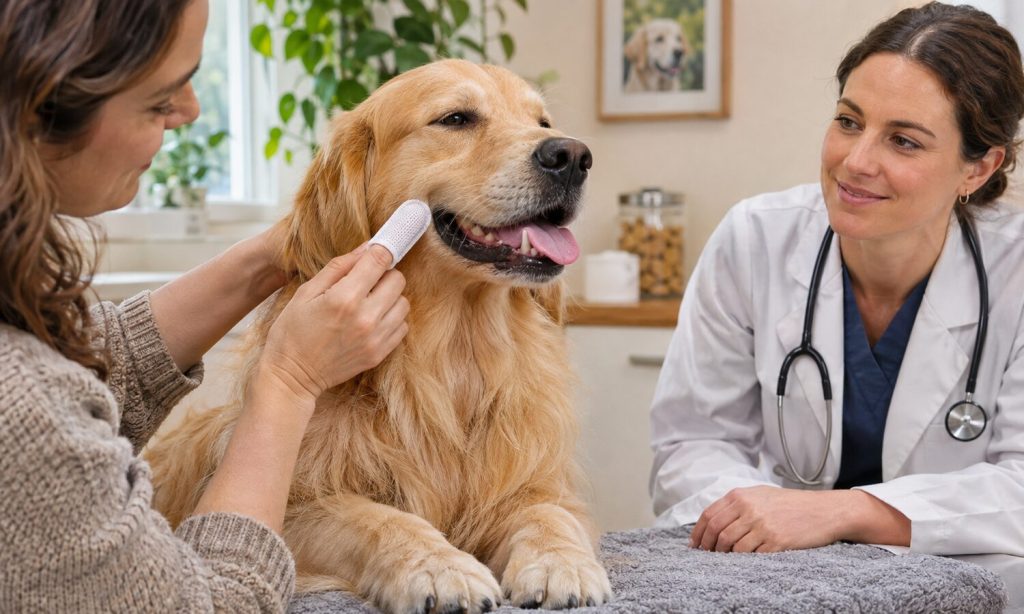
Dental wipes can make home mouth care less intimidating for a dog that resists a toothbrush. However, comparing dental wipes for dogs involves more than choosing a familiar package or a pleasant scent. The important questions are whether a wipe is made for canine mouths, how it fits your finger, whether your dog tolerates the routine, and what evidence supports its claims.
This guide explains how to compare dental wipes for dogs by fit and use, rather than by advertising alone. You will learn to assess texture, ingredients, handling, frequency, and the limits of wiping. It also describes a gentle introduction plan and warning signs that call for professional care. Wipes can be one practical part of a dental routine, but they cannot replace veterinary assessment, treatment of dental disease, or every benefit of regular brushing.
Start With the Dog’s Mouth and the Purpose of the Wipe
The first comparison is between the dog’s actual needs and the wipe’s intended job. Some wipes are designed to remove soft plaque from accessible outer tooth surfaces; others mainly freshen breath. Plaque control is a more meaningful goal than a short-lived fragrance. Check whether the package is specifically labeled for dogs and whether it gives clear directions for use inside the mouth. A wipe designed for skin, ears, or general household cleaning is not appropriate for teeth.
Look at your dog’s age, muzzle length, tooth crowding, and willingness to have the lips lifted. A small dog with tightly spaced teeth may require a different finger fit from a large dog with broad teeth. Loose, inflamed, or painful teeth are not suitable surfaces for casual scrubbing. The American Veterinary Medical Association emphasizes regular dental examinations and toothbrushing; a wipe should support an overall care plan, not postpone examination when there is a problem.
Check the evidence behind plaque-control claims
For a practical look at dental wipe formats for dogs, see our related guide. The Veterinary Oral Health Council evaluates products against defined criteria for helping control plaque or tartar. Its accepted-products list includes a category for toothbrushes and wipes. A VOHC acceptance statement, when present for the exact product, is more useful than broad claims such as ‘veterinarian inspired.’ An unlisted product is not automatically unsafe or ineffective, but its claims merit closer scrutiny. Read the directions because an accepted result applies to use under specific conditions. Do not assume any dental wipe will remove hardened tartar, clean beneath the gums, or cure gum disease.
Compare Physical Fit, Grip, and Texture
Wipe fit determines whether the cleaning movement is controlled or clumsy. A finger sleeve can provide direct contact but should not slip when damp. A flat sheet may wrap around the finger and reach a wider tooth surface, yet excess material can bunch near the dog’s cheek. Consider your hand size, the dog’s jaw size, and whether you can hold the product without getting too close to a sudden bite. No wipe should be pushed toward the throat.
Texture should provide gentle friction without abrasive scraping. A soft, lightly textured surface may lift fresh deposits more comfortably than a rough pad. Inspect stitching, seams, and loose fibers that might catch in crowded teeth. If the wipe tears, shreds, or leaves residue, stop using it. Test a handling motion on your own clean finger first, then approach the dog’s outer teeth slowly. A reliable grip and tolerable texture matter more than elaborate packaging.
Match wipe size to mouth size
For toy breeds, choose enough material to cover the fingertip without folding into a thick wad. For larger dogs, the wipe must still stay secured through several gentle passes. Avoid treating manufacturer size labels as precise measurements; compare dimensions, thickness, and the recommended finger position. If your dog cannot comfortably accept your finger near the mouth, start with consent-based handling training before trying any wipe. A long session with an oversized cloth is less useful than brief, calm contact with a controllable product.
Read Ingredients and Directions Carefully
Use only a wipe intended for a dog’s oral cavity. Ingredient disclosures, expiration dates, and storage directions should be easy to find. Avoid substituting disinfecting, baby, grooming, or human cosmetic wipes. These may contain ingredients unsuitable for swallowing or sensitive oral tissue. An appealing scent is not evidence of dental benefit. If your dog has an allergy history, a sensitive stomach, or a medical condition, have your veterinarian review the product’s ingredient list before introducing it.
Compare how each product instructs you to use it. Some are meant for daily use, while others specify different schedules. A premoistened wipe should be sealed securely between sessions so it does not dry out or become contaminated. Do not add mouthwash, household cleaner, toothpaste, or water unless the label specifically tells you to. For products with dental claims, consistency and appropriate contact time usually matter more than a single vigorous cleaning attempt.
Consider packaging, cost, and ongoing hygiene
A practical comparison includes how many fresh wipes a package contains and how quickly your household will use them before expiry. Single-use wipes reduce the temptation to reuse a contaminated cloth, but do create waste. Resealable tubs and pouches are convenient only when their seals remain clean and intact. Calculate cost per usable session rather than cost per packet. Keep wipes out of reach of children and pets, use clean hands, and discard a wipe after one mouth-care session.
Introduce Wiping With a Low-Stress Routine
Begin on a quiet day with a dog that is relaxed and receptive. Allow a brief sniff of the closed packet, reward calmly, then practice touching the cheek without opening the mouth. Over successive sessions, lift the lip for a second, touch a clean finger to the outer gumline, and reward immediately. Only after your dog accepts these steps should you add a dental wipe. Forcing the mouth open or holding the muzzle tightly can create fear and make later dental care harder.
When ready, wrap or secure the wipe according to its directions. Gently move along the outside of a few teeth where plaque collects, especially near the gumline, without rubbing reddened tissue. Use short sessions and stop if the dog turns away, freezes, growls, or struggles. Build duration gradually, and ask your veterinary team to demonstrate a suitable technique. For broader home oral-care choices, compare formats without assuming products perform identically. A wipe routine is successful when it can be repeated regularly without distress, not when every tooth is reached on day one.
Know when brushing is the better fit
Our guide to toothbrushes for reluctant dogs covers another approach. Veterinary guidance identifies frequent toothbrushing as a highly effective home method because it mechanically disrupts plaque. Wipes may be easier to introduce or useful for a dog that cannot yet tolerate a brush, but their contact area and reach differ. Consider a soft canine toothbrush and pet-safe toothpaste as the long-term goal if your veterinarian agrees. In dogs with advanced dental disease, neither a wipe nor a brush replaces professional cleaning and treatment. Build a care plan around the dog rather than choosing a tool by convenience alone.
Monitor Results and Red Flags
Keep a simple record of how often you use dental wipes for dogs, how your dog responds, and whether visible soft buildup changes. Breath that remains foul, red or bleeding gums, drooling, dropping food, pawing at the mouth, or reluctance to chew warrants a veterinary visit. Dogs often continue eating despite dental pain, so a normal appetite cannot rule out disease. Do not scrub bleeding gums harder in an effort to ‘clean through’ discomfort.
Review product fit after a week or two of short sessions. If wiping remains stressful, change the approach before changing brands repeatedly. Consider the dog’s handling tolerance, wipe shape, and the time needed to reach outer teeth. Ask the veterinarian whether your dog needs a dental procedure or another home-care method. This practical feedback is a stronger basis for comparing dental wipes for dogs than a rating based entirely on odor, flavor, or packaging.
Frequently Asked Questions
Dental wipes are most useful when their role is clear and the dog will tolerate gentle application. These common questions explain how to choose a manageable routine.
Keep veterinary dental care on the schedule even if the dog’s mouth looks cleaner at home. Some important disease develops below the visible gumline.
Are dental wipes as effective as brushing?
Usually not as a blanket claim. Toothbrushing is a well-supported home-care method. Some wipes have evidence for specific plaque-control claims, but performance depends on product, technique, and frequency.
Can I use a regular wet wipe on my dog’s teeth?
No. Use an oral-care wipe labeled for dogs. Household, cosmetic, and grooming wipes are not designed to be used inside a dog’s mouth.
How often should I use dental wipes for dogs?
Follow the specific product label and your veterinarian’s advice. A sustainable daily habit may be helpful, but do not overrub sensitive gums.
What if my dog refuses finger contact?
Pause and work through brief lip-lift and cheek-touch exercises with positive rewards. Ask a veterinary behavior professional for help if fear or defensiveness escalates.
When should I stop wiping and call a veterinarian?
Stop if there is pain, bleeding, swelling, loose teeth, severe bad breath, or marked avoidance. These signs can require diagnosis and treatment rather than more cleaning.
Final Words
Choosing dental wipes for dogs by fit and use means evaluating oral safety, comfort, clear instructions, and evidence of plaque control. An easy-to-hold wipe that your dog calmly accepts can support a consistent routine. The most expensive or most strongly scented option is not necessarily the most appropriate. Compare how each product works in your hands and how your dog’s mouth responds, then revisit the choice as needs change.
Use wiping as part of a broader dental-health plan that includes veterinary examinations and, when suitable, toothbrushing. If you find red gums, tooth pain, or persistent foul breath, seek professional assessment rather than replacing one wipe with another. Small, predictable sessions are kinder and more useful than a hurried cleaning that creates resistance.
Reference
American Veterinary Medical Association: Pet dental care. Veterinary Oral Health Council: Accepted products, including dental wipes and brushes.
Veterinary Oral Health Council: Brushing and plaque control guidance. These veterinary sources inform the discussion of routine care and the limits of wipes.









