
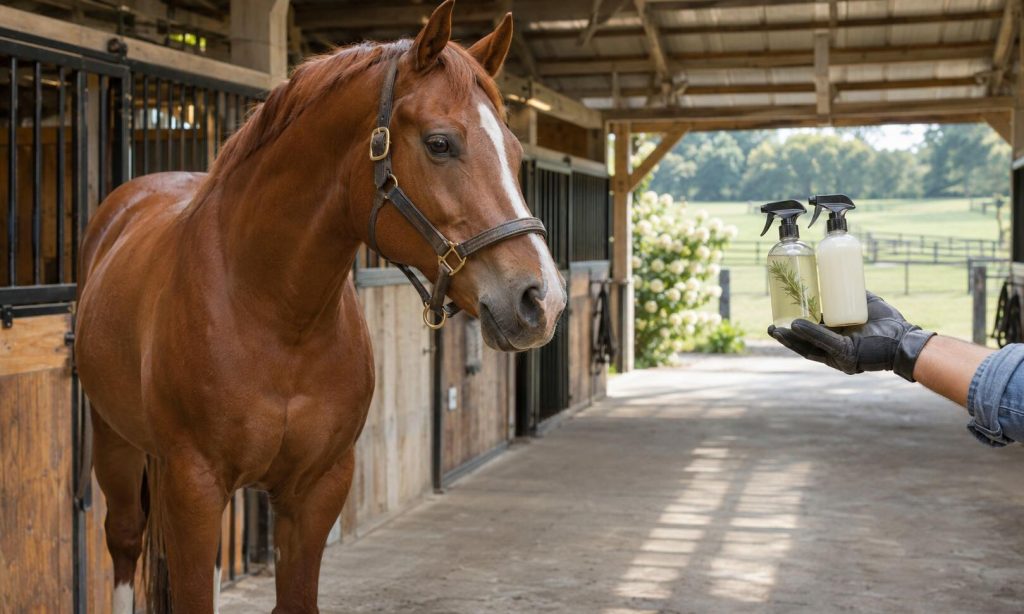
An herbal scent does not prove that a horse fly spray is harmless or effective. When choosing a natural fly spray for horses, the most common mistakes are skipping the label, assuming all essential oils are gentle, and expecting a bottle to solve every fly problem on the property. Horses differ in skin sensitivity, turnout conditions, and the insects that bother them. Those details matter more than a reassuring word on the front label.
This guide explains how to read use directions, examine ingredients, avoid unnecessary exposure, and combine sprays with practical fly management. It also distinguishes a registered pesticide from a product that may qualify for a minimum-risk exemption. If your horse is unusually sensitive, our guide to fly sprays for sensitive horses covers additional questions worth discussing with your veterinarian. The goal here is safe, realistic decision-making, not a brand ranking.
Mistake 1: Treating Natural as a Safety Guarantee
Essential oils come from plants, but concentrated plant compounds can still irritate skin, eyes, or airways. A pleasant smell to a person does not establish a useful safety margin for horses. Different plants, oil concentrations, solvents, preservatives, and carriers can make two products behave very differently. Check the complete ingredient disclosure and any cautionary statements. A vague botanical marketing claim is no substitute for specific directions about the intended animal and application sites.
Do not improvise by pouring undiluted essential oil into a spray bottle or adding a concentrated ingredient to another formula. Blending products can change skin exposure, stability, or the intended dose. A horse with an existing rash, wound, or allergic reaction deserves veterinary advice before topical products are applied. Stop using a spray that causes redness, swelling, coughing, excessive rubbing, or unusual distress. More fragrance is not evidence of more protection.
Mistake 2: Ignoring Label Status and Directions
In the United States, some fly-control products carry federal pesticide registration, while certain minimum-risk products can be exempt when they meet specific conditions. Exemption is not the same as a government finding that an individual formula works on every horse. Examine who and what the label says the product is for. A spray intended for buildings, people, or plants should not be assumed suitable for a horse’s skin. Use directions and precautions deserve more attention than the promotional description.
Read the application method, frequency limits, dilution instructions, storage conditions, environmental warnings, and first-aid statements. If the directions prohibit use near eyes, nostrils, feed, or water, respect that boundary. Avoid spraying into an enclosed, poorly ventilated stall or directly toward the face. For facial areas, follow only the product’s approved directions; some owners use a cloth where specifically allowed. Never guess a concentration, mix products, or increase application frequency because flies remain visible.
Mistake 3: Expecting One Spray to Control Every Fly
House flies, stable flies, horn flies, horse flies, and other biting insects differ in their habits and breeding sites. A product that discourages one type of fly may provide less useful protection against another. Wind, rain, sweat, grooming, and the horse’s movement can also affect how long a topical application remains useful. Avoid interpreting a short period without visible insects as proof of all-day protection. Choose expectations based on the target insects, the label, and observed conditions.
Fly control usually works best as a combined property-management effort. Remove wet or decaying organic material, manage manure promptly, fix poor drainage, and clean feeding areas. Consider appropriate physical barriers where suitable. Our stable and manure fly-management guide explains why removing breeding habitat helps. A bottle cannot compensate for a persistent fly nursery beside the barn. Focus on reducing the conditions that favor flies instead of repeatedly spraying a frustrated horse.
Mistake 4: Overlooking the Horse’s Individual Risk
Before trying a natural fly spray, consider the horse’s age, skin condition, pregnancy or nursing status, respiratory problems, and prior reactions. Review whether the product’s animal-use directions address those situations. An equine veterinarian can help when a horse has dermatitis, inflamed skin, respiratory disease, or a history of sensitivity. Avoid application to broken skin unless the directions explicitly permit it and a clinician agrees. A horse’s reaction should matter more than how popular an ingredient sounds.
Introduce an allowed spray carefully and watch the horse during and after use. Never restrain a frightened horse solely to force application. Desensitization to the sound of a spray bottle may help with handling, but it does not prove chemical tolerance. Record the date, area treated, weather, and any reaction. If signs of distress, swelling, labored breathing, or other concerning symptoms develop, stop exposure and seek prompt veterinary guidance. For insect protection around the legs, our overview of fly boots for horses explains a separate physical-barrier approach.
Mistake 5: Copying Homemade Recipes Without Checking Risks
Homemade mixtures circulate widely, but ingredient lists often omit concentration, stability, storage, or species-specific safety information. Water and oil can separate. Improperly stored mixtures can become contaminated, and the strength of botanical ingredients varies. Vinegar, detergents, alcohol, or concentrated oils do not automatically make a mixture appropriate for animal skin. Never assume that something harmless on a kitchen counter belongs on a horse. Use caution with any unverified recipe.
If you are evaluating a homemade approach, assess each component individually, avoid unsupported claims, and involve your veterinarian when skin or respiratory risks exist. Our homemade horse fly-spray care guide discusses handling and storage considerations. Prefer a clearly labeled, horse-appropriate approach when reliable directions are needed. Do not spray near feed, let children apply unknown mixtures, or store unidentified liquids in drink containers. A handwritten label is not an adequate substitute for understanding the contents.
Mistake 6: Measuring Success by Smell or a Single Test
Track the actual fly burden and the horse’s behavior before drawing conclusions. Signs worth observing include stomping, tail swishing, skin twitching, bunching in shelters, and interrupted grazing. Notice whether the pattern changes across times of day or locations. A spray that smells strong but leaves the horse constantly stamping may not be meeting the need. Insects also become more or less active with weather, so compare similar conditions when possible.
Review all measures together: manure control, ventilation, screening, turnout timing, physical barriers, and carefully chosen topical protection. If a horse develops sores, severe insect-bite hypersensitivity, persistent itching, or marked discomfort, contact a veterinarian. The problem may require more than a general-purpose spray. Reassess the plan after rainfall, seasonal changes, or changes in pasture management. Good fly control is an ongoing animal-welfare practice, not an occasional purchase.
Frequently Asked Questions
These questions help owners distinguish label-based precautions from assumptions that frequently surround botanical repellents. They also clarify what to do when a horse reacts badly or the overall fly problem continues.
Use them as a practical checklist alongside the full directions for any animal-use product. Individual horses and local insect populations differ, so a veterinarian or qualified extension specialist may recommend further measures.
Does natural mean a horse spray is non-toxic?
No. Natural describes the origin of some ingredients, not a guarantee of safety. Concentration, formulation, exposure, and individual sensitivity all matter. Read all warnings and avoid unsupported claims.
Are minimum-risk fly sprays tested and approved by the EPA?
A qualifying minimum-risk pesticide may be exempt from federal registration under specific legal conditions. That does not mean the EPA has reviewed and approved each exempt formulation for effectiveness. Follow the actual label and applicable rules.
Can I spray a horse’s face?
Do not spray directly toward the eyes, nose, or mouth. Follow the exact product instructions for sensitive areas; some formulations specify a cloth application or prohibit facial use. Ask a veterinarian if uncertain.
Why are flies still bothering my horse after application?
The insect species, weather, sweat, application technique, or inadequate environmental management may reduce the benefit. Check the label’s claims and timing. Remove breeding material and consider suitable physical barriers.
When should I stop using a fly spray?
Stop if the horse shows irritation, abnormal breathing, swelling, marked distress, or another concerning reaction. Seek veterinary guidance for significant symptoms. Also discontinue expired, damaged, unlabeled, or improperly stored products.
Final Words
The biggest mistakes with natural fly spray for horses are trusting marketing shorthand, skipping the directions, and expecting a topical formula to replace barn hygiene. Read ingredient and use information, match the application to the animal, and record how the horse responds. A botanical ingredient can still cause an unwanted reaction; a pleasant smell is not a safety assessment.
Choose a fly-management routine that includes clean surroundings, appropriate barriers, and veterinary advice where needed. Revisit the plan as weather and insect pressure change. The safest decision is not necessarily the most complicated one: it is the approach that has clear instructions, a sound purpose, and a comfortable horse at the center.









