
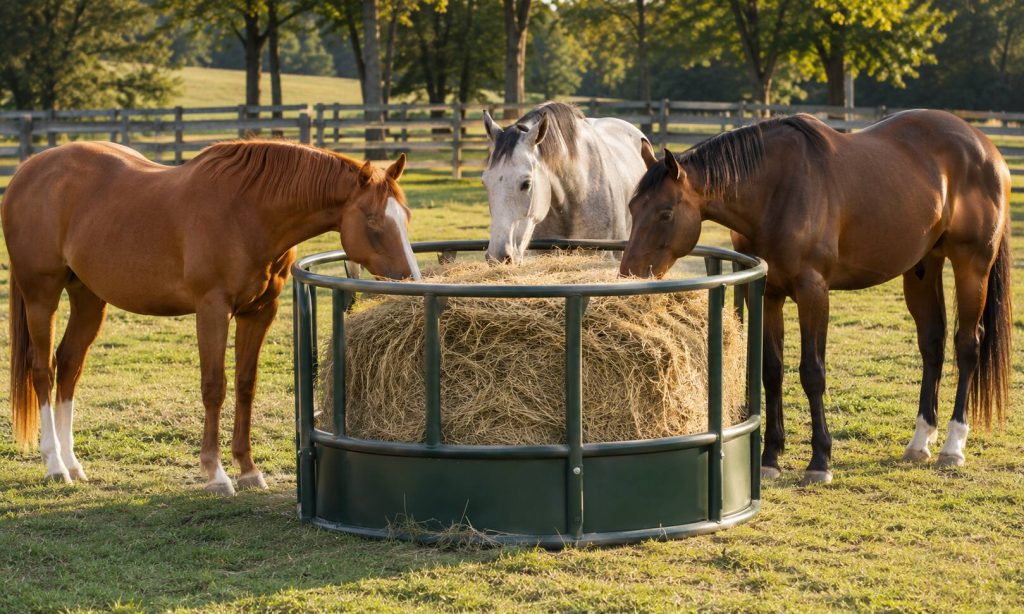
A round bale makes group feeding convenient, but the feeder around it deserves just as much attention as the hay itself. When assessing a round bale feeder for horses, look beyond the circular shape. Entry openings, edge protection, stability, weather exposure, space for multiple animals, and cleanup all affect how safely the feeder fits your routine. A feeder that reduces loose hay may still create problems if horses crowd around it or catch a leg in an opening.
This guide explains what to look for before installing a round bale feeder, how to inspect its use, and when another arrangement may be safer. University research suggests that feeder design can meaningfully change hay waste, yet no one design solves every management problem. Start with your animals, pasture, and forage plan. You can also review our daily hay portion guide before estimating how much forage the group needs.
Match the Feeder to the Horses and Their Feeding Pattern
Consider the number, size, age, and temperament of horses using the bale. A small opening that admits one muzzle at a time may be manageable for a single calm horse, yet encourage crowding in a larger group. Watch for a dominant animal monopolizing access while others hover or retreat. Timid, older, or injured horses may need a separate feeding space. Plan the number and distribution of stations around actual behavior, not only the total capacity of the feeder.
Check whether the horses eat together peacefully and whether each can reach enough suitable forage. If individuals are losing weight or routinely being displaced, reorganize feeding points before changing the hay ration. Forage requirements depend on body weight, health, workload, and hay quality. The feeder’s purpose is to deliver forage with manageable waste, not to restrict a horse inadvertently. If your barn contains a mixed group, make observation during feeding part of routine management.
Inspect Opening Design, Edges, and Structural Stability
Look at every opening from the horse’s perspective. A gap that appears harmless to an adult owner might trap a hoof, lower jaw, or head. Inspect welded joints, bolts, caps, seams, and the spaces below railings. Smooth covered edges reduce abrasion risk. Avoid cracked panels, sharp rusted metal, projecting fasteners, loose wire, and improvised attachments. Do not rely on a single published measurement as safe for every breed and age; inspect the actual design with the intended horses.
The feeder should remain stable when an animal leans, pushes, or pulls hay. Consider its weight, footprint, and anchoring instructions, along with conditions when the ground becomes wet or uneven. A unit that shifts, tips, or exposes openings as the bale becomes smaller deserves immediate reassessment. Check manufacturer guidance for lifting, assembly, and repair; use appropriate equipment when moving heavy feeders. Examine the entire structure before first use and after storms or rough handling.
Keep Bale Wrap, Twine, and Debris Away From Horses
Remove plastic net wrap and baling twine before horses can reach the hay. These materials are not forage and can become entanglement or ingestion hazards. Inspect the bale for mold, contamination, foreign objects, and spoiled sections. A feeder should not be used to make questionable hay seem acceptable. If the bale has been stored outside, evaluate its condition carefully and discard unsafe material. Forage safety takes priority over preserving the last few pounds of a damaged bale.
Check how the feeder contains loose stems. Some rail designs allow more hay to fall out, while others keep the outer surface better protected. Research comparing feeder types shows meaningful differences in waste, but the best practical result depends on the whole setup. See our guide to evaluating hay and equine feed information when assessing forage quality. A feeder saves little if horses repeatedly eat from contaminated, muddy areas.
Choose a Dry, Accessible Site With Safe Traffic Flow
Install the feeder on the most level, well-drained location reasonably available. Persistent mud can damage footing, contaminate fallen hay, and create unpleasant traffic zones. Avoid tight corners where a horse could be pinned between the feeder and a fence, wall, or gate. Check that equipment can safely approach for bale replacement without moving through a group of loose horses. Take the time to establish a predictable routine for people and animals.
Consider water access, shelter, pasture rotation, and seasonal ground conditions. Moving the feeding station periodically, when practical and safe, may reduce concentrated wear on one patch of ground. Avoid placing it near exposed wire, low branches, or other obstacles. Horses should be able to step away from a dominant neighbor rather than being trapped at the feeder. Observe the animals at the first feeding and during later use as crowding patterns can change.
Compare Waste Reduction With Real-World Management
Reducing forage waste is a reasonable goal, but it should not override safe, comfortable access. Research from the University of Minnesota has found that using a feeder can substantially reduce round-bale hay wasted compared with feeding without one. The amount depends on feeder design and management. More restrictive access is not automatically better. Watch whether horses can maintain intake, body condition, and calm social behavior. A spotless enclosure does not matter if a horse is unable to eat enough.
Calculate waste in practical terms by noting how much hay becomes trampled, wet, or otherwise uneaten. Compare several bales under similar conditions, not one unusually rainy week. Check whether hay is lasting longer because waste fell or because an animal is eating less than needed. If group size or hay type changes, repeat the observation. When the setup becomes difficult to manage, smaller-bale feeding systems or multiple stations may offer better control; our hay-net feeding overview explains another category and its tradeoffs.
Inspect, Clean, and Maintain the Feeder Regularly
Before each new bale, remove spoiled hay, twine remnants, and collected debris. Examine rails, panels, welds, fasteners, and any moving parts. Check that feed-contact surfaces remain smooth. Depending on the material and weather, corrosion or degraded plastic can make edges rough or weaken joints. Clean according to the construction material and allow surfaces to dry as appropriate. A maintenance schedule is more reliable than waiting until a horse finds the defective part first.
Record persistent crowding, rub marks, hoof-catching attempts, tipping, or unusual damage. Remove a questionable feeder from service until a qualified person can assess and repair it safely. If you rotate or store feeding equipment, follow the safe handling principles in our horse feeder storage guide. FYI, checking bolts can feel boring until one goes missing. The few minutes spent on inspections protect horses and can extend the usable life of the structure.
Frequently Asked Questions
These questions address the decisions that often come up after an owner identifies a potential feeder but before it becomes a permanent part of turnout. Safety depends on the actual horses, construction, and use conditions.
Use the answers as a starting point for inspection and monitoring. Ask an experienced equine professional when a design has unusual openings, a high-risk group, or uncertain installation instructions.
Are round bale feeders safer than feeding directly on the ground?
A feeder can reduce waste, but safety depends on its design and placement. Watch for sharp edges, entrapment openings, instability, crowding, and contaminated footing. Ground feeding and feeder systems have different management risks.
Should baling twine and plastic net wrap stay on the bale?
No. Remove accessible twine and net wrap completely before feeding. These materials can snag, entangle, or be ingested. Inspect for hidden remnants as the bale shrinks.
How many horses can share one round bale feeder?
There is no universal safe number. It depends on access points, group relationships, individual needs, and room to retreat. Provide additional stations if horses are displaced, competing aggressively, or failing to eat adequately.
Does a feeder guarantee lower hay costs?
No. It may reduce waste, but actual savings depend on bale price, feeder cost, wasted forage, labor, weather, and upkeep. Observe and record outcomes across more than one bale.
When should I replace a round bale feeder?
Retire or repair it if structural parts loosen, rust weakens load-bearing joints, edges become sharp, rails distort, or an animal could be trapped. Do not continue using a damaged feeder while waiting for a convenient repair date.
Final Words
The right round bale feeder for horses is a stable, smooth, accessible structure that suits the herd and protects the hay. Look carefully at opening dimensions, group behavior, footing, twine removal, and the condition of the bale. Waste reduction matters, but never more than adequate forage intake and freedom from entrapment hazards. A feeder must work safely when the bale is full and as it becomes smaller.
Reassess the setup after every change in herd size, weather, or feeding routine. Inspect and clean the feeder before refilling, and remove damaged equipment promptly. With patient observation, you can judge whether the system genuinely improves feeding without sacrificing horse comfort or welfare.









