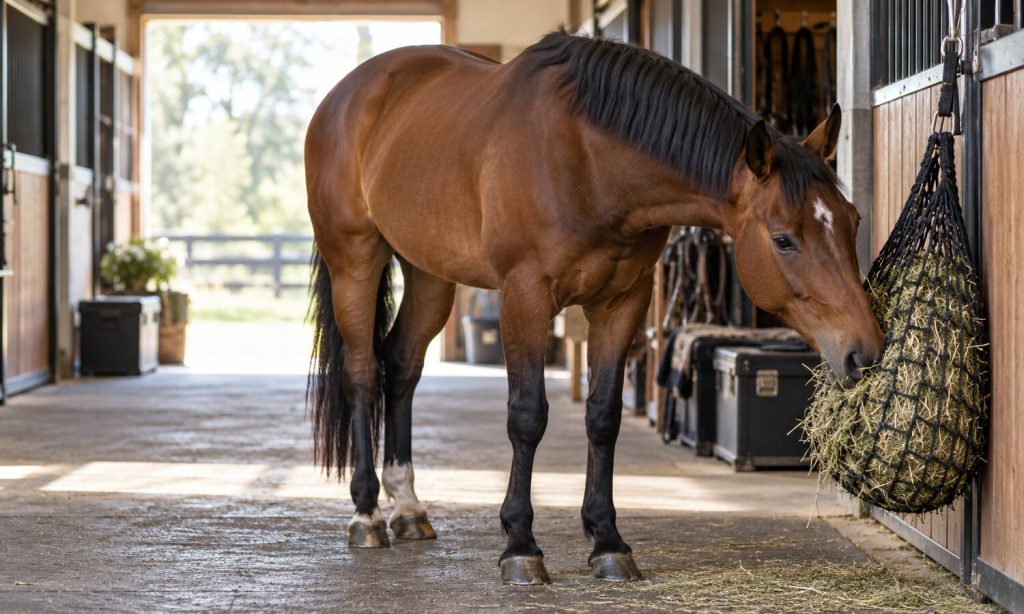
Choosing the best hay nets for horses starts with how your horse eats, the hay you use, and where the net will hang. A small mesh may slow a fast eater, while larger holes can make forage easier to pull. Capacity also matters: a stall bag, trailer net, and round-bale cover solve different problems. This guide compares seven verified options by mesh, size, construction, and feeding setup. It also explains the tradeoffs that product pages often gloss over, including safe positioning, wear checks, and when a net may not suit your horse. A practical comparison helps separate useful details from promotional claims. Slow feeding is not automatically right for every animal. A horse with dental pain, limited access to forage, or a veterinary diet plan may need another approach. Check the product’s current measurements and follow the manufacturer’s installation instructions before use.
Quick Picks
| Product | Best For | Key Advantage | Buy | |
|---|---|---|---|---|
| Hay Chix Half Bale Net, 1¾-Inch Mesh | Half-bale feeding | Half-bale capacity for 4–6 flakes | View on Amazon | Jump to Review |
| Hay Chix Half Bale Net, 1¼-Inch Mesh | Smaller mesh | Smaller 1¼-inch openings | View on Amazon | Jump to Review |
| Three-Pack 58-Inch Hay Nets | Spare nets | Three nets in one set | View on Amazon | Jump to Review |
| Texas Haynet Round-Bale Net | Round bales | Made for round and large-square bales | View on Amazon | Jump to Review |
| Aoneky 47-Inch Knotless Bale Net | Soft knotless mesh | 47-inch overall length | View on Amazon | Jump to Review |
| Five-by-Five Round-Bale Slow Feeder | Outdoor round bales | Five-by-five-foot round-bale coverage | View on Amazon | Jump to Review |
| ADOEIAK Two-Pack Heavy-Duty Hay Bags | Two-bag setup | Two bags per pack | View on Amazon | Jump to Review |
How We Chose These Horse Hay Nets
We compared seven distinct, currently identifiable hay nets through the authenticated product catalog. The selections cover hanging bags, half-bale nets, and round-bale covers. We checked stated mesh size, capacity, material, and attachment details where product data supplied them. Product listing claims are not independent test results, so we avoid treating advertised waste savings or health benefits as guaranteed outcomes.
The right opening depends on your horse. Smaller holes may slow access but can frustrate a horse that cannot grasp hay comfortably. A larger opening may suit easier feeding or modest pacing. Consider dental health, forage length, body condition, and time between checks. If the horse has a medical condition or a prescribed ration, involve your veterinarian or equine nutritionist before changing the feeding method.
1. Hay Chix Half Bale Net, 1¾-Inch Mesh

- Half-bale capacity for 4–6 flakes
- Marine-grade UV-treated nylon
- Fixed-knot construction
- Rope-and-hoggle closure
- Tight openings may slow some horses too much
- Loading a half bale takes space
Hay Chix’s half-bale net is a useful fit when you want to prepare several hours of forage at once. The listing describes capacity for four to six flakes, which can reduce how often you refill a stall or trailer feeder. Its 1¾-inch openings allow larger bites than an ultra-slow net, so it may suit horses that already manage portioned forage well. Match the opening size to your horse’s chewing habits and body condition rather than choosing the smallest mesh automatically.
The manufacturer identifies marine-grade, UV-treated nylon and fixed knots as core construction details. A rope-and-hoggle closure is intended to make filling and hanging more straightforward. Those features may be handy for a barn routine that moves between a stall, trailer, or turnout area. The maker also reports a hay-waste reduction figure from testing; treat that as a manufacturer claim, not a guaranteed result for every horse or feeding setup. Inspect knots and wear points regularly.
This model makes the most sense when your feeding plan calls for a half bale and a moderate slow-feed pace. It is less convenient if you need a compact single-meal bag, or if your horse struggles to pull hay through small openings. Set the net at a safe height and secure it so the horse cannot trap a hoof or become entangled. Ask your veterinarian or equine nutritionist before using a slow feeder for a horse with dental problems, weight concerns, or a special forage plan.
My Recommendation
Choose this half-bale net if you want to load several flakes at once and prefer a 1¾-inch opening over finer mesh. It suits a horse that can comfortably pull hay through that size. If you need a single-meal bag or your horse struggles with nets, compare another setup.
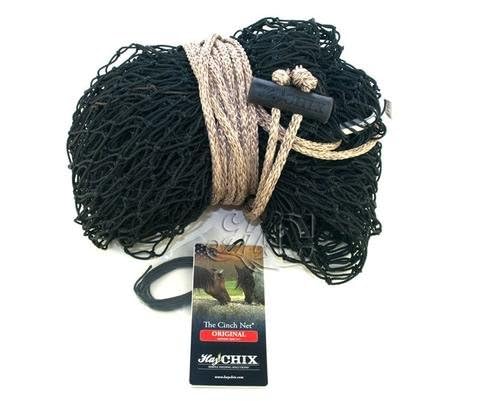
2. Hay Chix Half Bale Net, 1¼-Inch Mesh
- Smaller 1¼-inch openings
- Holds four to six flakes
- UV-treated nylon rope
- Fixed-knot netting
- Useful for planned portions
- Slower access may not fit every horse
- Requires regular knot inspection
This half-bale net is built around smaller openings than the 1¾-inch Hay Chix model. Its product listing describes 1¼-inch holes and capacity for four to six flakes. That combination can suit a horse that pulls forage quickly from a larger-mesh net, provided the horse can comfortably retrieve hay. Mesh size is only one part of the decision: consider forage length, the horse’s teeth, and how much time it spends without direct supervision.
The product is described as marine-grade, UV-treated nylon with fixed knots. The manufacturer presents the bag as a slow feeder for a half small-square bale and notes that it can be used for livestock as well as horses. The larger capacity may be useful for a feeding schedule with fewer refills, but it also means filling and hanging a heavier net. Check the suspension point and net condition before each use, especially after travel or outdoor exposure.
Choose this version when a smaller mesh opening is appropriate for your horse and a half-bale load suits your routine. It may be a poor match for a horse that cannot grasp hay through narrow spaces, has dental discomfort, or needs a veterinarian-directed feeding arrangement. Introduce any net gradually and monitor how much forage the horse actually consumes. If the horse shows frustration, reduced intake, or damaged teeth, stop using it and discuss another feeding method. Check the filled net before hanging it.
My Recommendation
Choose this version when you want half-bale capacity with narrower 1¼-inch openings. It may suit a horse that eats rapidly from larger mesh, provided the horse can pull hay comfortably. If you notice frustration or reduced intake, stop and discuss another feeding arrangement with your veterinarian.
3. Three-Pack 58-Inch Hay Nets

- Three nets in one set
- 58-inch overall length
- 2.36-inch mesh openings
- Braided tie handles
- Fits stall, trailer, or pasture use
- Larger openings offer a lighter slow-feed effect
- Capacity details vary by hay type
This three-pack is aimed at barns that want spare nets ready for rotation, multiple feeding locations, or more than one animal. The listing gives a 58-inch length and 2.36-inch openings. Those wider openings make it a less restrictive choice than fine-mesh nets, which may work better for horses that need a modest pace change instead of a very slow feeder. The set can also make it easier to keep a clean net available while another is being washed or repaired.
The product page describes heavy-duty construction and braided tie handles, with no metal hardware at the attachment point. That may simplify tying the net to a suitable stall or trailer ring, but the knot and anchor still need checking before use. The advertised design also aims to keep hay contained and reduce waste. Actual savings depend on the horse, hay quality, ground conditions, and whether the net is hung securely.
This option is most practical when a multi-pack and larger mesh fit your feeding plan. It is not the right pick if your horse needs a small opening to slow rapid eating or if you only need one compact net. Confirm the filled dimensions and hanging location before purchase. Keep the bottom from dragging, remove damaged equipment promptly, and monitor the horse to make sure the mesh does not snag shoes, halters, or teeth. A three-pack is useful when several feeding stations need nets with the same mesh size.
My Recommendation
The three-pack is a practical pick for barns that need spare nets or several feeding stations and can use 2.36-inch openings. Its larger mesh is less restrictive than fine nets. If you need a stronger slow-feed effect, compare a smaller opening and monitor intake.
4. Texas Haynet Round-Bale Net

- Made for round and large-square bales
- 1¾-inch openings
- Knotted nylon mesh
- Heavy-gauge construction
- Designed for outdoor bale feeding
- Requires a large bale setup
- Not a portable single-meal bag
Round-bale feeding needs a different net shape from a hanging bag, and this Texas Haynet model is designed for larger forage bales. The listing specifies 1¾-inch openings and compatibility with round or large square bales. That makes it a candidate for a group or outdoor feeding arrangement where hay is otherwise exposed to trampling. Before choosing this format, make sure the bale size and feeder arrangement match the product’s current fit guidance.
The maker describes heavy-gauge knotted nylon mesh and production in the United States. A net that covers a large bale can help keep loose hay together, but the setup must be installed carefully. Tension, ground contact, and the way horses approach the feeder all matter. Check the net for frays and damaged knots, and remove it if it can catch a hoof or become entangled with fencing or equipment.
This product is best suited to an established round-bale feeding system, not a small stall or travel kit. A single horse may need a different portion-control plan, and herd dynamics can affect whether every animal gets access. Ask an equine professional to review the feeding arrangement if horses compete for forage or have special dietary needs. The net’s larger scale is useful only when the bale, placement, and horse group all fit safely. Its oversized format is less useful for single flakes or small enclosures where a hanging bag is easier.
My Recommendation
Choose this Texas Haynet model when you feed round or large-square bales outdoors and have room to install a bale cover securely. Its scale makes it less practical for stall flakes or travel. Confirm bale dimensions and check placement after animals shift the net.
5. Aoneky 47-Inch Knotless Bale Net

- 47-inch overall length
- Soft knotless nylon mesh
- Fits small square bales
- Large-capacity hanging design
- Useful for stall or travel feeding
- Confirm bale dimensions before ordering
- Soft mesh needs frequent wear checks
The Aoneky net is a large hanging style made for small square bales, with a stated 47-inch length and fit for bales up to 36 by 18 by 18 inches. The listing describes soft knotless nylon mesh. That construction may feel different from knotted rope nets and can be a consideration for horses that rub or mouth their feeders. Check the product measurements against the hay you buy, because bale sizes and flake thickness vary.
The larger capacity is intended to reduce how often hay needs to be loaded. It can be useful in a stall or trailer when a horse’s feeding plan includes a prepared bale portion. The company promotes slower access and reduced scattering, but an individual horse’s intake will depend on the mesh, forage, and feeding duration. The product listing includes broad health benefits; those should not be treated as veterinary claims or a substitute for a balanced forage plan.
Consider this net when you want a large soft-mesh option for a compatible small square bale. It may not be ideal for a horse that chews through fabric-like materials or needs closely controlled openings. Inspect seams and attachment points often, and do not leave a damaged net in use. Introduce it while you can observe the horse. If forage intake changes or the horse appears unable to eat comfortably, return to a safe feeding method and seek professional guidance.
My Recommendation
This Aoneky net is worth comparing if you use small square bales and want a larger hanging bag with knotless mesh. Verify the filled size against your bale and hanging space. If the net will remain outdoors, inspect the material and attachment points regularly for wear.
6. Five-by-Five Round-Bale Slow Feeder

- Five-by-five-foot round-bale coverage
- 1.5-inch knotless mesh
- Drawstring closure
- UV-stabilized polypropylene
- Designed for outdoor use
- Large format needs careful setup
- Mesh can slow access substantially
This 5-by-5-foot net is designed to wrap a round bale rather than hold a few flakes. The listing describes a 1.5-inch knotless mesh, drawstring closure, and UV-stabilized polypropylene. It may suit an outdoor feeding area where a large bale needs to stay contained. Its format is a poor fit for someone who needs a lightweight bag to carry into a stall or trailer.
The product page presents the net as a slow feeder for horses, goats, and cattle and describes reinforced edges for outdoor conditions. Those construction details are relevant when comparing nets exposed to sun and weather, but they do not remove the need for inspection. Make sure the net is installed according to its instructions and cannot shift into fencing, legs, or equipment. A filled or partly used bale may change shape as animals feed.
Choose a round-bale cover only when your bale and feeding system match its dimensions. A small-mesh design can change how quickly horses access forage, so observe consumption and make sure all animals can eat enough. This is particularly important in a group setting or when one horse has a prescribed diet. If you need individual portions, a hanging hay bag may be easier to monitor. The product’s large coverage is useful when the feeding site is prepared for it. Outdoor sites need secure placement and checks after wind, rain, or movement around the bale.
My Recommendation
Pick this round-bale cover when your feeding area can accommodate a five-by-five-foot net and you want a broad outdoor setup. It is too large for a compact stall or trailer routine. Follow the installation directions and check that loose mesh cannot catch legs or equipment.
7. ADOEIAK Two-Pack Heavy-Duty Hay Bags

- Two bags per pack
- Two-inch openings
- Adjustable drawstring closure
- Polypropylene rope construction
- Useful for stall or trailer
- Larger openings may not slow fast eaters
- Hardware and knots need inspection
This two-pack offers a straightforward hanging bag with two-inch holes and an adjustable drawstring, according to its listing. The larger openings provide easier access than ultra-slow nets and may be appropriate when the goal is to contain hay and modestly extend eating time. A spare bag can help with rotation between locations or give you a backup while one net is being cleaned.
The product is described as heavy-duty polypropylene rope for stall, trailer, or pasture use. Its adjustable closure is meant to accommodate different hay loads, but avoid overfilling or tying it where the horse can pull it loose. The listing mentions waste reduction and digestion benefits; those are marketing claims and not guaranteed outcomes. The practical points to compare are mesh opening, bag dimensions, attachment design, and the way your horse handles the net.
This set is a sensible option for a basic two-bag setup if two-inch openings suit your horse. It may not slow a fast eater as much as smaller mesh, and it may not fit large-bale feeding. Inspect the material after each trip and replace it if strands loosen or the closure no longer secures. Use the net only in a safe position that allows a comfortable head posture and keeps the horse clear of entanglement hazards. Two bags can simplify rotation between barn locations, though the included quantities may exceed a one-horse setup daily.
My Recommendation
The two-pack suits a barn or trailer routine that benefits from a spare bag and 2-inch openings. It offers a less restrictive mesh than finer options, so compare the pace with your horse’s feeding needs. Secure the top carefully, keep the net clear of hazards, and replace it if frayed.
How to choose best hay nets for horses
Start with the feeding job. A small hanging net can portion flakes for one horse or a trailer ride. A half-bale net reduces refills, while a round-bale cover fits a prepared outdoor feeder. Compare dimensions with the hay bale and hanging space; these formats are not interchangeable.
Match the mesh to your horse
Smaller openings generally restrict how quickly a horse pulls hay, while larger openings permit easier access. The smallest mesh is not always best. A horse with dental problems, poor appetite, or difficulty grasping forage may need a different feeding system. Watch the horse use a new net and check that it continues eating its planned amount. Ask your veterinarian before changing feeding access for a horse with weight, dental, or digestive concerns.
Check capacity and construction
Look at stated flake or bale capacity, total length, material, seams, knots, closure, and attachment points. Nylon, polypropylene, and knotless mesh have different textures and wear patterns. A product’s material claim does not guarantee it will withstand every horse. Inspect for fraying and replace damaged nets. When a net will be outdoors, consider UV exposure and weather, but still follow the manufacturer’s care guidance.
Plan safe placement
Use a secure anchor and position the net so it cannot drag, swing into equipment, or trap a hoof. Follow the product instructions and observe your horse during introduction. In a group, ensure less assertive horses can reach forage without conflict. Diet decisions may be more important than net style for horses with special needs; read our guides to hay choices for horses with laminitis and feeding hay to insulin-resistant horses. For seasonal forage planning, see our winter hay guide.
The new net should be introduced while you can observe your horse. Check that the animal can pull forage without excessive effort and that the net stays clear of legs, shoes, halters, and fencing. In a group, watch whether each horse can reach enough hay. Recheck the fit when the bale changes or the net stretches. For horses with a prescribed ration, dental needs, or weight concerns, ask an equine professional to review the whole setup before making the net part of a daily routine.
Frequently Asked Questions
What size holes should a horse hay net have?
Choose an opening your horse can use comfortably while meeting the intended feeding pace. Smaller holes slow access more; dental health and forage intake matter.
Are slow-feed hay nets safe for every horse?
No. Horses with dental problems, special diets, or difficulty pulling hay may need another method. Ask your veterinarian if you are unsure.
Can I use a hay net in a trailer?
Some products are intended for trailer use, but secure placement is essential. Follow the product instructions and prevent dangling or entanglement hazards.
How often should I inspect a hay net?
Check it before each use for frayed strands, loose knots, damaged closures, and unsafe attachment points. Replace damaged equipment promptly.
Do hay nets reduce hay waste?
They may contain forage and reduce trampling in some setups, but actual results depend on the horse, net, and feeding area. Treat product-page percentages as manufacturer claims.
Final Verdict
The best hay nets for horses are the ones that fit the forage, feeding schedule, and horse safely. Hay Chix’s 1¾-inch half-bale net is a strong all-around format for larger prepared portions. The Aoneky knotless net offers a softer-mesh alternative, while the round-bale options suit outdoor bale systems. Compare hole size, capacity, and placement before choosing. Monitor intake after any change and ask an equine professional about special feeding needs.
This article contains Amazon affiliate links. If you purchase through these links, PetAdvisorPro may earn a commission. As an Amazon Associate I earn from qualifying purchases.