
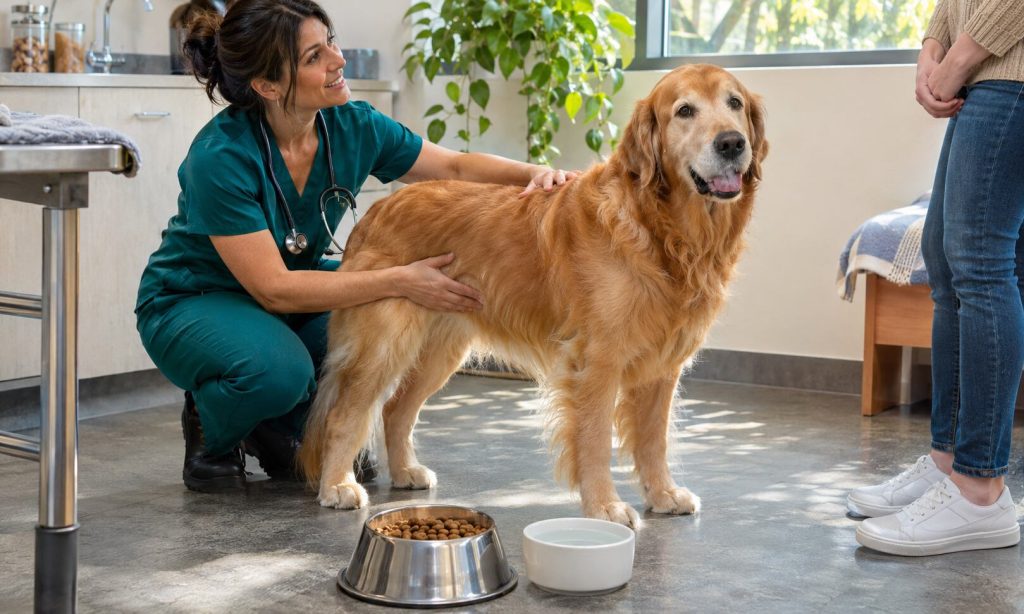
Cushing’s disease changes a dog’s hormone balance, appetite, muscle condition, and sometimes body weight. No food treats the disease. An unsuitable low-fat or weight-loss formula may harm dogs that are underweight or have other medical needs. The best dog food for Cushing’s disease is therefore an individualized choice made with the veterinarian managing the condition. Diet may support appropriate weight and digestion, but it does not replace hormonal testing, treatment, or follow-up care.
This guide compares seven available dog foods across ordinary weight-management and veterinary low-fat categories. Each serves a different nutritional purpose; none is marketed here as a Cushing’s cure. We explain how to compare calories, protein, food texture, and veterinary-diet requirements. Always ask your veterinarian whether weight control or fat restriction is actually appropriate before switching a diagnosed dog’s food.
Quick Picks
These seven foods address different weight and digestive needs; none treats Cushing’s disease. For additional context, see selecting food for overweight dogs.
| Product | Best For | Key Advantage | Buy | |
|---|---|---|---|---|
| SquarePet VFS Low Fat Lean Whitefish Dry Dog Food | Nonprescription lower-fat discussion | Digestible low-fat fish formula | View on Amazon | Jump to Review |
| Natural Balance Fat Dogs Chicken and Salmon Dry Food | Overweight adult dogs with vet approval | Calorie-control formula with fiber | View on Amazon | Jump to Review |
| Purina Pro Plan Weight Management Chicken and Rice | Weight control with grain-inclusive kibble | Protein-focused chicken-and-rice recipe | View on Amazon | Jump to Review |
| Blue Buffalo Life Protection Healthy Weight Chicken | Grain-inclusive everyday weight plan | Chicken-and-whole-grain adult formula | View on Amazon | Jump to Review |
| Hill’s Science Diet Adult Perfect Weight Chicken and Brown Rice | Structured adult weight-reduction program | Dedicated calorie-management adult food | View on Amazon | Jump to Review |
| Hill’s Prescription Diet i/d Low Fat Chicken Wet Food | Vet-directed digestive low-fat needs | Prescription low-fat canned texture | View on Amazon | Jump to Review |
| Royal Canin Veterinary Gastrointestinal Low Fat Dry Food | Vet-exclusive fat-restriction feeding | Specialized low-fat digestive dry formula | View on Amazon | Jump to Review |
SquarePet VFS Low Fat Lean Whitefish Dry Dog Food

- Low-fat food category
- No prescription claimed
- Whitefish protein source
- Contains fiber blend
- Compact 4.4-lb bag
- Cost per pound is higher
- May not suit every Cushing dog
SquarePet VFS Low Fat Lean Whitefish is a nonprescription, lower-fat dry food. Its positioning includes dogs with digestive concerns. The verified listing identifies Pacific cod and ocean whitefish meal. It also describes fiber sources with prebiotics and probiotics. Owners can discuss it when their veterinarian wants fat control without a specific prescription diet. It does not treat excess cortisol. The manufacturer does not establish that every dog with Cushing’s needs this formula.
For a Cushing’s patient, the starting point is the medical picture. Some dogs gain excess body fat, while others lose muscle or have another illness that changes nutrition needs. Compare its calories, protein, fat, and fiber against the dog’s current food. Use dry-matter values when needed. Low-fat labeling alone cannot determine whether the food provides enough energy or protein. Also check whether the dog is taking medication with food, since the veterinarian may specify a consistent meal routine.
The small bag can make a careful trial more manageable than purchasing a large sack before checking acceptance. If the clinician approves a switch, transition over the recommended period and record appetite, stool quality, body condition, and weight. Report vomiting, diarrhea, reduced appetite, or unusual weakness promptly because these can be significant in a dog receiving Cushing’s treatment. SquarePet offers a clear low-fat comparison point for specific nutritional goals, not a default diet for this hormonal disorder. Ask how its fiber content fits the individual digestive plan.
My Recommendation
SquarePet VFS is useful to discuss when the veterinarian specifically recommends a lower-fat nonprescription option. The fish recipe and digestive positioning distinguish it from weight-control kibble. Confirm the nutrient profile and calorie target first. Cushing’s disease alone does not make low-fat feeding mandatory.
Natural Balance Fat Dogs Chicken and Salmon Dry Food
- Weight-management focus
- Protein-rich adult recipe
- Fiber for satiety
- Eleven-pound bag
- Listed L-carnitine
- Not for underweight dogs
- Check calorie plan
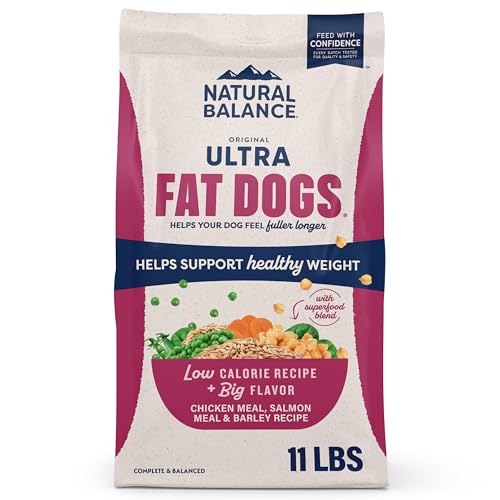
Natural Balance Fat Dogs is an adult dry food built around calorie control and weight management. The listing names chicken meal, salmon meal, and L-carnitine. Its fiber blend is intended to help dogs feel satisfied. These features matter when a veterinarian identifies excess body fat. They may suit a supervised weight-reduction plan. Do not switch automatically if the dog has muscle wasting or poor appetite. Other illnesses may also require different nutrition.
Cushing’s often increases appetite. Asking for more food does not prove that a dog needs extra calories. Instead, veterinarians assess body condition, muscle condition, weight trends, and any concurrent illness. Compare the energy per cup or kilogram on the current label with the prescribed daily calorie target. Fiber can influence stool quality and fullness, but too much reduction can make calorie intake inadequate. The brand’s weight-management emphasis should never be mistaken for direct treatment of hormonal overproduction.
Portion control matters as much as choosing the bag. Use a kitchen scale for meals if the veterinary team recommends it, and include treats in the total energy budget. Transition gradually to reduce digestive upset and recheck weight as advised rather than continuing the same amount indefinitely. If the dog loses weight unexpectedly, appears weak, or refuses food while on a Cushing’s medication, seek veterinary advice promptly. Natural Balance is best understood as a weight-control tool for selected dogs under a tailored plan.
My Recommendation
Natural Balance Fat Dogs is a practical option to compare for an overweight, otherwise stable adult dog when the veterinarian recommends calorie reduction. Its fiber and protein positioning may make measured meals easier. Avoid it for underweight dogs and confirm protein adequacy, actual calorie targets, and a monitoring schedule with the treatment team.
Purina Pro Plan Weight Management Chicken and Rice

- Chicken first ingredient stated
- Grain-inclusive formulation
- Live probiotic inclusion
- Small six-pound option
- Weight-management label
- Not a therapeutic Cushing diet
- Must confirm calorie reduction
Purina Pro Plan Weight Management Chicken and Rice is a conventional adult formula. It can support veterinarian-directed weight reduction. The verified listing describes a high-protein formula with chicken, rice, crunchy kibble, shredded pieces, and live probiotics. It has a different texture from uniform pellets. This may appeal to dogs eating carefully measured portions. As with every product here, these general features do not treat Cushing’s disease or establish that the formula fits a particular endocrine patient.
The choice may be reasonable when a dog needs to lose excess fat but preserve muscle condition. Cushing’s can cause muscle weakness or wasting. Veterinarians may prioritize protein-to-calorie balance and medical history over the lowest calorie number. Review the nutritional adequacy statement for the dog’s life stage, the energy density, and the current serving guidance. If pancreatitis, diabetes, kidney disease, or gastrointestinal disease coexists, nutrition decisions become more specialized and this ordinary diet may be inappropriate.
A six-pound bag offers a manageable purchase for comparing palatability after veterinary approval. Weigh meals consistently, limit unmeasured snacks, and watch stool changes during transition. Reduced appetite or vomiting during trilostane treatment deserves prompt veterinary attention. Do not dismiss it as picky eating. This Purina formula belongs on the shortlist for structured weight management, not because it contains an ingredient demonstrated to lower cortisol. Review calories, protein adequacy, and stool tolerance during follow-up visits with your clinician. The dog should also be comfortable eating the mixed kibble texture.
My Recommendation
Consider Purina Pro Plan Weight Management for an overweight adult dog when your veterinarian wants a grain-inclusive, protein-focused calorie-control food. The smaller bag and mixed kibble texture are useful practical details. Confirm the actual daily calories and monitor muscle condition, since maintaining strength can matter as much as lowering body fat.
Blue Buffalo Life Protection Healthy Weight Chicken

- Adult healthy-weight positioning
- Real chicken first ingredient
- Grain-inclusive carbohydrates
- Fifteen-pound bag option
- Balanced daily nutrition claim
- Not needed for thin dogs
- Weight goals require monitoring
Blue Buffalo Life Protection Healthy Weight Chicken is an adult maintenance-style formula adjusted for weight control. The verified listing names chicken first and includes carbohydrate sources. Its calorie balance targets adult weight management. That makes it one more nonprescription possibility when the veterinarian says a dog with Cushing’s should reduce excess fat gradually. It does not treat the hormone disorder. A diagnosis alone does not justify abandoning a well-tolerated, balanced diet.
Evaluate calories and protein together, because endocrine disease can involve both excess abdominal fat and loss of muscle. The right plan is not always a conventional weight-loss food. Check the current nutritional adequacy and energy statement and ask whether this recipe meets the dog’s age and any concurrent disease requirements. The inclusion of grains is a recipe feature, not a claim that grain-inclusive food treats Cushing’s. Likewise, the product’s antioxidant marketing should not be interpreted as a substitute for medication or regular blood testing.
If approved, introduce the new food gradually and measure portions rather than free-feeding based on the dog’s appetite. Keep records of weight, activity, stool quality, and muscle condition for follow-up appointments. Consider the fifteen-pound bag size relative to your storage space and how rapidly the food will be used. Reseal the bag and avoid leaving kibble exposed to heat or moisture. Blue Buffalo is most useful as a straightforward healthy-weight comparison for a dog with a confirmed need for calorie control.
My Recommendation
Blue Buffalo Healthy Weight is a reasonable comparison for owners who prefer a conventional grain-inclusive chicken recipe and have a veterinarian-approved calorie goal. Its value lies in everyday portion management, not Cushing’s-specific ingredients. Skip weight-loss diets if your dog is losing weight or muscle, and have the clinician reassess the plan regularly.
Hill’s Science Diet Adult Perfect Weight Chicken and Brown Rice
- Adult weight-management focus
- Chicken-and-brown-rice recipe
- Large bag for established use
- Veterinary brand reputation
- Clear product life stage
- Large initial bag size
- Wrong fit for normal or low weight
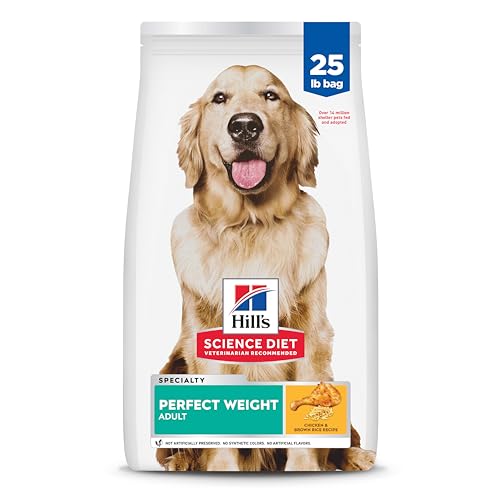
Hill’s Science Diet Adult Perfect Weight Chicken and Brown Rice targets adult weight control. Its purpose is managing excess body fat. The manufacturer describes the formula as supporting weight control, and the verified listing is a twenty-five-pound bag. It may suit some dogs with Cushing’s after veterinary assessment. Weight loss must be a suitable clinical goal. An endocrine diagnosis alone does not establish that weight reduction is desirable or safe.
Some dogs with Cushing’s have a pot-bellied look caused partly by altered fat distribution and weakened muscles. That appearance should not be taken as proof of simple obesity. A clinician can distinguish overall fat condition from abdominal shape and recommend an energy allowance that avoids unnecessary muscle loss. Compare this recipe’s calories, protein, fat, and fiber with the dog’s current intake. If another condition, such as pancreatitis or diabetes, needs specialized nutrition, a standard adult weight-control formula may not be the right match.
The larger bag is sensible only if a dog accepts the food and a clinician expects it to remain suitable. For an initial transition, compare smaller sizes if available. Use accurate portions, keep treats controlled, and schedule veterinary reweighing rather than aiming for fast losses. Unexpected weakness, refusal to eat, vomiting, or diarrhea is especially important in a dog receiving Cushing’s medication. Perfect Weight offers a structured adult calorie-management choice, but its success depends on a monitored plan rather than the food name alone.
My Recommendation
Hill’s Science Diet Perfect Weight is worth considering when the veterinary team wants a defined adult weight-management diet and the dog is otherwise an appropriate candidate. Check bag size before buying in bulk. The clinician should set calories and monitor muscle condition; do not use a weight-loss formula simply because the dog has Cushing’s.
Hill’s Prescription Diet i/d Low Fat Chicken Wet Food

- Wet canned format
- Veterinary digestive formulation
- Reduced-fat category
- Easy to portion by can
- Useful for specific GI plans
- Veterinary authorization may apply
- Not a routine Cushing diet
Hill’s Prescription Diet i/d Low Fat wet food is a veterinary therapeutic diet intended for dogs with specific digestive needs. The Amazon listing describes a chicken-based canned food formulated to support digestion while keeping fat lower. Its soft texture may help dogs struggling with kibble. It is not a universal Cushing’s food recommendation. Choose prescription gastrointestinal food only for a diagnosed medical need. One possible indication is a separate fat-digestion problem.
The distinction is important. Cushing’s disease can occur alongside other illnesses, yet the endocrine disorder does not itself establish an indication for a gastrointestinal prescription. Changing to a therapeutic diet without veterinary approval could displace an appropriate existing ration or alter energy and protein intake unnecessarily. Ask the clinician to compare the food’s full dry-matter nutrient profile and calories with any current medication schedule and health concerns. The current listing is a twelve-pack of thirteen-ounce cans, which affects storage and daily feeding cost.
Once prescribed, follow the veterinarian’s feeding instructions and monitor appetite, stools, body weight, and hydration. Store unopened cans as directed and refrigerate leftovers promptly according to the label. A dog undergoing Cushing’s treatment who develops reduced appetite, vomiting, or unusual lethargy needs veterinary guidance rather than merely a different flavor. Hill’s i/d Low Fat belongs in this roundup as a conditionally appropriate wet therapeutic option when there is a separate indication for fat restriction or digestive management.
My Recommendation
Choose Hill’s Prescription Diet i/d Low Fat only when your veterinarian recommends this specific therapeutic diet for a documented digestive or fat-related need. The canned format may help with feeding convenience, but it is not a Cushing’s treatment. Confirm authorization requirements, calorie amounts, and how it fits medication and follow-up plans.
Royal Canin Veterinary Gastrointestinal Low Fat Dry Food

- Veterinary-exclusive product
- Low-fat formula stated
- Dry feeding convenience
- Prebiotic component
- Large supply for approved plan
- Higher-cost therapeutic product
- Not suitable without vet indication
Royal Canin Veterinary Gastrointestinal Low Fat is a specialized dry food intended for dogs with particular digestive and fat-handling concerns. The verified Amazon listing describes a low-fat, easy-to-digest veterinary-exclusive formula containing prebiotics. It may be considered when a dog diagnosed with Cushing’s also has a medical condition for which the veterinarian specifically wants dietary fat restriction. That is a narrower situation than the keyword might suggest. The food is not designed to reduce cortisol or replace medical management of hyperadrenocorticism.
The twenty-eight-point-six-pound bag provides substantial supply. Confirm prescription eligibility and tolerance before committing to its high cost. Ask the clinician about dry-matter fat level, calories, protein, digestibility, and whether the complete ration meets any other concurrent disease needs. A dog without gastrointestinal disease may need only balanced adult food. The veterinarian should make that decision. More specialized is not automatically more appropriate.
If your veterinarian prescribes this diet, transition according to their directions and measure meals accurately. Monitor the dog’s weight and muscle condition, not just its visible abdominal shape. Keep any necessary prescription documentation and check storage and expiration dates before buying a large bag. Report changes in appetite, vomiting, diarrhea, or unusual weakness promptly, especially when endocrine medication has recently changed. Royal Canin’s low-fat digestive focus makes it useful for specific complex cases, not a universal top-ranked Cushing’s food. Ask whether a smaller bag is available before purchasing the large format.
My Recommendation
Royal Canin Gastrointestinal Low Fat should be on your shortlist only if the veterinarian identifies a digestive or fat-restriction requirement and approves this therapeutic formula. It offers a dedicated low-fat dry option, but bag size and cost are significant. Cushing’s disease alone is not a valid reason to self-prescribe it.
How to choose best dog food for cushing’s disease
Selecting the best dog food for Cushing’s disease requires clinical context. Body condition, muscle health, medications, and other diagnoses shape the choice. Options range from balanced adult food to therapeutic diets. No listed product cures excess cortisol.
Start with diagnosis, weight and muscle condition
Cushing’s disease, or hyperadrenocorticism, often increases appetite and changes body fat distribution. A round belly can partly reflect weakened abdominal muscles, so body shape alone does not prove obesity. Ask the veterinarian for both body-condition and muscle-condition assessments, a current weight trend, and a daily calorie target when necessary. Some dogs need careful weight reduction; others need enough high-quality nutrition to avoid muscle loss. A food labeled low fat may be sensible for one patient yet too restrictive for another. The veterinarian also needs to know about concurrent diabetes, pancreatitis, kidney problems, hypertension, and digestive symptoms. Treatment commonly involves medication and monitored testing. Food cannot replace those measures. Record exactly how much food and how many treats the dog actually receives to support an accurate clinical review.
Compare calories, fat and protein for the specific case
Read the guaranteed analysis and energy statement on the current product label instead of comparing brand slogans. Foods with different moisture levels need to be compared on a dry-matter basis, particularly when choosing between canned and dry recipes. If weight reduction is the clinical goal, lower energy density and measured portions may help. If a veterinary clinician recommends fat restriction due to another disease, choose a suitably formulated product rather than assuming every Cushing’s dog needs low fat. Adequate protein is important for maintaining muscle, but requirements change with comorbidities. Prescription gastrointestinal formulas are designed for separate indications and may require veterinary approval. For weight-related buying details, consider the linked guide in this section. Sudden appetite loss, vomiting, weakness, or severe diarrhea while on endocrine medication requires prompt veterinarian contact. For more context, see how to estimate daily dog food portions.
Transition carefully and schedule follow-up
After a veterinarian recommends a food, ask how to transition from the previous ration and whether medication timing depends on eating. Some drugs used for Cushing’s require close monitoring, and reduced appetite can be medically significant. Measure portions in grams when possible, count treats, and provide continual access to drinking water unless your veterinarian directs otherwise. Keep notes on weight, stool, coat, activity, appetite, and changes in muscle condition. Reassess the calorie allowance as the endocrine disease comes under control because appetite and body condition can change. Avoid swapping products repeatedly without a plan. A large bag is not always a bargain if the dog refuses it or the clinician adjusts the diet. The best value comes from nutritional adequacy, tolerability, and a realistic follow-up schedule rather than any claim that a specific food treats Cushing’s.
Frequently Asked Questions
These questions cover everyday use and safety considerations. Get individual veterinary guidance for a diagnosed medical condition.
Is there one best dog food for every dog with Cushing’s disease?
No. Veterinary treatment and the dog’s weight, muscle status, comorbidities, and current diet determine the feeding plan. A balanced adult food may be suitable for one dog, while another needs a targeted veterinary diet.
Do dogs with Cushing’s need low-fat dog food?
Not always. Fat restriction may be recommended for specific digestive or lipid-related problems, but a clinician must assess the complete case. A thin dog or one losing muscle may need a different approach.
Can dog food treat Cushing’s disease?
No. Food cannot correct abnormal cortisol production. Veterinary evaluation, medical treatment where indicated, and monitoring remain essential.
Is prescription dog food required for Cushing’s disease?
Not routinely. A prescription gastrointestinal or other therapeutic diet may be appropriate if the dog has an additional condition that calls for it. Obtain veterinary approval before using one.
What symptoms should prompt a call to the vet after a food change?
Contact the veterinarian about persistent vomiting, diarrhea, poor appetite, unusual weakness, marked lethargy, or rapid weight changes. These can be particularly important in a dog receiving medication for Cushing’s disease.
Final Verdict
For veterinary-approved weight control, compare Natural Balance Fat Dogs and Purina Pro Plan Weight Management. Blue Buffalo Healthy Weight and Hill’s Perfect Weight are alternatives. SquarePet VFS is a distinct lower-fat nonprescription option when indicated. Hill’s i/d Low Fat and Royal Canin Gastrointestinal Low Fat are veterinary therapeutic choices for specific additional needs. None treats Cushing’s disease. Ask the managing veterinarian to set an individual nutrition target, review medication requirements, and monitor weight and muscle condition before making a purchase. Related guidance: comparing canned dog foods for older dogs.
Affiliate disclosure: This article contains Amazon affiliate links. If you purchase through them, PetAdvisorPro may earn a commission. As an Amazon Associate I earn from qualifying purchases.









