

A diabetes diagnosis changes the way you plan meals, portions, and daily routines. The best dog food for dogs with diabetes is the diet your veterinarian selects for that individual dog, coordinated with insulin and monitoring. This guide compares six veterinary diets with glucose-management positioning, including dry and canned formats. These are products to discuss with your clinic, not foods to start independently. Keep meals consistent and ask your veterinarian what to do if your dog skips a meal. Never change insulin or medication based on a food label or online recommendation. Keep the veterinary team updated on home glucose readings and appetite changes.
Quick Picks
| Product | Best For | Key Advantage | Buy | |
|---|---|---|---|---|
| Royal Canin Veterinary Glycobalance Adult Dry Dog Food | A dry glucose-support formula for adult dogs | Veterinary diet positioned for diabetes management | View on Amazon | Jump to Review |
| Royal Canin Veterinary Glycobalance Adult Wet Dog Food | A poultry-based veterinary pâté | Formulated for diabetic adult dogs per listing | View on Amazon | Jump to Review |
| Royal Canin Veterinary Glycobalance Small Adult Dry Dog Food | Small-kibble veterinary diet for small diabetic adults | Specifically listed for small adult dogs | View on Amazon | Jump to Review |
| Hill’s Prescription Diet w/d Multi-Benefit Dry Dog Food | A multi-benefit veterinary dry formula | Prescription diet positioning for glucose management | View on Amazon | Jump to Review |
| Hill’s Prescription Diet w/d Multi-Benefit Wet Dog Food | A canned chicken recipe for veterinary-directed feeding | Therapeutic diet listed for glucose management | View on Amazon | Jump to Review |
| Hill’s Prescription Diet w/d Vegetable & Chicken Stew | A smaller-can stew texture | Prescription diet listing includes glucose management | View on Amazon | Jump to Review |
Before You Change a Diabetic Dog’s Food
Food changes should fit the care plan. Ask your veterinarian about dog feeding schedules, daily portion estimates, and weight-management food considerations as related topics—not substitutes for diabetes-specific advice.
Royal Canin Veterinary Glycobalance Adult Dry Dog Food
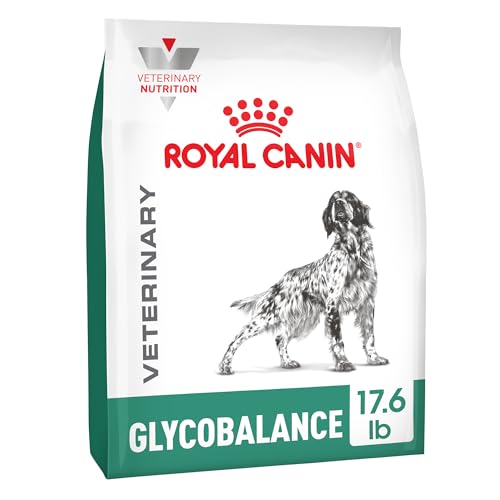
- Veterinary diet positioned for diabetes management
- Controlled-carbohydrate formula per listing
- Soluble and insoluble fiber blend
- Controlled fat amounts per listing
- Dry format for measured meals
- Use only with veterinary guidance
- Adult formula may not fit every dog
Royal Canin Veterinary Glycobalance Adult Dry Dog Food is a veterinary diet marketed for blood-glucose support and diabetes management. The verified listing describes a controlled-carbohydrate formula with prebiotics, soluble and insoluble fiber, and controlled fat amounts. Those features may make it a discussion option when a veterinarian is building a nutrition plan for a diabetic adult dog. This is not an over-the-counter wellness food to select on a label alone. Confirm that the product is appropriate for your dog and obtain any required veterinary authorization before ordering.
The dry format can fit measured meals and a consistent routine, which are important topics to coordinate with insulin timing and the dog’s daily schedule. The listing does not mean all diabetic dogs need the same fiber profile or carbohydrate level. Calorie needs, body condition, concurrent disease, appetite, and medication all matter. Check the current package and feeding chart with your clinic before making a change, and do not adjust insulin doses on your own because a food has changed.
This option may suit an adult dog whose veterinarian specifically recommends Glycobalance and who eats dry food reliably. It may be inconvenient for a dog that refuses kibble or needs a different texture. Follow the veterinary plan for portions, meal timing, and monitoring. If your dog misses a meal or has vomiting or unusual behavior, contact the clinic for instructions rather than guessing about food or insulin.
My Recommendation
Discuss Royal Canin Veterinary Glycobalance Adult Dry Dog Food with your veterinarian if you need a dry glucose-support formula for adult dogs. Its main advantage is a veterinary diet developed around glucose management; its essential limitation is that it must fit the full diabetes plan. Confirm portions, meal timing, and authorization with the clinic before use.
Royal Canin Veterinary Glycobalance Adult Wet Dog Food

- Formulated for diabetic adult dogs per listing
- Reduced starch positioning
- Poultry-based loaf texture
- Wet format contributes food moisture
- Weight-management positioning
- Must fit the veterinarian’s plan
- Poultry recipe may not suit every dog
Royal Canin Veterinary Glycobalance Adult Wet Dog Food is a veterinary canned diet listed for diabetic adult dogs. The verified product details describe reduced starch, a poultry-based pâté texture, and weight-management support. A wet formula can be useful when a dog prefers soft food or needs a different meal format, but it must be coordinated with the veterinarian’s prescribed diet and feeding schedule. The product’s listing is not a reason to switch foods without discussing the dog’s current insulin, calorie needs, and medical history.
The soft loaf in sauce may appeal to dogs that eat poorly when offered dry kibble, and the moisture content is a practical difference from the dry version. However, a dog’s acceptance can change, and a veterinary diet is only helpful when the dog eats the planned amount consistently. Ask your clinic how the canned food should be portioned and whether it replaces or combines with another formula. Do not estimate equivalent portions by volume; use the package feeding guidance and veterinary instructions.
This is a candidate for an adult dog whose veterinarian has recommended Glycobalance wet food and whose ingredient needs fit poultry. It may not suit dogs with poultry sensitivities or those whose clinic prefers a dry formula. Keep meal and medication timing consistent as directed, track appetite and glucose as instructed, and call your veterinarian when a meal is refused. Confirm with your veterinarian how the canned portion should fit meal timing and insulin instructions before replacing dry food.
My Recommendation
Discuss Royal Canin Veterinary Glycobalance Adult Wet Dog Food with your veterinarian if you need a poultry-based veterinary pâté. Its main advantage is a veterinary diet developed around glucose management; its essential limitation is that it must fit the full diabetes plan. Confirm portions, meal timing, and authorization with the clinic before use.
Royal Canin Veterinary Glycobalance Small Adult Dry Dog Food

- Specifically listed for small adult dogs
- Small-kibble format
- Veterinary diabetes diet positioning
- Reduced-starch feature per listing
- Weight-support positioning
- Small-dog formula has a narrow audience
- Requires veterinary direction
Royal Canin Veterinary Glycobalance Small Adult Dry Dog Food is listed for small-breed diabetic adult dogs, with a small-kibble format and reduced-starch positioning. It is a more specific size-oriented option than the standard Glycobalance dry formula. The listing says the formula is designed for small adult dogs up to 22 pounds. That detail matters: the product should not be treated as a universal diabetic diet for dogs of every size or life stage. Ask your veterinarian whether the formula suits your dog’s weight, diagnosis, and feeding plan.
The small kibble may be easier for some small dogs to pick up and chew, while its veterinary-diet status makes professional guidance essential. A precise food can help a care team set a repeatable routine, but it does not replace insulin, monitoring, or follow-up visits. Confirm the exact product and amount with your clinic. If your dog has dental problems, another chronic condition, or irregular appetite, mention that before choosing the dry format.
This may fit a small adult dog when the veterinarian recommends this specific diet and kibble size. It is not a substitute for the standard adult formula in every dog, and it may be unsuitable for larger dogs. Use the meal schedule and monitoring plan your clinic provides. Do not change portions or medication independently if weight or glucose readings shift. Compare its calorie density and serving directions with the dose-linked schedule recommended by your clinic, and keep meals consistent.
My Recommendation
Discuss Royal Canin Veterinary Glycobalance Small Adult Dry Dog Food with your veterinarian if you need small-kibble veterinary diet for small diabetic adults. Its main advantage is a veterinary diet developed around glucose management; its essential limitation is that it must fit the full diabetes plan. Confirm portions, meal timing, and authorization with the clinic before use.
Hill’s Prescription Diet w/d Multi-Benefit Dry Dog Food

- Prescription diet positioning for glucose management
- Soluble and insoluble fiber blend
- Also addresses weight and digestive needs per listing
- L-carnitine feature in listing
- Dry format for measured meals
- Therapeutic diet should be vet-directed
- Chicken recipe is not universal
Hill’s Prescription Diet w/d Multi-Benefit Dry Dog Food is a therapeutic diet listed for glucose, weight, digestive, and urinary management. Its verified product details describe a blend of soluble and insoluble fiber and L-carnitine. That broader positioning may be relevant for a dog whose veterinarian is managing more than one nutrition concern, but it also makes professional selection especially important. A diabetic dog with other conditions should not be switched based on one feature or a search result; the care team needs to consider the complete health picture.
The dry kibble format can simplify portion measurement and storage. The listing identifies a chicken recipe, so ingredient sensitivities must be checked. Because it is a prescription diet, follow the clinic’s instructions about authorization, amount, and transition. Do not add another therapeutic food or supplement without asking, since the combined feeding plan can affect calories and nutrient balance. Compare the exact bag size and label details before ordering.
This food may suit a dog whose veterinarian recommends w/d for a particular glucose, weight, digestive, or urinary plan. It is not the default choice for every diabetic dog. Monitor weight and appetite with the clinic, keep the feeding schedule steady, and contact your veterinarian if your dog refuses the meal or develops concerning signs. Its therapeutic positioning does not make it interchangeable with another formula; confirm the exact recipe, portions, and monitoring plan with your veterinarian.
My Recommendation
Discuss Hill’s Prescription Diet w/d Multi-Benefit Dry Dog Food with your veterinarian if you need a multi-benefit veterinary dry formula. Its main advantage is a veterinary diet developed around glucose management; its essential limitation is that it must fit the full diabetes plan. Confirm portions, meal timing, and authorization with the clinic before use.
Hill’s Prescription Diet w/d Multi-Benefit Wet Dog Food

- Therapeutic diet listed for glucose management
- Wet format with chicken recipe
- Fiber blend described in listing
- Multi-benefit digestive and weight positioning
- 12-can pack
- Requires veterinary diet approval
- Large cans need proper storage
Hill’s Prescription Diet w/d Multi-Benefit Wet Dog Food offers a canned format of the w/d therapeutic line. The verified listing describes glucose and weight management, digestive support, and a chicken recipe. For a dog that strongly prefers wet meals, this format may be worth discussing with the veterinarian who manages the diabetes plan. It remains a prescription diet, not a general wet food recommendation. The specific role depends on the dog’s body condition, glucose control, medications, and any other diagnosed conditions.
The larger can size may work for medium or large dogs, but smaller dogs may need careful portioning and safe storage of leftovers. Follow package instructions after opening and use the clinic’s feeding amount rather than an online estimate. A wet diet may alter meal volume and routine compared with dry kibble, so confirm how it should align with medication and monitoring. Keep ingredient restrictions in mind, since chicken is part of the listed recipe.
This can be considered when the dog’s veterinarian recommends w/d and a canned meal makes feeding more reliable. It may be less convenient for single-serving households or dogs that prefer dry food. Keep meals consistent, record how much is eaten, and contact your clinic if appetite changes or your dog misses a meal. If switching from kibble, ask the veterinarian how to adjust the amount by calories and coordinate every meal with insulin. with your veterinary care team.
My Recommendation
Discuss Hill’s Prescription Diet w/d Multi-Benefit Wet Dog Food with your veterinarian if you need a canned chicken recipe for veterinary-directed feeding. Its main advantage is a veterinary diet developed around glucose management; its essential limitation is that it must fit the full diabetes plan. Confirm portions, meal timing, and authorization with the clinic before use.
Hill’s Prescription Diet w/d Vegetable & Chicken Stew

- Prescription diet listing includes glucose management
- Vegetable and chicken stew texture
- 5.5-ounce cans for measured portions
- Fiber and low-calorie positioning
- Multi-benefit formulation
- Veterinarian approval required
- Stew texture differs from pâté
Hill’s Prescription Diet w/d Vegetable & Chicken Stew is another wet format within the therapeutic w/d line. The verified listing describes glucose and weight management, a fiber blend, and a stew-style recipe with chicken and vegetables. Its smaller 5.5-ounce cans may be easier to portion for some households than larger cans. The product remains a veterinary diet; the smaller package does not make it a casual substitute for the dog’s current food or medication plan.
The stew texture differs from a smooth canned loaf, which may matter for dogs with strong texture preferences. The listing also positions the food for digestive and urinary support, but the dog’s veterinarian should decide whether those features align with the diagnosed conditions. Check the current can’s feeding guidance and calorie information, and ask how to transition from another food. Do not mix formats or divide portions by guesswork if the clinic has given a specific plan.
This may suit an adult dog who needs w/d, prefers stew, and benefits from smaller cans for portion management. It may be a poor fit if your dog avoids chicken or the veterinarian has selected another formulation. Follow the prescribed schedule and report missed meals or unusual glucose readings to the care team. A stew texture may help some dogs eat, but acceptance varies; keep portions measured and follow the clinic’s insulin and monitoring directions. Review any other health conditions with the clinic before making a change.
My Recommendation
Discuss Hill’s Prescription Diet w/d Vegetable & Chicken Stew with your veterinarian if you need a smaller-can stew texture. Its main advantage is a veterinary diet developed around glucose management; its essential limitation is that it must fit the full diabetes plan. Confirm portions, meal timing, and authorization with the clinic before use.
How to Choose Food for a Dog With Diabetes
Treat diet as part of the veterinary plan
A diabetic dog’s food cannot be chosen separately from insulin, activity, body condition, and monitoring. Your veterinarian may recommend a therapeutic diet, a familiar complete food, or a specific routine based on the dog’s response and other health conditions. The products above are veterinary diets, and some require prescription authorization. Do not switch foods, change portions, or alter insulin doses without the clinic’s instructions. If your dog has kidney, digestive, urinary, or other disease, mention it before selecting a formula.
Choose a format your dog will eat reliably
The list includes dry kibble, pâté, and stew. A dog who consistently eats a measured dry meal may do well with a dry formula, while a dog who refuses kibble may need a veterinarian-approved wet option. Texture is a practical factor because missed meals can disrupt the routine. Ask your veterinarian how much to feed, what to do if a meal is skipped, and whether dry and wet versions can be exchanged. Do not assume that two foods with the same product family name have identical calories or feeding amounts.
Keep timing, portions, and follow-up consistent
Use the clinic’s feeding schedule and measure portions accurately. Track meals, treats, activity, weight, and glucose readings if your veterinarian asks you to. Treats and toppers can add calories or change the routine, so ask which options and amounts are acceptable. Keep fresh water available and arrange follow-up monitoring as recommended. If appetite drops, your dog vomits, seems weak, or behaves unusually, contact the veterinary team promptly for specific next steps. Do not try to solve a missed meal by independently changing insulin or feeding extra food.
Compare the diet’s calories and feeding directions with your dog’s current body condition, because portion changes can affect insulin needs. Ask the clinic how to coordinate meals with each dose and what steps to follow if a meal is delayed or refused. Do not add treats or toppers without discussing them, since they can alter the meal plan. Keep a written record of food amounts, dose times, glucose readings when directed, and unusual signs. Bring that record to follow-up visits so the veterinarian can adjust the plan safely.
Frequently Asked Questions
Can diet alone manage canine diabetes?
Food is one part of care. Follow your veterinarian’s plan for insulin, monitoring, feeding, activity, and follow-up.
Do diabetic dogs need prescription food?
Not every dog follows the same plan. Your veterinarian decides whether a therapeutic diet is appropriate and which formula fits.
Should I change food before starting insulin?
Ask your veterinarian. Food transitions and medication timing need to be coordinated for your dog.
What if my dog refuses a meal?
Follow the specific instructions from your clinic and contact them for guidance. Do not guess about insulin changes.
Can I use treats with a diabetic dog?
Ask the veterinary team which treats and amounts fit the plan. Include all treats in the daily calorie and feeding routine.
Final Verdict
Royal Canin Glycobalance and Hill’s Prescription Diet w/d are the clearest veterinary-diet options found for this roundup, with dry and wet formats to compare. The right choice depends on your dog’s full medical plan and reliable meal routine. Discuss any change with your veterinarian before ordering or feeding.
As an Amazon Associate I earn from qualifying purchases.









